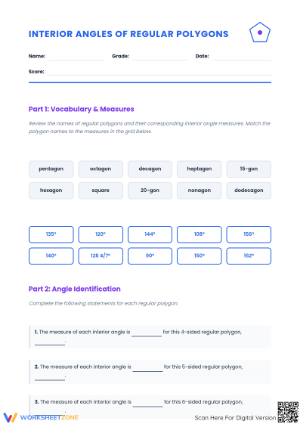
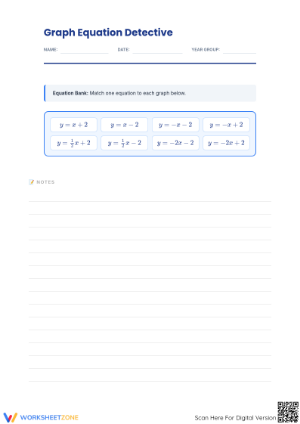
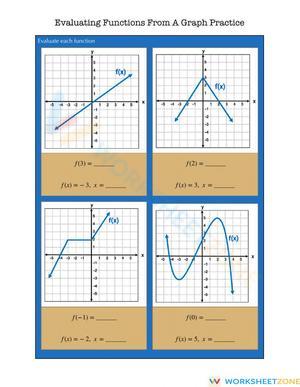
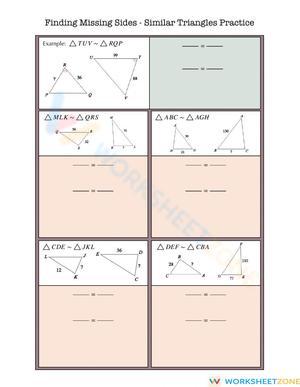
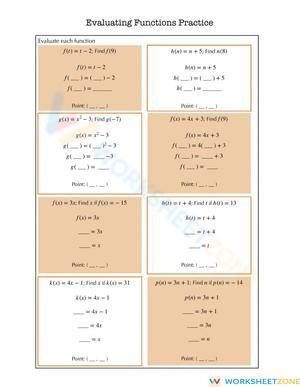
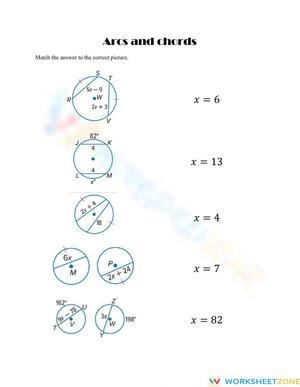
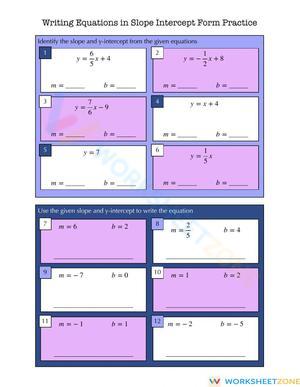
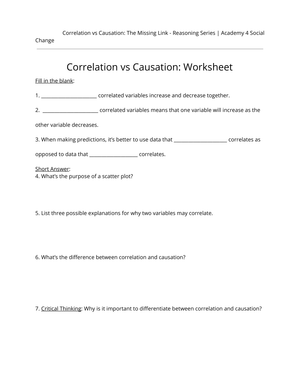
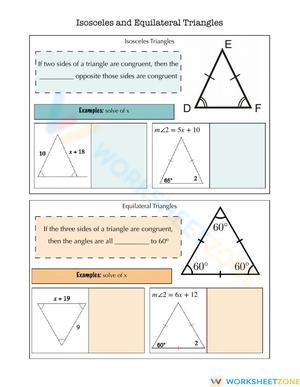
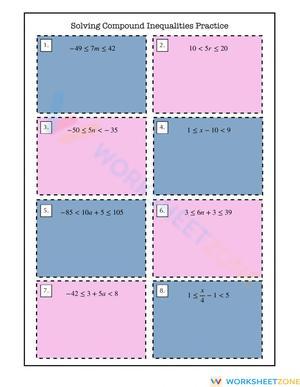
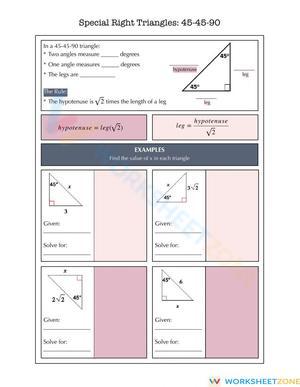
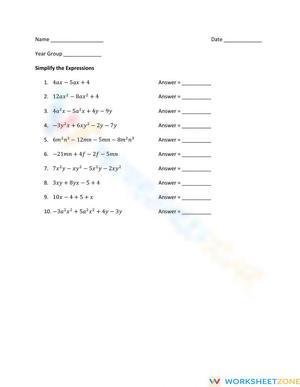
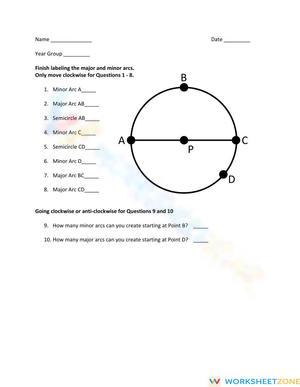
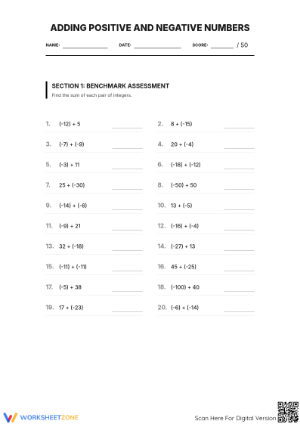
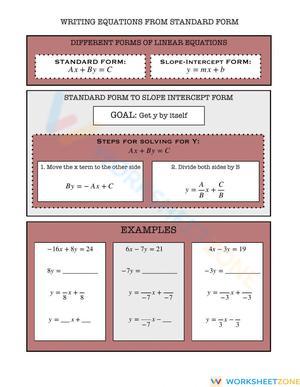
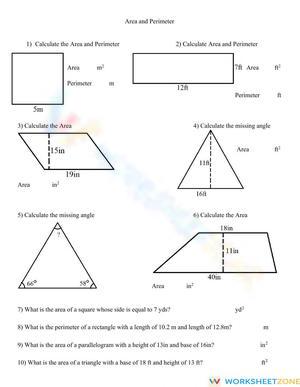
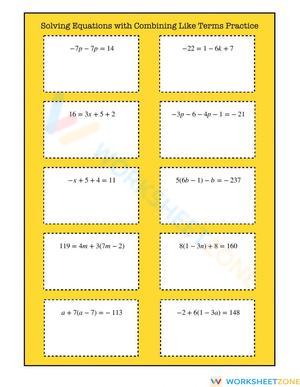
Math worksheets for college courses solve a persistent problem: students leaving lecture with partial understanding, unable to get targeted practice without hunting through textbook exercises that mix topics unpredictably. These worksheets offer focused, notation-accurate problem sets across the college math sequence — from developmental algebra through multivariable calculus and statistics — and the PDF format means the same integral sign and matrix bracket that appears on a campus computer renders identically on a student's phone at midnight before an exam.
The Specific Topics These Worksheets Cover
The set spans the full college mathematics sequence. College algebra and trigonometry worksheets target the skills that determine placement: logarithmic and exponential functions, trigonometric identities, polynomial behavior, and complex number arithmetic. These are the topics students most often underestimate between high school graduation and their first Accuplacer or CLEP attempt.
Calculus worksheets break the sequence into discrete skill sets — limits and continuity, derivative rules including chain rule and implicit differentiation, integration techniques, and series — rather than reproducing the chapter structure of any particular textbook, which makes them usable alongside any course syllabus. Linear algebra worksheets handle vector spaces, matrix operations, determinants, and eigenvalue computation. Statistics worksheets move from probability distributions through hypothesis testing and confidence intervals to regression, maintaining the manual calculation practice students need before they rely on software outputs they cannot yet interpret.
Errors Students Make That These Worksheets Surface
The mistakes that appear most reliably in student work fall into a few categories worth watching. In integration by parts, students who correctly identify u and dv still apply the formula backward — writing ∫v du − uv instead of uv − ∫v du — and arrive at a result that looks plausible until checked. In statistics, the error is conceptual rather than computational: students conclude that failing to reject the null hypothesis proves the null is true, a misreading that a well-designed worksheet catches by asking students to write out in plain language what their p-value actually means.
In college algebra, one of the most durable misconceptions involves the logarithm addition rule. Students who correctly apply log(ab) = log(a) + log(b) will then write log(a + b) = log(a) + log(b) without hesitation, treating the logarithm as a distributive operator. Asking students to evaluate both sides numerically — rather than just simplify symbolically — is often the only intervention that breaks this habit. Each worksheet in the algebra set includes numerical check prompts precisely because symbolic manipulation alone does not expose this error.
Fitting These Worksheets Into Your Course Structure
In large lecture sections, these work well as recitation-hour materials. The most productive format is error analysis: distribute a completed worksheet containing four or five deliberately introduced mistakes, give students 15 minutes to locate and correct them with a partner, then spend the remaining time on the two or three errors that stumped the most pairs. This shifts the cognitive work from answer-getting to reasoning verification — a level of analysis that aligns with what college exams actually test.
Math worksheets for college courses also integrate cleanly into flipped classroom models. Assign one worksheet after the pre-class video; students arrive having already hit the wall on specific problems. Rather than spending class time re-teaching the concept from scratch, the instructor addresses the three or four problem types that tripped up the most students — information a brief show-of-hands check at the start of class surfaces immediately. The PDF format matters here: every student works from an identical file, so the instructor can say "problem six, part b" and the entire room turns to the same item.
Peer-led team learning (PLTL) sessions are another natural fit. Distributing each worksheet to peer leaders a week in advance gives them time to work through the full set, anticipate where their group will get stuck, and prepare targeted explanations — which produces more focused small-group discussion than open-ended review sessions ever do.
Adjusting the Set for Students at Different Points in the Sequence
Students in developmental or remedial tracks need the arithmetic and pre-algebra worksheets that build the foundation for credit-bearing courses — fraction operations, order of operations with signed numbers, linear equations in one variable. These are not simplified versions of the college-level content; they form a separate tier of practice designed for students whose placement scores indicate gaps below the college algebra level. Using math worksheets for college in these developmental contexts means giving students practice that is rigorous in its own right, not a watered-down version of content they are not yet ready for.
At the other end, students accelerating through placement or preparing for transfer-level work benefit from application problems that combine skills across units — a calculus item that requires chain rule differentiation, then substitution to evaluate a definite integral, then interpretation of the result in a physical context. These multi-step problems challenge students who have mastered individual techniques but have not yet developed the judgment to sequence them correctly under exam conditions.
Standard Alignment
These worksheets align with the American Mathematical Association of Two-Year Colleges (AMATYC) IMPACT standards, particularly the strands emphasizing mathematical reasoning, communication, and technology-informed practice. The statistics worksheets address the data literacy outcomes AMATYC identifies as essential across all majors — not only STEM tracks — which matters for departments serving mixed-major populations. Developmental math worksheets align with the College and Career Readiness Standards that govern remedial placement, making them appropriate for corequisite models that pair foundational support with credit-bearing coursework. Instructors using OpenStax textbooks will find close topical alignment, as both follow the same sequence from precalculus through the calculus series.
Frequently Asked Questions
Do these worksheets include full solution keys, or just final answers?
Each worksheet includes a complete answer key with worked solutions showing every step. For calculus and linear algebra items, the solution guides note where students most often make errors — particularly in sign handling during integration and in row reduction — so instructors using them during recitation know where to pause and probe for understanding rather than moving on.
Are these suitable for Accuplacer or CLEP exam preparation?
Yes. The college algebra and trigonometry worksheets map closely to the content domains on both the Accuplacer Next-Generation Quantitative Reasoning test and the CLEP College Algebra exam. Students who work through these sets systematically report that the problem types feel familiar on test day, which reduces the cognitive overhead of parsing unfamiliar item formats under time pressure.
Can these be used in a corequisite support model alongside a credit-bearing course?
The developmental tier of math worksheets for college is structured precisely for corequisite use — each set targets the prerequisite skills that underlie that week's credit-bearing content rather than covering unrelated foundational material. A corequisite statistics section, for example, gets fraction and proportion practice the week the credit course covers probability, not the week it covers regression.
Can instructors modify the problem sets to match their course data or notation conventions?
Editable source files are available alongside the print-ready PDFs for instructors who need to substitute course-specific data sets into statistics problems or adjust variable naming to match departmental conventions — a common need when multiple sections share a standardized syllabus but individual instructors use different textbook editions.













 Interactive Worksheet Maker
 Quiz Maker
 Word Search Maker
 Crossword Puzzle Maker
 Word Scramble Generator
 Sentence Scramble Generator
 Handwriting Worksheet Generator
 Name Tracing Generator
 Fill In The Blank Generator