


























1 / 2
0
Views
0
Downloads

0.0
0
Save
0 Likes
Share
Causation vs Correlation: Understanding Relationships
0 Views
0 Downloads
Paste this activity's link or code into your existing LMS (Google Classroom, Canvas, Teams, Schoology, Moodle, etc.).
Students can open and work on the activity right away, with no student login required.
You'll still be able to track student progress and results from your teacher account.
Information
Description
What It Is:
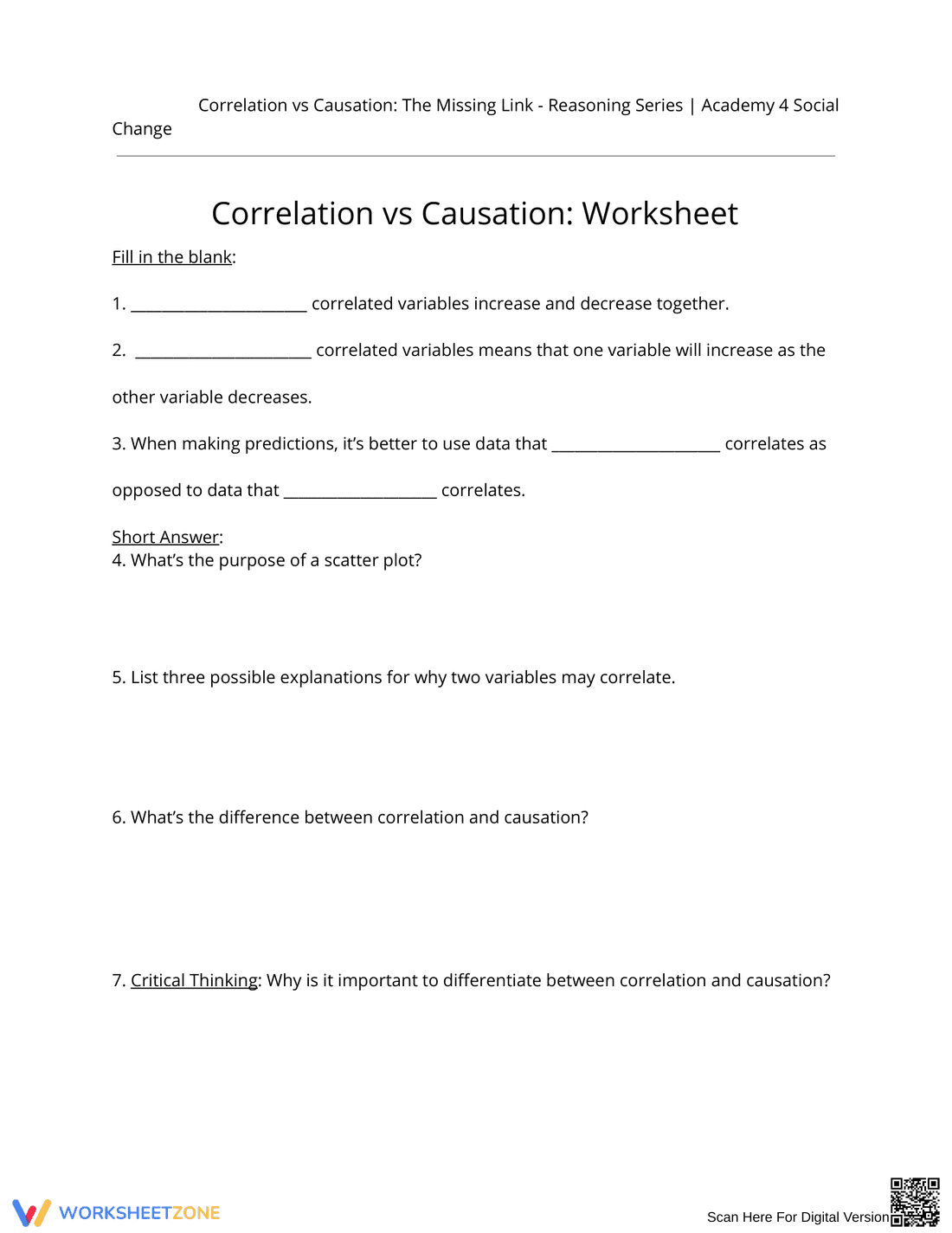
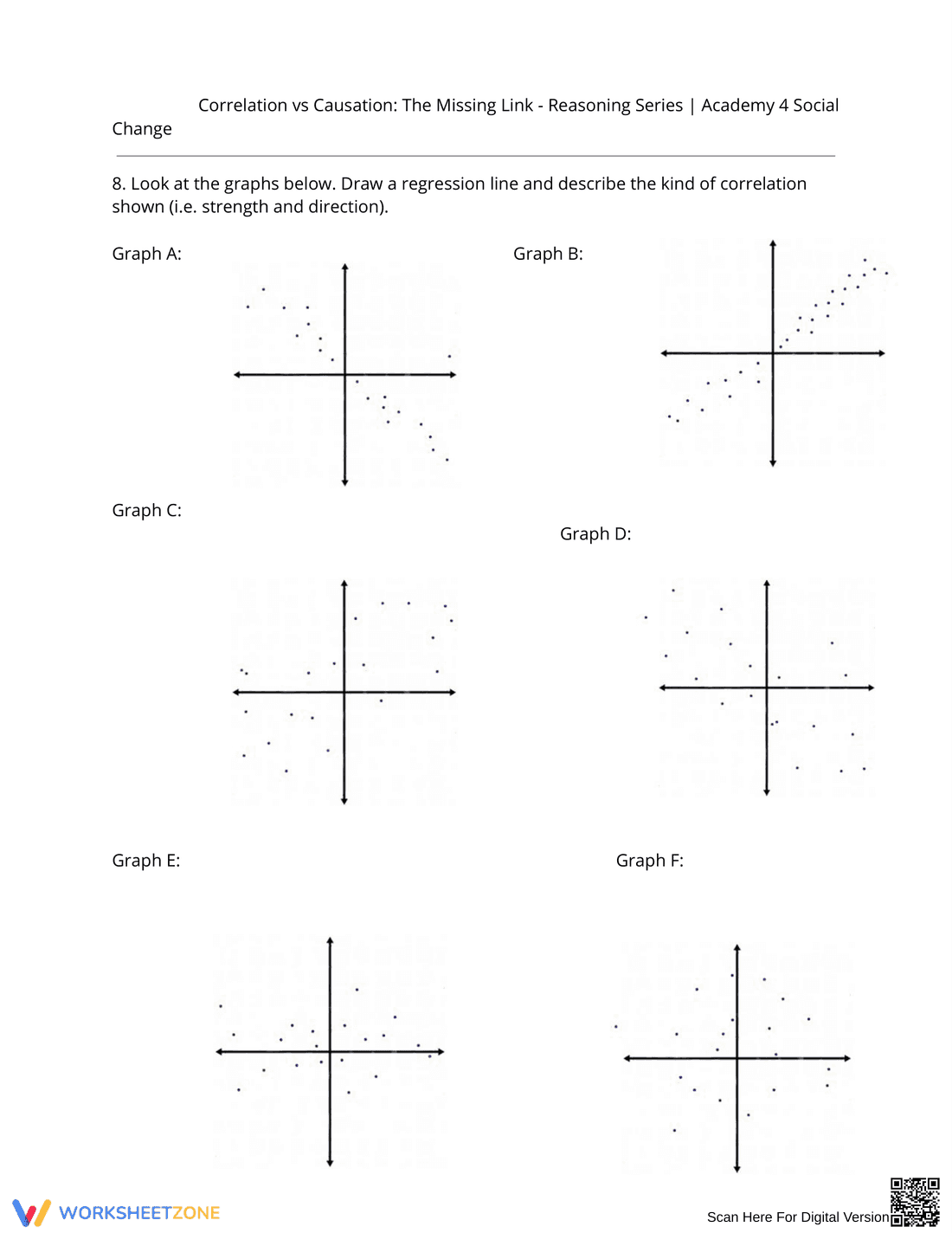
This is a worksheet focusing on the concepts of correlation and causation. It includes fill-in-the-blank questions about correlated variables, short answer questions about scatter plots, explanations for variable correlation, and the difference between correlation and causation. It also includes a critical thinking question about the importance of differentiating between correlation and causation.
Grade Level Suitability:
This worksheet is suitable for high school students, specifically grades 9-12, particularly those studying statistics, social sciences, or research methods. The concepts require abstract thinking and understanding of data analysis, making it appropriate for older students.
Why Use It:
This worksheet helps students understand the difference between correlation and causation, which is a crucial skill for critical thinking and data analysis. It reinforces key concepts related to statistical relationships and helps students develop the ability to interpret data accurately and avoid drawing incorrect conclusions.
How to Use It:
Students should first review the definitions of correlation and causation. They can then complete the fill-in-the-blank questions to test their understanding of the relationship between variables. The short answer and critical thinking questions can be used for class discussions or individual reflection to deepen their understanding of the topic.
Target Users:
This worksheet is ideal for high school students, particularly those in statistics, social studies, or research methods courses. It can also be used by teachers looking for resources to teach and reinforce the concepts of correlation and causation.
This is a worksheet focusing on the concepts of correlation and causation. It includes fill-in-the-blank questions about correlated variables, short answer questions about scatter plots, explanations for variable correlation, and the difference between correlation and causation. It also includes a critical thinking question about the importance of differentiating between correlation and causation.
Grade Level Suitability:
This worksheet is suitable for high school students, specifically grades 9-12, particularly those studying statistics, social sciences, or research methods. The concepts require abstract thinking and understanding of data analysis, making it appropriate for older students.
Why Use It:
This worksheet helps students understand the difference between correlation and causation, which is a crucial skill for critical thinking and data analysis. It reinforces key concepts related to statistical relationships and helps students develop the ability to interpret data accurately and avoid drawing incorrect conclusions.
How to Use It:
Students should first review the definitions of correlation and causation. They can then complete the fill-in-the-blank questions to test their understanding of the relationship between variables. The short answer and critical thinking questions can be used for class discussions or individual reflection to deepen their understanding of the topic.
Target Users:
This worksheet is ideal for high school students, particularly those in statistics, social studies, or research methods courses. It can also be used by teachers looking for resources to teach and reinforce the concepts of correlation and causation.


