


























1 / 4
0
Views
0
Downloads

Save
0 Likes
Share
Practice with Geometric Proofs
0 Views
0 Downloads
Paste this activity's link or code into your existing LMS (Google Classroom, Canvas, Teams, Schoology, Moodle, etc.).
Students can open and work on the activity right away, with no student login required.
You'll still be able to track student progress and results from your teacher account.
Information
Description
What It Is:
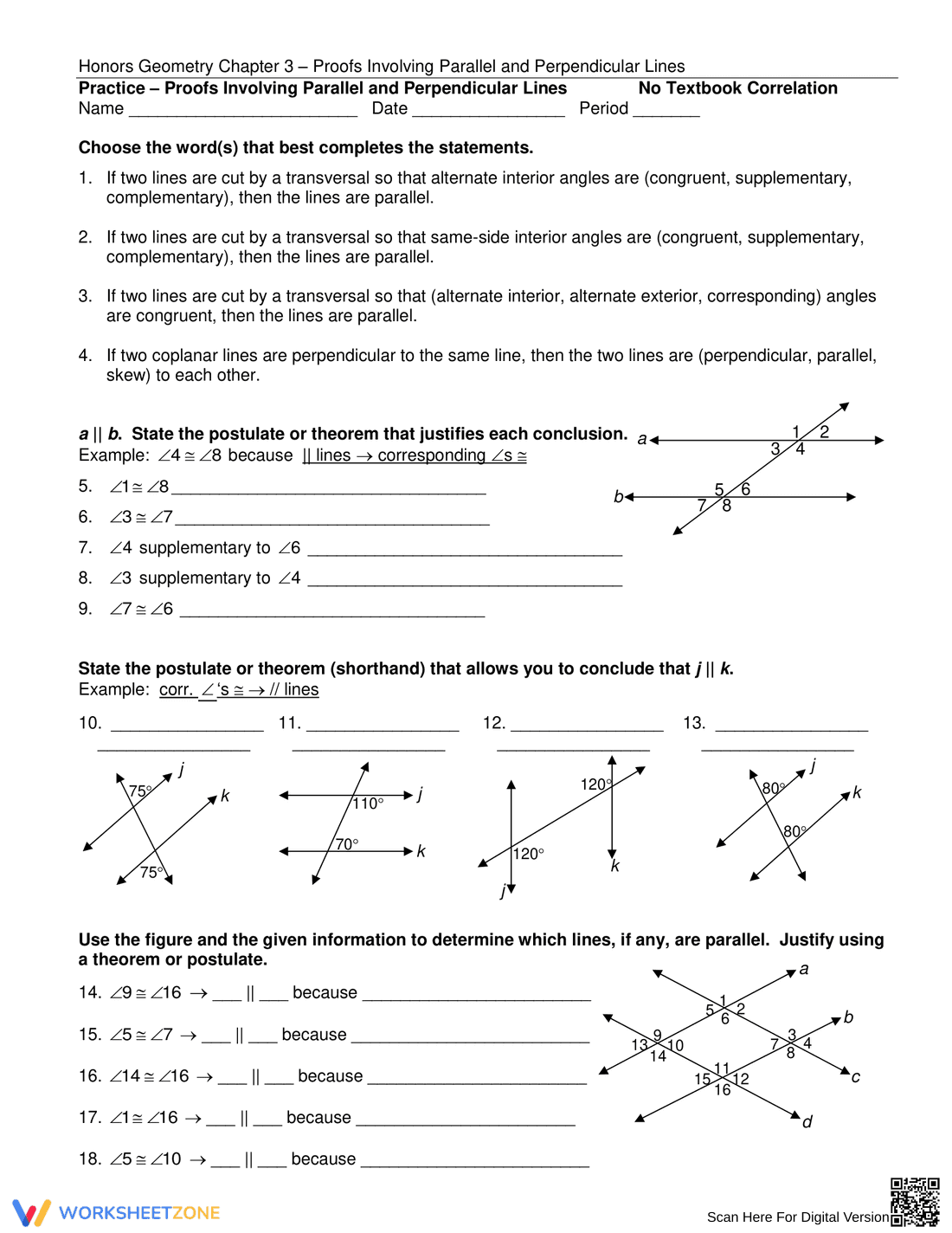
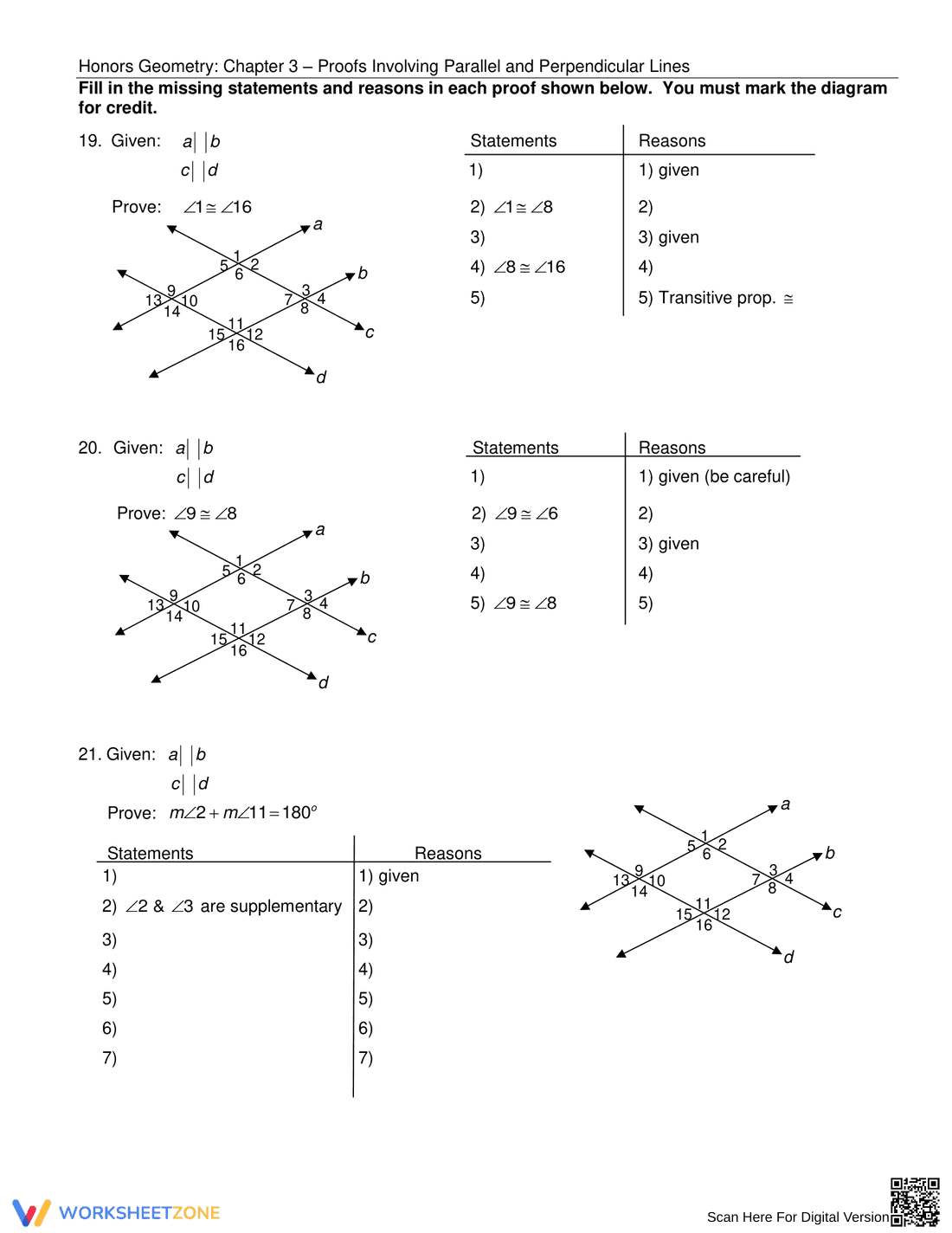
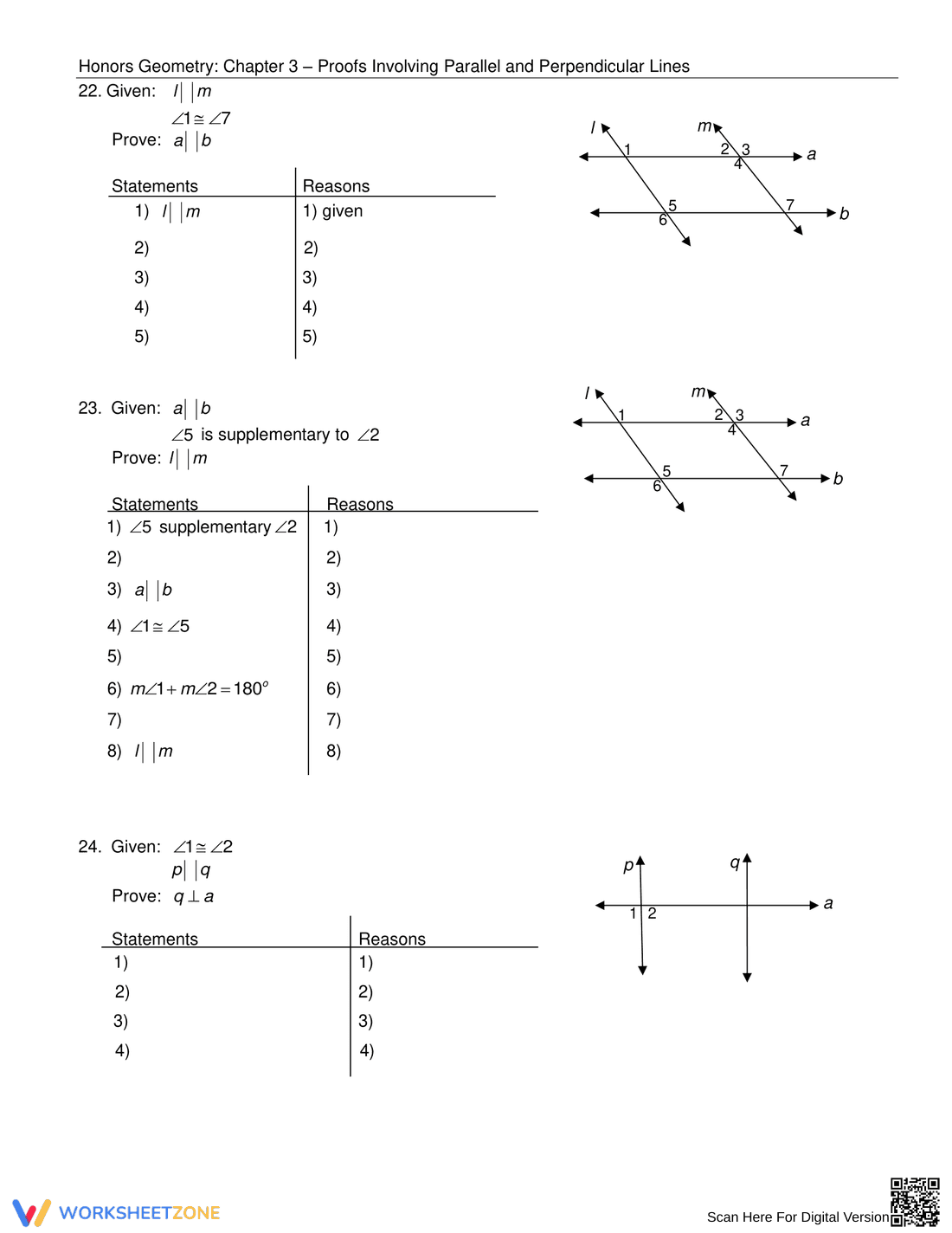
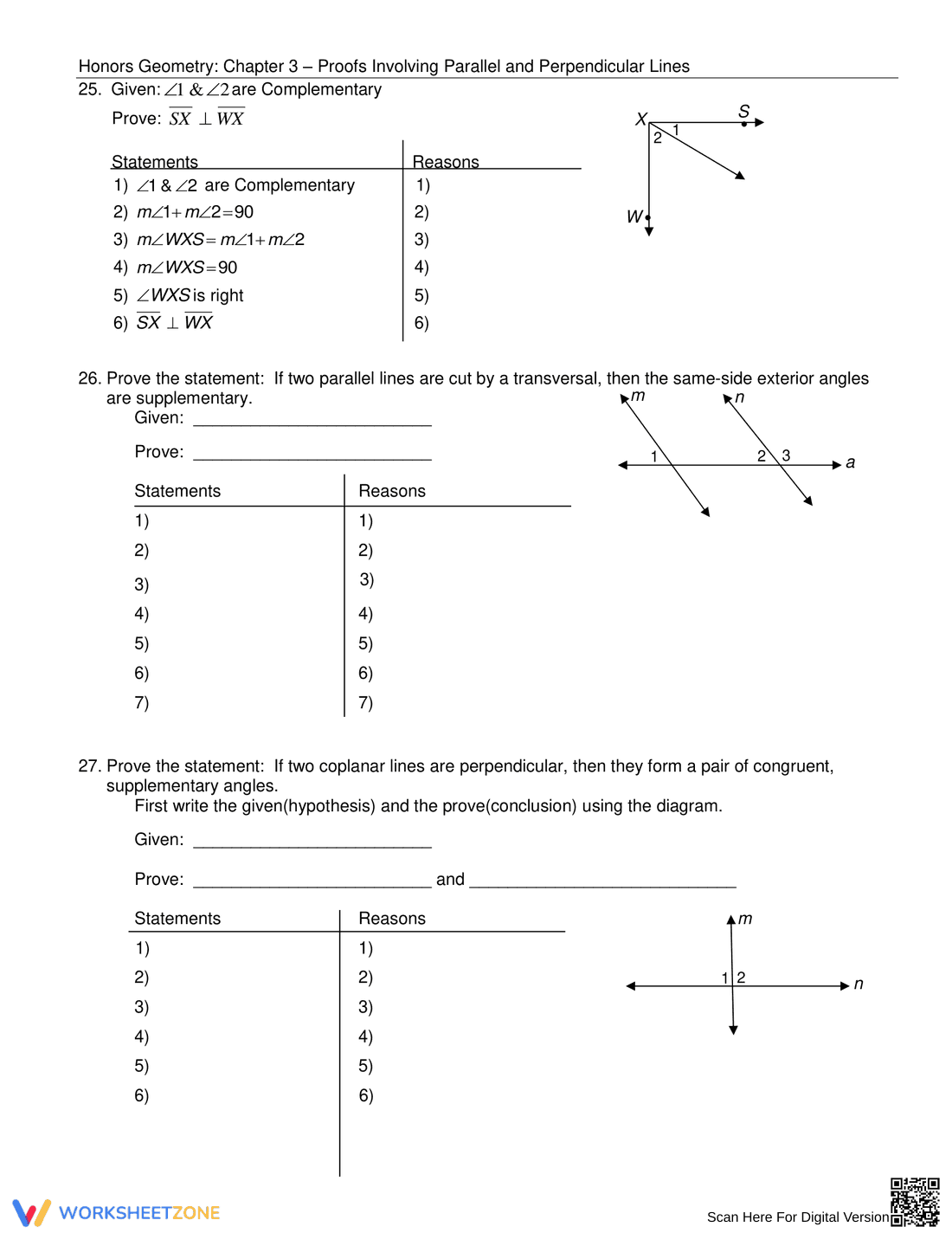
This is a geometry worksheet focusing on proofs involving parallel and perpendicular lines. It includes fill-in-the-blank statements about angles formed by transversals cutting parallel lines, asking students to choose the correct word (congruent, supplementary, etc.). There are problems where students must state the postulate or theorem that justifies a given conclusion about parallel lines based on angle relationships, and problems where students are given angle measures and must determine if lines are parallel, justifying their answer with a theorem or postulate. The worksheet includes diagrams with numbered angles and labeled lines.
Grade Level Suitability:
This worksheet is suitable for high school geometry, specifically grades 9-10. The concepts of parallel and perpendicular lines, transversals, angle relationships (alternate interior, corresponding, supplementary), and geometric proofs are typically covered in these grades.
Why Use It:
This worksheet reinforces understanding of angle relationships formed when parallel lines are cut by a transversal. It helps students learn to apply postulates and theorems to prove lines are parallel or perpendicular. It also strengthens logical reasoning and deductive skills in a geometric context.
How to Use It:
Students should read each statement and fill in the blanks with the correct term. For problems involving diagrams, they should analyze the given information (angle measures or relationships) and use their knowledge of postulates and theorems to determine if lines are parallel, justifying their answer. Students may need to refer to their textbook or notes for definitions and theorems.
Target Users:
This worksheet is intended for high school geometry students who are learning about parallel and perpendicular lines, transversals, and angle relationships. It is also suitable for students who need extra practice with geometric proofs.
This is a geometry worksheet focusing on proofs involving parallel and perpendicular lines. It includes fill-in-the-blank statements about angles formed by transversals cutting parallel lines, asking students to choose the correct word (congruent, supplementary, etc.). There are problems where students must state the postulate or theorem that justifies a given conclusion about parallel lines based on angle relationships, and problems where students are given angle measures and must determine if lines are parallel, justifying their answer with a theorem or postulate. The worksheet includes diagrams with numbered angles and labeled lines.
Grade Level Suitability:
This worksheet is suitable for high school geometry, specifically grades 9-10. The concepts of parallel and perpendicular lines, transversals, angle relationships (alternate interior, corresponding, supplementary), and geometric proofs are typically covered in these grades.
Why Use It:
This worksheet reinforces understanding of angle relationships formed when parallel lines are cut by a transversal. It helps students learn to apply postulates and theorems to prove lines are parallel or perpendicular. It also strengthens logical reasoning and deductive skills in a geometric context.
How to Use It:
Students should read each statement and fill in the blanks with the correct term. For problems involving diagrams, they should analyze the given information (angle measures or relationships) and use their knowledge of postulates and theorems to determine if lines are parallel, justifying their answer. Students may need to refer to their textbook or notes for definitions and theorems.
Target Users:
This worksheet is intended for high school geometry students who are learning about parallel and perpendicular lines, transversals, and angle relationships. It is also suitable for students who need extra practice with geometric proofs.


