


























Views
Downloads

Printable 2-Digit Minus 1-Digit Subtraction | Grade 2 Math
Paste this activity's link or code into your existing LMS (Google Classroom, Canvas, Teams, Schoology, Moodle, etc.).
Students can open and work on the activity right away, with no student login required.
You'll still be able to track student progress and results from your teacher account.
This comprehensive Grade 2 subtraction worksheet provides targeted practice for mastering 2-digit minus 1-digit calculations. Students progress from simple no-regrouping problems to more challenging regrouping tasks, ensuring a solid foundation in vertical subtraction. By focusing on place value logic, students develop the fluency needed for mental math and multi-digit computation in higher grades.
At a Glance
- Grade: 2 · Subject: Math
- Standard:
CCSS.MATH.CONTENT.2.NBT.B.5— Fluently subtract within 100 using strategies based on place value and properties- Skill Focus: 2-Digit Minus 1-Digit Subtraction
- Format: 5 pages · 19 problems · Answer key included · PDF
- Best For: Daily morning work or independent practice
- Time: 15–20 minutes
What's Inside
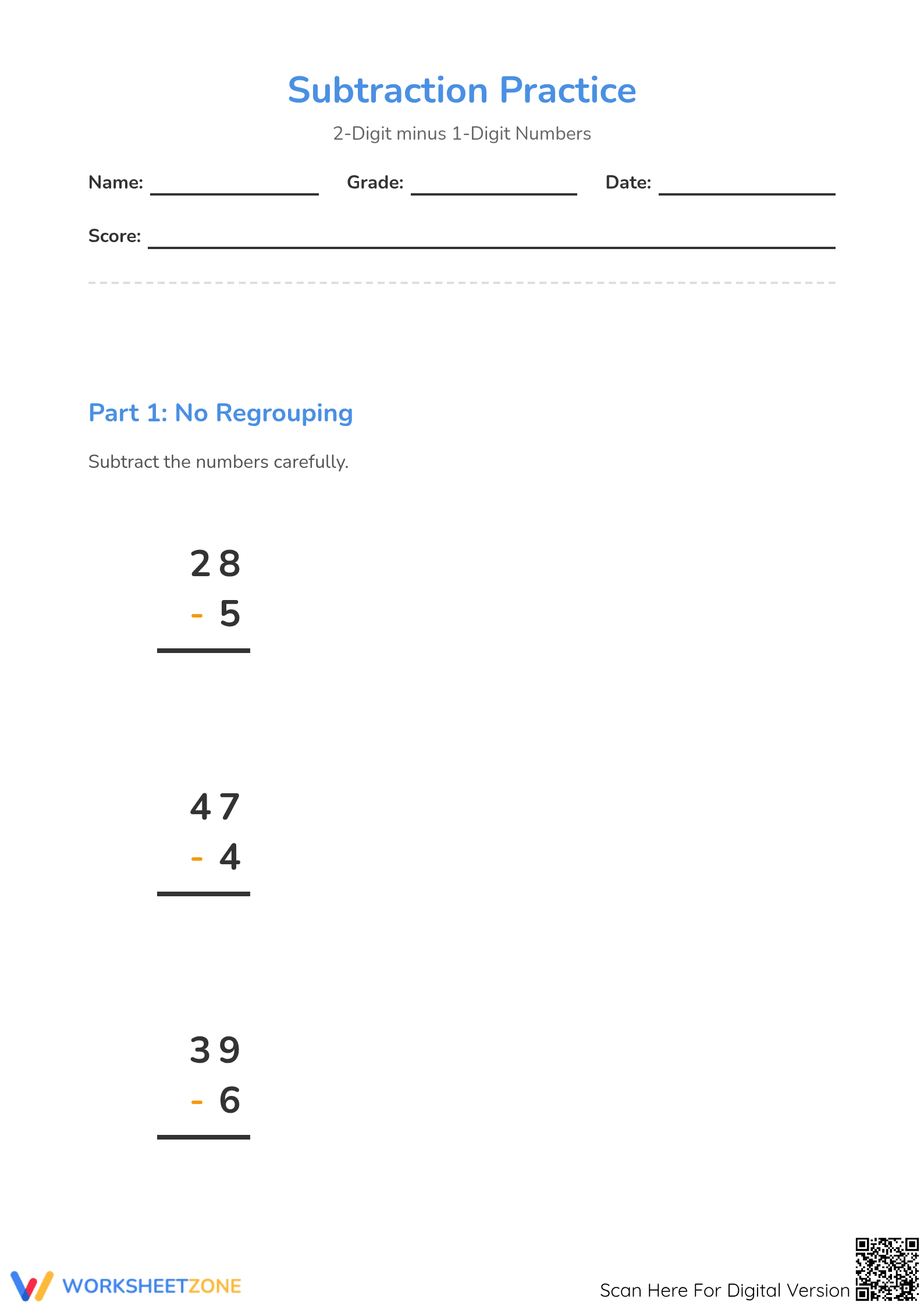
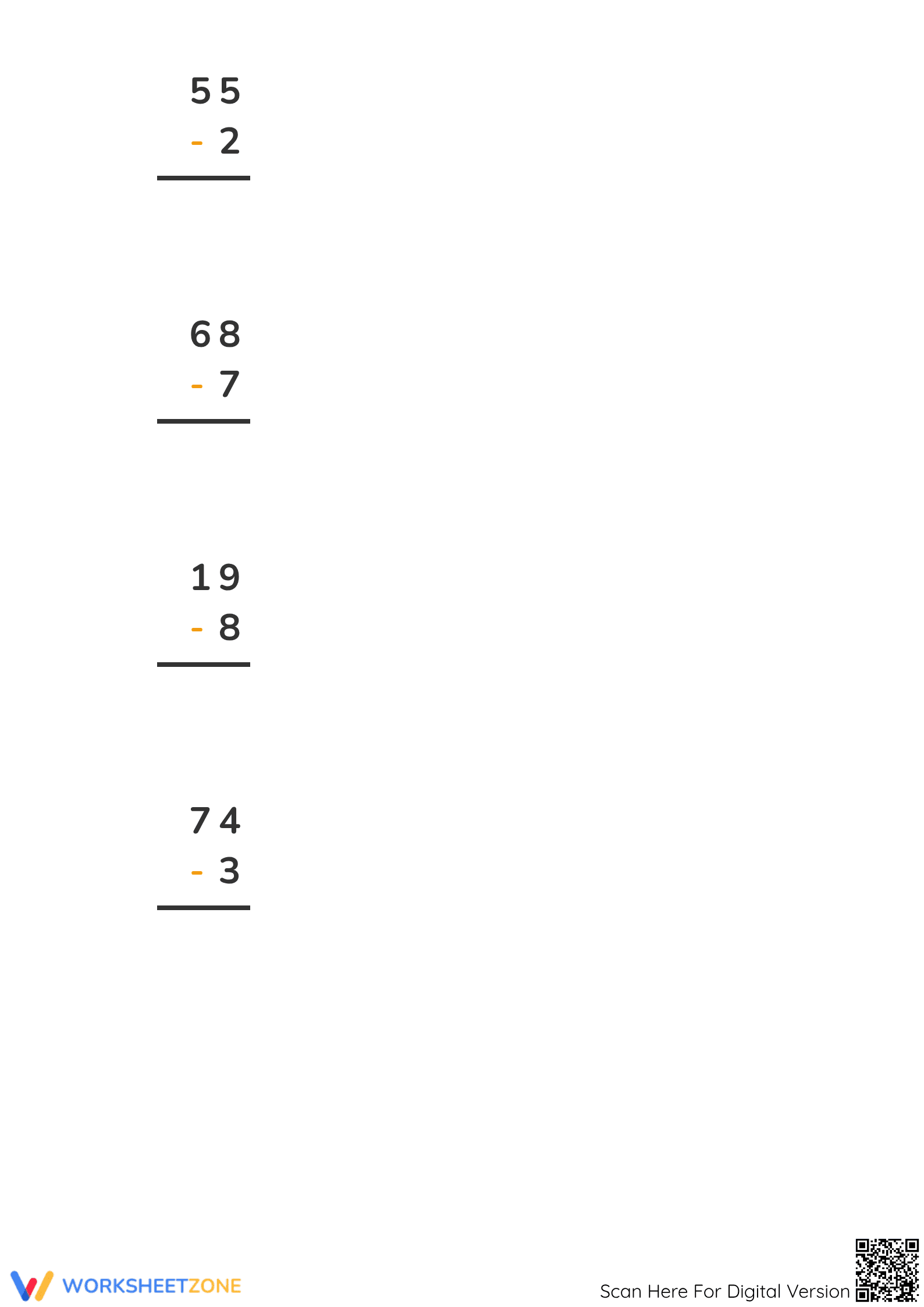
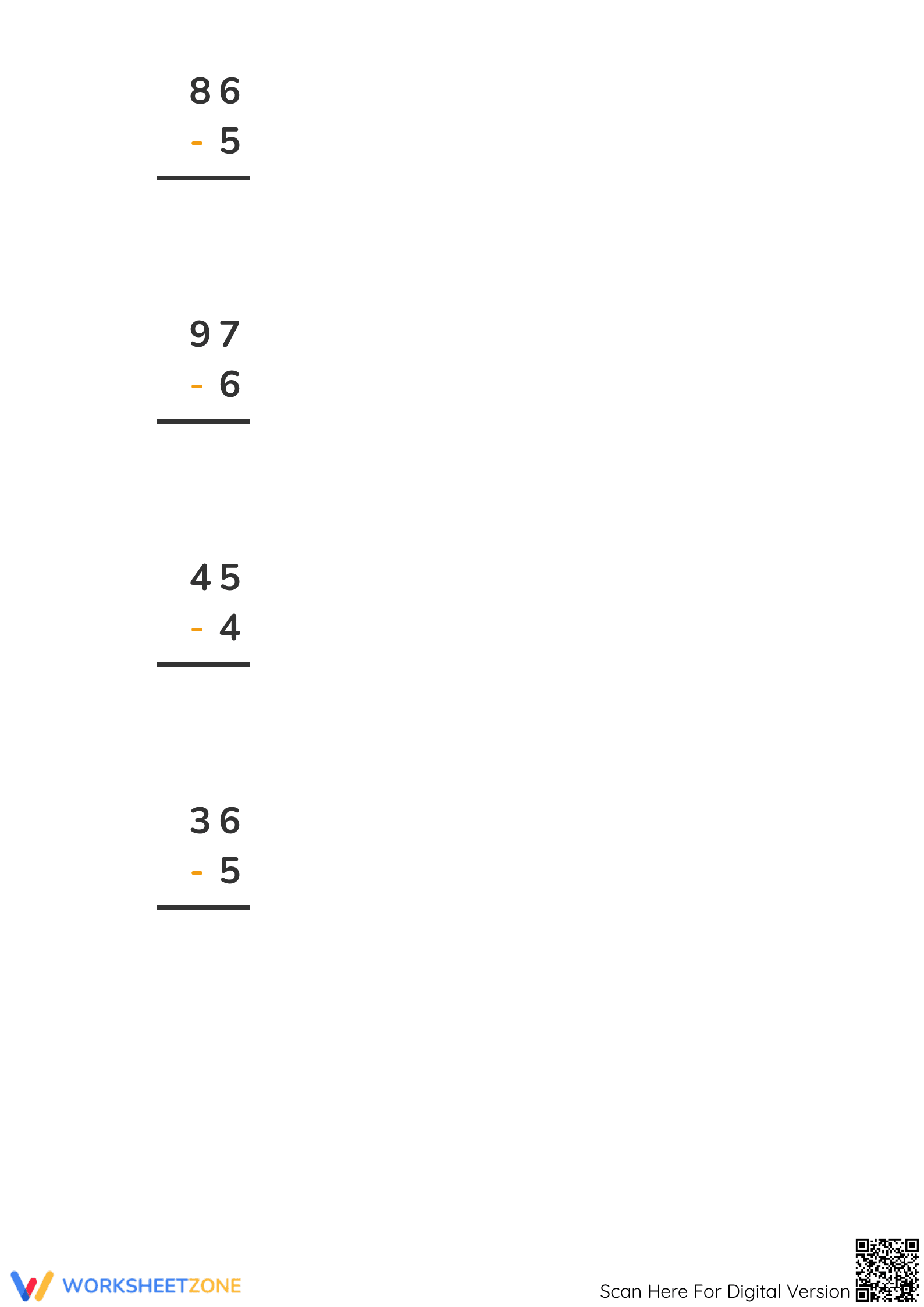
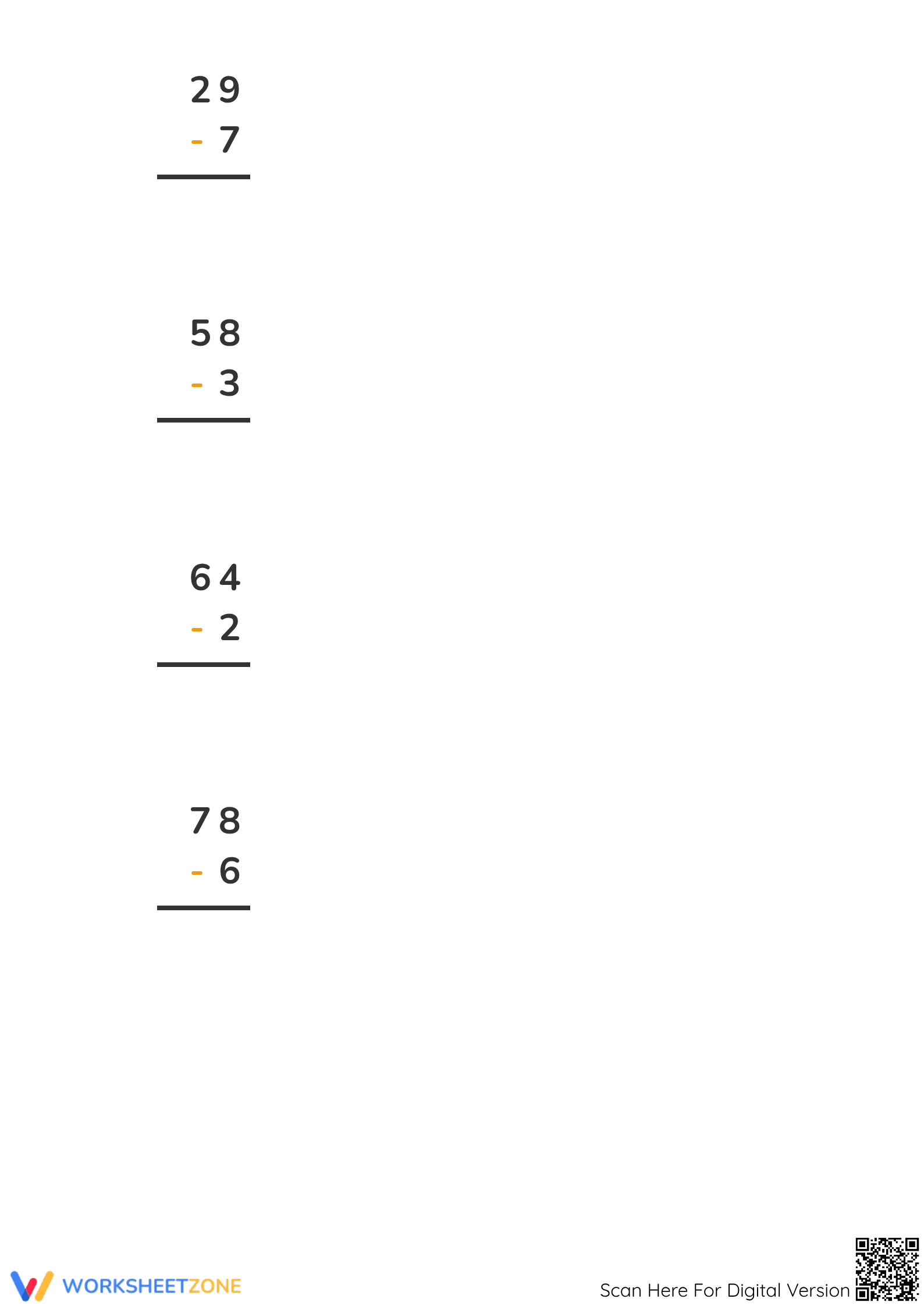
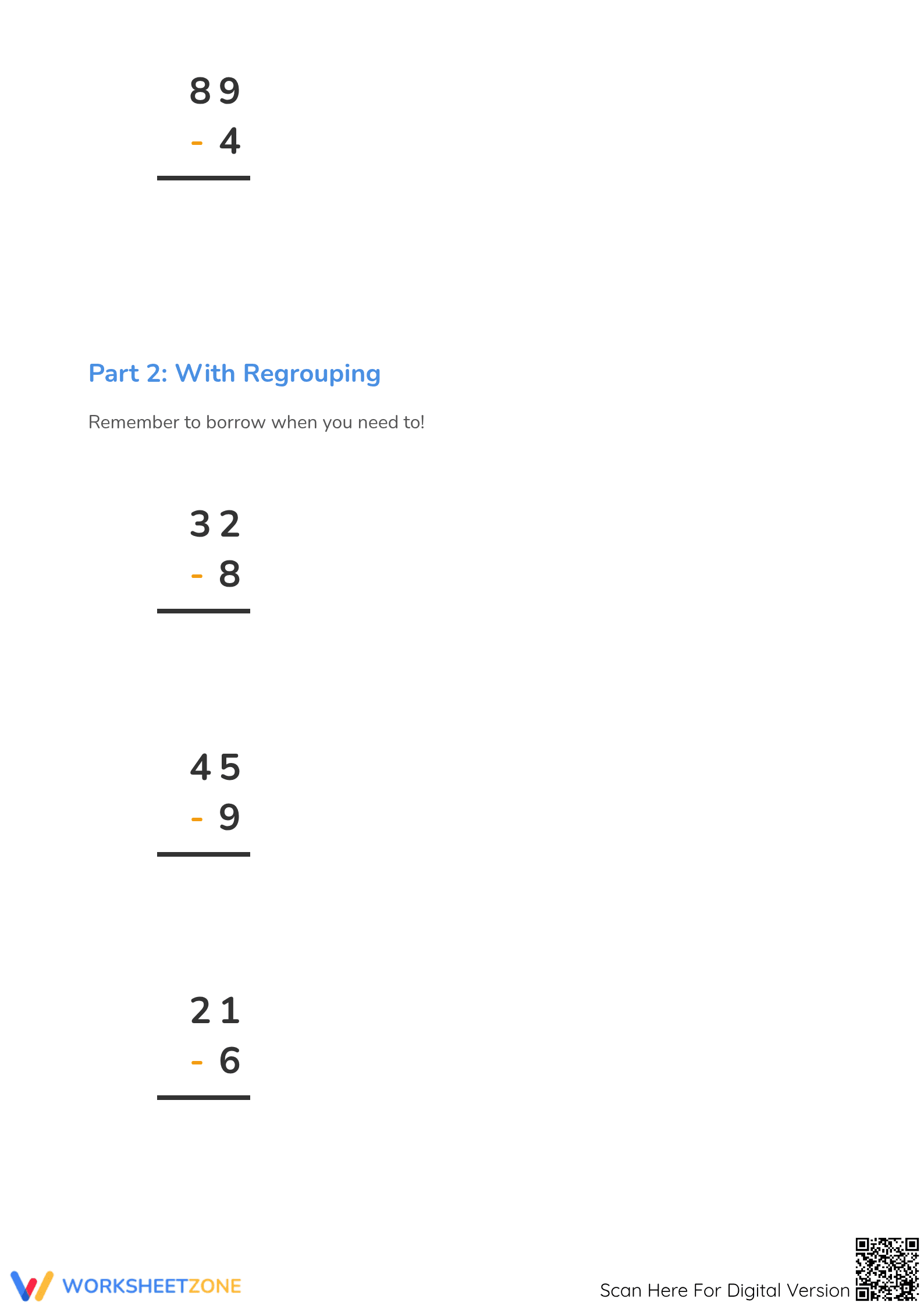
This 5-page PDF contains 19 vertical subtraction problems. Part 1 features 16 problems with no regrouping, building confidence in place value alignment. Part 2 introduces 3 problems requiring regrouping, providing a gentle transition to borrowing logic. A complete answer key is included for quick grading and immediate student feedback.
Skill Progression
- Guided Practice: The first page features 3 large-print problems without regrouping to model correct vertical alignment and column-by-column subtraction.
- Supported Practice: Pages 2 through 4 offer 12 additional no-regrouping problems, reinforcing the pattern of subtracting the ones place first.
- Independent Practice: The final page introduces regrouping with a "Remember to borrow" cue, challenging students to apply their understanding of tens and ones to 3 more complex problems.
This "I Do, We Do, You Do" structure ensures students master the basic mechanic before tackling conceptual shifts.
Standards Alignment
The primary standard is `CCSS.MATH.CONTENT.2.NBT.B.5`: "Fluently subtract within 100 using strategies based on place value, properties of operations, and/or the relationship between addition and subtraction." This worksheet targets the subtraction component by scaffolding difficulty from simple vertical problems to regrouping. This code can be copied directly into lesson plans or IEP goals.
How to Use It
Use this during independent practice for multi-digit subtraction lessons. It works well as a "Do Now" to assess knowledge before 2-digit minus 2-digit subtraction. For formative assessment, observe students in Part 2; if they struggle to regroup, provide base-ten manipulatives. Completion time is 15 to 20 minutes.
Who It's For
Designed for Grade 2 students learning vertical subtraction, it also serves as intervention for Grade 3 learners needing place value support. It pairs naturally with an anchor chart or direct instruction to help students visualize the borrowing process in the final section.
Research from Fisher & Frey (2014) emphasizes that the gradual release of responsibility model is critical for mathematical fluency, particularly when students transition from procedural no-regrouping tasks to conceptual regrouping challenges. This worksheet implements this findings by providing sixteen scaffolded repetitions of basic vertical alignment before introducing the "borrowing" mechanic in a separate section. According to the RAND AIRS 2024 report on mathematics instructional materials, high-quality printable resources must prioritize clear visual spacing and direct alignment to state standards like CCSS.MATH.CONTENT.2.NBT.B.5. By isolating 2-digit minus 1-digit subtraction, this resource allows students to focus on the specific logic of place value without the cognitive load of larger multi-digit numbers. This targeted approach is proven to decrease mathematical anxiety while increasing the rate of procedural mastery in early elementary learners, making it a staple for any data-driven second-grade classroom environment.


