


























Views
Downloads

Rhyming Words Worksheet | Grade K Printable
Paste this activity's link or code into your existing LMS (Google Classroom, Canvas, Teams, Schoology, Moodle, etc.).
Students can open and work on the activity right away, with no student login required.
You'll still be able to track student progress and results from your teacher account.
This Kindergarten rhyming words worksheet helps early readers build essential phonological awareness by identifying and producing rhymes. By practicing with familiar word families like "-ell" and "-at," young students develop the critical auditory discrimination skills necessary for future reading fluency and decoding success.
At a Glance
- Grade: Kindergarten · Subject: ELA
- Standard:
CCSS.ELA-LITERACY.RF.K.2.A— Recognize and produce rhyming words- Skill Focus: Rhyming and Word Families
- Format: 3 pages · 13 problems · Answer key included · PDF
- Best For: Independent practice or centers
- Time: 15–20 minutes
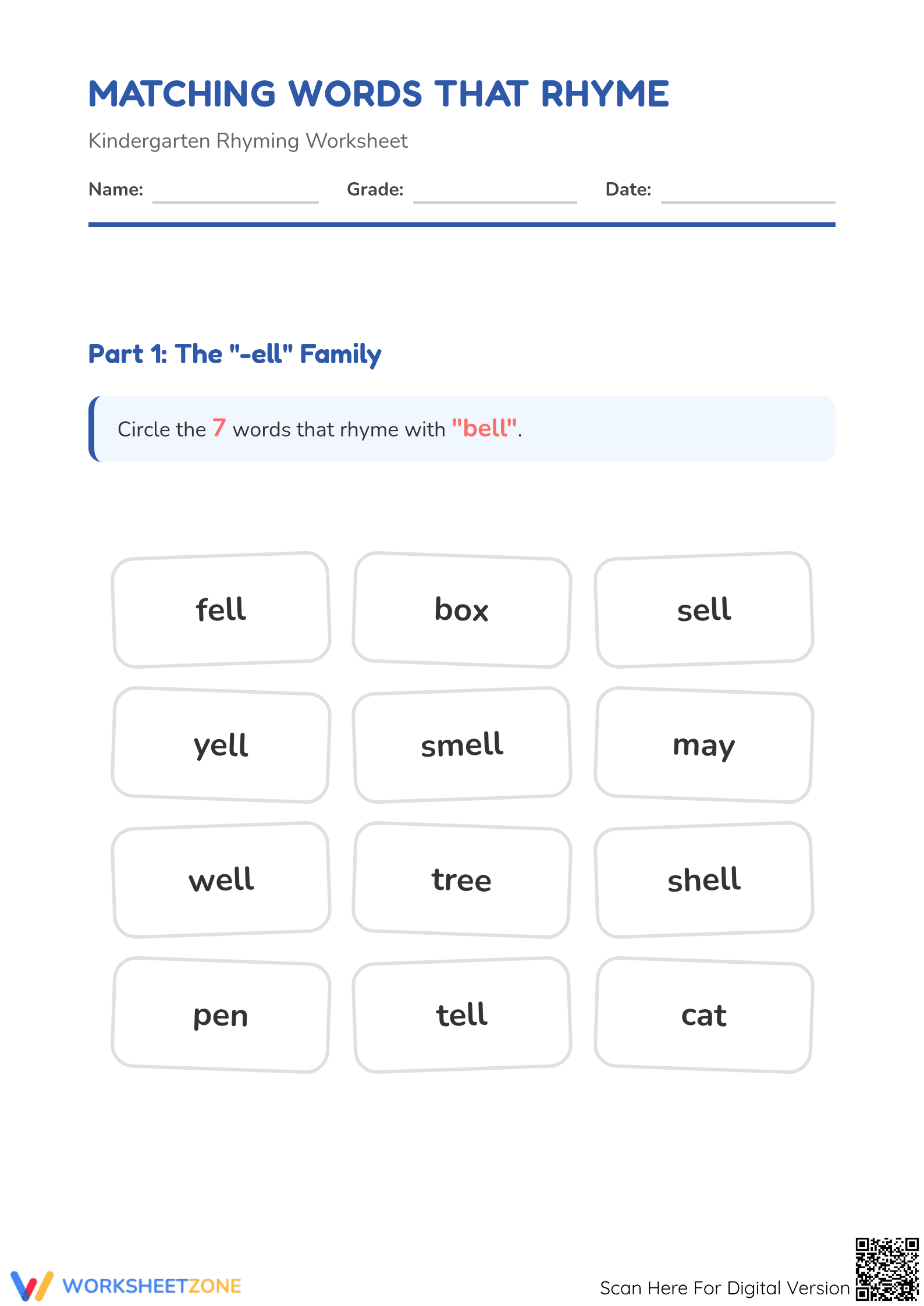
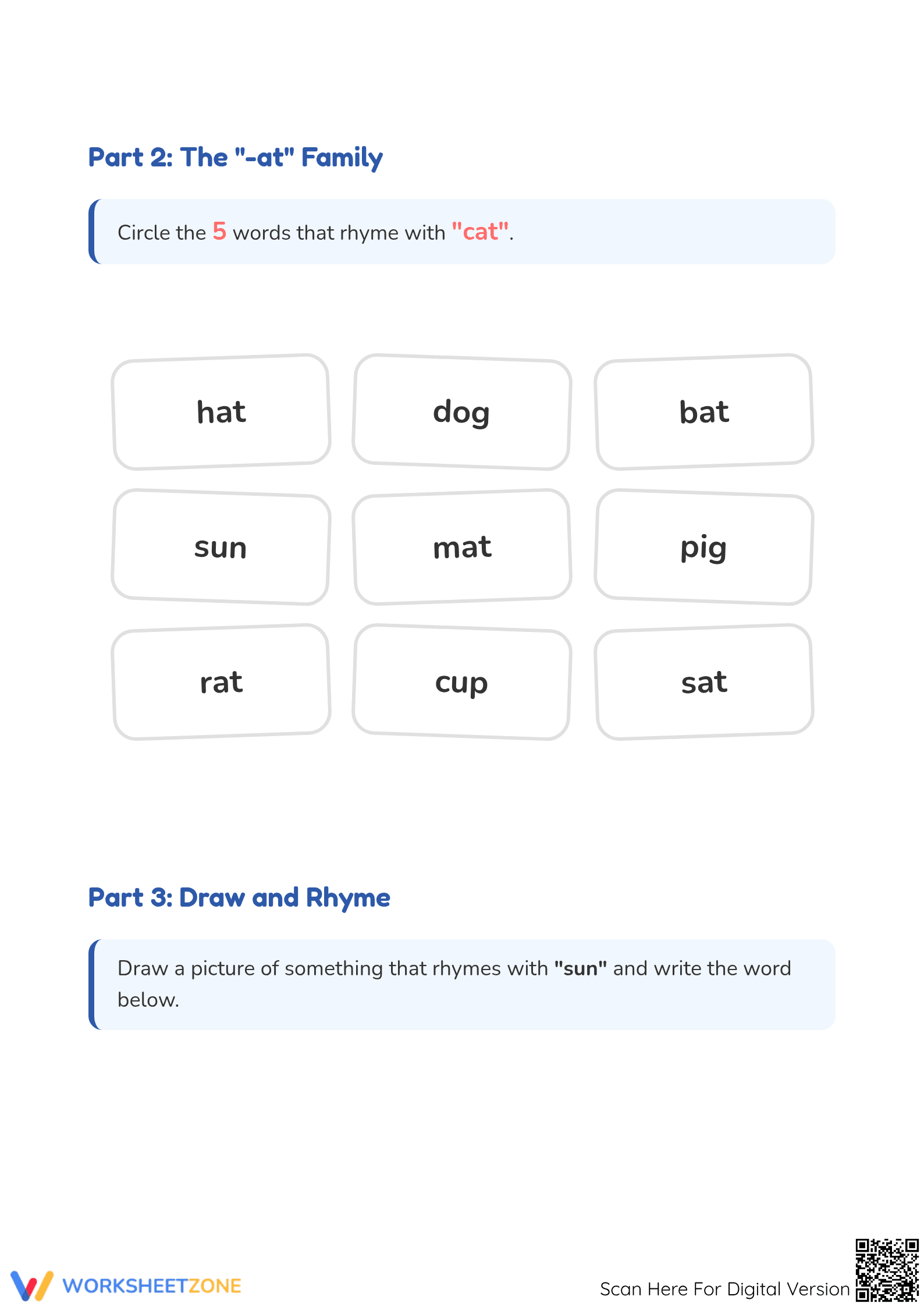
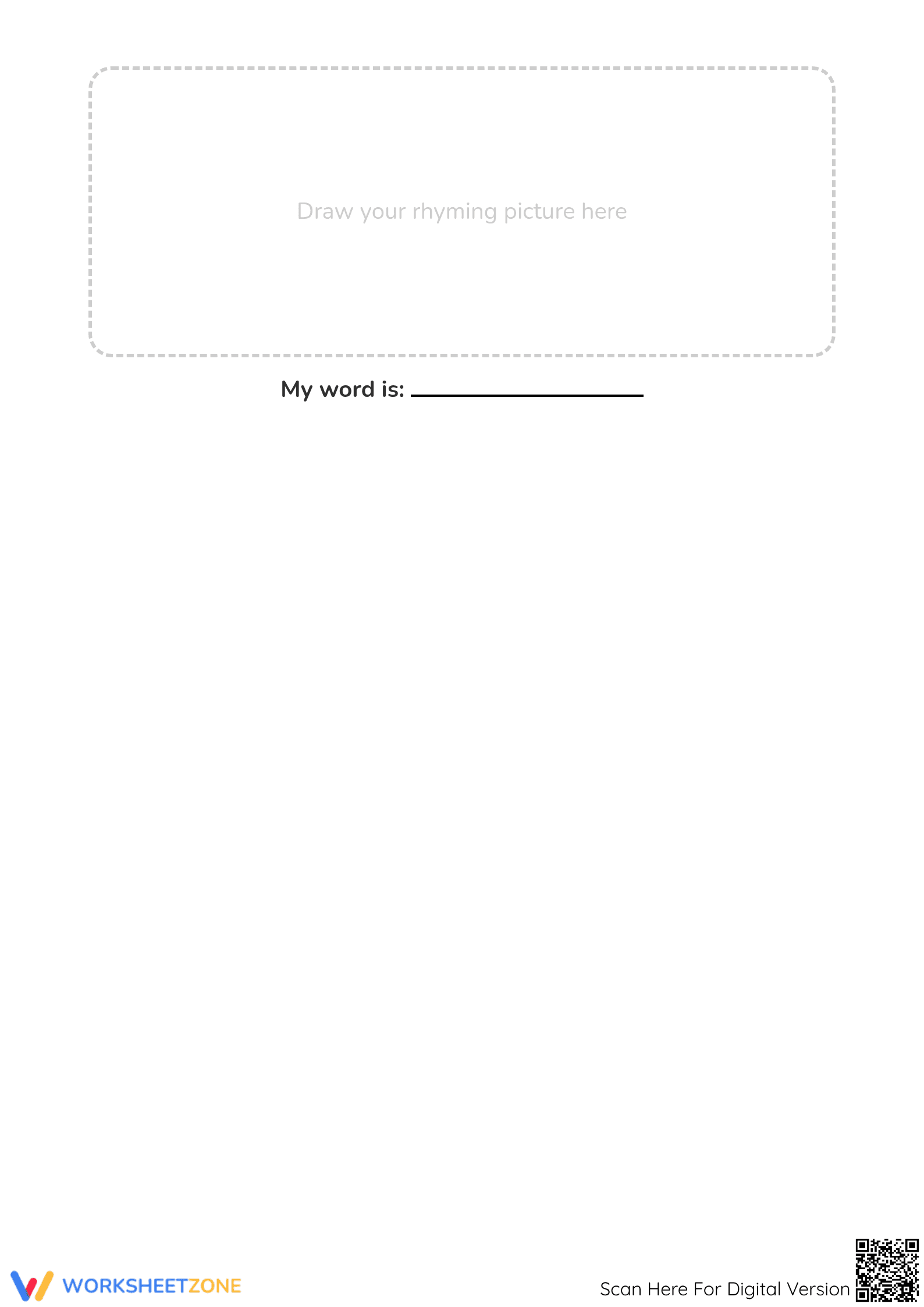
This three-page printable includes three distinct parts to reinforce rhyming concepts. Students will first circle words that rhyme with a target word from a field of twelve options. Next, they tackle a similar identification task with a different word family. Finally, the worksheet provides a creative application section where learners draw a picture of a rhyming word and write the corresponding text. A complete answer key is provided for quick grading.
- Guided practice: The first section focuses on the "-ell" family, offering 7 correct matches out of 12 words to build initial confidence.
- Supported practice: The second section shifts to the "-at" family, requiring students to find 5 rhyming matches among 9 options.
- Independent practice: The final task asks students to independently generate, draw, and write a word that rhymes with "sun."
This gradual-release approach ensures students move smoothly from recognizing rhymes to producing them on their own.
This resource is directly aligned to CCSS.ELA-LITERACY.RF.K.2.A, requiring students to recognize and produce rhyming words. It also supports foundational phonics skills by exposing children to common spelling patterns in CVC and CCVC words. Both standard codes can be copied directly into lesson plans, IEP goals, or district curriculum mapping tools.
Deploy this worksheet during literacy centers after a whole-group read-aloud focused on rhyming books. It also serves as an excellent morning work activity to activate prior knowledge. While students are working, observe whether they are sounding out the words aloud or relying purely on visual spelling patterns—this formative assessment data can guide future phonics instruction. Most students will complete the activities within 15 to 20 minutes.
This resource is designed for Kindergarten students developing early phonological awareness, but it also works well for Preschoolers ready for a challenge or First Graders needing a quick review. For students requiring extra support, provide a physical anchor chart of word families to reference during the activity. Pair this worksheet with hands-on rhyming matching cards for a comprehensive literacy block.
Mastering the ability to recognize and produce rhyming words, as outlined in CCSS.ELA-LITERACY.RF.K.2.A, is a critical milestone in early childhood literacy. According to a comprehensive EdReports 2024 analysis of foundational reading skills, explicit instruction in phonological awareness, including rhyming, significantly predicts later reading and spelling achievement. When children manipulate sounds and identify rhyming patterns, they are actively building the neural pathways required for decoding complex text. This worksheet provides the targeted, repetitive practice necessary to solidify these auditory skills before students transition to more advanced phonics concepts. By combining visual identification with creative production, educators can ensure that learners are not just memorizing word shapes, but truly understanding the phonetic structures that make up our language. Consistent practice with rhyming word families lays the groundwork for lifelong reading fluency.


