




























Views
Downloads
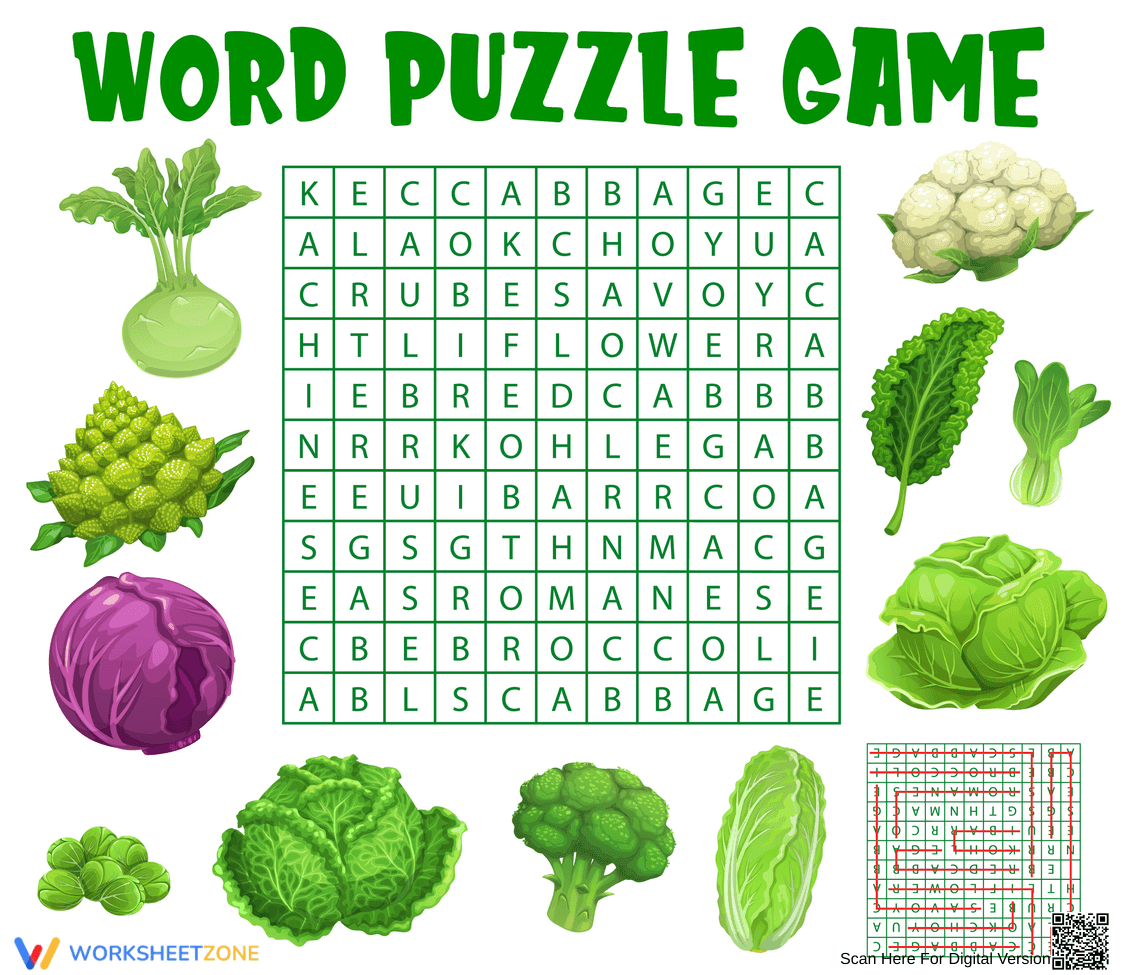

Printable Vegetable Word Search | Grade 2

Paste this activity's link or code into your existing LMS (Google Classroom, Canvas, Teams, Schoology, Moodle, etc.).
Students can open and work on the activity right away, with no student login required.
You'll still be able to track student progress and results from your teacher account.
This printable vegetable word search helps early elementary students build vocabulary and reinforce spelling patterns. By scanning for specific plant names, learners practice identifying consonant clusters and vowel combinations in a highly visual context. The activity strengthens word recognition while keeping students engaged with colorful illustrations.
At a Glance
- Grade: 2 · Subject: ELA
- Standard:
CCSS.ELA-LITERACY.L.2.2— Apply spelling patterns and vocabulary skills- Skill Focus: Spelling and Vocabulary
- Format: 1 page · 8 problems · Answer key included · PDF
- Best For: Independent practice
- Time: 10–15 minutes
This single-page resource features a grid-based word puzzle surrounded by vibrant illustrations of various vegetables, such as cabbage, broccoli, and cauliflower. Students must locate and circle eight specific vocabulary terms hidden horizontally, vertically, and diagonally. A convenient miniature answer key is provided in the bottom corner for quick reference, making self-checking straightforward.
Zero-Prep Workflow
This resource requires absolutely no teacher setup. Follow these three simple steps:
- Print (1 minute): Generate copies of the single-page PDF for your entire class.
- Distribute (1 minute): Hand out the sheets along with highlighters or pencils.
- Review (3 minutes): Use the built-in answer key to quickly verify student work or allow them to self-correct.
With a total prep time of under two minutes, this activity is an excellent addition to any emergency sub plan or morning work routine.
Standards Alignment
This activity aligns with CCSS.ELA-LITERACY.L.2.2, requiring students to demonstrate command of standard English spelling conventions. As they search for complex vegetable names, they actively process letter sequences and phonetic patterns. Both standard codes can be copied directly into lesson plans, IEP goals, or district curriculum mapping tools.
How to Use It
Deploy this puzzle during morning work to settle students into the day, or use it as a fast-finisher activity during a broader language arts block. While students work, teachers can observe how quickly they identify starting letters and track their visual scanning strategies. Most students will complete the search within 10 to 15 minutes.
Who It's For
This worksheet is designed for first through third-grade students developing their foundational reading and spelling skills. Visual learners benefit greatly from the accompanying vegetable illustrations, which provide context clues for the target words. Pair this puzzle with a science lesson on plants or a read-aloud about healthy eating to reinforce the vocabulary across different subjects.
Integrating visual puzzles into literacy instruction offers measurable benefits for early readers. According to Fisher & Frey (2014), activities that require active visual scanning and pattern recognition significantly improve students' orthographic mapping capabilities. When learners engage with this material, they are directly applying the skills outlined in CCSS.ELA-LITERACY.L.2.2 to apply spelling patterns and vocabulary skills. By repeatedly exposing students to specific consonant clusters and vowel combinations within a structured grid, educators facilitate deeper cognitive retention of complex words like "cauliflower" and "broccoli." This method transforms passive reading into an active search-and-identify mission, reinforcing the neural pathways responsible for spelling accuracy. Such targeted practice ensures that foundational literacy skills are solidified through engaging, low-stakes repetition, ultimately supporting broader reading fluency and writing proficiency in the elementary classroom.


