


























Views
Downloads


Essential Word Problems Worksheet | Grade 2 Math Ready
Paste this activity's link or code into your existing LMS (Google Classroom, Canvas, Teams, Schoology, Moodle, etc.).
Students can open and work on the activity right away, with no student login required.
You'll still be able to track student progress and results from your teacher account.
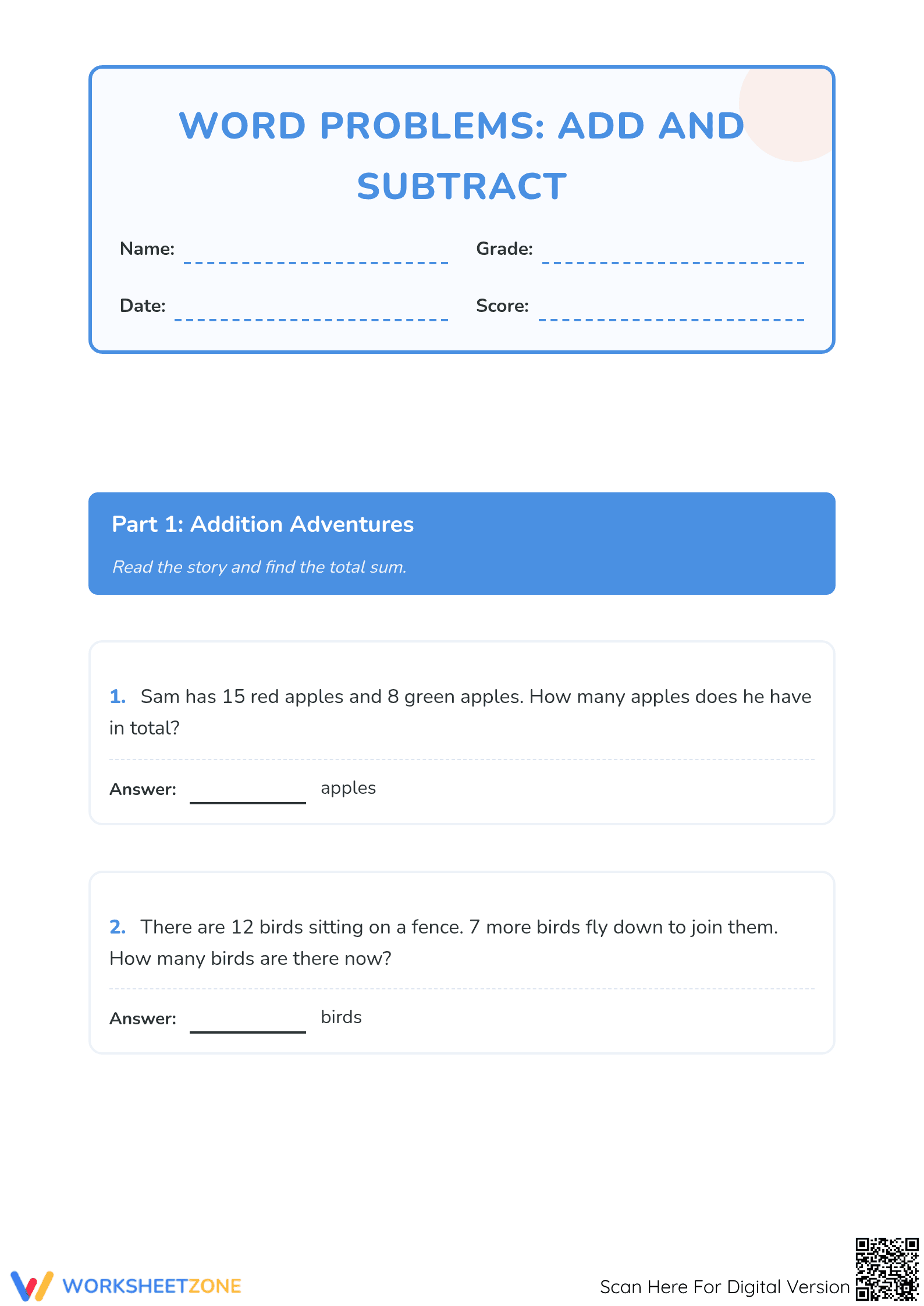
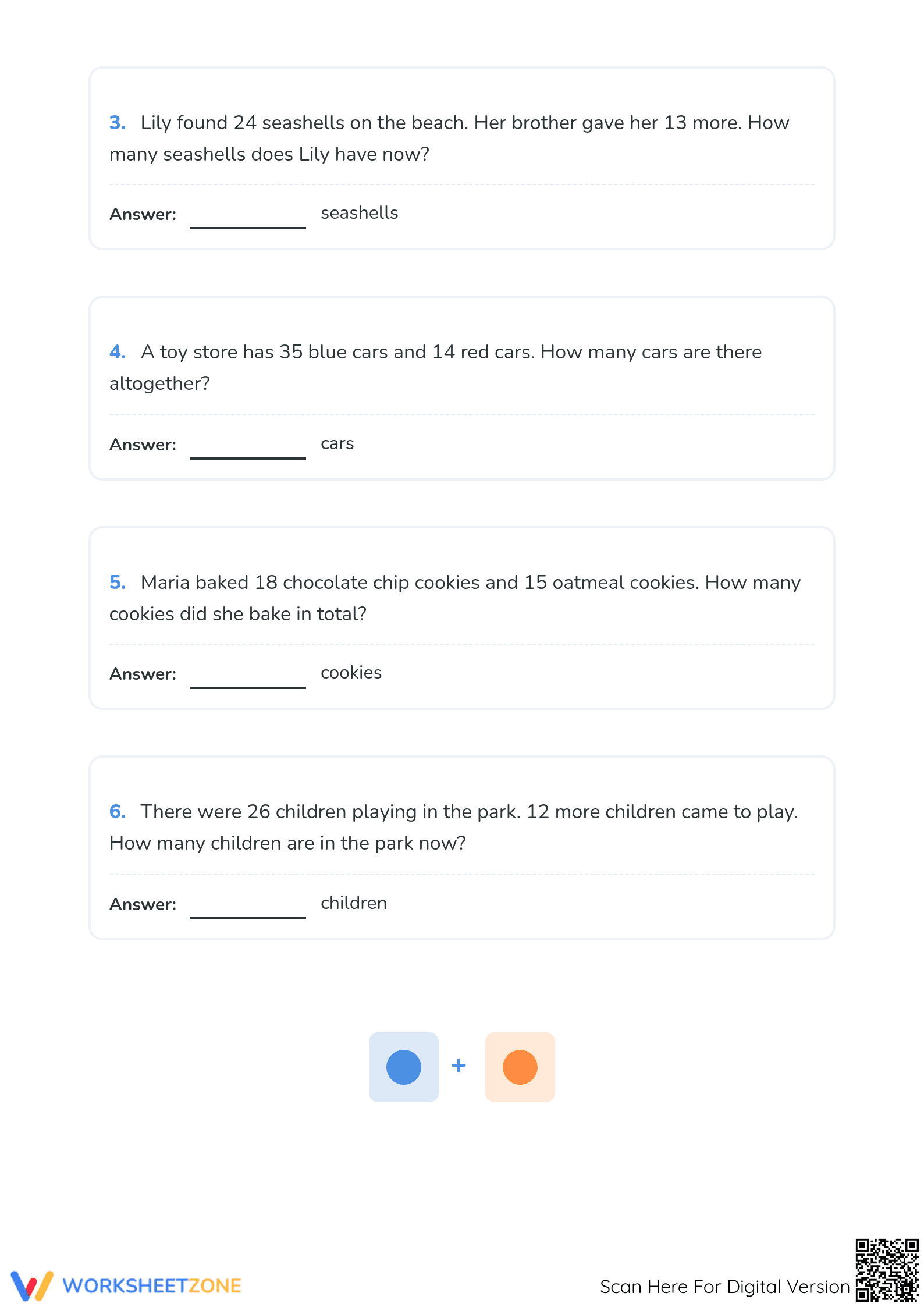
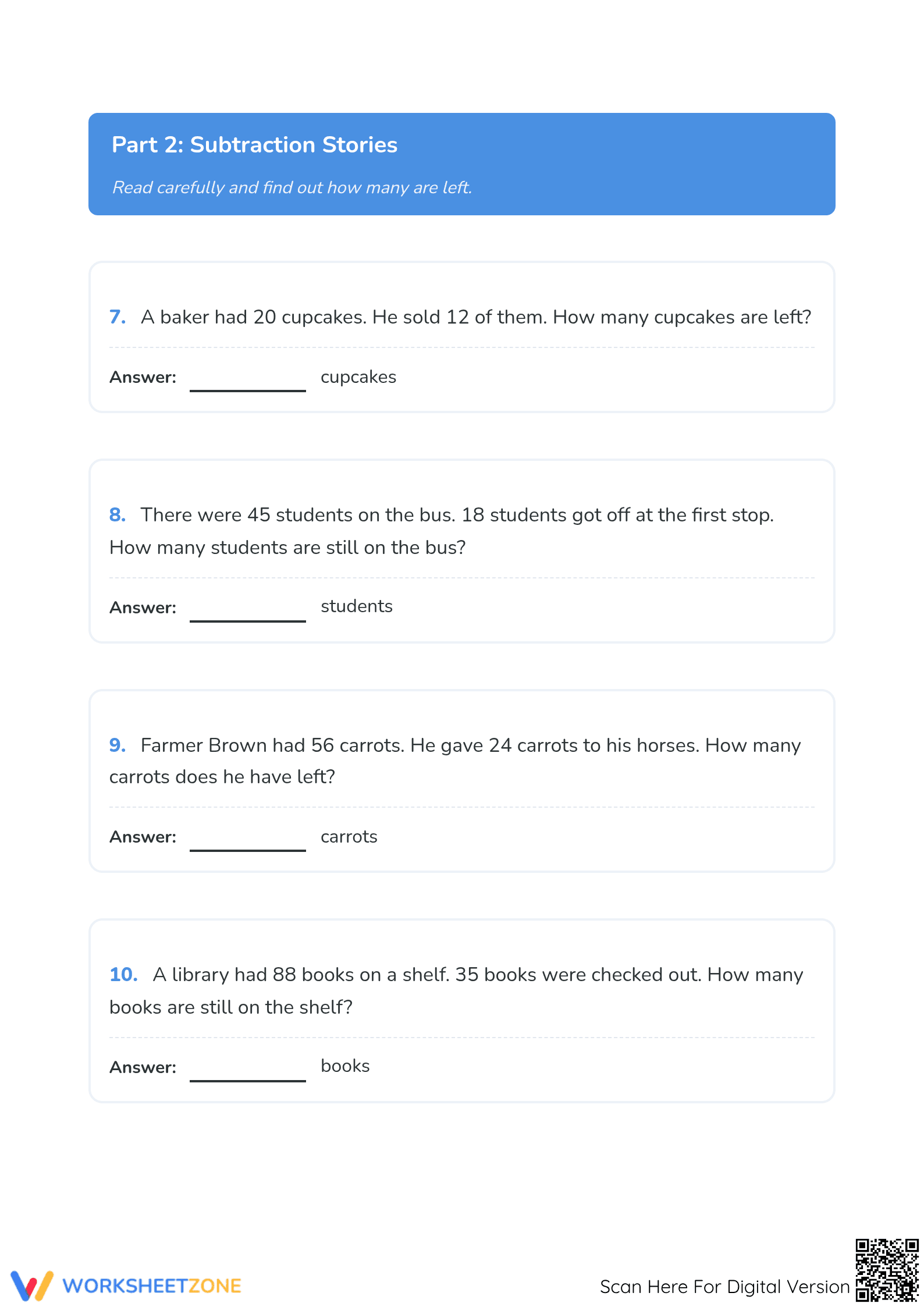
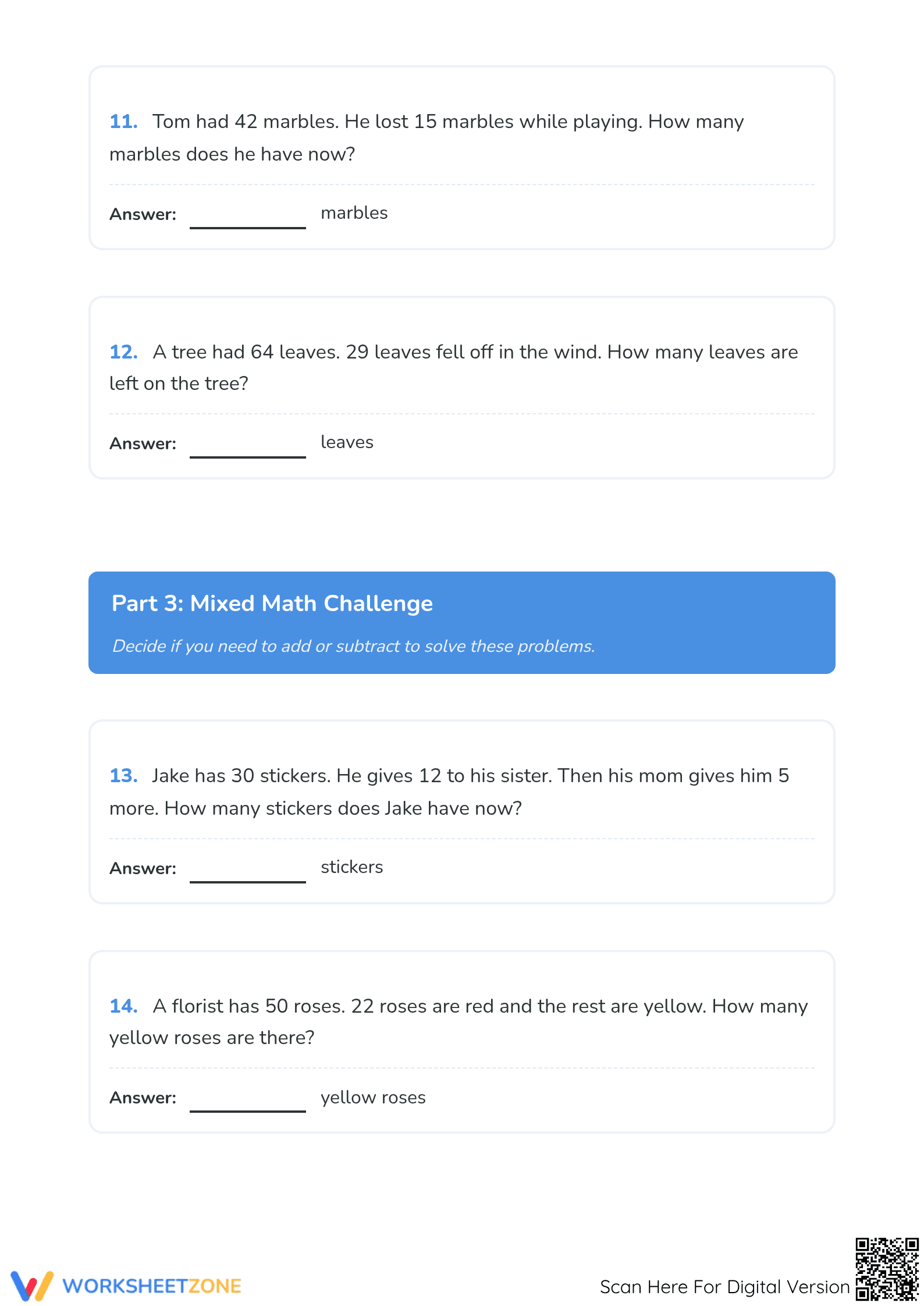
This comprehensive Grade 2 math worksheet helps students master one- and two-step word problems involving addition and subtraction within 100. By engaging with realistic story scenarios, learners develop the critical thinking skills needed to identify operations and solve complex equations. This resource ensures students achieve confidence in math.
At a Glance
- Grade: 2 · Subject: Math
- Standard:
CCSS.MATH.CONTENT.2.OA.A.1— Use addition and subtraction to solve one- and two-step word problems- Skill Focus: Addition and Subtraction Word Problems
- Format: 5 pages · 18 problems · Answer key included · PDF
- Best For: Independent practice, homework reinforcement, and morning work
- Time: 30–45 minutes of focused instruction
This 5-page packet features 18 unique word problems divided into three targeted sections: Addition Adventures, Subtraction Stories, and a Mixed Math Challenge. Each problem provides ample workspace for students to write their calculations and final answers. A complete answer key is provided at the end of the document, making grading quick and efficient for busy educators.
Zero-Prep Workflow
Teachers can implement this resource in under two minutes with a simple three-step process. First, print the desired number of copies (1 minute). Second, distribute the packets during independent work time or as a sub-plan activity (30 seconds). Third, use the included answer key to review student work or facilitate self-correction (30 seconds). This streamlined workflow minimizes administrative burden while maximizing instructional time.
Standards Alignment
The primary focus of this worksheet is CCSS.MATH.CONTENT.2.OA.A.1, which requires students to use addition and subtraction within 100 to solve one- and two-step word problems involving situations of adding to, taking from, putting together, taking apart, and comparing. Students practice representing these situations with drawings and equations. Both standard codes can be copied directly into lesson plans, IEP goals, or district curriculum mapping tools.
How to Use It
Incorporate this worksheet during the independent practice phase of your math block to assess students' ability to translate text into numerical operations. For a formative-assessment observation, walk through the classroom and note which students struggle to identify the correct operation in the "Mixed Math Challenge" section. This packet is best used after direct instruction on regrouping strategies and typically takes 35 minutes to complete.
Who It's For
This resource is designed for Grade 2 students but serves as an excellent enrichment tool for Grade 1 advanced learners or a remedial review for Grade 3 students. The story-based format is particularly helpful for English Language Learners who are practicing mathematical vocabulary. Pair this worksheet with a set of base-ten blocks or a hundreds chart to provide additional tactile support for struggling learners.
According to the RAND AIRS 2024 report, providing students with structured practice in word problem solving is a proven method for bridging the gap between computational fluency and conceptual application. This Grade 2 worksheet targets the CCSS.MATH.CONTENT.2.OA.A.1 standard, requiring learners to navigate linguistic cues to determine if addition or subtraction is necessary. By presenting 18 varied scenarios—including "Addition Adventures" and "Subtraction Stories"—the curriculum encourages students to visualize mathematical relationships rather than relying on rote memorization. Fisher & Frey (2014) emphasize that guided practice in decoding situational math problems is essential for developing the higher-order thinking skills required for late elementary mathematics. This document provides the necessary scaffolding to ensure that students can accurately quote numerical evidence from a story and explain their operational choices. This targeted approach leads to sustained mastery of base-ten operations and improved problem-solving outcomes.


