


























Views
Downloads
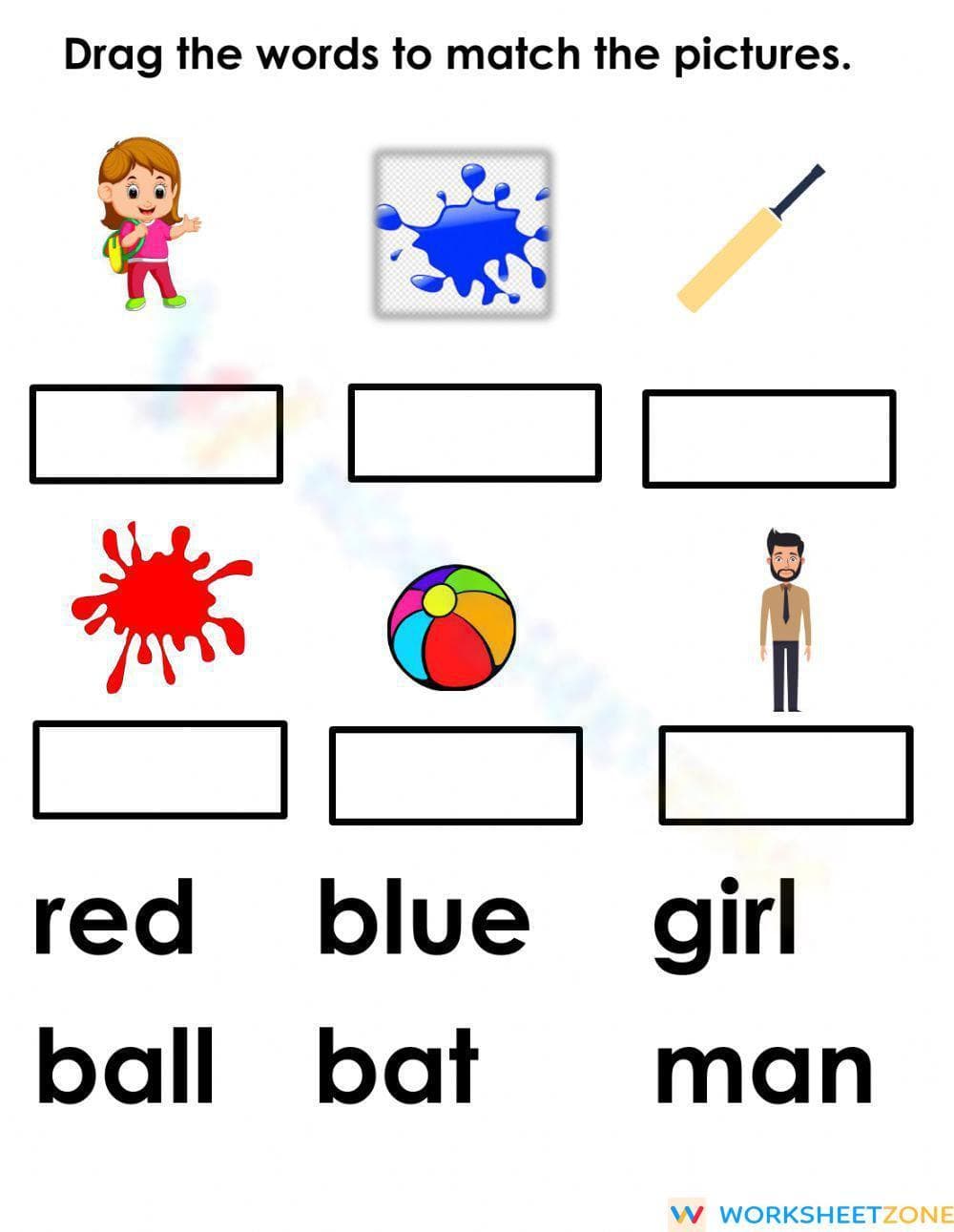

Printable Word Matching Worksheet | Grade K-1 ELA
Paste this activity's link or code into your existing LMS (Google Classroom, Canvas, Teams, Schoology, Moodle, etc.).
Students can open and work on the activity right away, with no student login required.
You'll still be able to track student progress and results from your teacher account.
This Printable Word Matching Worksheet for Early Learners strengthens the connection between visual symbols and written language for Kindergarten and First Grade students. By matching common sight words to clear illustrations, children build foundational literacy skills and visual recognition. This resource provides immediate reinforcement of essential vocabulary in a simple, engaging format that encourages independent learning.
At a Glance
- Grade: K–1 · Subject: English Language Arts
- Standard:
CCSS.ELA-LITERACY.RF.K.3— Read common high-frequency words by sight and identify basic vocabulary- Skill Focus: Word-to-Picture Matching
- Format: 1 page · 6 problems · Answer key included · PDF
- Best For: Independent practice and morning work
- Time: 5–10 minutes
This single-page PDF features six distinct matching tasks designed for early readers. Students encounter high-frequency words including colors (red, blue), objects (ball, bat), and people (girl, man). The worksheet uses clear, high-quality illustrations to provide visual cues, paired with large, legible text in a sans-serif font suitable for beginning learners. A word bank at the bottom allows for easy identification and spatial organization as students drag or write words to their corresponding boxes.
The design of this resource prioritizes teacher efficiency with a total preparation time of under two minutes. Simply print the single-page document (30 seconds), distribute it to your students (30 seconds), and conduct a quick visual review of the completed matches (1 minute). Its self-explanatory layout makes it an ideal candidate for emergency sub plans or quiet transition activities where minimal teacher intervention is required.
The primary alignment for this activity is CCSS.ELA-LITERACY.RF.K.3, which requires students to know and apply grade-level phonics and word analysis skills in decoding words. Specifically, it supports the recognition of high-frequency words by sight. This standard code can be copied directly into lesson plans, IEP goals, or district curriculum mapping tools to ensure instructional compliance and tracking of foundational reading benchmarks.
Deploy this worksheet during the "Independent Practice" phase of a literacy block after introducing the specific vocabulary words. For a formative-assessment observation, watch how students approach the task: do they identify the picture first or read the word first? This provides insight into their decoding strategies. It also serves as an excellent 5-minute morning work task to settle students into their learning routine.
This resource is tailored for Kindergarten and Grade 1 students, as well as English Language Learners (ELL) who benefit from the visual-to-text bridge. It provides necessary scaffolding for students with reading difficulties by using distinct images to support word identification. Pair this with a color-coded anchor chart or a basic phonics reader to create a comprehensive learning experience for diverse classroom populations.
The integration of visual cues with written text is a cornerstone of early literacy development, as highlighted in the EdReports 2024 analysis of foundational reading materials. Research demonstrates that pairing high-frequency words with corresponding images reduces the cognitive load on beginning readers, allowing them to focus on the semantic connection rather than just phonemic decoding. This worksheet implements these principles by providing 6 structured matching tasks that align with CCSS.ELA-LITERACY.RF.K.3. By engaging in this type of supported practice, students reinforce their visual memory for sight words like "blue" and "girl," which are critical for reading fluency. Such activities serve as essential bridges between oral language and written proficiency, ensuring that learners develop the visual recognition skills necessary for more complex text analysis. This evidence-based approach provides a reliable tool for educators seeking to improve vocabulary retention and foundational decoding accuracy in primary classrooms.


