


























Views
Downloads
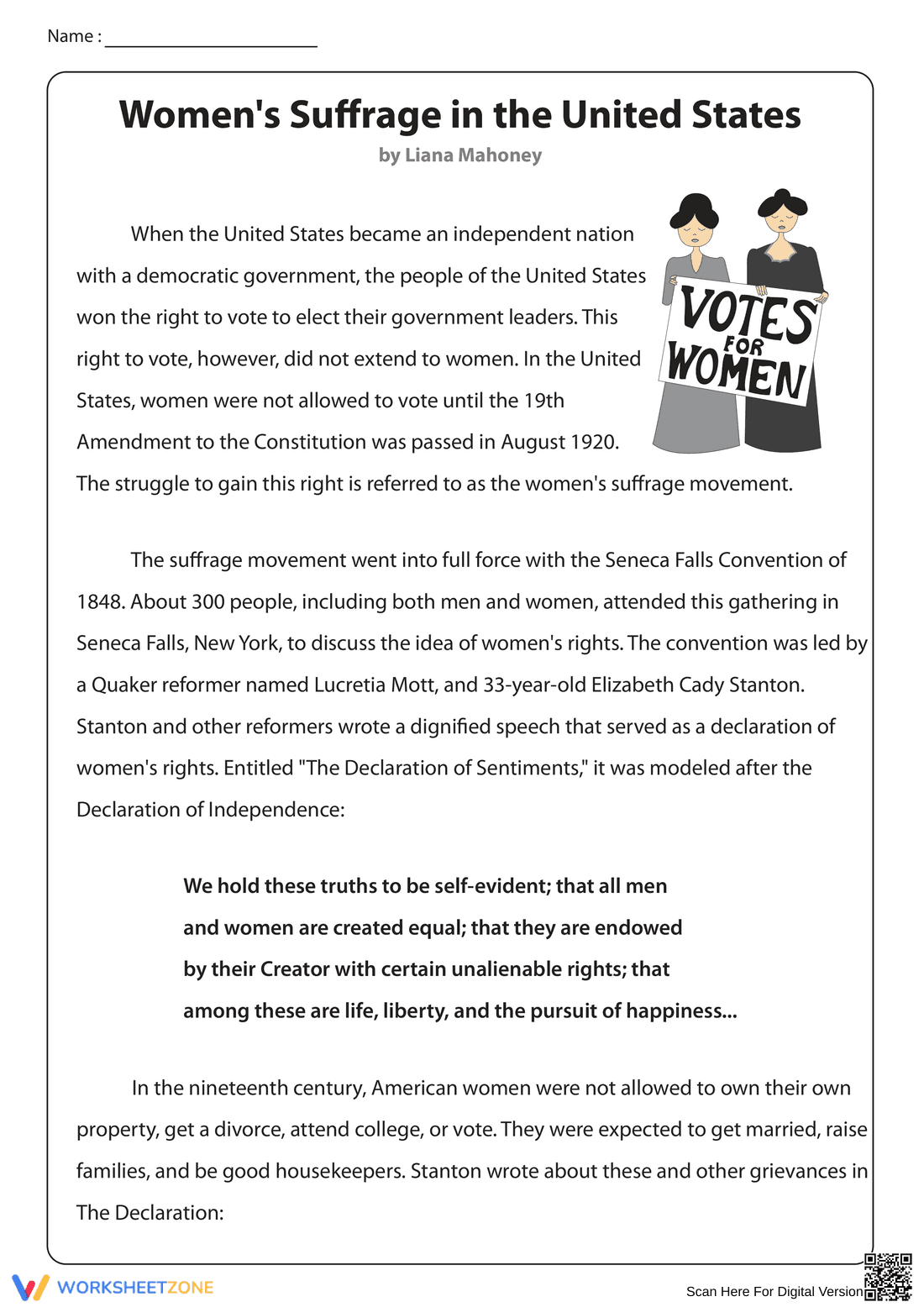
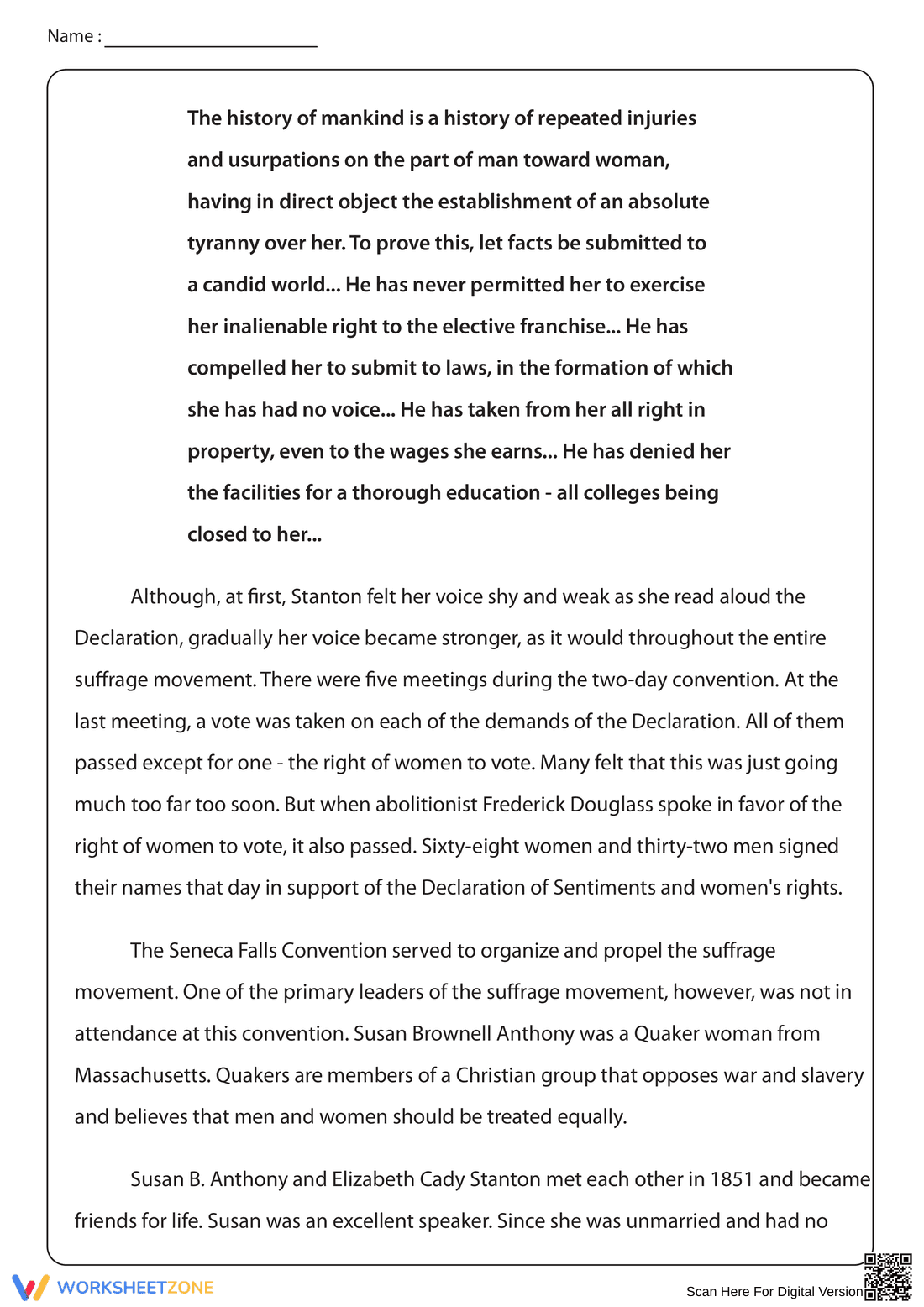
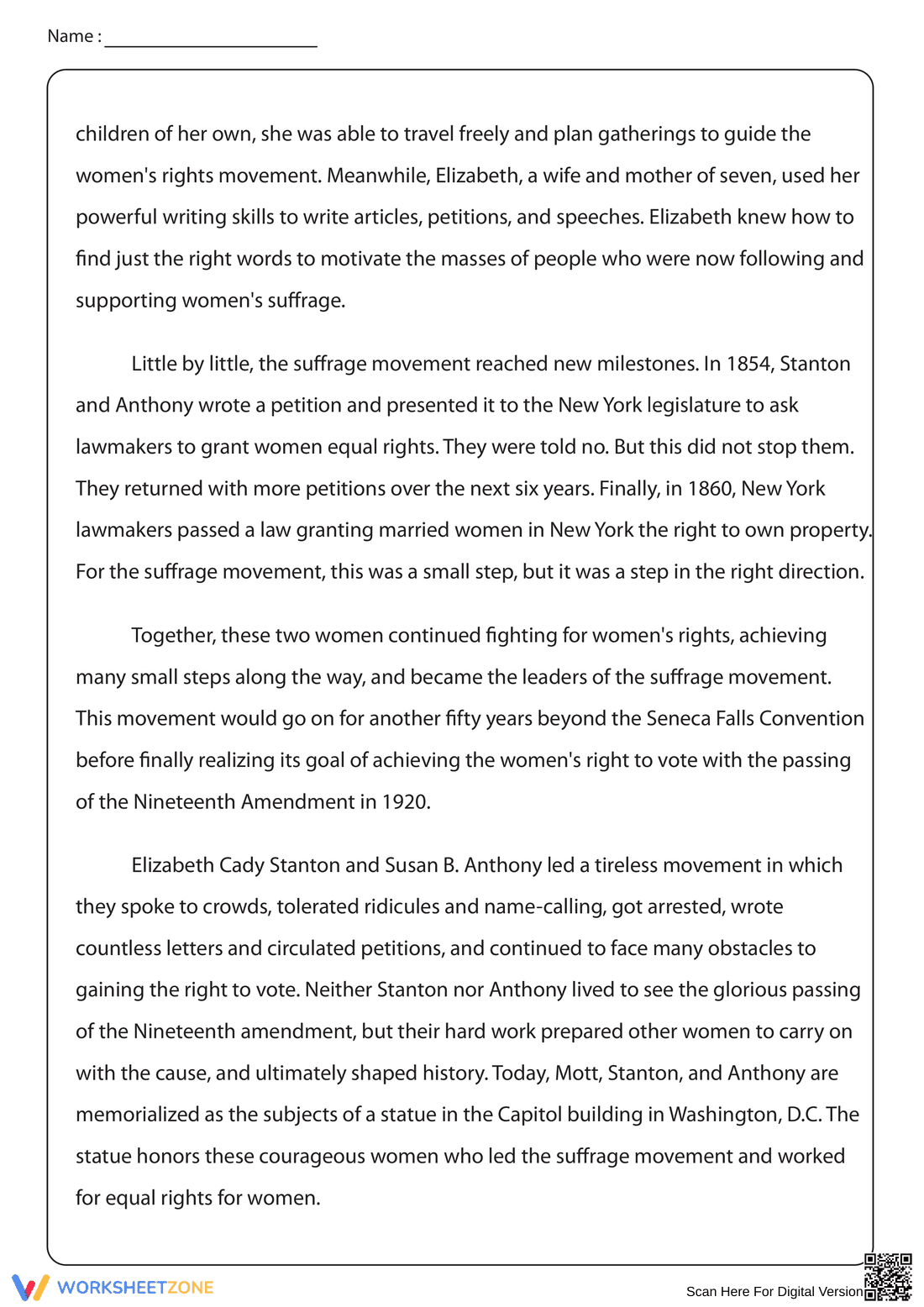
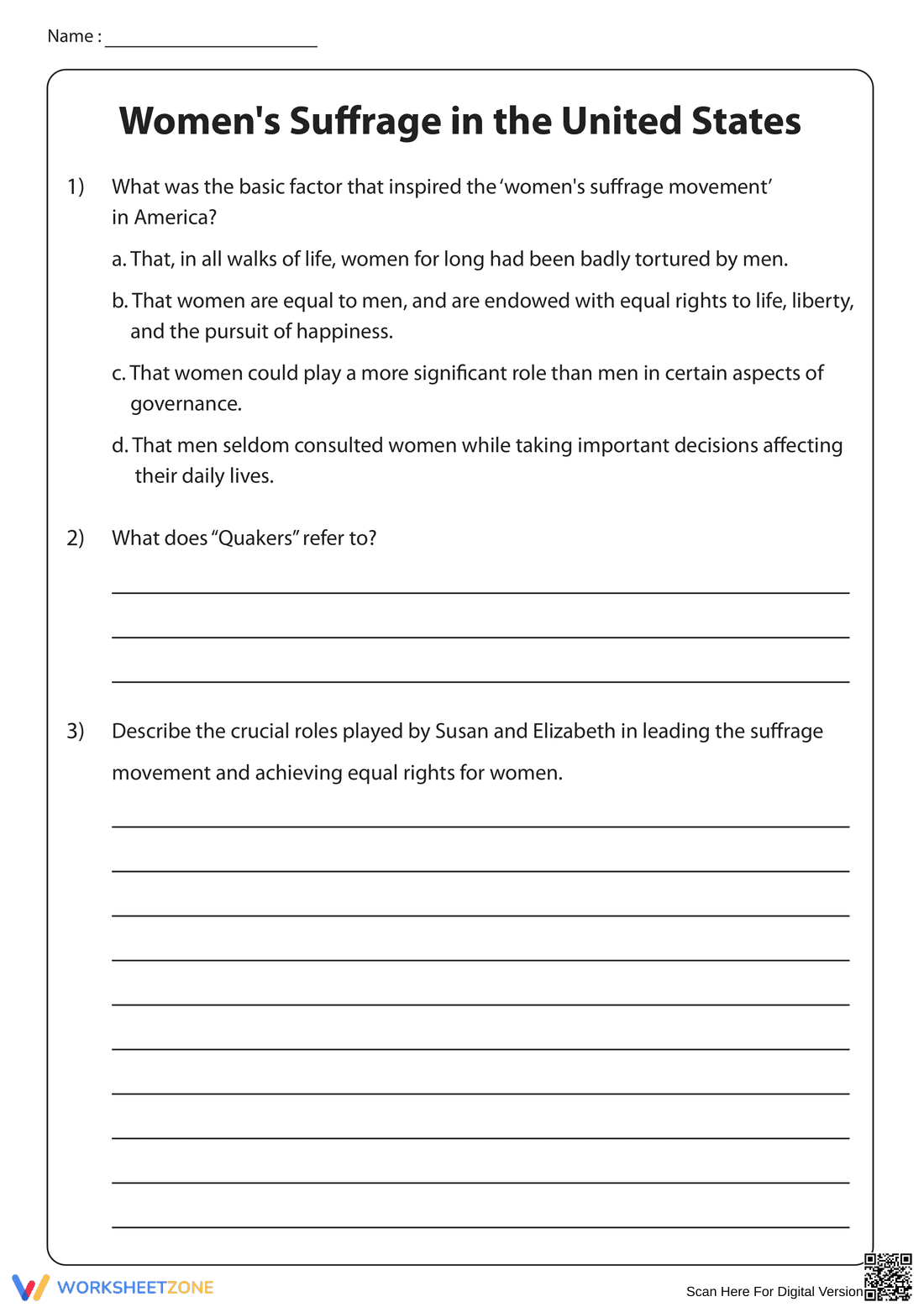

Women's Suffrage Worksheet | Essential Grade 7 Reading
Paste this activity's link or code into your existing LMS (Google Classroom, Canvas, Teams, Schoology, Moodle, etc.).
Students can open and work on the activity right away, with no student login required.
You'll still be able to track student progress and results from your teacher account.
Provide students with a rigorous exploration of the 19th-century struggle for equal voting rights with this Women's Suffrage reading comprehension worksheet. Designed for Grade 7 learners, this biographical extract focuses on key figures like Elizabeth Cady Stanton and Lucretia Mott, challenging students to make evidence-based inferences from historical text.
At a Glance
- Grade: 7 · Subject: Reading Comprehension
- Standard:
CCSS.ELA-LITERACY.RI.7.1— Cite several pieces of textual evidence to support analysis and inferences- Skill Focus: Informational Text Analysis
- Format: 2 pages · 8 problems · Answer key included · PDF
- Best For: Independent practice or history sub plans
- Time: 25–35 minutes
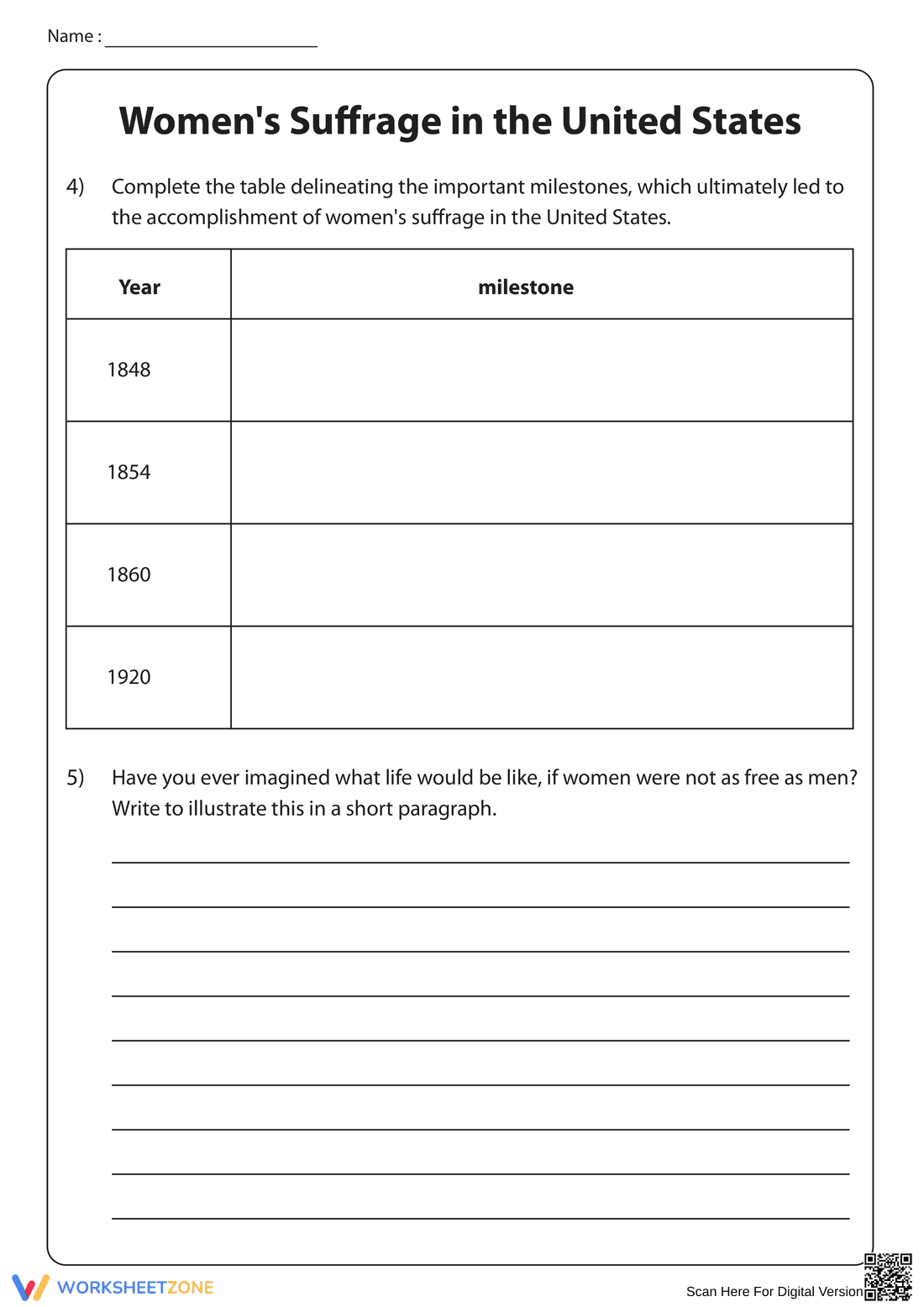
This resource features a multi-paragraph text detailing the Seneca Falls Convention and the passage of the 19th Amendment. The second page contains eight structured comprehension questions, ranging from direct recall to complex inferential reasoning. A full answer key is provided to facilitate rapid grading, and the layout uses a clear, readable font suitable for middle school readers.
This worksheet is optimized for immediate classroom implementation with a three-step workflow. First, print the two-page PDF (30 seconds). Second, distribute copies to students (1 minute). Finally, review the answers as a class using the included key (5 minutes). Total teacher preparation time is under two minutes, making it an ideal choice for emergency sub plans or bell-ringer activities.
The primary alignment for this resource is CCSS.ELA-LITERACY.RI.7.1, which requires students to cite several pieces of textual evidence to support analysis of what the text says explicitly as well as inferences drawn from the text. By analyzing "The Declaration of Sentiments," students practice distinguishing between explicit historical facts and the underlying grievances of the suffrage movement. This standard code can be copied directly into lesson plans, IEP goals, or district curriculum mapping tools.
Use this worksheet as a summative assessment following a unit on American history or as a standalone literacy exercise during Women's History Month. For a formative assessment tip, observe students as they underline evidence in the text; those who struggle to locate specific quotes may benefit from a guided re-reading session. The expected completion time is approximately 30 minutes.
This resource is tailored for seventh-grade students but is highly effective for Grade 6 and Grade 8 learners requiring focused practice on informational text. It serves as a natural pairing for social studies units or as a companion to primary source documents like the 19th Amendment.
Research from RAND AIRS 2024 indicates that middle school students who engage with high-interest historical biographies show significant improvements in their ability to draw sophisticated inferences from complex informational texts. This Women's Suffrage worksheet is specifically engineered to bridge the gap between basic reading fluency and the analytical demands of CCSS.ELA-LITERACY.RI.7.1. By presenting the struggle for voting rights through the lens of individual reformers, the material encourages students to synthesize historical context with textual evidence. This pedagogical approach aligns with NAEP standards for literacy, which emphasize the importance of disciplinary reading in social studies. The inclusion of structured questions ensures that students move beyond surface-level comprehension to evaluate the strategic choices made by suffrage leaders. Educators can utilize this standalone summary as evidence of standards-aligned instructional practice in professional portfolios or curriculum reviews.


