


























Views
Downloads

Wise Mind Worksheet (3 Levels) | Grade 5 Ready
Paste this activity's link or code into your existing LMS (Google Classroom, Canvas, Teams, Schoology, Moodle, etc.).
Students can open and work on the activity right away, with no student login required.
You'll still be able to track student progress and results from your teacher account.
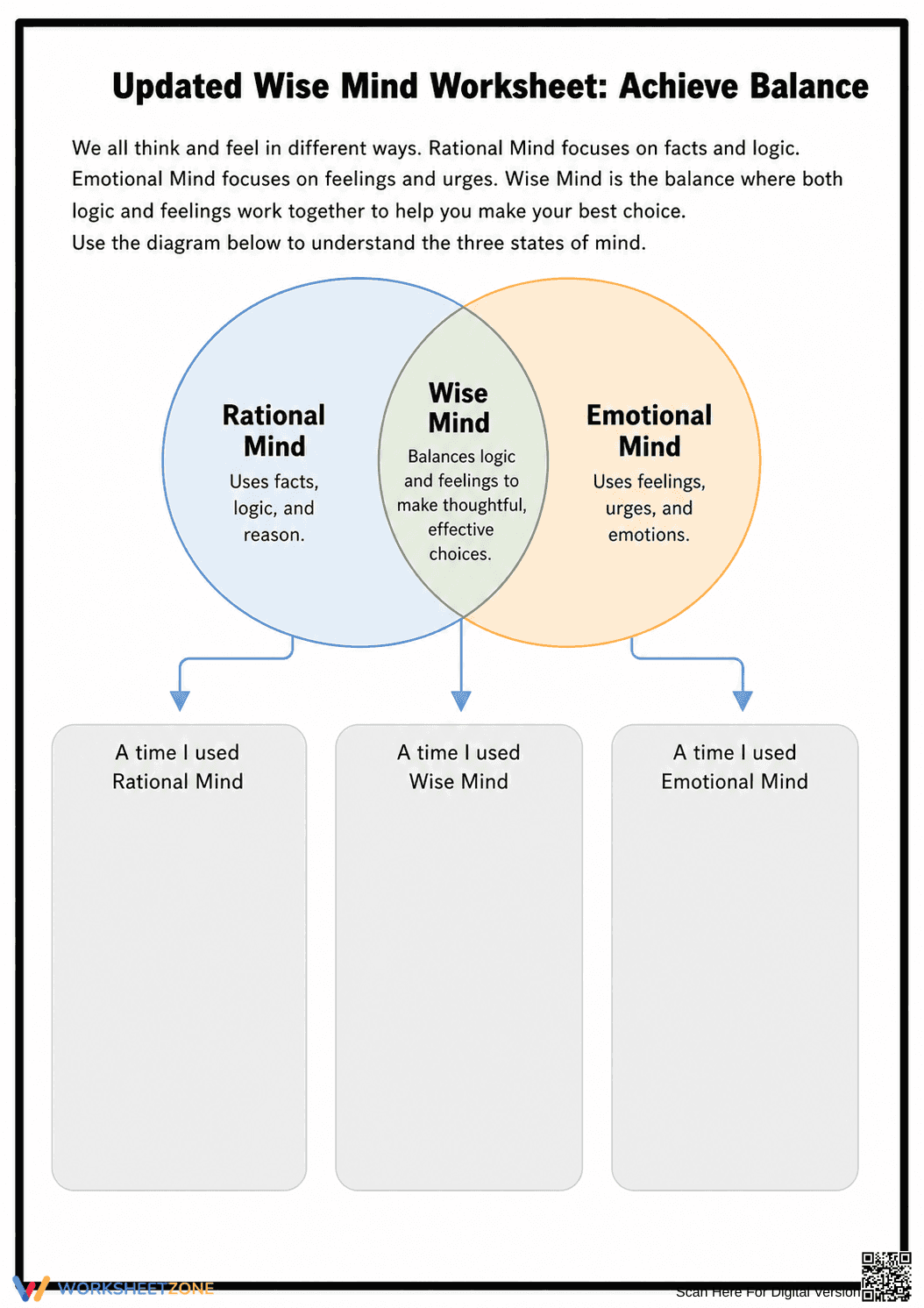
This Wise Mind worksheet helps students achieve emotional balance by identifying the intersection of logic and feelings. By practicing the Dialectical Behavior Therapy (DBT) concept of Wise Mind, learners develop the self-awareness needed to make calm, thoughtful decisions in high-pressure situations. It provides a structured framework for reflecting on past behaviors and planning future responses.
At a Glance
- Grade: 5 · Subject: Social Skills
- Standard:
CCSS.ELA-LITERACY.W.5.10— Write routinely over extended time for a range of tasks- Skill Focus: Emotional Regulation
- Format: 14 pages · 3 problems · Answer key included · PDF
- Best For: Social-emotional learning and behavioral reflection
- Time: 15–20 minutes
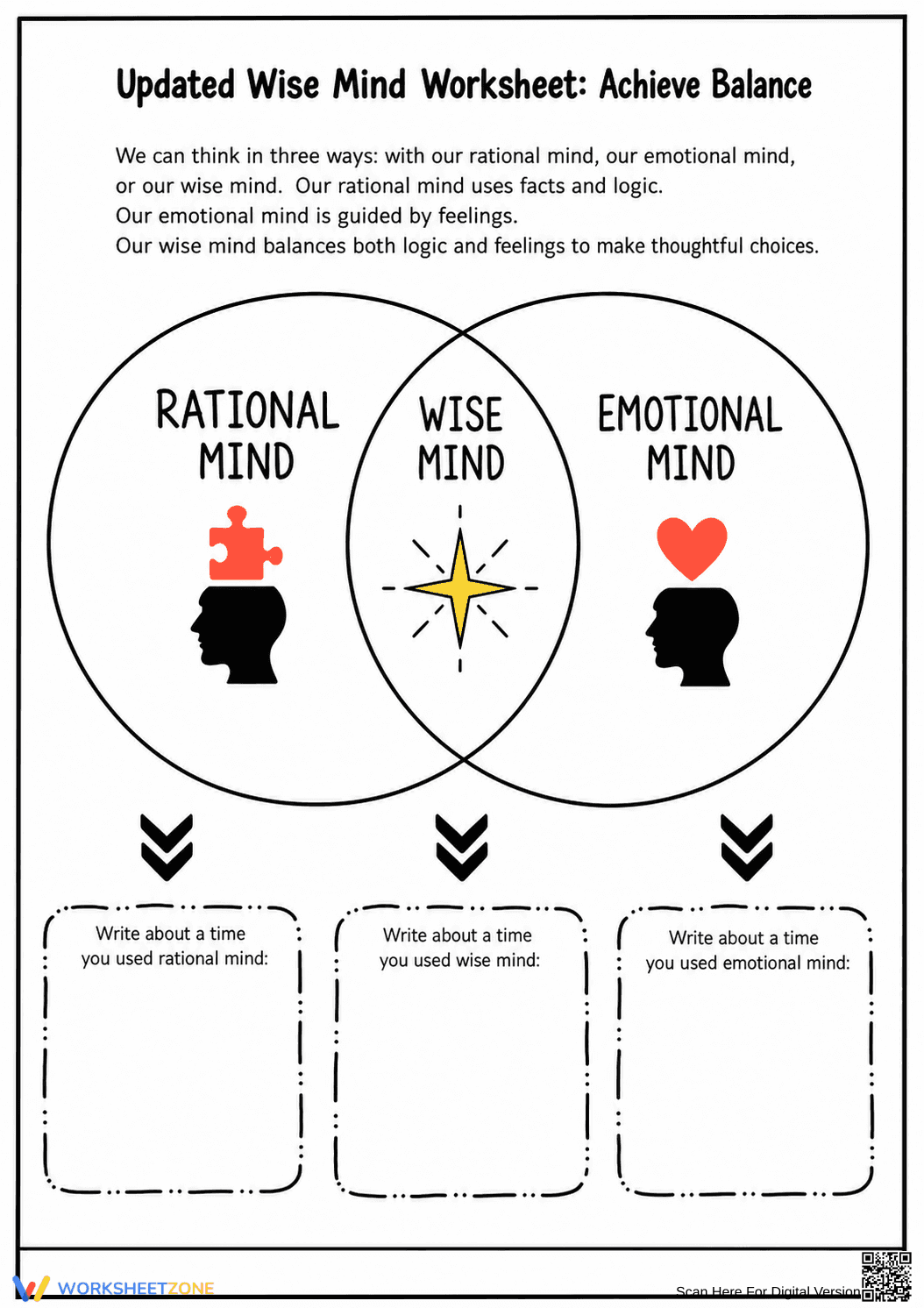
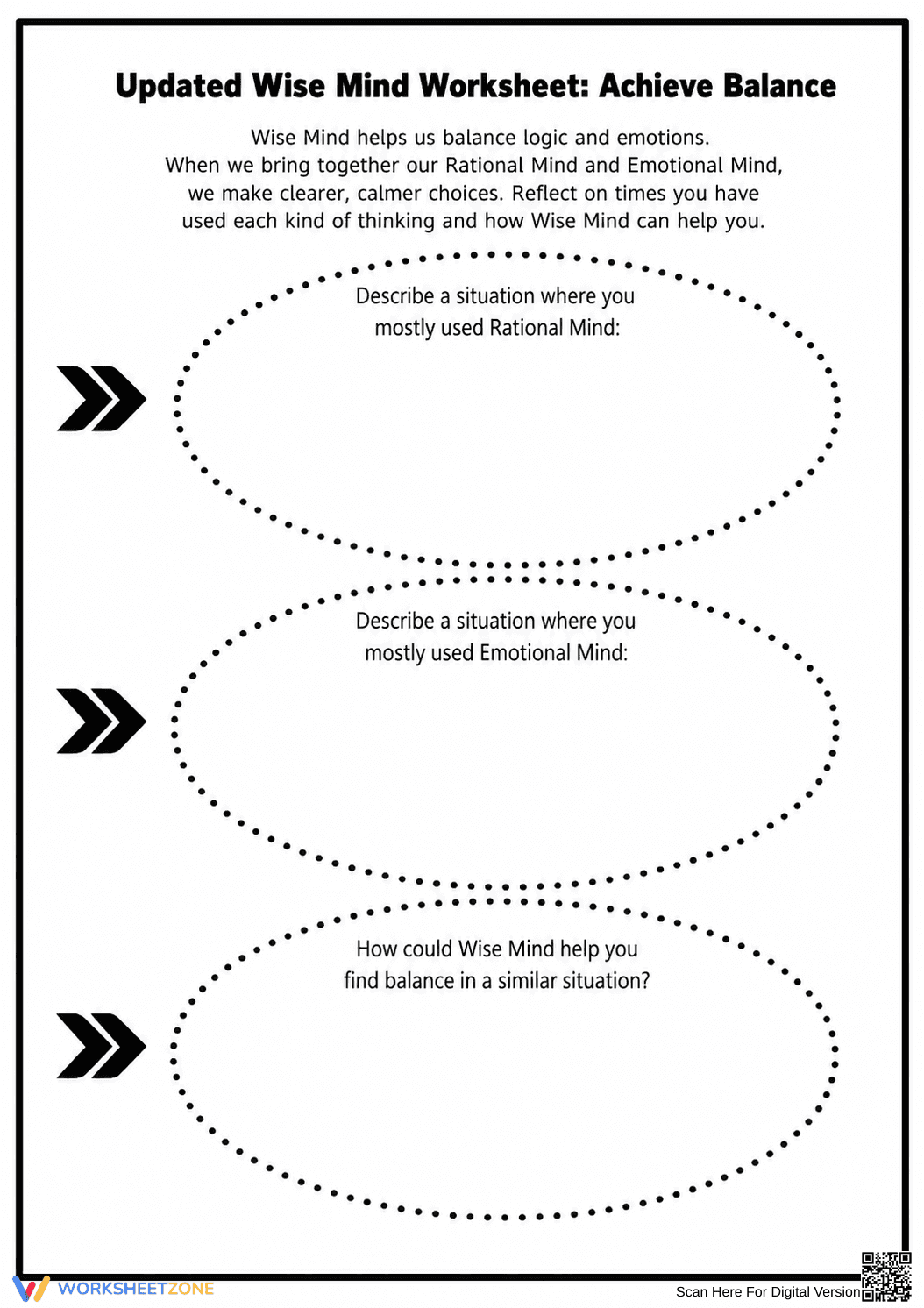
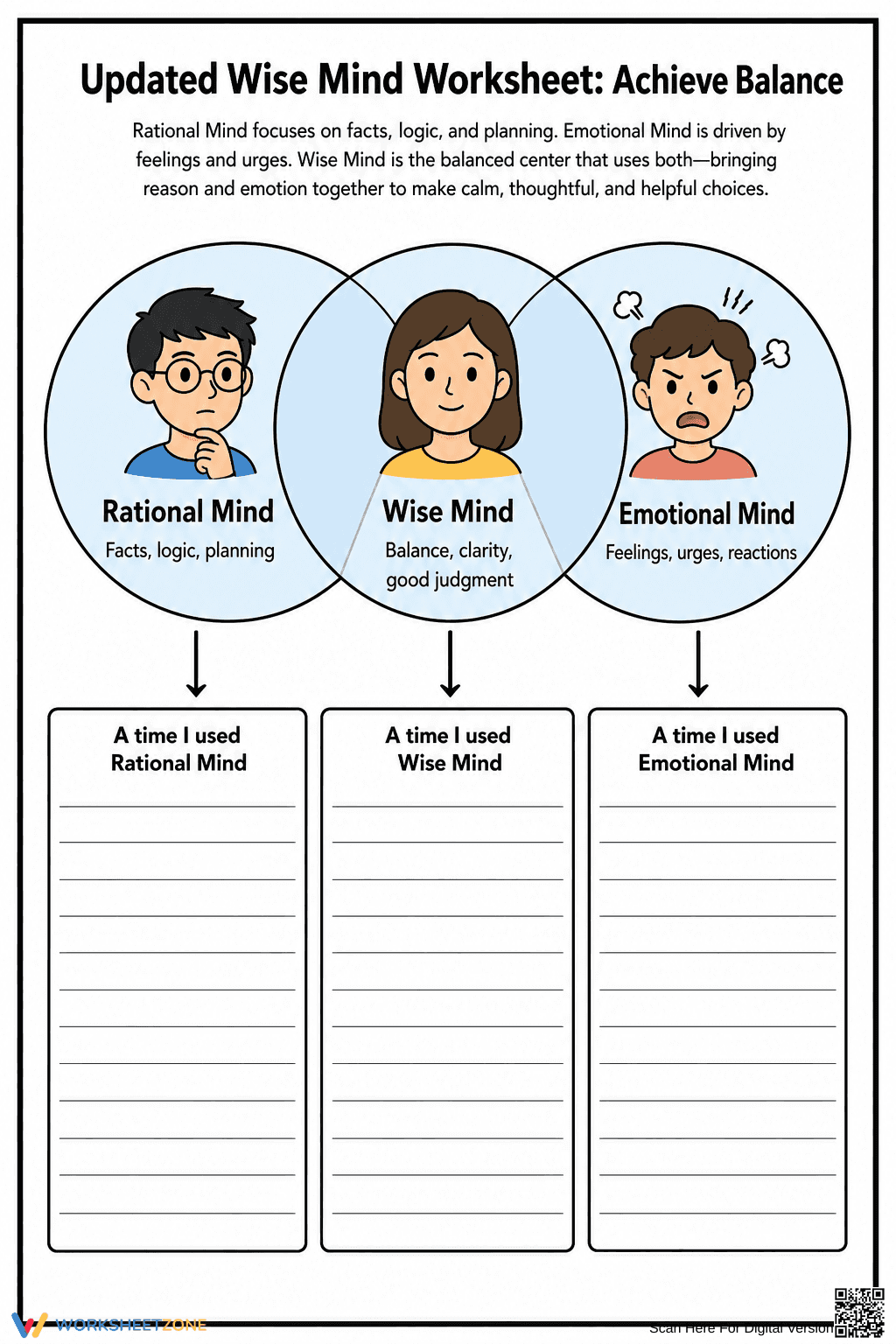
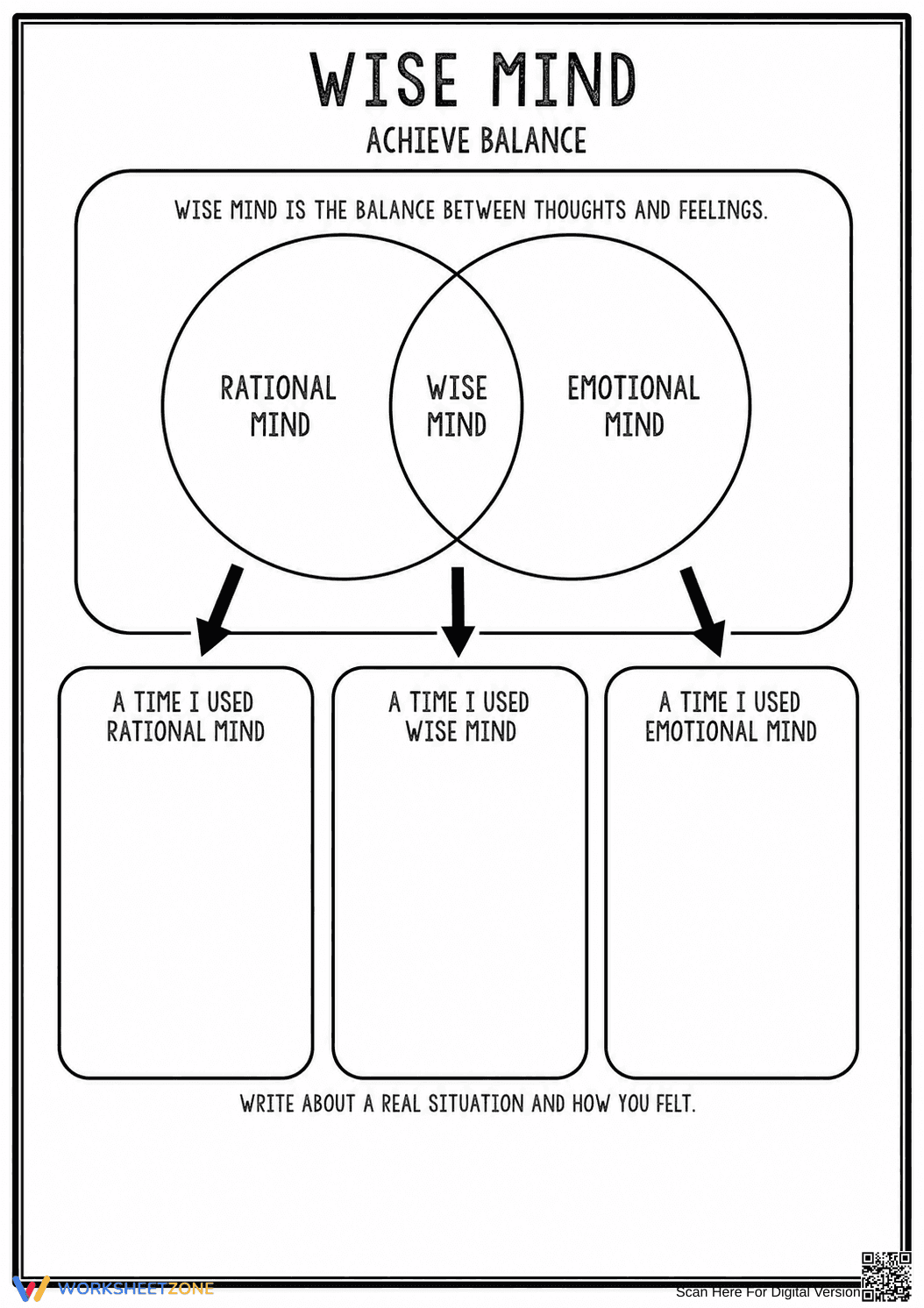
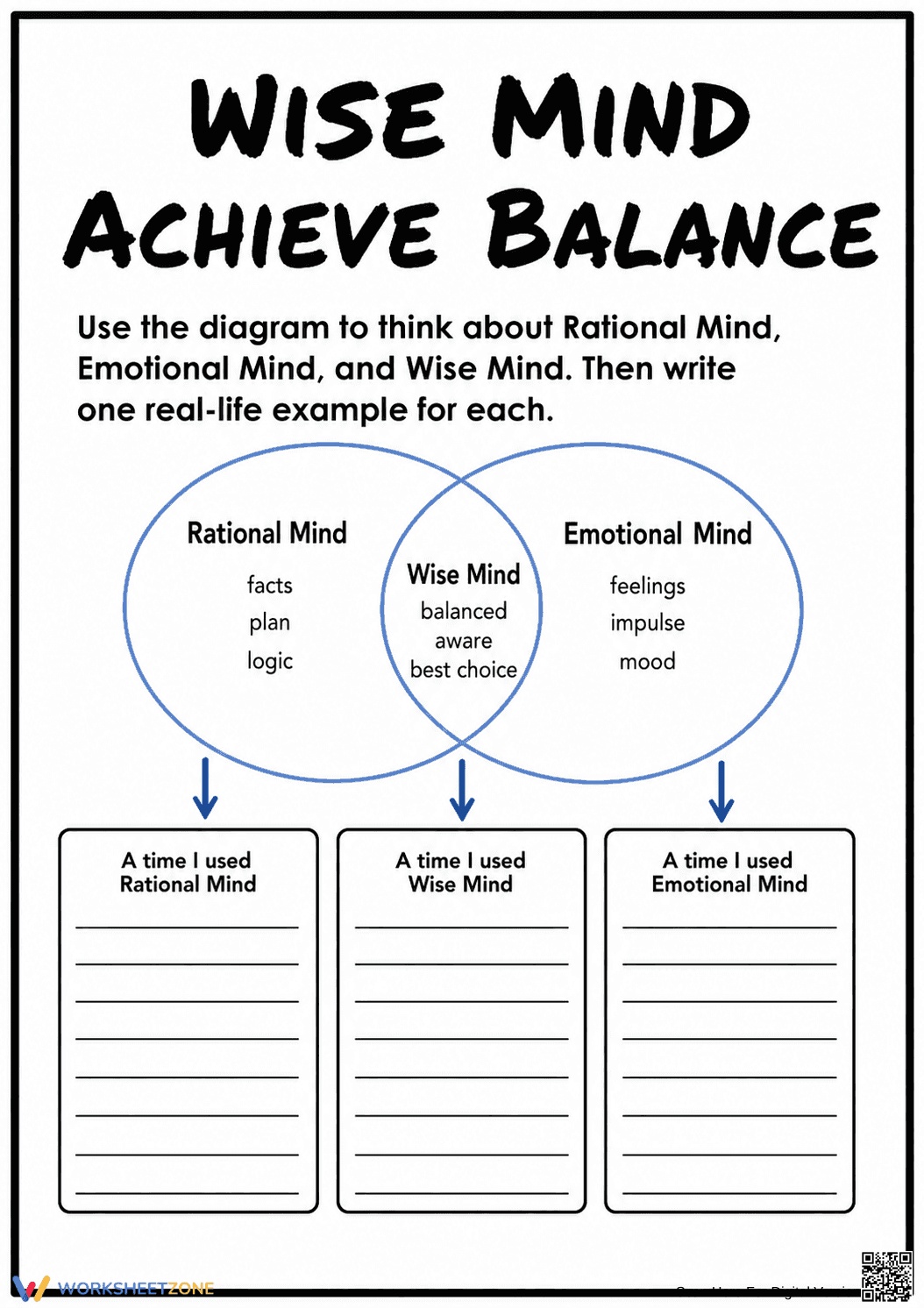
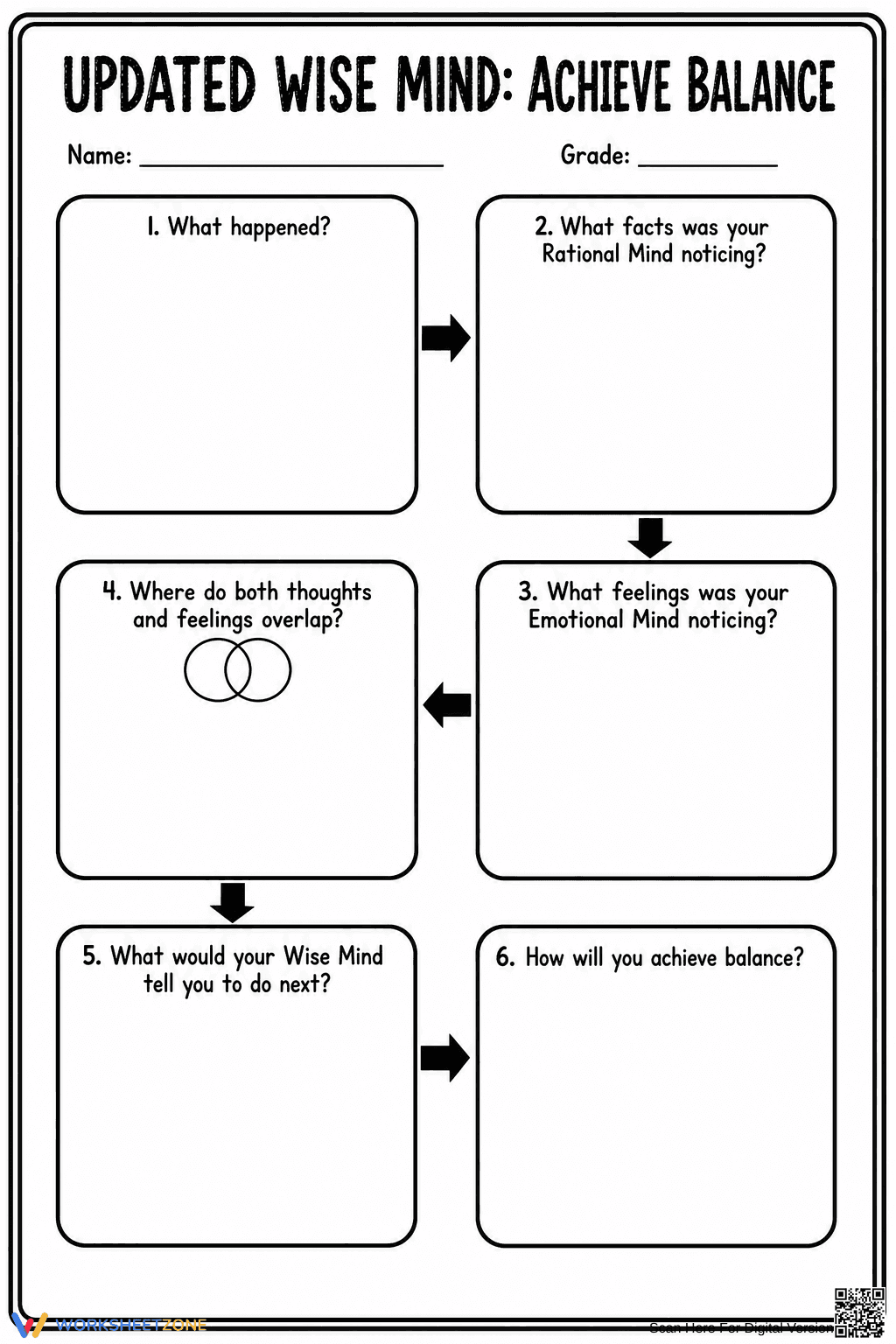
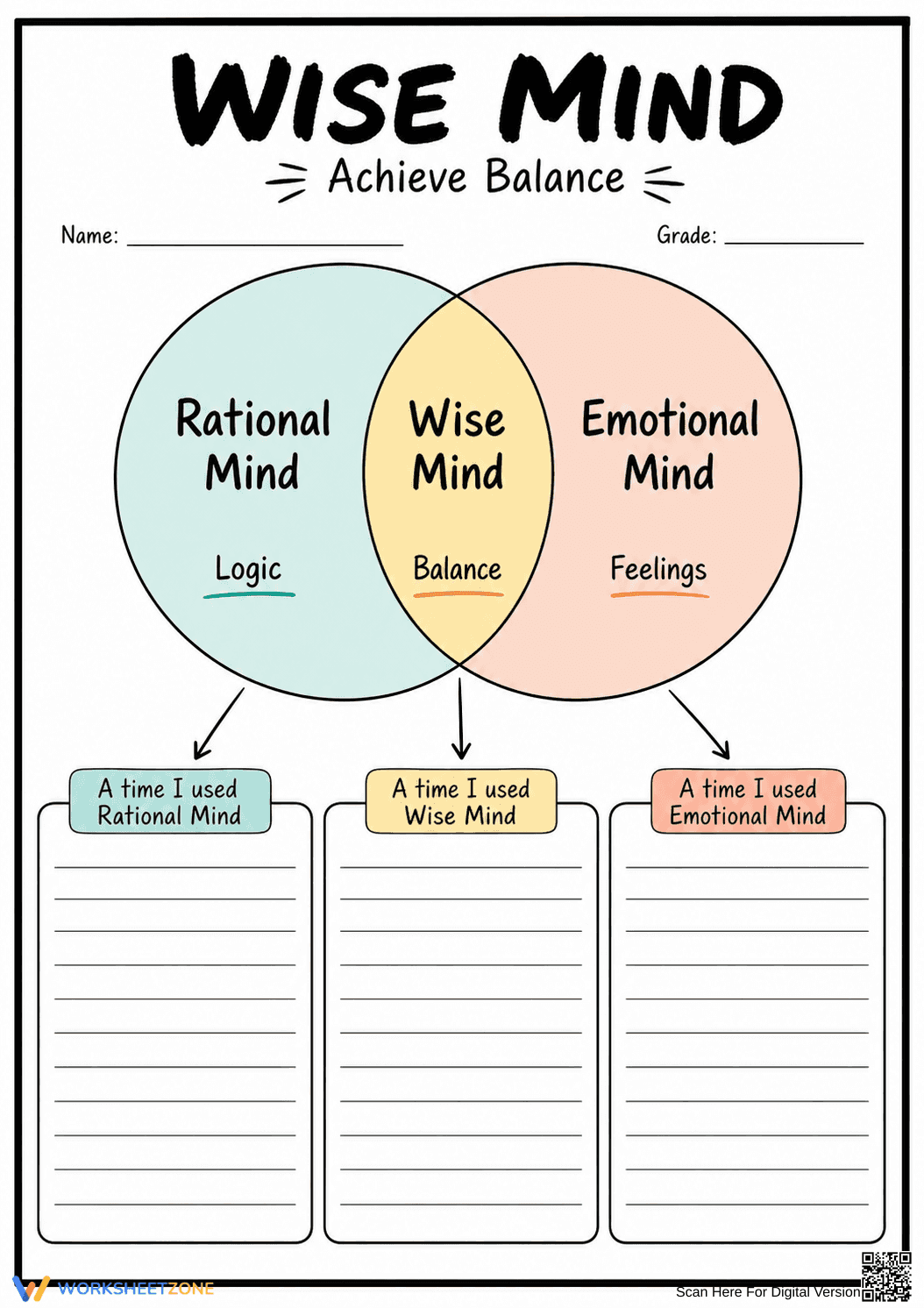
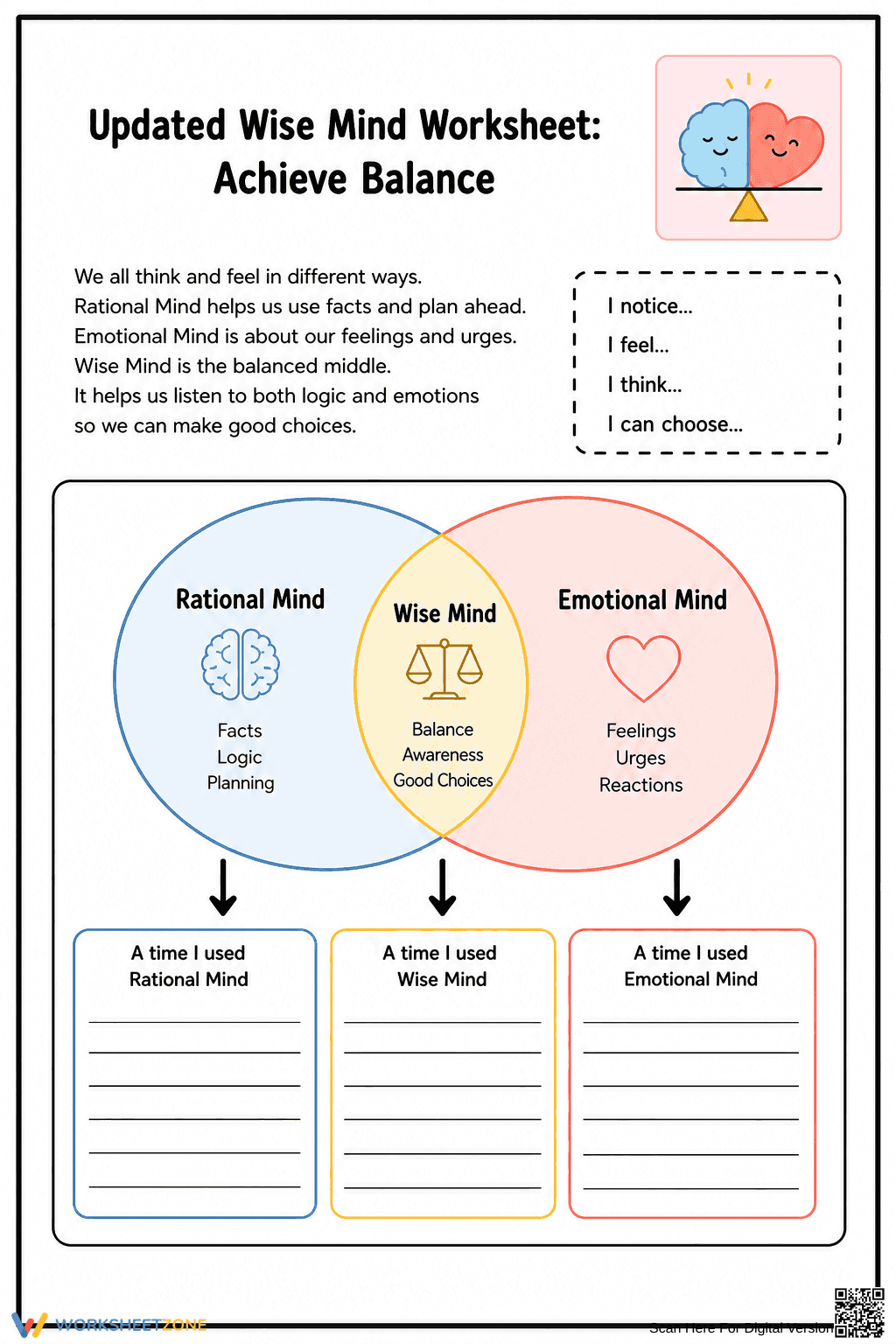
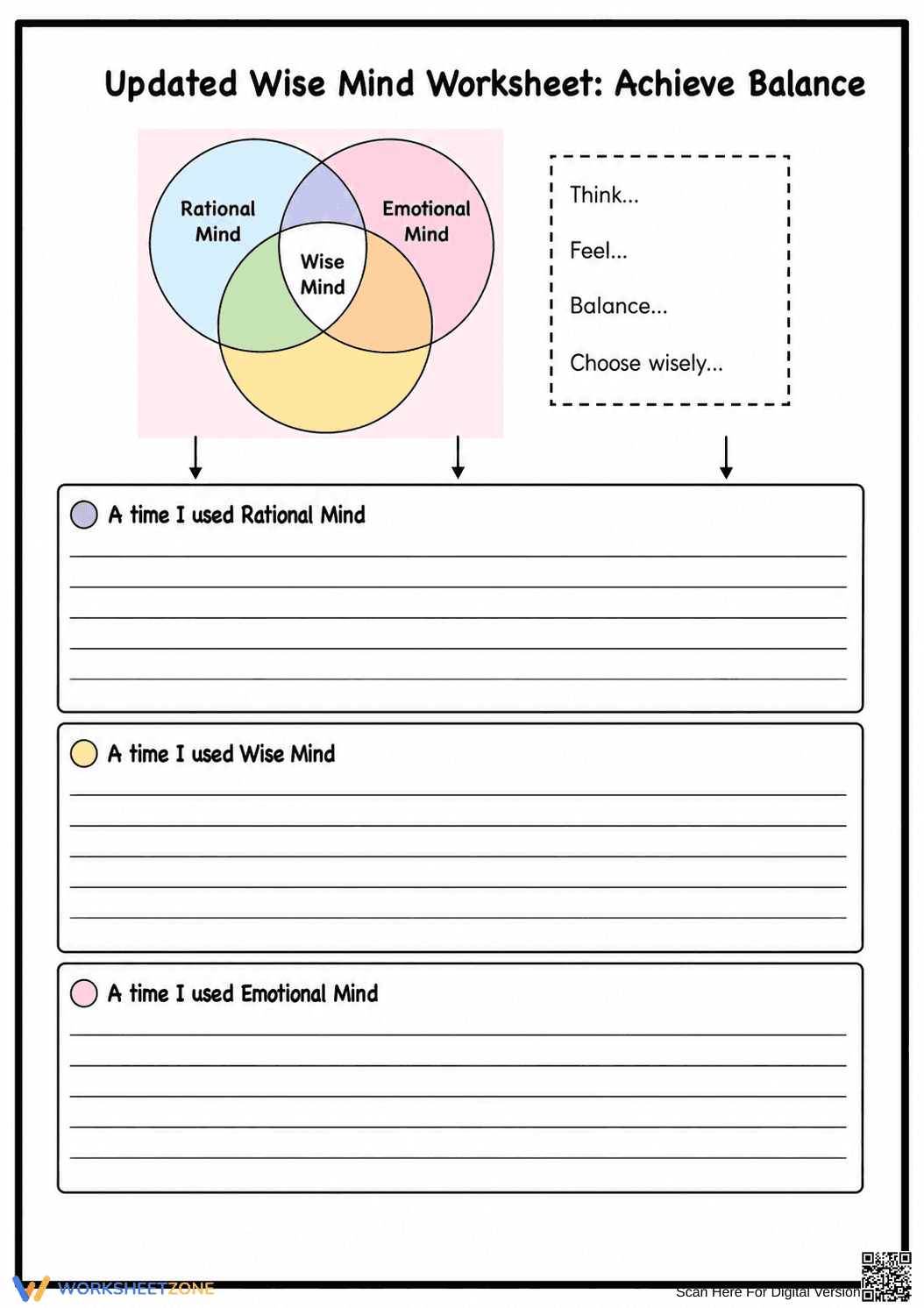
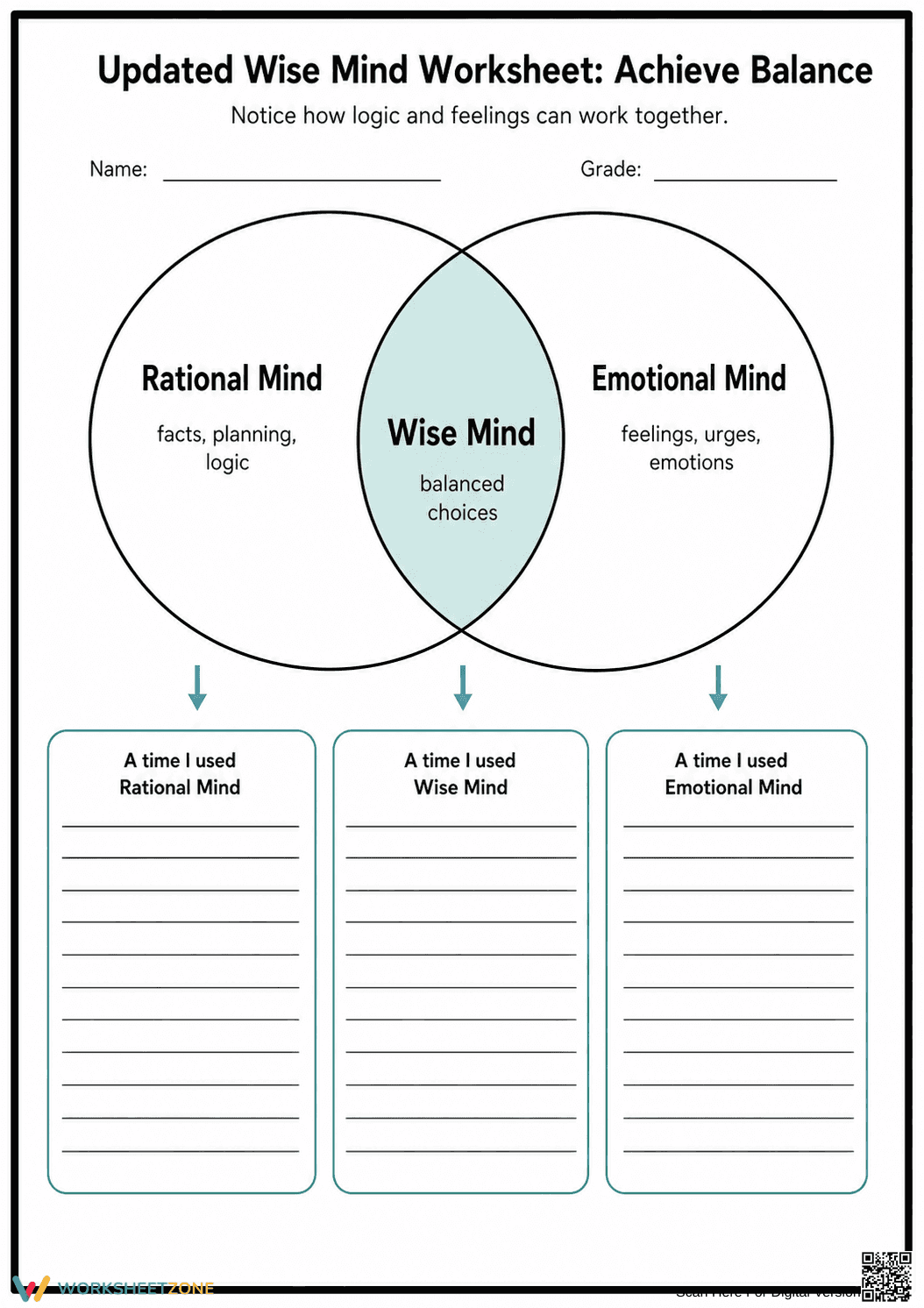
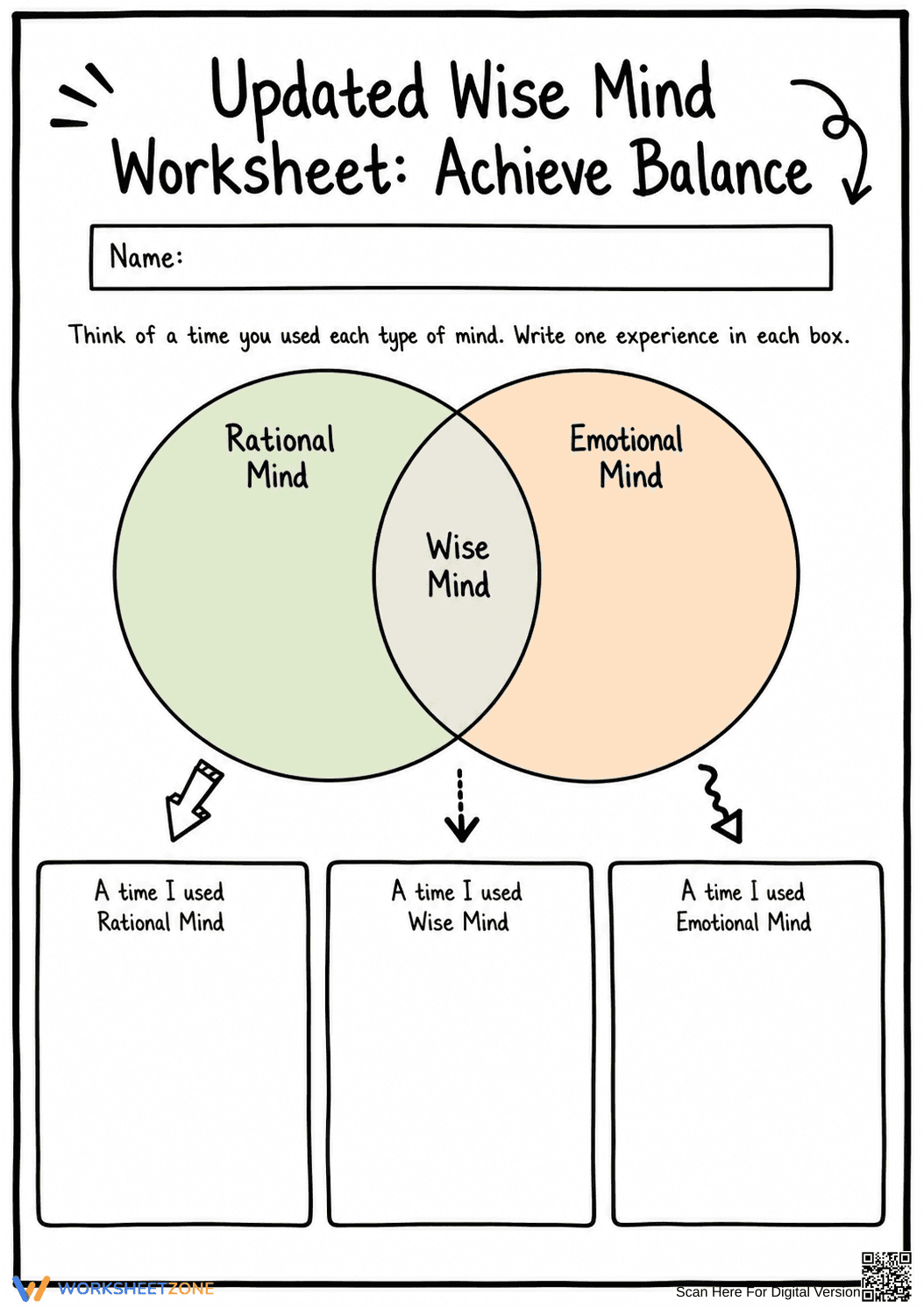
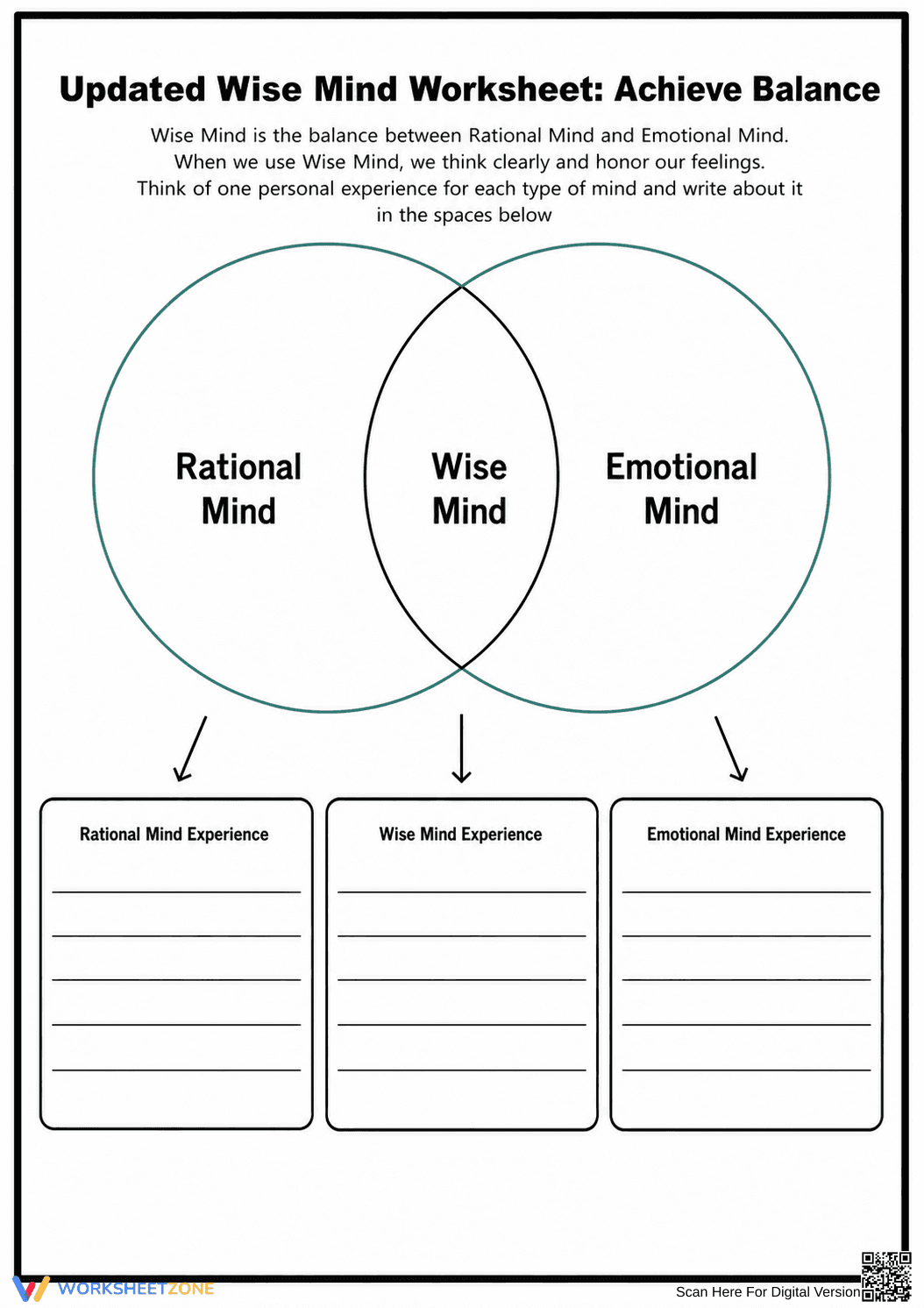
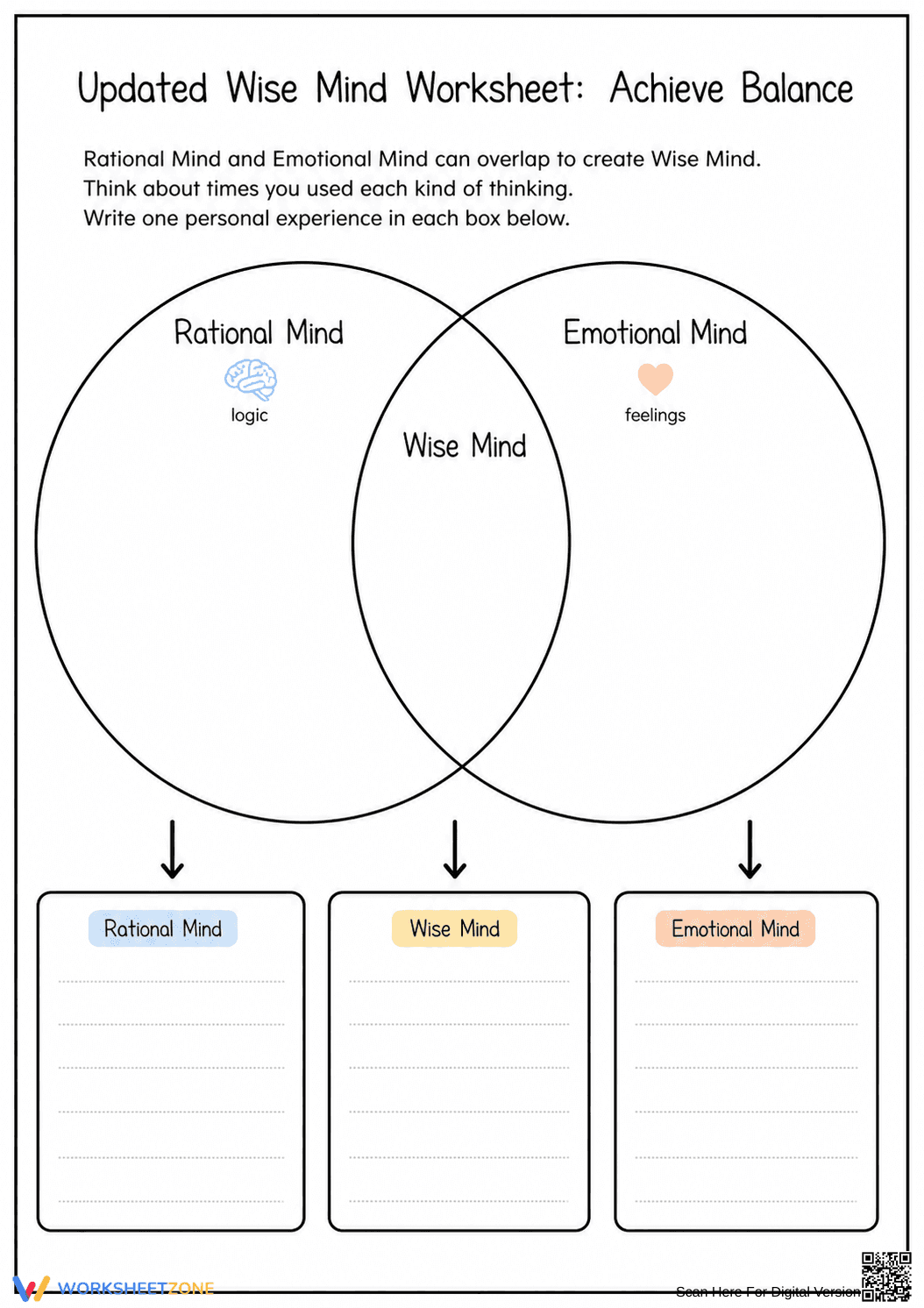
Inside this comprehensive 14-page PDF, you will find multiple variations of the Wise Mind diagram. The resource includes a classic Venn diagram layout, a sequential flowchart for processing specific incidents, and a character-based version for younger or more visual learners. Each page features three primary reflection boxes where students document experiences using their Rational Mind, Emotional Mind, and the balanced Wise Mind.
- Below grade: Features simplified language, visual icons like puzzle pieces and hearts, and sentence starters to help students identify basic emotions and facts.
- On grade: Utilizes the standard Venn diagram model, requiring students to independently categorize their thoughts and feelings before finding the "middle path."
- Above grade: Includes a 6-step flowchart that asks students to analyze the consequences of their actions and predict how Wise Mind will influence future behavior.
This resource is aligned with CCSS.ELA-LITERACY.W.5.10, which requires students to write routinely for a range of discipline-specific tasks, purposes, and audiences. By engaging in written reflection about internal states, students meet the standard's demand for routine metacognitive practice. Both standard codes can be copied directly into lesson plans, IEP goals, or district curriculum mapping tools.
Use this worksheet as a formative assessment during a small-group social skills lesson. After introducing the three states of mind, have students complete the Venn diagram to see if they can distinguish between a "fact" and a "feeling." Alternatively, use the flowchart version as a "Think Sheet" following a behavioral incident to help the student de-escalate and find a balanced perspective. Expect completion in 15 to 20 minutes.
This tool is designed for upper elementary and middle school students, particularly those receiving Tier 2 or Tier 3 behavioral interventions. It is highly effective for students with ADHD or anxiety who struggle with impulse control. Pair this worksheet with a Wise Mind anchor chart or a short video clip demonstrating the "middle path" in action to provide a complete instructional cycle.
According to the RAND AIRS 2024 report on social-emotional learning, structured reflection tools that bridge cognitive and emotional domains significantly improve student self-regulation outcomes. This worksheet utilizes the Wise Mind framework, a core component of Dialectical Behavior Therapy adapted for educational settings, to help students meet CCSS.ELA-LITERACY.W.5.10 requirements. By providing 14 pages of differentiated layouts, the resource ensures that students at varying developmental levels can access abstract concepts of logic and emotion. Research from Fisher & Frey (2014) suggests that visual organizers, such as the Venn diagrams included here, are essential for scaffolding the complex metacognitive tasks required for behavioral mastery. This evidence-based approach allows educators to document progress toward IEP goals while fostering the emotional intelligence necessary for long-term academic success and interpersonal stability in the classroom environment.


