


























Views
Downloads
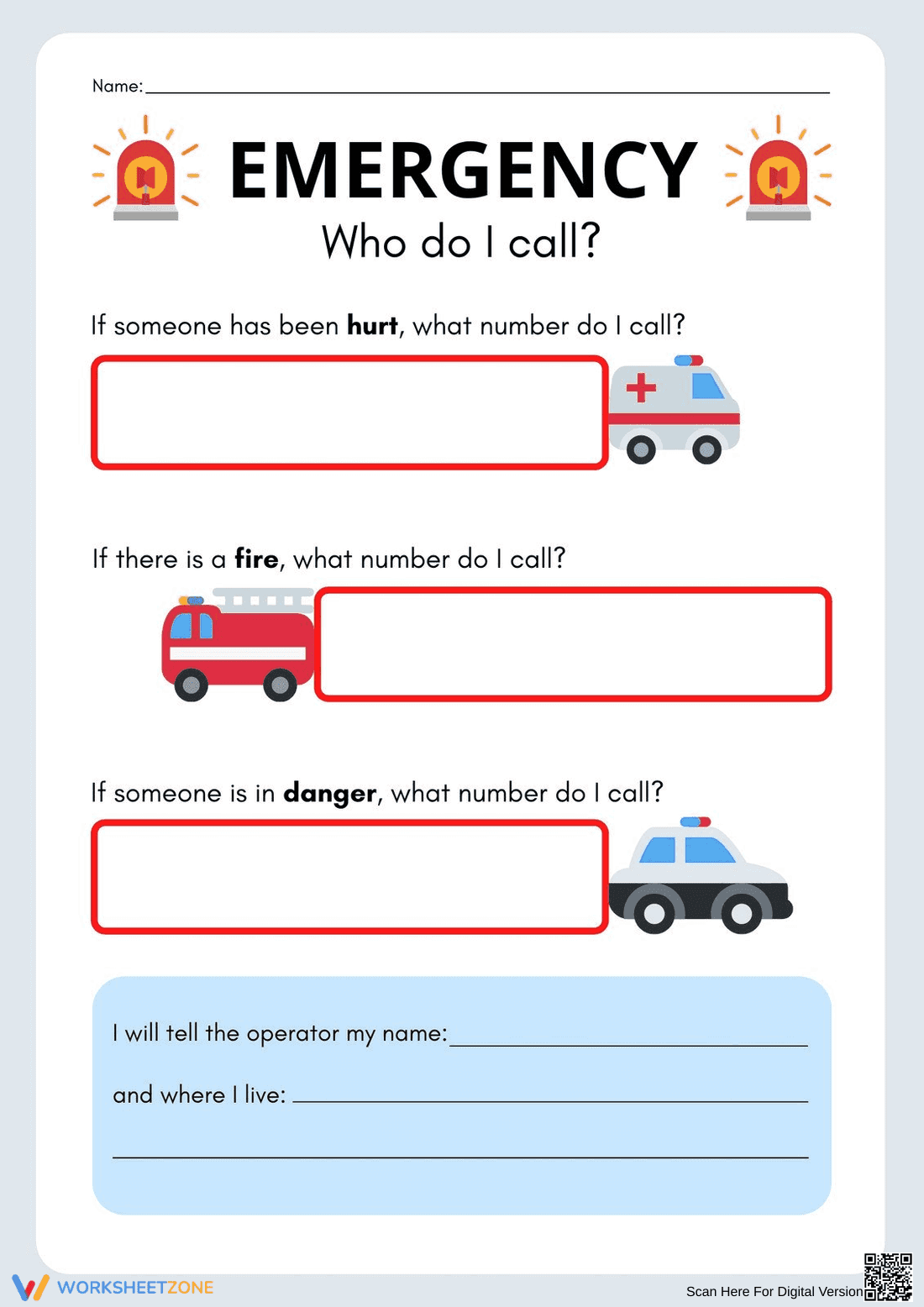

Emergency Call Worksheet | Grade K-1 Essential
Paste this activity's link or code into your existing LMS (Google Classroom, Canvas, Teams, Schoology, Moodle, etc.).
Students can open and work on the activity right away, with no student login required.
You'll still be able to track student progress and results from your teacher account.
Emergency preparedness is a critical life skill for young learners in the primary grades. This worksheet helps students identify when and how to call for help during a fire, medical injury, or dangerous situation. By practicing these responses, children build the confidence needed to act quickly in real-world emergencies while memorizing vital personal contact details.
At a Glance
- Grade: K-1 · Subject: Health & Safety
- Standard:
NHES.7.2.1— Demonstrate healthy practices and behaviors to maintain personal health and help others- Skill Focus: Emergency response and personal identification
- Format: 1 page · 5 tasks · Answer key included · PDF
- Best For: Fire Safety Month or community helpers units
- Time: 10–15 minutes
What's Inside: This single-page PDF features three scenario-based questions paired with visual icons of an ambulance, fire truck, and police cruiser. Below the scenario section, students are provided with dedicated primary writing lines to record their full name and home address. The layout is designed with large, clear fonts and high-contrast borders to support early readers and writers.
The zero-prep workflow is designed for maximum efficiency. First, print the required copies for your group. Second, distribute the sheets during a morning meeting or safety lesson; the intuitive icons allow students to begin with minimal verbal instruction. Finally, review the correct answer (911) as a whole group to ensure every child understands the universal emergency number. Total teacher preparation time is under 2 minutes, making this an ideal addition to a sub plan or a last-minute safety drill follow-up.
Standards Alignment: This resource is aligned to `NHES.7.2.1`, which requires students to demonstrate the ability to practice health-enhancing behaviors and avoid or reduce health risks. By identifying the correct number to call and providing their location, students meet the criteria for basic safety competency. This standard code can be copied directly into lesson plans, IEP goals, or district curriculum mapping tools.
How to Use It: Use this worksheet during a direct instruction lesson on community helpers or during Fire Prevention Week. It serves as an excellent formative assessment tool; as students work, walk around to observe which children can independently recall their home address. This provides immediate data on which students may need additional support or a take-home practice sheet for parents. Expect most Kindergarten students to complete the tasks in approximately 12 minutes.
Who It's For: This resource is specifically tailored for Kindergarten and 1st-grade students, as well as English Language Learners (ELLs) who benefit from the strong visual cues. It pairs naturally with a classroom visit from a local first responder or a reading of a community safety picture book. The simple structure ensures that even emerging writers can participate in the safety discussion.
Emergency preparedness education is supported by research from Fisher & Frey (2014), emphasizing scaffolded instruction for life skills. This worksheet aligns with NHES.7.2.1, focusing on identifying the emergency number 911. By connecting visual cues—like an ambulance or fire truck—to the required action, the resource reduces cognitive load. The inclusion of personal identification fields ensures students practice the verbal output required by dispatchers. Studies indicate that repetitive practice increases a child's likelihood of successful communication during a crisis. This resource provides a structured environment for mastering these procedures, making it a vital component of any primary health curriculum focused on community safety and personal responsibility.


