


























1 / 3
0
Views
0
Downloads


0.0
0
Save
0 Likes
Who Has Seen the Wind? Poem Poster for Kids
0 Views
0 Downloads
Paste this activity's link or code into your existing LMS (Google Classroom, Canvas, Teams, Schoology, Moodle, etc.).
Students can open and work on the activity right away, with no student login required.
You'll still be able to track student progress and results from your teacher account.
Information
Description
What It Is:
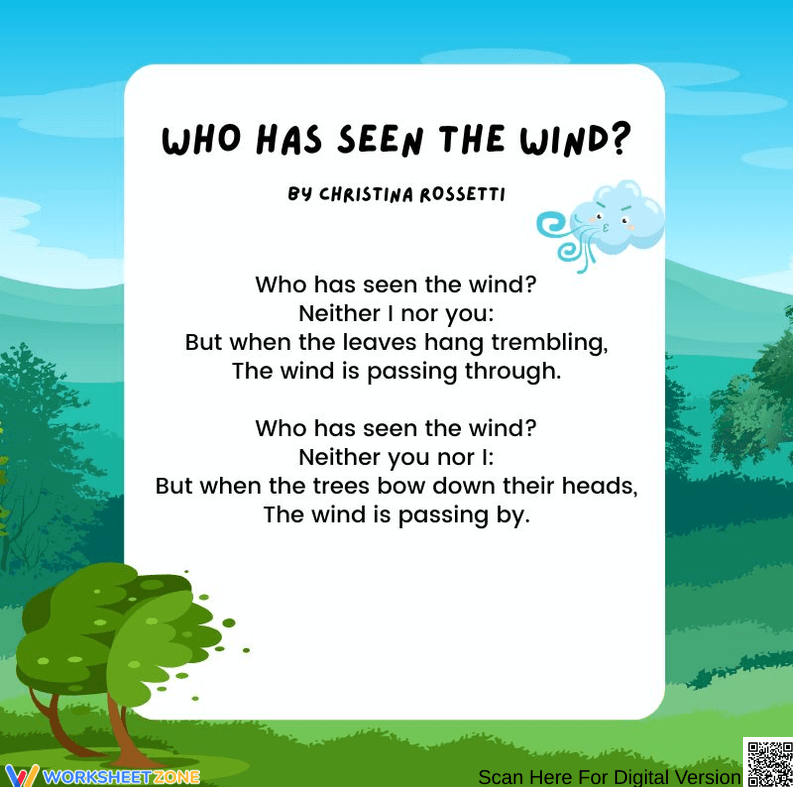
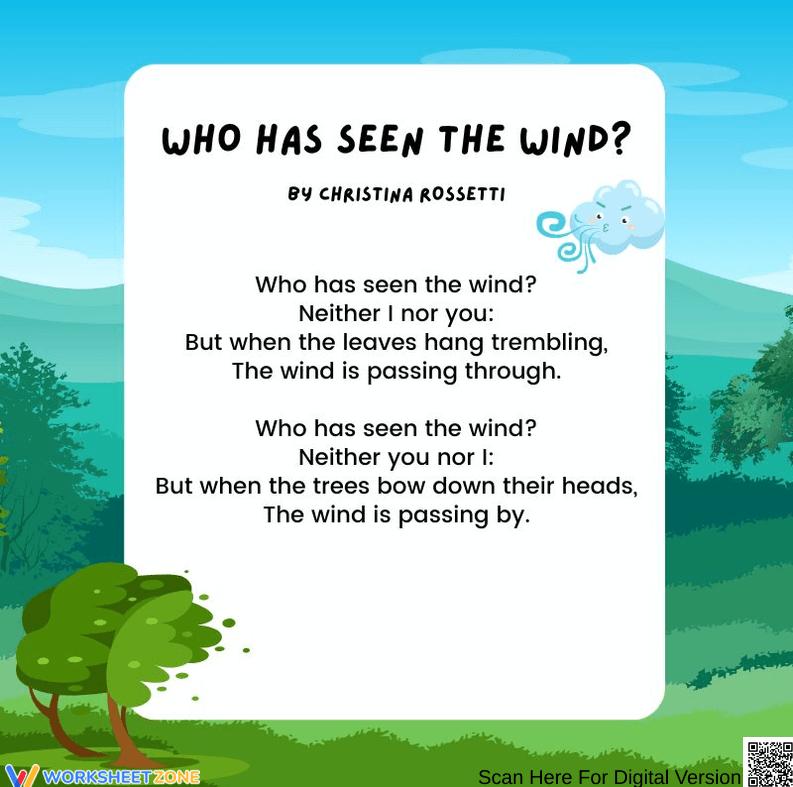
This illustrated poetry poster features Who Has Seen the Wind? by Christina Rossetti—a gentle, lyrical poem that encourages children to explore the invisible forces of nature. With soft visuals of breezy trees and a friendly cloud character, this printable is perfect for introducing poetry, weather concepts, or figurative language to young learners.
Grade Level Suitability:
Best for Grades 1–4 and early literacy or science integration.
• Grades 1–2: Encourages listening, rhyme recognition, and observation skills.
• Grades 3–4: Supports discussion of personification, theme, and poetic structure.
• ESL Learners: Reinforces vocabulary and poetic rhythm with nature-based imagery.
Why Use It:
Rossetti’s poem offers a beautiful example of how poets express abstract ideas using simple, sensory language. It fosters inquiry, descriptive writing, and cross-curricular connections with science.
How to Use It:
Display during poetry month, weather units, or morning meetings. Use it as a springboard for writing about nature, invisible forces, or feelings. Pair with a science activity about wind or a creative drawing project.
Target Users:
Elementary teachers, homeschool educators, librarians, and reading specialists seeking classic poems that engage young minds with curiosity and observation.
This illustrated poetry poster features Who Has Seen the Wind? by Christina Rossetti—a gentle, lyrical poem that encourages children to explore the invisible forces of nature. With soft visuals of breezy trees and a friendly cloud character, this printable is perfect for introducing poetry, weather concepts, or figurative language to young learners.
Grade Level Suitability:
Best for Grades 1–4 and early literacy or science integration.
• Grades 1–2: Encourages listening, rhyme recognition, and observation skills.
• Grades 3–4: Supports discussion of personification, theme, and poetic structure.
• ESL Learners: Reinforces vocabulary and poetic rhythm with nature-based imagery.
Why Use It:
Rossetti’s poem offers a beautiful example of how poets express abstract ideas using simple, sensory language. It fosters inquiry, descriptive writing, and cross-curricular connections with science.
How to Use It:
Display during poetry month, weather units, or morning meetings. Use it as a springboard for writing about nature, invisible forces, or feelings. Pair with a science activity about wind or a creative drawing project.
Target Users:
Elementary teachers, homeschool educators, librarians, and reading specialists seeking classic poems that engage young minds with curiosity and observation.


