


























Views
Downloads


Essential Grade 3 Homographs — Printable No-Prep Worksheet
Paste this activity's link or code into your existing LMS (Google Classroom, Canvas, Teams, Schoology, Moodle, etc.).
Students can open and work on the activity right away, with no student login required.
You'll still be able to track student progress and results from your teacher account.
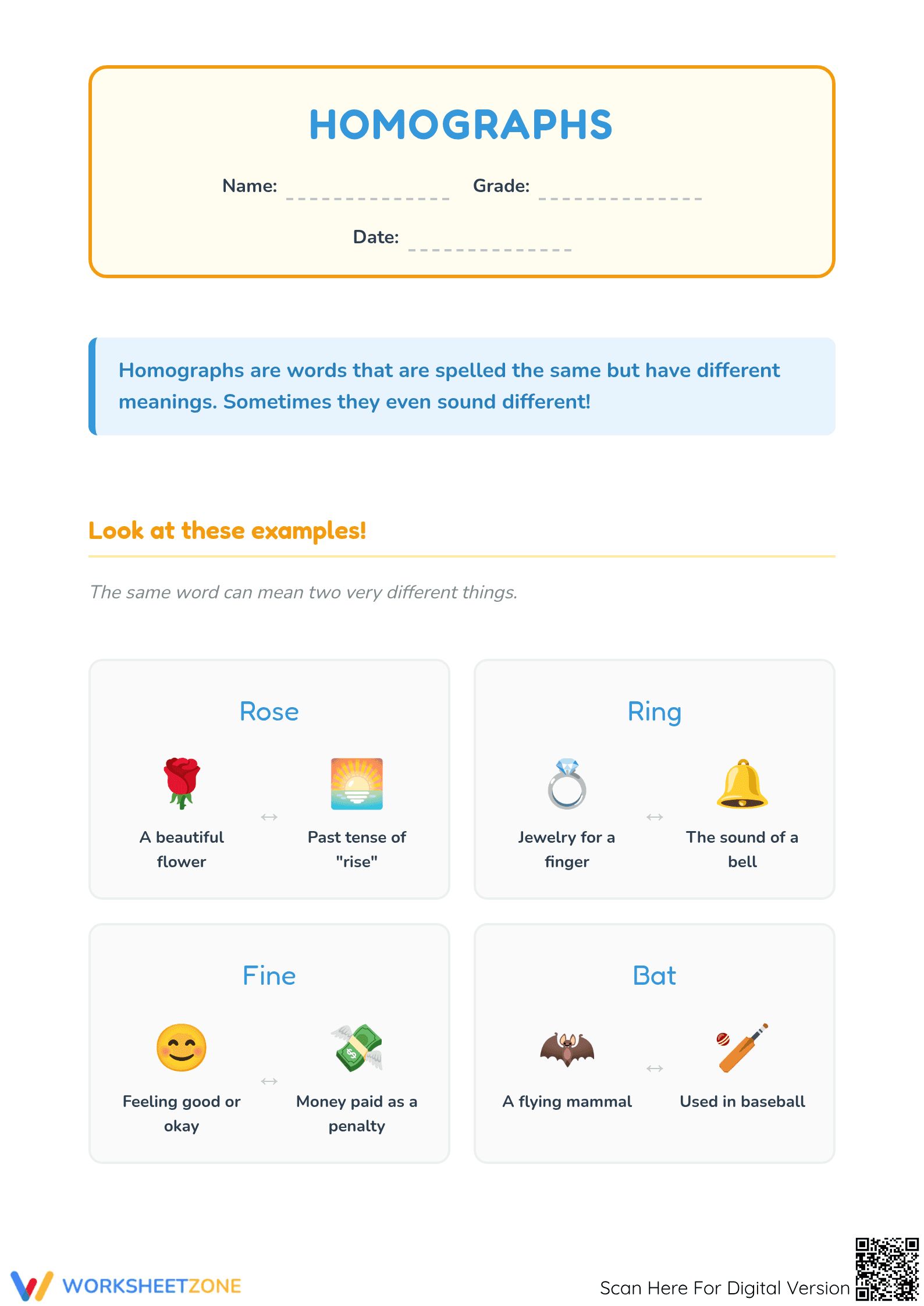
This Grade 3 homographs worksheet provides students with a clear, structured path to mastering multiple-meaning words. By focusing on words that are spelled the same but carry distinct definitions, students learn to rely on context clues to determine the intended meaning. This resource ensures learners can distinguish between common terms like "rose," "ring," and "bat" in various sentence structures.
At a Glance
- Grade: 3 · Subject: ELA
- Standard:
CCSS.ELA-LITERACY.L.3.4.A— Use sentence-level context clues to determine meanings of multiple-meaning words- Skill Focus: Homographs
- Format: 4 pages · 10 problems · Answer key included · PDF
- Best For: Independent practice or quick formative assessment
- Time: 15–20 minutes
What's Inside
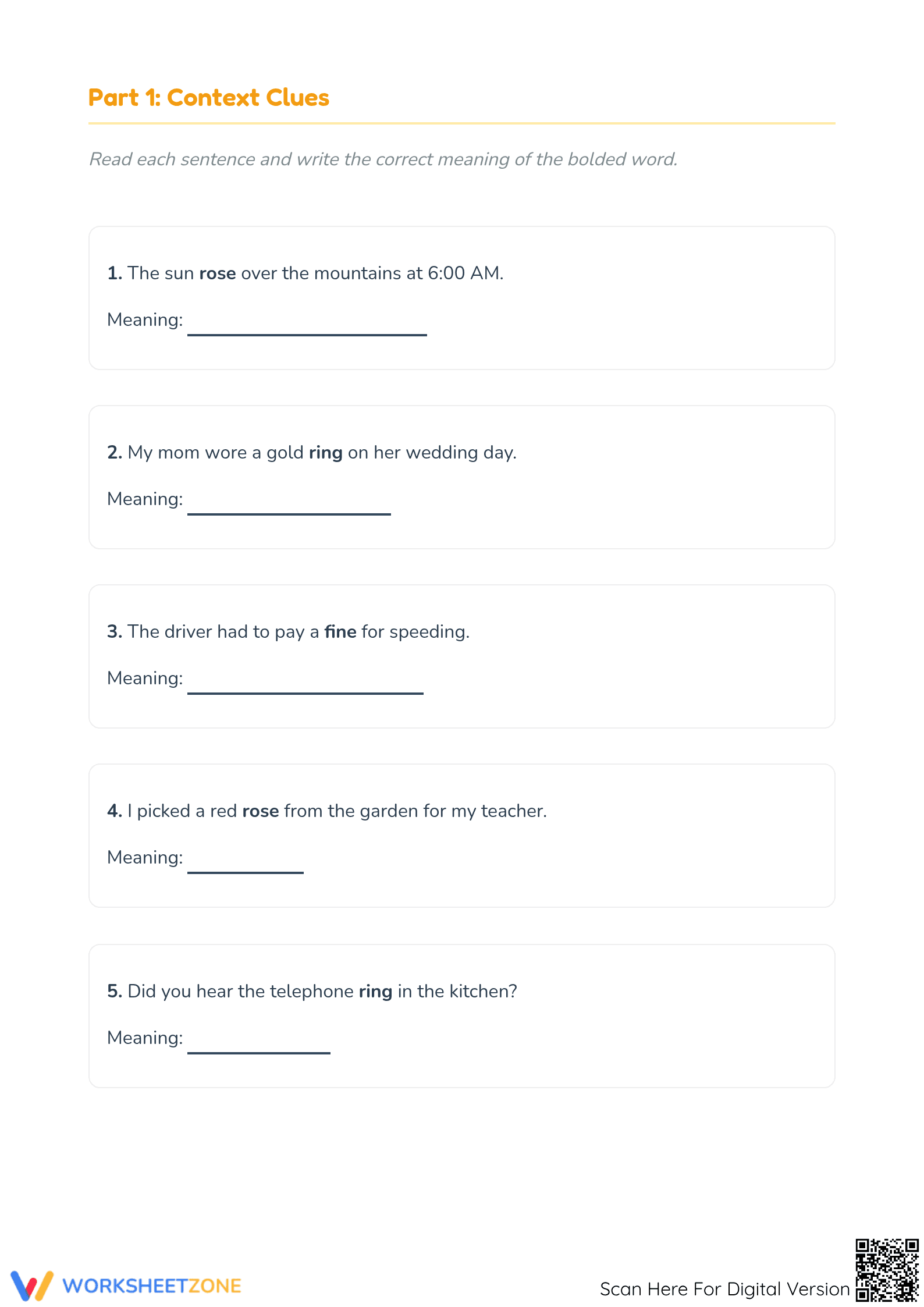
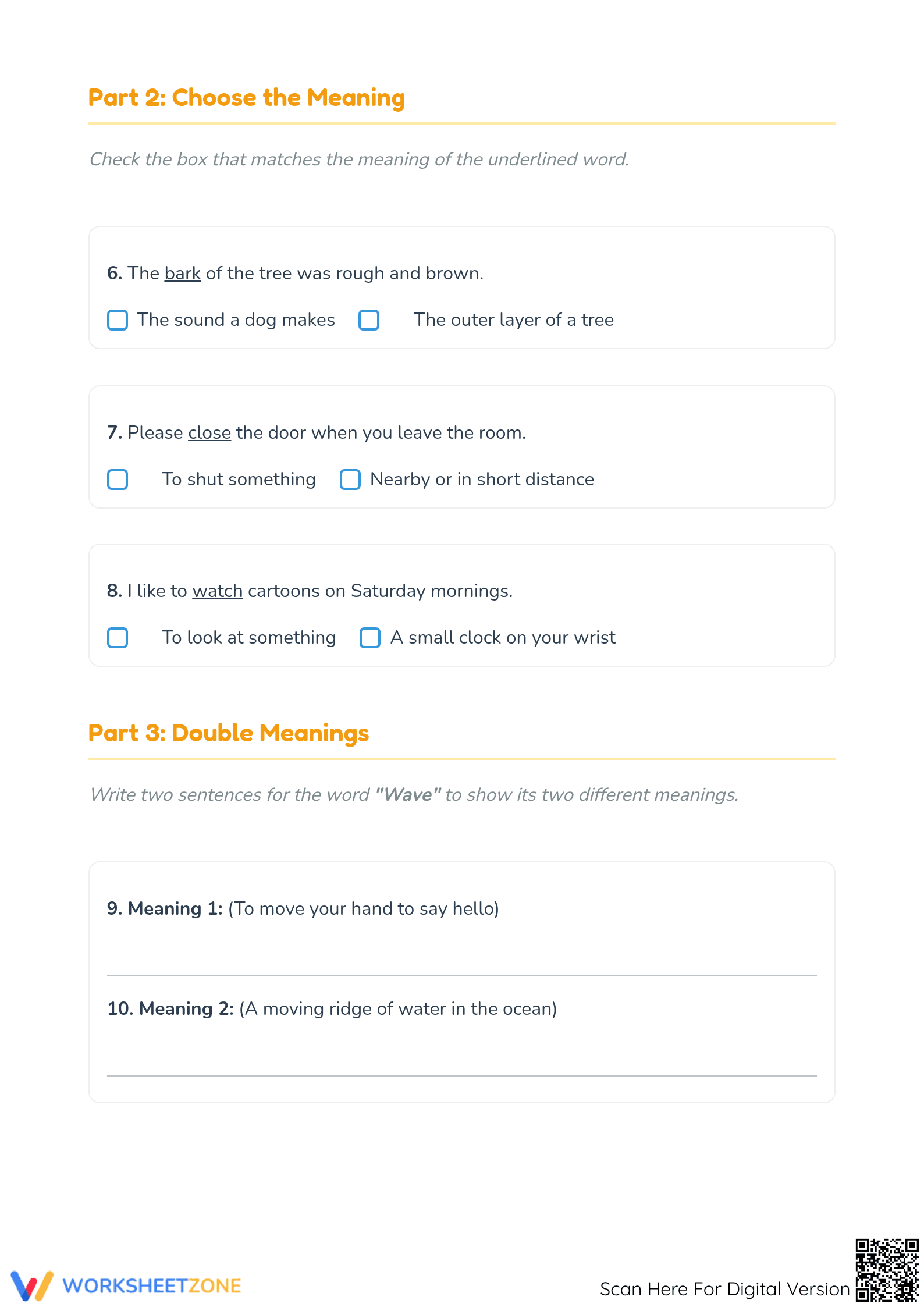
The packet includes a comprehensive visual introduction page featuring four illustrated examples to anchor student understanding. Following the introduction, students engage with 10 specific tasks across three distinct sections: context clue identification, multiple-choice meaning selection, and original sentence construction. The layout is spacious and student-friendly, including a dedicated "Great Job" completion page and a full four-page answer key for rapid grading.
Zero-Prep Workflow
- Print: Select the specific practice pages or the entire 4-page set. Total time: 30 seconds.
- Distribute: Hand out the worksheets for a quiet bell-ringer activity or a focused literacy center station. Total time: 1 minute.
- Review: Use the provided answer key to conduct a whole-class check or allow students to self-correct their work. Total time: 5 minutes.
This resource is designed for immediate classroom implementation, requiring less than two minutes of teacher preparation time, making it an ideal choice for substitute plans or unexpected schedule shifts.
Standards Alignment
This resource aligns directly with `CCSS.ELA-LITERACY.L.3.4.A`: "Use sentence-level context as a clue to the meaning of a word or phrase." It also supports vocabulary acquisition goals by requiring students to synthesize meaning from surrounding text. Both standard codes can be copied directly into lesson plans, IEP goals, or district curriculum mapping tools.
How to Use It
Use this worksheet during the "You Do" phase of a gradual release lesson on vocabulary. It serves as an excellent formative assessment tool; observe students during Part 3 to see if they can independently generate context that clarifies a word's specific meaning. Most students will complete the active portions of the worksheet within 15 to 20 minutes.
Who It's For
This practice set is tailored for third-grade students but is equally effective for fourth-grade review or English Language Learners (ELL) who need visual support for multiple-meaning words. It pairs naturally with a classroom anchor chart on homophones and homographs or a direct instruction lesson on semantic clues.
According to research by Fisher & Frey (2014), the ability to use context clues is a foundational component of reading comprehension and academic vocabulary growth. This worksheet addresses the specific challenge of homographs, which often cause cognitive friction for developing readers. By providing 10 targeted tasks that move from recognition to application, the resource reinforces the linguistic flexibility required by CCSS.ELA-LITERACY.L.3.4.A. The inclusion of visual aids on the introductory page helps bridge the gap for visual learners, ensuring that the concept of "same spelling, different meaning" is concrete before students move into abstract sentence analysis. Utilizing such structured practice helps students internalize the habit of looking beyond the word itself to the surrounding sentence structure. This systematic approach to multiple-meaning words is essential for moving students toward mastery in both language and reading strands, providing a reliable tool for classroom teachers and literacy specialists alike.


