




























Views
Downloads
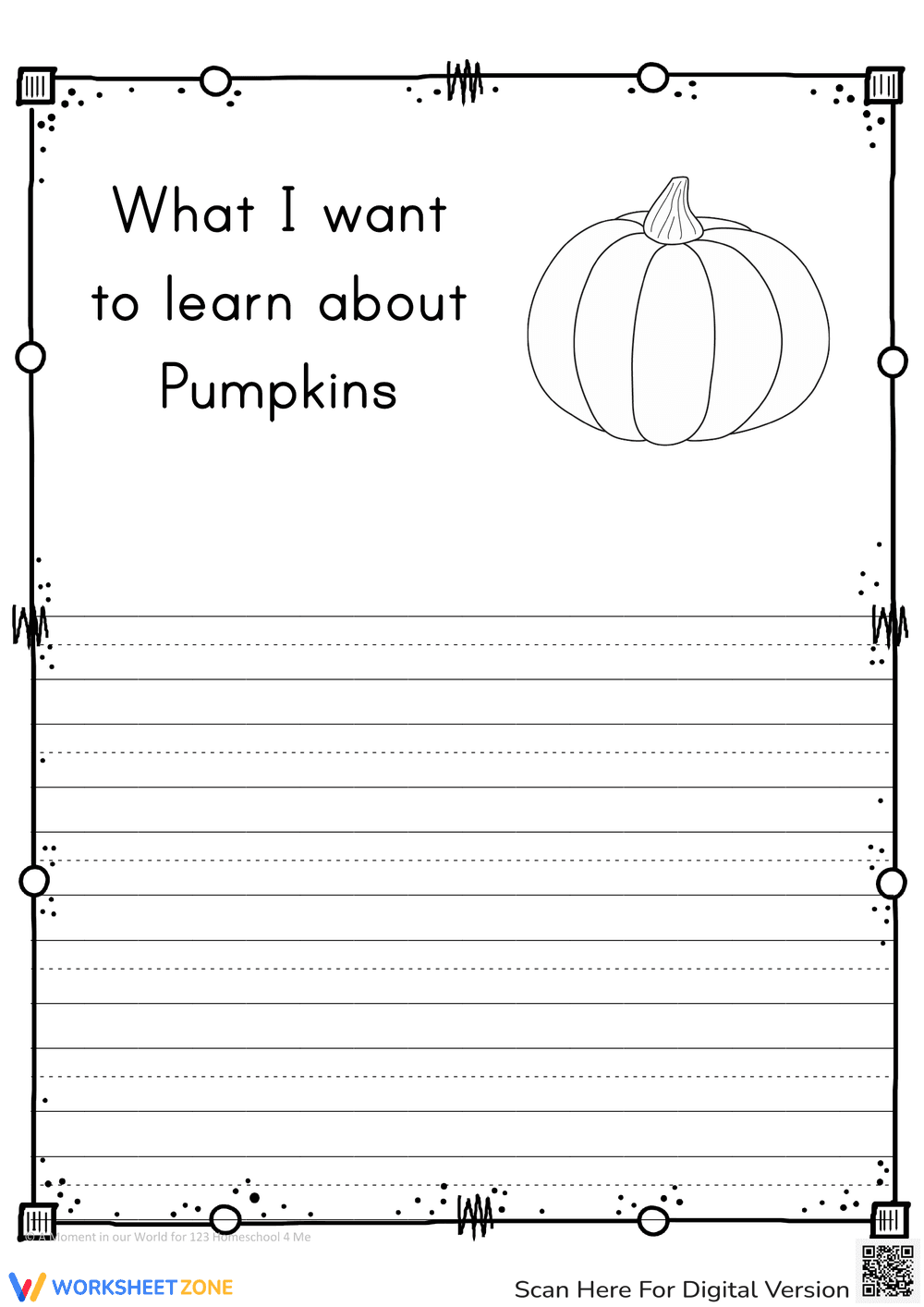

Pumpkin Inquiry Worksheet | Grade 3-8 Essential

Paste this activity's link or code into your existing LMS (Google Classroom, Canvas, Teams, Schoology, Moodle, etc.).
Students can open and work on the activity right away, with no student login required.
You'll still be able to track student progress and results from your teacher account.
This pumpkin-themed inquiry worksheet empowers students to take ownership of their learning by identifying specific areas of interest before beginning a research project or science unit. By articulating what they want to learn, learners activate prior knowledge and establish a clear purpose for reading informational texts or conducting observations.
At a Glance
- Grade: 3-8 · Subject: ELA & Science
- Standard:
CCSS.ELA-LITERACY.W.3.7— Conduct short research projects that build knowledge about a topic- Skill Focus: Inquiry and Questioning
- Format: 1 page · 1 task · No answer key included · PDF
- Best For: Pre-reading activity or KWL supplement
- Time: 10–15 minutes
The resource features a clean, student-friendly layout with a large pumpkin graphic and ample primary-ruled writing lines. The dotted mid-line supports younger writers or those needing handwriting assistance, while the open-ended prompt allows older students to draft complex research questions. This single-page PDF is designed for immediate use without additional teacher instructions.
The zero-prep workflow for this resource is designed for maximum efficiency. First, print the single-page PDF (30 seconds). Second, distribute the sheets to students as a hook for a new unit (1 minute). Third, review student responses to group them by interest for collaborative research projects (5 minutes). Total teacher preparation time is under 2 minutes.
This worksheet aligns with `CCSS.ELA-LITERACY.W.3.7`, which requires students to conduct short research projects that build knowledge about a topic. It also supports higher-grade standards as students progress toward more sophisticated inquiry. Both standard codes can be copied directly into lesson plans, IEP goals, or district curriculum mapping tools.
Use this worksheet during the Engage phase of a 5E science lesson about plant life cycles or as a pre-writing brainstorming tool for a Thanksgiving-themed informational essay. Teachers should observe whether students are asking thin questions (simple facts) or thick questions (complex processes) to provide immediate formative feedback. Completion typically takes 10 to 15 minutes.
This resource is ideal for general education classrooms, homeschool settings, and English Language Learners who benefit from visual cues and structured writing space. It pairs naturally with a non-fiction text about pumpkins or a hands-on pumpkin dissection activity to provide a structured way for students to record their initial curiosities.
According to the RAND AIRS 2024 report, inquiry-based learning frameworks significantly improve student engagement by allowing learners to direct their own investigative paths. This worksheet facilitates the "Want to Know" phase of the KWL strategy, a proven method for increasing comprehension of informational texts. By focusing on CCSS.ELA-LITERACY.W.3.7, the resource ensures that students are not just consuming information but are actively seeking answers to self-generated questions. Research by Fisher & Frey (2014) suggests that when students articulate their own learning goals, they demonstrate higher levels of metacognitive awareness and better retention of subject matter. This printable provides the necessary scaffolding for students to transition from passive observers to active researchers. Using this tool as a formative assessment allows educators to gauge class interest and tailor subsequent instruction to meet the specific needs and curiosities of their student population.


