


























Views
Downloads

Printable Park Vocabulary Worksheet | Grade 1 ELA
Paste this activity's link or code into your existing LMS (Google Classroom, Canvas, Teams, Schoology, Moodle, etc.).
Students can open and work on the activity right away, with no student login required.
You'll still be able to track student progress and results from your teacher account.
Grade 1 Park Vocabulary Analysis
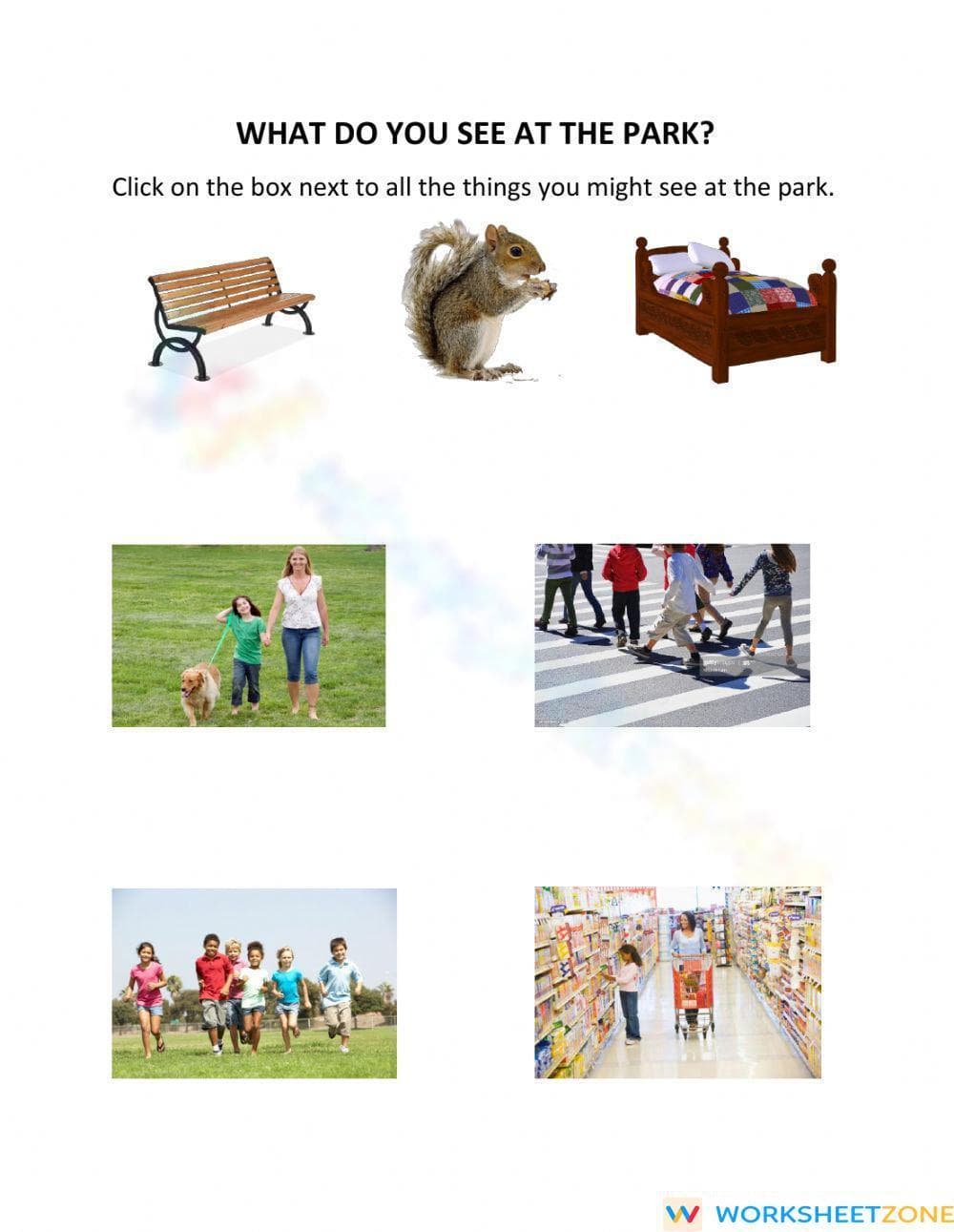
This Grade 1 park vocabulary worksheet helps young learners identify and categorize common objects found in a park setting. By distinguishing between park-related items like benches and squirrels versus unrelated items like beds, students strengthen their observational skills. This resource provides a visual way for students to practice essential language arts concepts and environmental literacy.
At a Glance
- Grade: 1 · Subject: English Language Arts
- Standard:
CCSS.ELA-LITERACY.L.1.5.A— Sort words into categories to gain a sense of the concepts they represent- Skill Focus: Park Vocabulary & Categorization
- Format: 1 page · 7 tasks · Answer key included · PDF
- Best For: Independent center work or quick assessment
- Time: 5–10 minutes
What's Inside
This single-page resource features seven photographic images representing various objects and scenes. Students are prompted to select items they might encounter at a park. The worksheet includes checkboxes for easy marking. The clean, distraction-free layout makes it accessible for early readers or English Language Learners. A complete answer key is included to facilitate quick and accurate grading.
Zero-Prep Workflow
This worksheet is designed for maximum efficiency. Total teacher preparation time is under 2 minutes: simply print and distribute. The instructions are self-explanatory, allowing students to begin work immediately. For review, the visual nature of the tasks allows for a quick 30-second check using a document camera. It is also perfect for emergency sub plans or independent finish-work.
Standards Alignment
The primary standard addressed is `CCSS.ELA-LITERACY.L.1.5.A`, which requires students to sort words into categories to gain a sense of the concepts they represent. By evaluating whether an image belongs in the "park" category, students engage in foundational classification. This work supports broader literacy by building mental schemas. This standard code can be copied directly into lesson plans, IEP goals, or district curriculum mapping tools.
How to Use It
Use this as a formative assessment after a class discussion about community places. It works well during independent literacy centers where students demonstrate understanding of common nouns. A formative tip: notice if students hesitate on images like the "crosswalk," providing an opportunity to discuss how settings overlap. Completion time is typically under 10 minutes, making it a perfect bell-ringer.
Who It's For
This resource is ideal for Grade 1 students, though it can serve as Kindergarten enrichment. It is effective for English Language Learners who benefit from direct pairing of images with vocabulary. The worksheet pairs naturally with informational texts about neighborhood spaces or anchor charts listing community features. It is a versatile tool for any early elementary ELA classroom.
According to RAND AIRS 2024, visual categorization tasks are critical for developing lexical depth in young learners. This worksheet focuses on standard `CCSS.ELA-LITERACY.L.1.5.A`, emphasizing the ability to sort items into conceptual categories, a precursor to organizational structures in reading. Fisher & Frey (2014) notes that providing "I Do, We Do, You Do" opportunities—starting with simple identification and moving toward independent classification—ensures higher retention of vocabulary. By identifying items at the park, students construct a mental framework for environmental literacy. This process is essential for Grade 1 students as they transition from basic naming to analytical thinking. The inclusion of non-examples, such as a bed, forces students to employ exclusionary logic, refining their understanding of the target category. This structured approach builds foundational skills necessary for academic success.


