


























0
Views
0
Downloads

0.0
0
Save
0 Likes
Share
Vegetable Facts: Nutrition and Health Worksheet
0 Views
0 Downloads
Paste this activity's link or code into your existing LMS (Google Classroom, Canvas, Teams, Schoology, Moodle, etc.).
Students can open and work on the activity right away, with no student login required.
You'll still be able to track student progress and results from your teacher account.
Information
Description
What It Is:
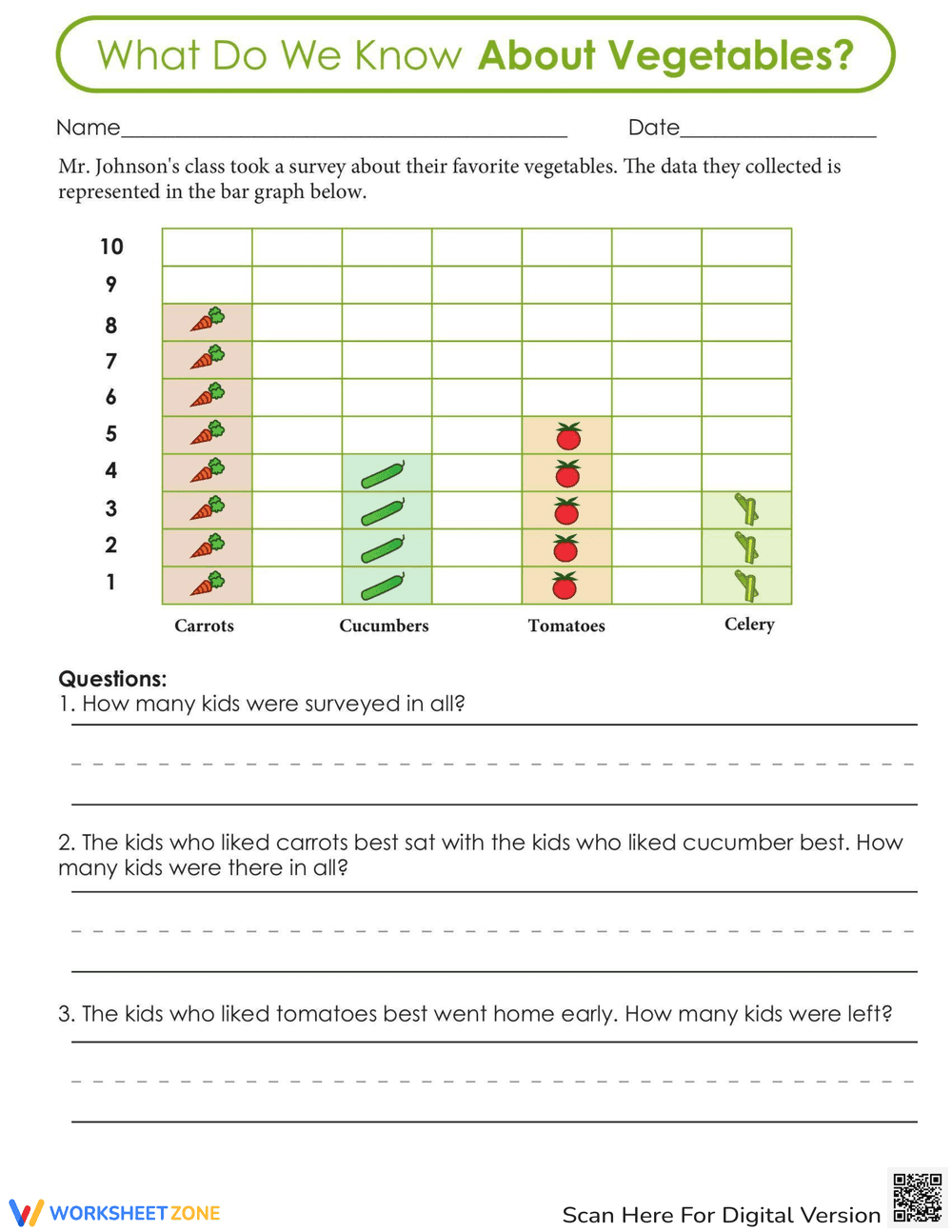
This is a math worksheet focusing on data interpretation using a bar graph. The graph shows the results of a survey about favorite vegetables: carrots, cucumbers, tomatoes, and celery. Students are asked to answer word problems based on the information presented in the bar graph. The questions involve addition and subtraction skills.
Grade Level Suitability:
This worksheet is suitable for 1st and 2nd grade students. The questions require basic addition and subtraction skills, and the bar graph is simple to understand.
Why Use It:
This worksheet helps students practice reading and interpreting data from a bar graph. It reinforces addition and subtraction skills in a real-world context and promotes critical thinking through problem-solving.
How to Use It:
Students should first analyze the bar graph to determine how many students chose each vegetable. Then, they should use this information to answer the word problems, using addition or subtraction as needed. Provide support in reading the graph and understanding the questions if needed.
Target Users:
This worksheet is designed for elementary school students, specifically those in 1st and 2nd grade who are learning about data interpretation and basic math skills. It's also beneficial for teachers looking for engaging math activities related to surveys and graphing.
This is a math worksheet focusing on data interpretation using a bar graph. The graph shows the results of a survey about favorite vegetables: carrots, cucumbers, tomatoes, and celery. Students are asked to answer word problems based on the information presented in the bar graph. The questions involve addition and subtraction skills.
Grade Level Suitability:
This worksheet is suitable for 1st and 2nd grade students. The questions require basic addition and subtraction skills, and the bar graph is simple to understand.
Why Use It:
This worksheet helps students practice reading and interpreting data from a bar graph. It reinforces addition and subtraction skills in a real-world context and promotes critical thinking through problem-solving.
How to Use It:
Students should first analyze the bar graph to determine how many students chose each vegetable. Then, they should use this information to answer the word problems, using addition or subtraction as needed. Provide support in reading the graph and understanding the questions if needed.
Target Users:
This worksheet is designed for elementary school students, specifically those in 1st and 2nd grade who are learning about data interpretation and basic math skills. It's also beneficial for teachers looking for engaging math activities related to surveys and graphing.


