


























Views
Downloads

Letter C Beginning Sounds | Printable Preschool Worksheet
Paste this activity's link or code into your existing LMS (Google Classroom, Canvas, Teams, Schoology, Moodle, etc.).
Students can open and work on the activity right away, with no student login required.
You'll still be able to track student progress and results from your teacher account.
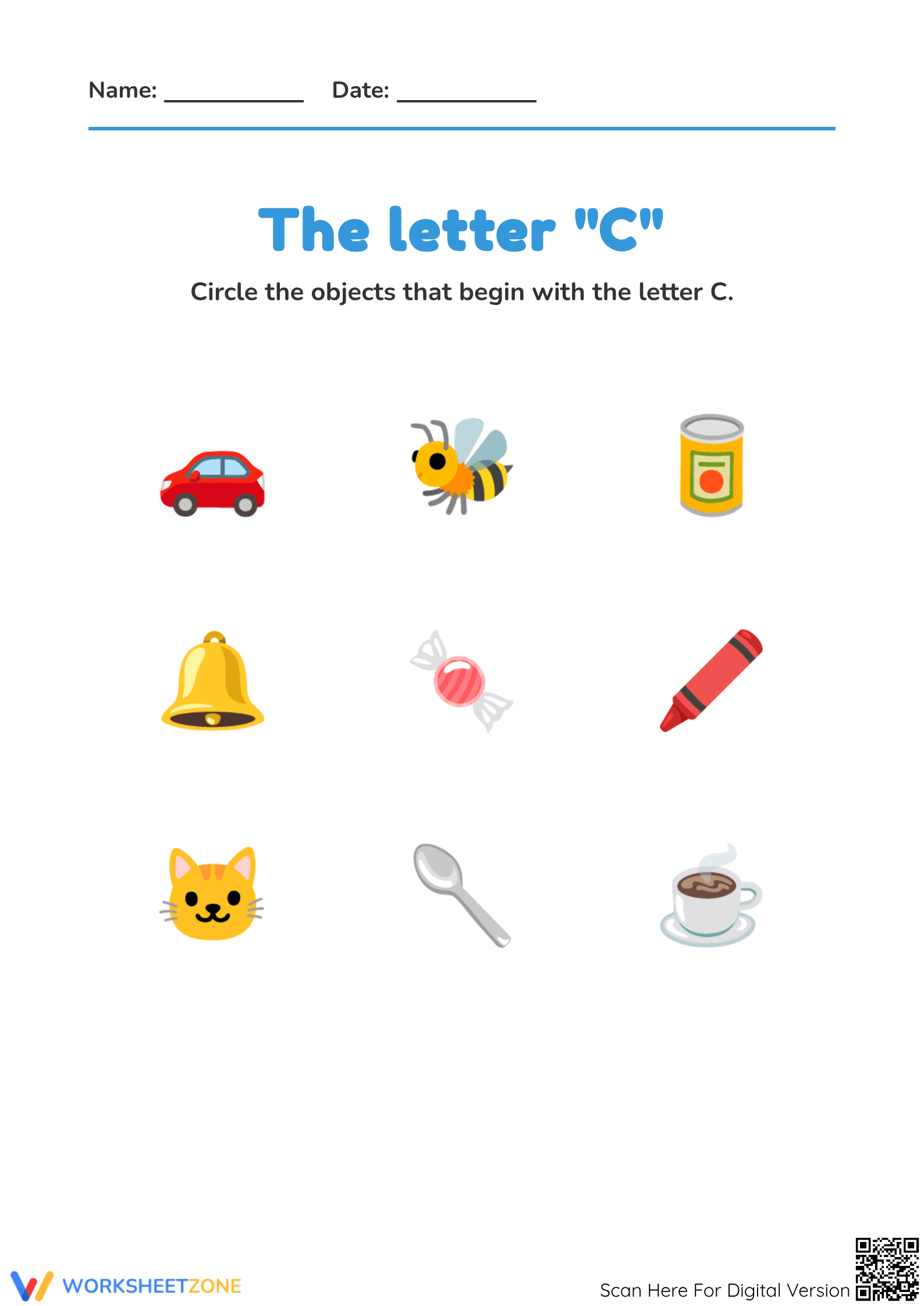
This foundational phonics worksheet helps early learners identify the beginning sound of the letter C. By evaluating familiar objects and selecting those that start with the target letter, preschool students build essential phonemic awareness and object recognition skills necessary for future reading success.
At a Glance
- Grade: Preschool · Subject: ELA
- Standard:
CCSS.ELA-LITERACY.RF.K.3.A— Identify primary sounds for consonants- Skill Focus: Beginning Sounds (Letter C)
- Format: 2 pages · 12 problems · Answer key included · PDF
- Best For: Independent practice
- Time: 10–15 minutes
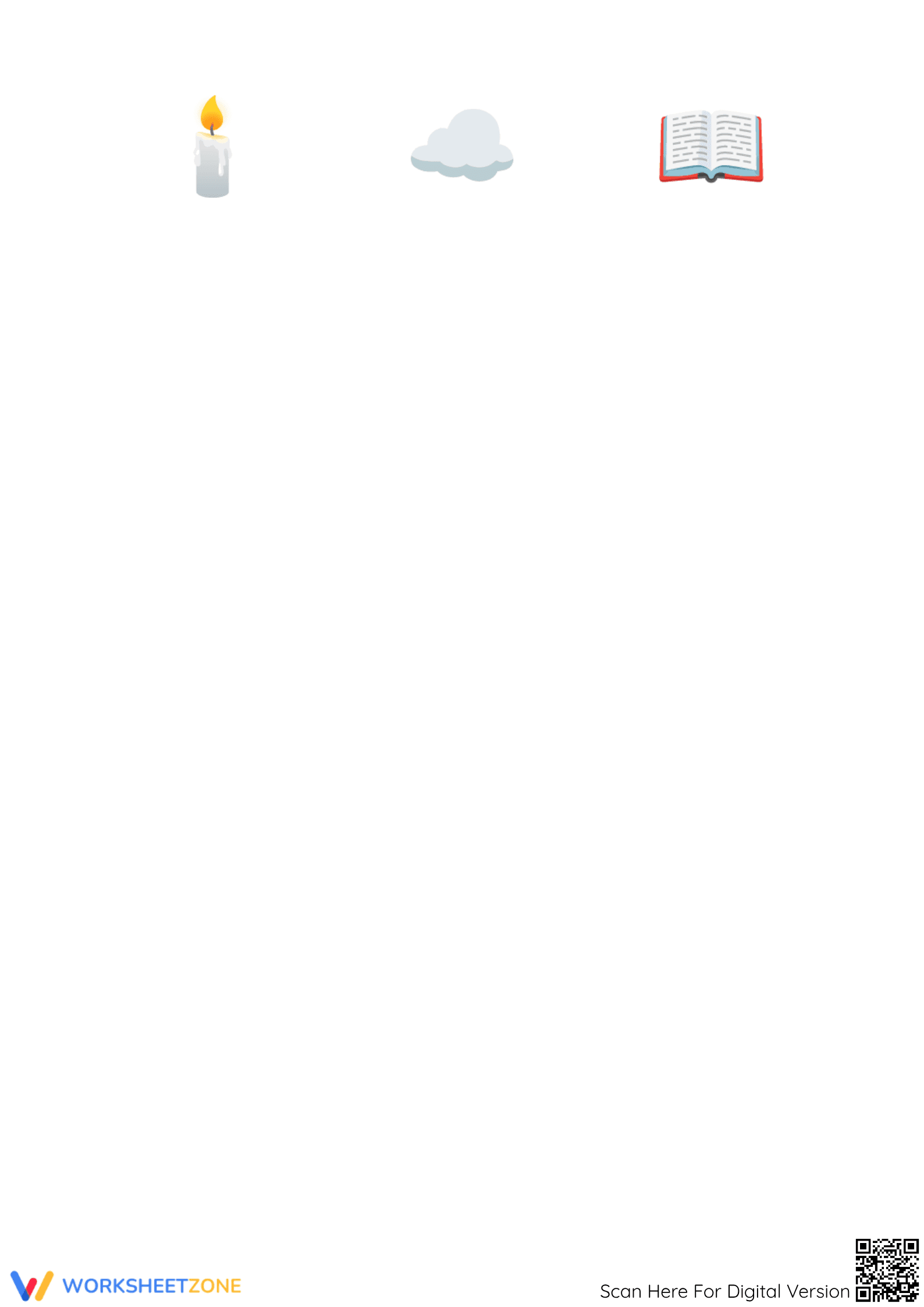
This resource features two pages of highly visual, engaging practice. Students are presented with twelve colorful illustrations of everyday items, such as a car, cat, and candle. They must say the name of each object out loud and circle only the pictures that begin with the hard "C" sound. A complete answer key is provided to ensure accurate feedback and easy grading.
Zero-Prep Workflow
- Print: Download the PDF and print the two-page activity.
- Distribute: Hand out the worksheets and model naming an object.
- Review: Use the included answer key to quickly check student work.
With under two minutes of prep required, this activity is perfect for any emergency sub plan or morning routine.
Standards Alignment
This activity aligns with CCSS.ELA-LITERACY.RF.K.3.A: Demonstrate basic knowledge of one-to-one letter-sound correspondences by producing the primary sound or many of the most frequent sounds for each consonant. It also supports early vocabulary development as students name each pictured item. Both standard codes can be copied directly into lesson plans, IEP goals, or district curriculum mapping tools.
How to Use It
Use this during small group literacy centers after introducing the letter C, allowing students to practice independently. Alternatively, assign it as morning work. The expected completion time is 10 to 15 minutes. As a formative assessment tip, observe students as they work; if a child circles the "bell," ask them to say the word aloud to check if the error is in object identification or sound isolation.
Who It's For
This resource is designed for preschool and early kindergarten students learning basic phonics. It is also effective for English Language Learners building vocabulary, as the imagery supports word acquisition. Pair this worksheet with a letter C anchor chart or a read-aloud book featuring the target sound.
Developing phonemic awareness through targeted practice with initial consonant sounds is a critical stepping stone for early literacy and long-term reading success. According to Fisher & Frey (2014), providing students with clear, visual scaffolds during foundational skills practice significantly increases their ability to transfer these isolated skills to independent reading and writing tasks. This specific worksheet directly supports CCSS.ELA-LITERACY.RF.K.3.A by requiring students to identify primary sounds for consonants in a highly structured format. By isolating the beginning sound of the letter C and connecting it to easily recognizable everyday objects, young learners strengthen both their auditory processing and visual association capabilities. Consistent, daily exposure to these types of focused, single-letter activities builds the automaticity required for later decoding and spelling proficiency. Educators can rely on this evidence-based approach to ensure students establish a robust, reliable foundation for their future academic journeys in language arts.


