


























Views
Downloads
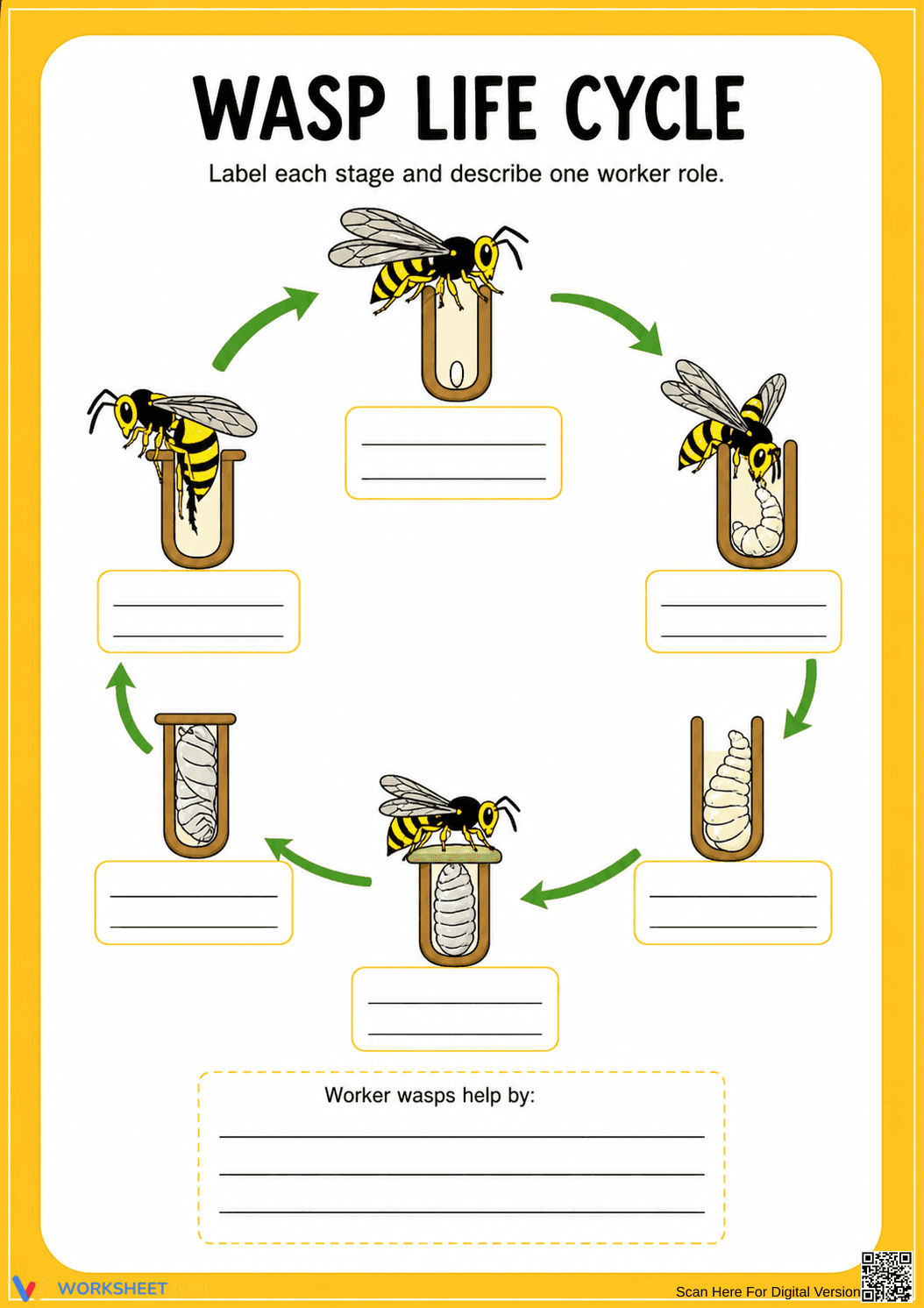

Essential Wasp Life Cycle Worksheet | Grade 6-7 Science
Paste this activity's link or code into your existing LMS (Google Classroom, Canvas, Teams, Schoology, Moodle, etc.).
Students can open and work on the activity right away, with no student login required.
You'll still be able to track student progress and results from your teacher account.
This Grade 6 and 7 science worksheet guides students through the complete metamorphosis of a wasp while exploring the social dynamics of a colony. By labeling specific biological stages and identifying worker contributions, learners gain a comprehensive understanding of insect development and cooperative survival strategies in the natural world.
At a Glance
- Grade: 6-7 · Subject: Life Science
- Standard:
MS-LS1-4— Explain how animal behaviors affect the probability of successful reproduction- Skill Focus: Metamorphosis & Social Roles
- Format: 1 page · 7 tasks · Answer key included · PDF
- Best For: Independent practice or quick assessment
- Time: 15–20 minutes
What's Inside
Inside this resource, you will find a high-quality visual diagram featuring six distinct stages of the wasp life cycle. The layout includes dedicated labeling boxes for each phase—from egg to adult—and a structured writing prompt at the bottom for describing the vital roles of worker wasps. The clear arrows and detailed illustrations ensure students can follow the progression easily.
Zero-Prep Workflow
- Print: Generate copies of the single-page PDF in under 30 seconds.
- Distribute: Hand out to students for immediate use as a bell-ringer or main activity.
- Review: Use the included answer key for a 2-minute rapid review session to check for understanding.
This worksheet serves as an ideal resource for emergency sub plans or as a transition activity between direct instruction and lab work.
Standards Alignment
This resource aligns with `MS-LS1-4`, focusing on how specialized animal behaviors, such as the cooperative roles of worker wasps, contribute to the survival and reproduction of the species. It also supports `MS-LS1-5` by illustrating the physical changes during growth. Both standard codes can be copied directly into lesson plans, IEP goals, or district curriculum mapping tools.
How to Use It
Use this worksheet as a formative assessment after a lecture on Hymenoptera or as a collaborative activity where students compare wasp development to other insects. A great observation tip is to check if students can distinguish between the larval and pupal stages based on the visual cues provided. Completion typically takes 15 to 20 minutes.
Who It's For
This activity is tailored for middle school science students, including those requiring visual aids or structured writing frames. It pairs naturally with an insect anatomy anchor chart or a video documentary on social insects. The clear diagrams provide necessary scaffolding for English Language Learners and students with diverse learning needs.
According to the RAND AIRS 2024 report, high-quality visual organizers significantly improve the retention of complex biological sequences in middle school learners. This worksheet utilizes the MS-LS1-4 standard to bridge the gap between simple life cycle identification and the more complex understanding of social insect behaviors. By requiring students to articulate the logic behind worker roles, the resource moves beyond rote memorization toward functional scientific literacy. Research from Fisher & Frey (2014) suggests that such structured labeling tasks provide the necessary cognitive scaffolding for students to transition from guided practice to independent mastery of life science concepts. This 1-page PDF ensures that the 7 specific tasks are aligned with current evidence-based instructional practices for Grade 6 and 7 science curricula.


