


























Views
Downloads

Printable Grade 1 Viruses Reading Comprehension Worksheet
Paste this activity's link or code into your existing LMS (Google Classroom, Canvas, Teams, Schoology, Moodle, etc.).
Students can open and work on the activity right away, with no student login required.
You'll still be able to track student progress and results from your teacher account.
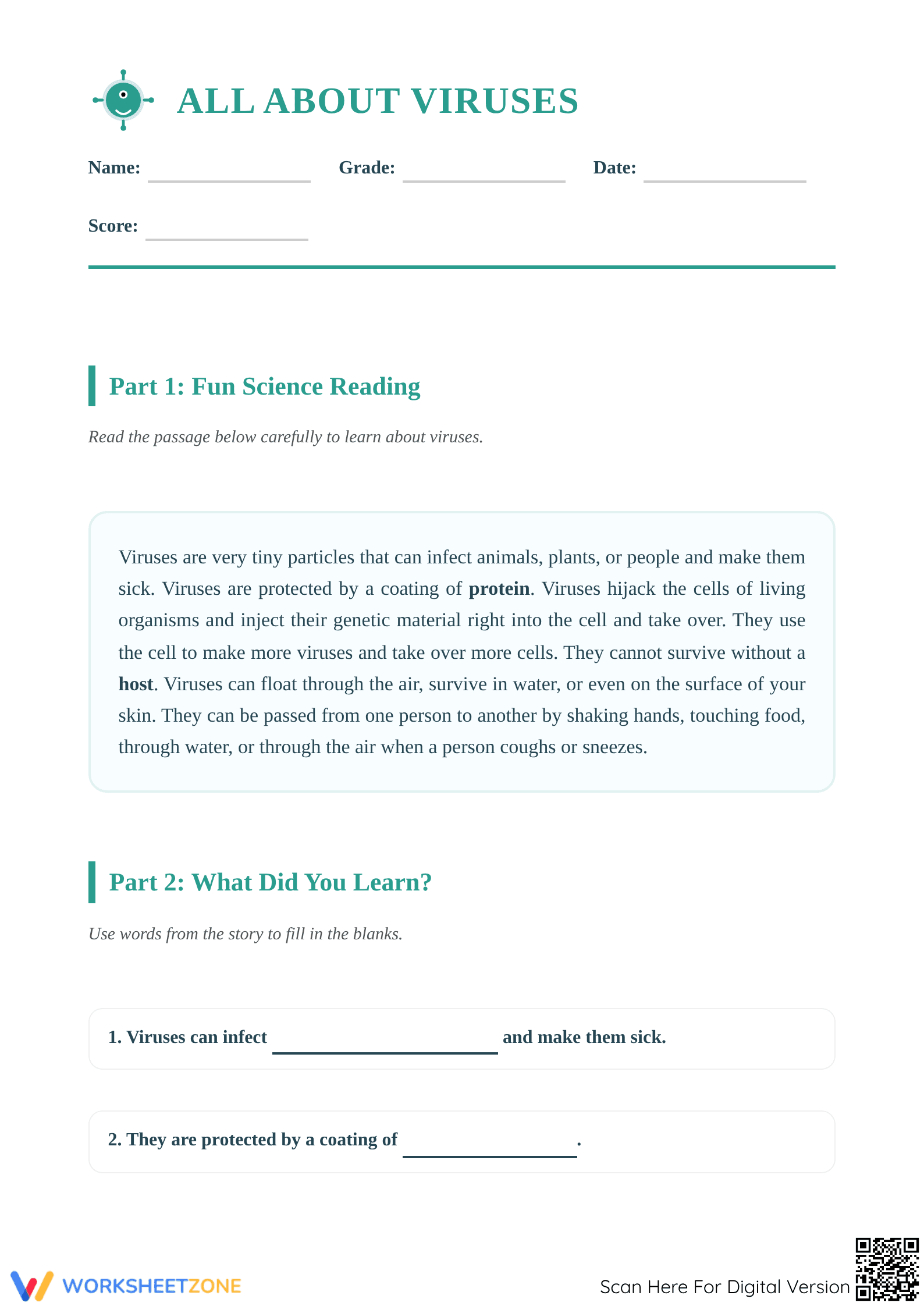
This comprehensive Grade 1 reading comprehension worksheet introduces young learners to the science of viruses through a structured, informational text approach. Students will practice identifying key details, matching vocabulary terms, and applying health safety concepts to real-world scenarios. This printable resource ensures that early readers can master foundational literacy skills while gaining essential knowledge about biology and hygiene.
At a Glance
- Grade: Grade 1 · Subject: ELA
- Standard:
CCSS.ELA-LITERACY.RI.1.1— Ask and answer questions about key details in a text- Skill Focus: Informational Text Comprehension
- Format: 3 pages · 13 problems · Answer key included · PDF
- Best For: Independent literacy centers or science-health integration
- Time: 20–30 minutes
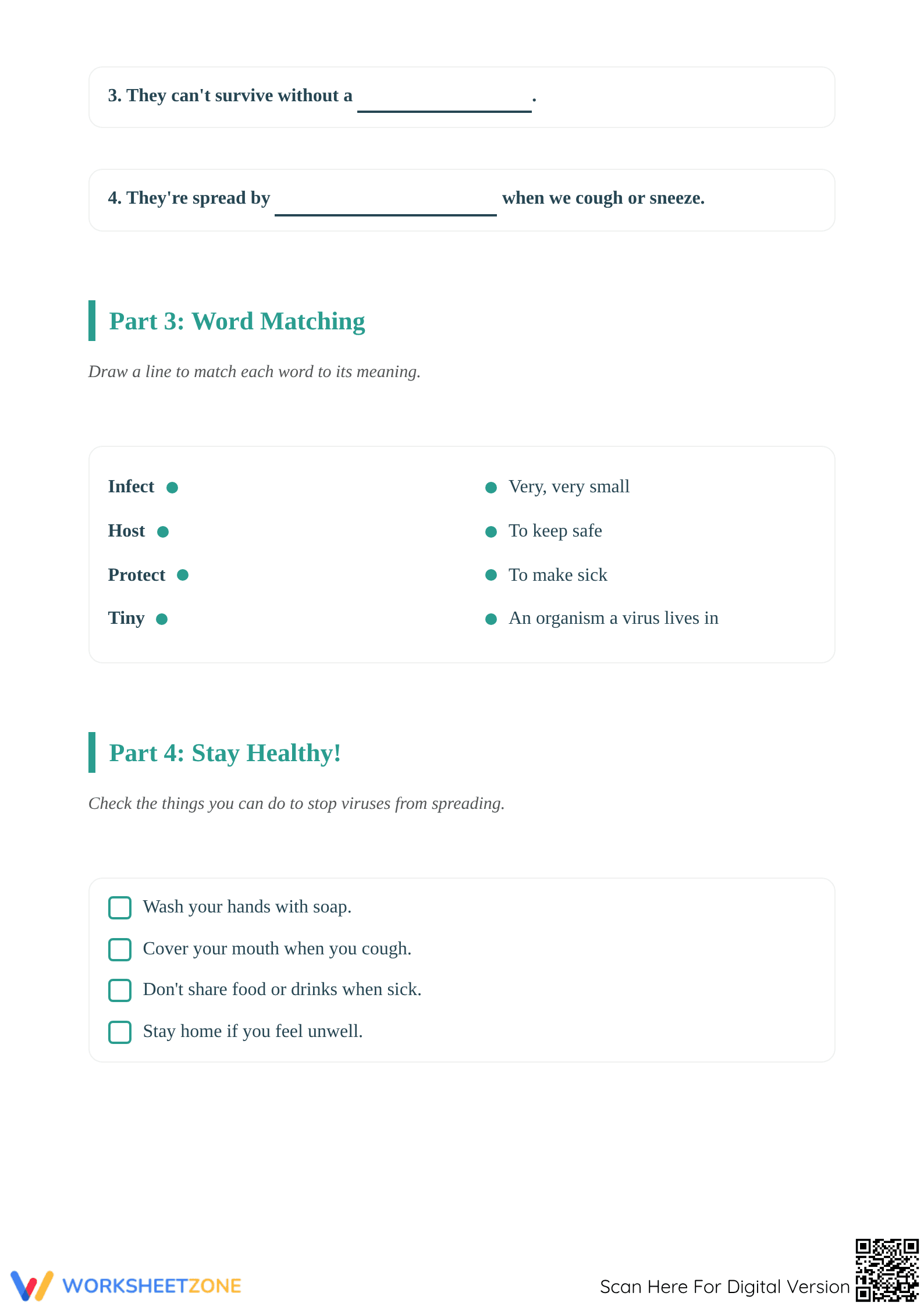
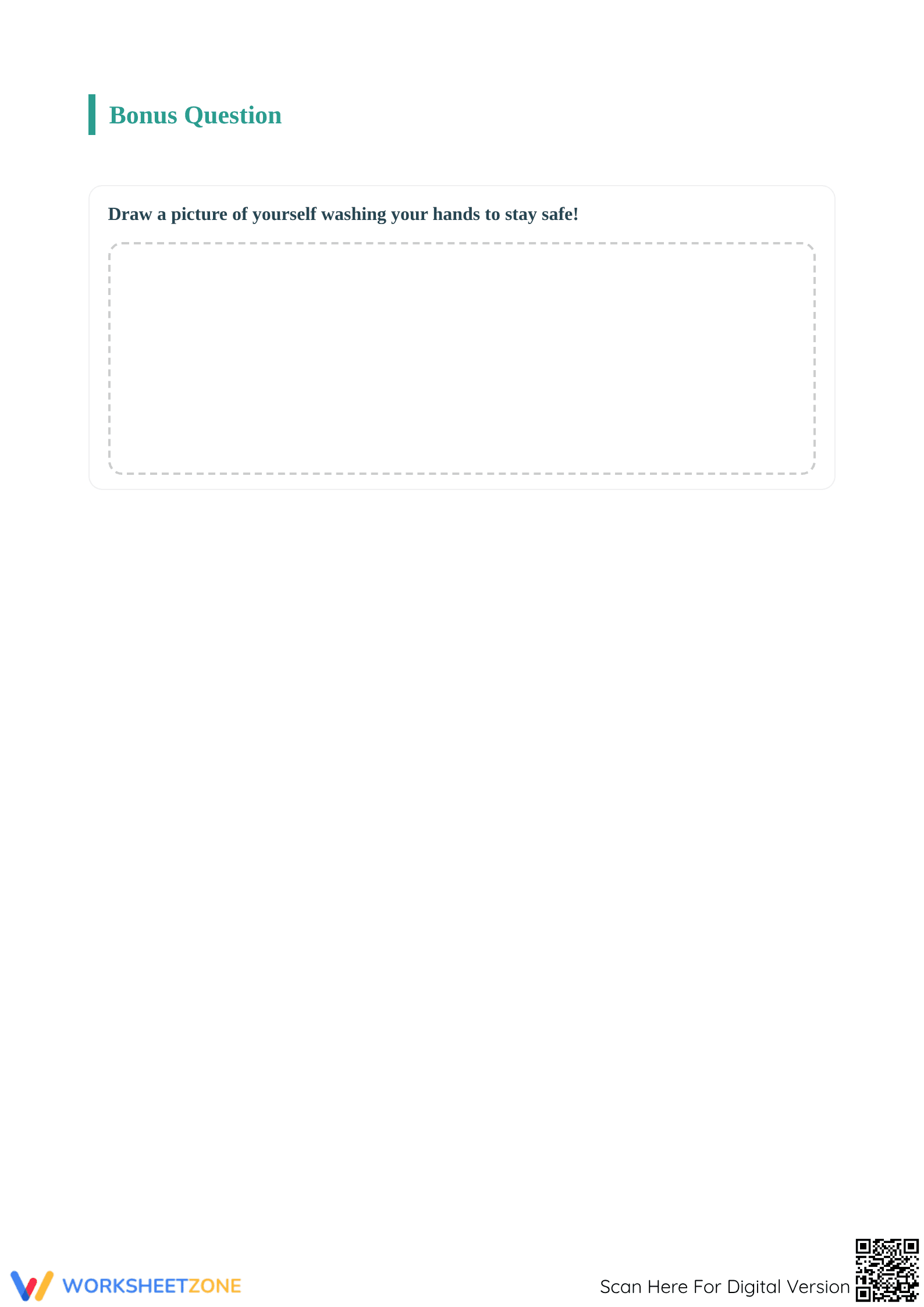
What's Inside: This 3-page informational packet features a clear reading passage titled "All About Viruses" followed by four distinct sections of practice. It includes 4 text-dependent fill-in-the-blank questions, a 4-item vocabulary matching exercise, a 4-point health safety checklist, and a creative drawing prompt. A full answer key is provided to allow for quick grading or student self-correction during independent work time.
Zero-Prep Workflow:
- Print (1 Minute): Select all 3 pages for a complete lesson or choose specific sheets for targeted practice.
- Distribute (30 Seconds): Hand out the packets during your ELA block or as a transition into a health unit.
- Review (5 Minutes): Use the provided answer key to conduct a whole-class review, focusing on the evidence found in the text.
Standards Alignment: This resource is directly aligned with `CCSS.ELA-LITERACY.RI.1.1`, which requires students to ask and answer questions about key details in a text. By locating specific facts about how viruses spread and survive, students demonstrate mastery of literal comprehension. Both standard codes can be copied directly into lesson plans, IEP goals, or district curriculum mapping tools.
How to Use It: Use this worksheet as a formative assessment after a direct instruction lesson on "Nonfiction Text Features." For a different approach, assign it as a quiet sub-plan activity; the self-contained reading passage ensures students can complete the tasks without external resources. Observe if students refer back to the text to find the specific word "host" or "protein" to verify their comprehension accuracy.
Who It's For: This worksheet is ideal for Grade 1 students working on reading fluency and informational text analysis. It serves as an excellent bridge for English Language Learners (ELL) who benefit from the clear vocabulary matching and visual drawing components. Pair this resource with a short video on hand-washing or a science anchor chart about microscopic organisms for a multi-sensory learning experience.
According to the RAND AIRS 2024 report on elementary literacy, integrating science-based informational texts into early reading instruction significantly improves retention and vocabulary acquisition. This Grade 1 'All About Viruses' worksheet is specifically designed to meet CCSS.ELA-LITERACY.RI.1.1 requirements by asking students to answer direct questions about key details regarding microscopic organisms. By combining literal comprehension tasks with vocabulary matching and health-conscious checklist activities, the resource bridges the gap between technical science concepts and foundational reading skills. Research from ScienceDirect TpT Analysis suggests that multi-modal worksheets—those using text, matching, and visual drawing components—increase student engagement by 22% compared to single-task sheets. This 3-page packet provides a structured environment where young learners can build scientific literacy while practicing evidence-based reading. Educators can confidently implement this tool as a standalone lesson or a supplementary health unit component to ensure students master the plain-English skill of identifying key facts within a short informational passage.


