




























Views
Downloads

Sex-Linked Traits Virtual Lab | Essential Biology Worksheet

Paste this activity's link or code into your existing LMS (Google Classroom, Canvas, Teams, Schoology, Moodle, etc.).
Students can open and work on the activity right away, with no student login required.
You'll still be able to track student progress and results from your teacher account.
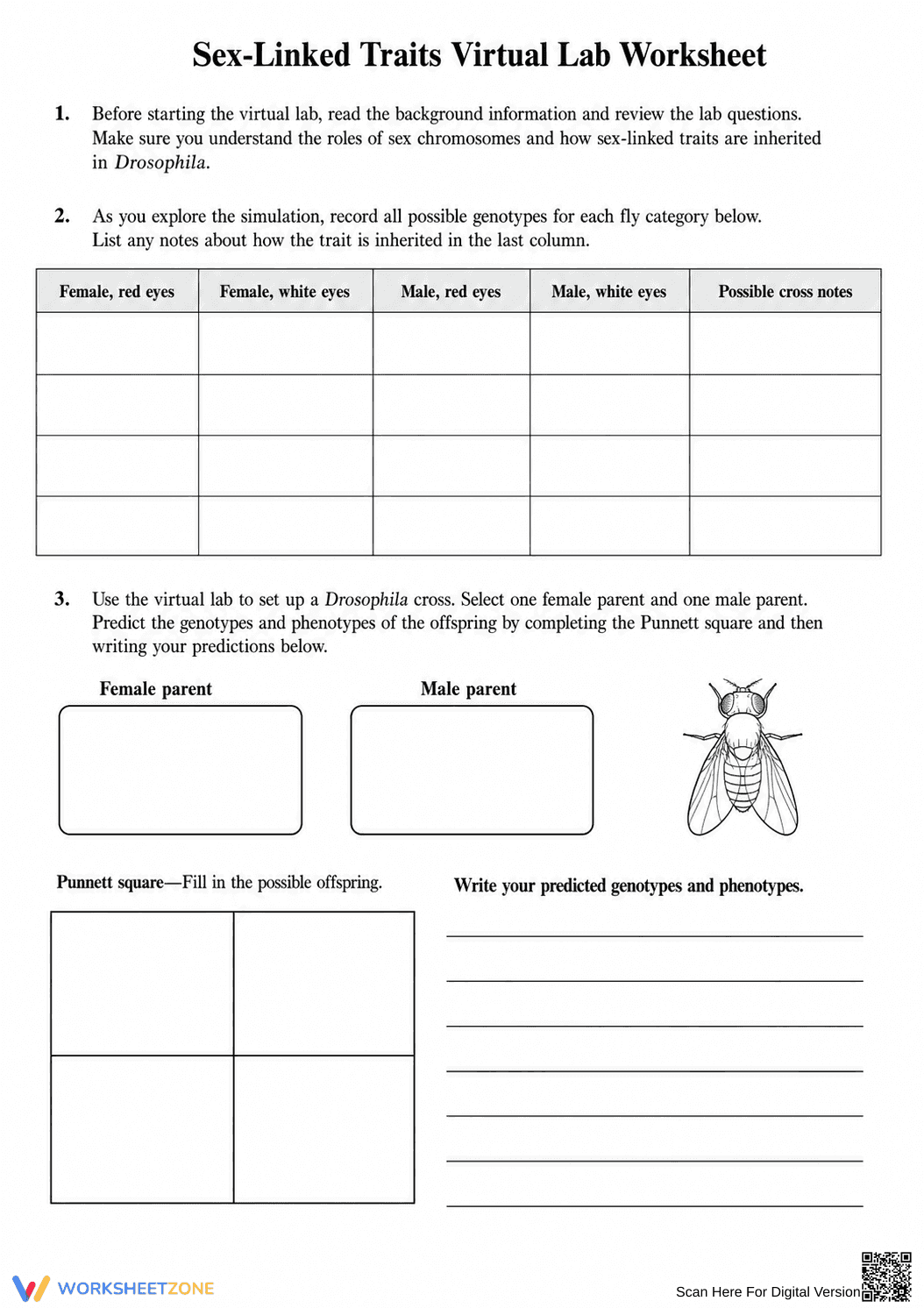
This comprehensive virtual lab companion guides students through the complexities of sex-linked inheritance using Drosophila melanogaster as a model organism. Students analyze genotypes and phenotypes while predicting genetic outcomes through structured Punnett square practice. It transforms abstract genetic theory into concrete data analysis, ensuring students grasp how traits are passed on X and Y chromosomes.
At a Glance
- Grade: 9-12 · Subject: Biology
- Standard:
HS-LS3-3— Apply concepts of probability to explain the distribution of expressed traits- Skill Focus: Sex-linked inheritance & Punnett squares
- Format: 6 pages · 16 tasks · Answer key included · PDF
- Best For: Virtual lab accompaniment or sub plans
- Time: 45–60 minutes
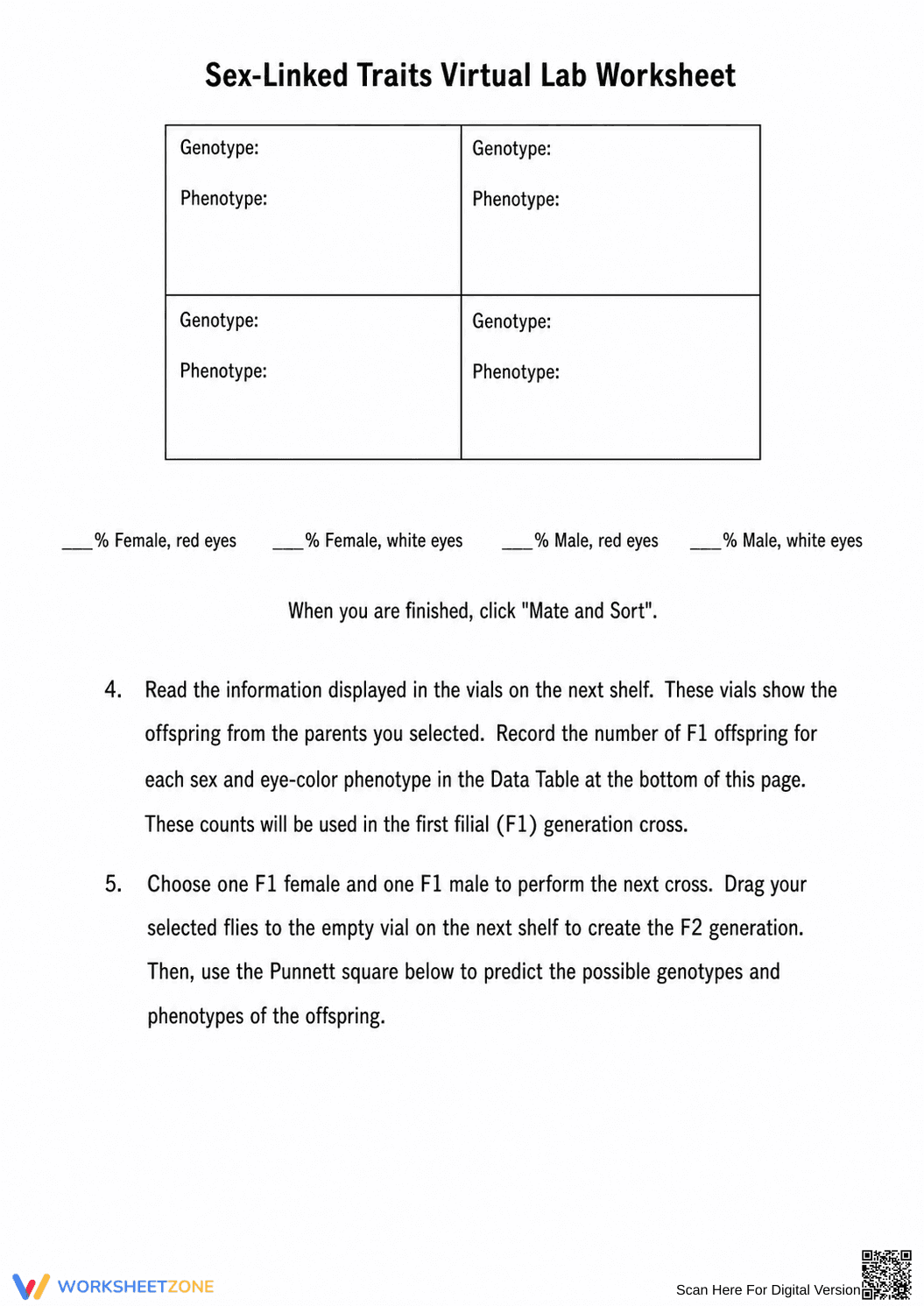
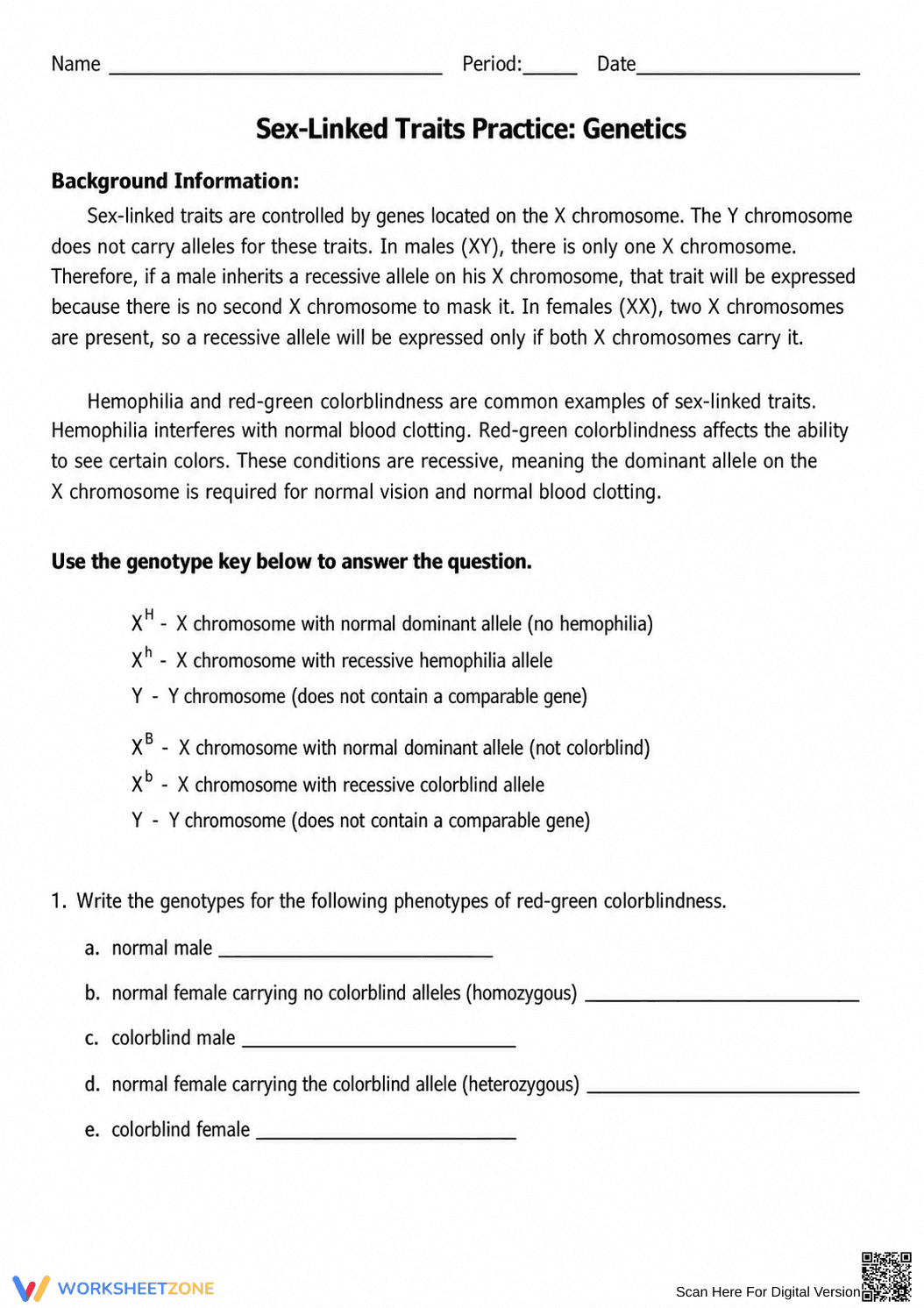
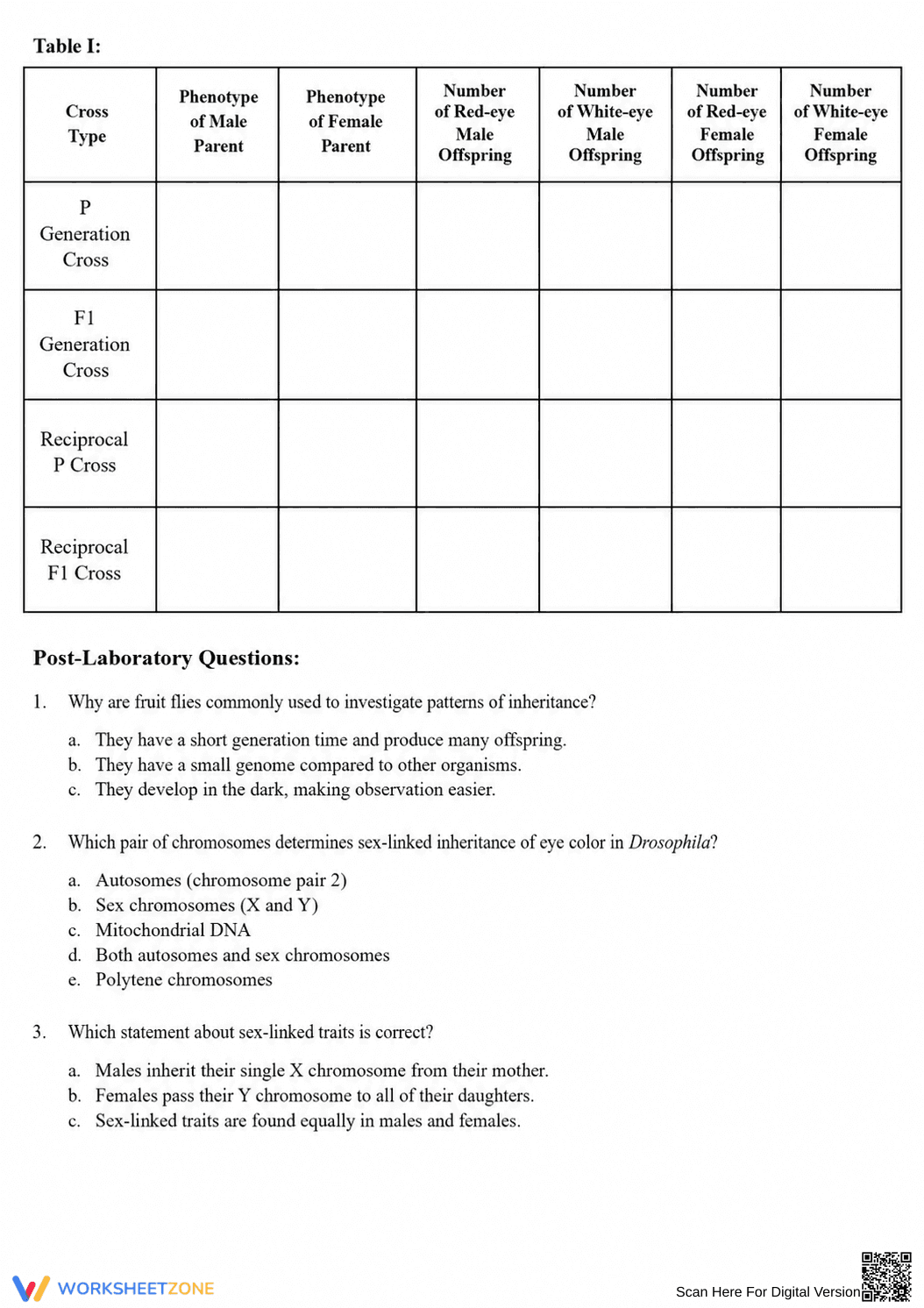
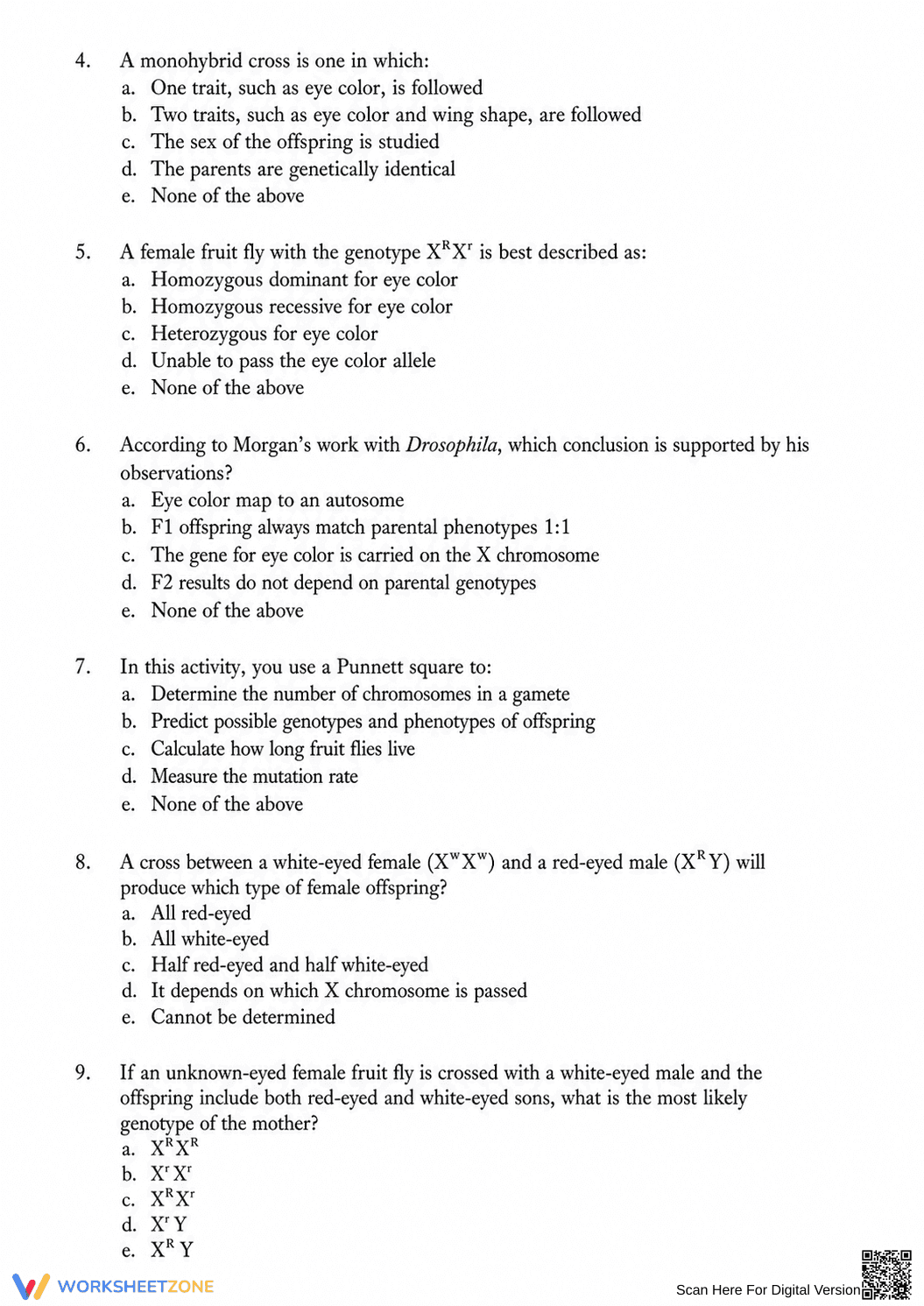
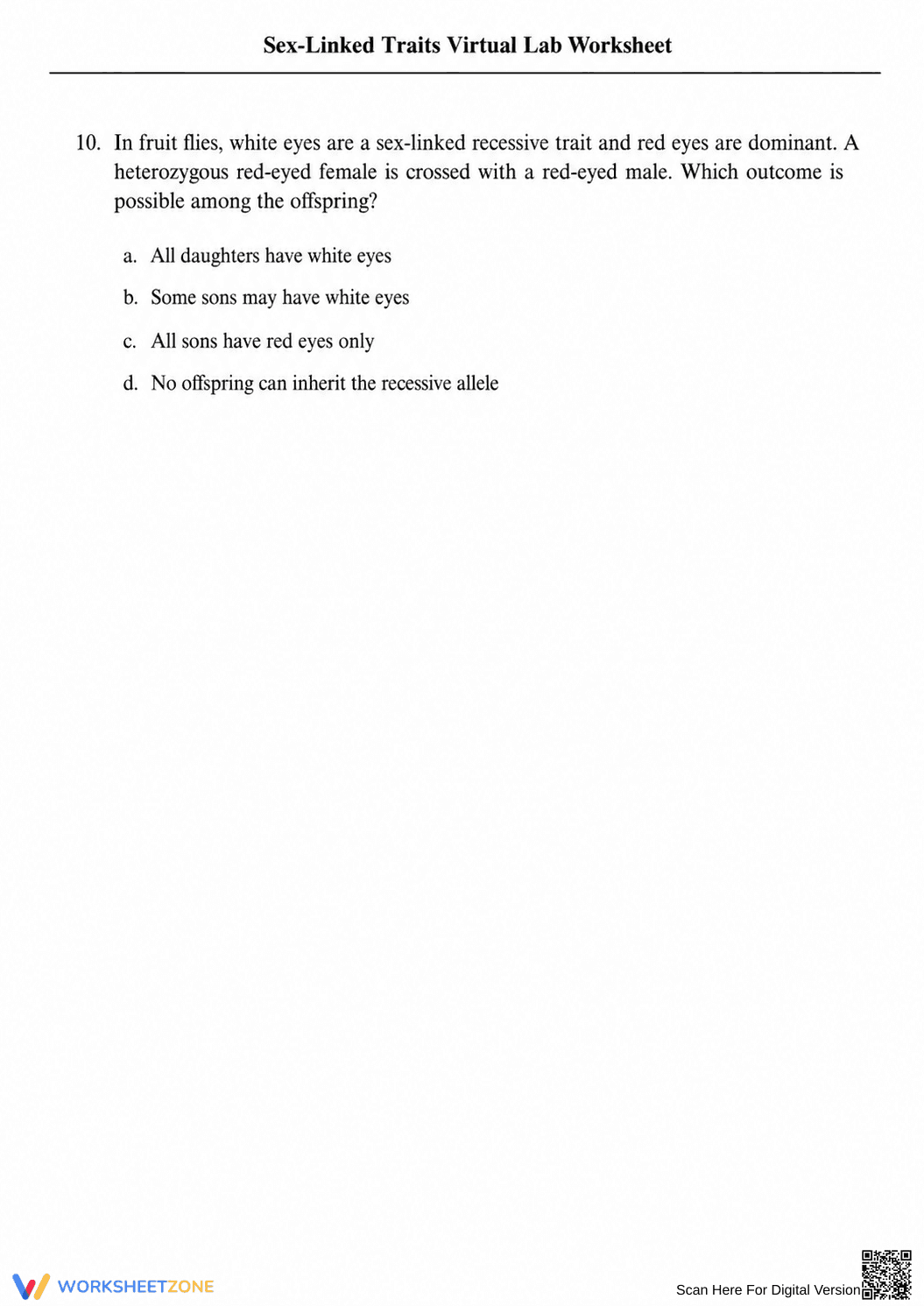
The 6-page PDF includes a detailed background information section covering hemophilia and colorblindness, a genotype key for reference, and multiple data collection tables. Students will find dedicated spaces for P and F1 generation crosses, interactive Punnett squares, and a 10-question multiple-choice post-lab assessment to verify conceptual mastery of heredity patterns.
Zero-Prep Workflow
- Print: Select the 6-page PDF and print enough copies for your class or upload the file to your LMS for digital annotation (1 minute).
- Distribute: Provide the worksheet alongside the virtual lab link; the background section allows students to start immediately without teacher intervention (1 minute).
- Review: Use the structured data tables to quickly spot-check student predictions against the simulation results during the lab session.
Total teacher preparation time is under 2 minutes, making this an ideal resource for busy lab days or unexpected absences.
Standards Alignment
This resource is aligned to `HS-LS3-3`: "Apply concepts of statistics and probability to explain the variation and distribution of expressed traits in a population." It specifically addresses the inheritance patterns of traits located on sex chromosomes. Both standard codes can be copied directly into lesson plans, IEP goals, or district curriculum mapping tools.
How to Use It
Use this worksheet during the "Explore" phase of a 5E instructional cycle. After a brief lecture on Mendelian genetics, assign the virtual lab to allow students to discover non-Mendelian patterns independently. As a formative assessment, observe students as they fill out the F1 generation table to ensure they are correctly placing alleles on the X and Y chromosomes. Expected completion time is 50 minutes.
Who It's For
This lab is designed for high school biology students, including those in Honors or AP Biology tracks who need a refresher on sex-linked mechanics. The inclusion of a genotype key provides necessary scaffolding for English Language Learners and students with IEPs. It pairs perfectly with a digital Drosophila simulation or a physical lab involving fruit fly observation.
According to the RAND AIRS 2024 report on science education, interactive simulations paired with structured guided inquiry worksheets significantly improve student retention of complex biological mechanisms like sex-linked inheritance. This worksheet facilitates that inquiry by requiring students to translate virtual observations into written genotypes and phenotypes. By focusing on the HS-LS3-3 standard, the resource ensures that students are not just clicking through a simulation but are actively applying probability to explain trait distribution. Research from Fisher & Frey (2014) emphasizes that scaffolded data collection is a critical component of the gradual release of responsibility in laboratory settings. This 6-page document provides that scaffold, moving from background reading to independent problem-solving. The use of Drosophila as a model organism aligns with NAEP science frameworks, which prioritize the understanding of heredity through observable evidence and statistical prediction in high school populations.


