


























Views
Plays



U.S. Government Structure Worksheet | Grade 5 Essential
Paste this activity's link or code into your existing LMS (Google Classroom, Canvas, Teams, Schoology, Moodle, etc.).
Students can open and work on the activity right away, with no student login required.
You'll still be able to track student progress and results from your teacher account.
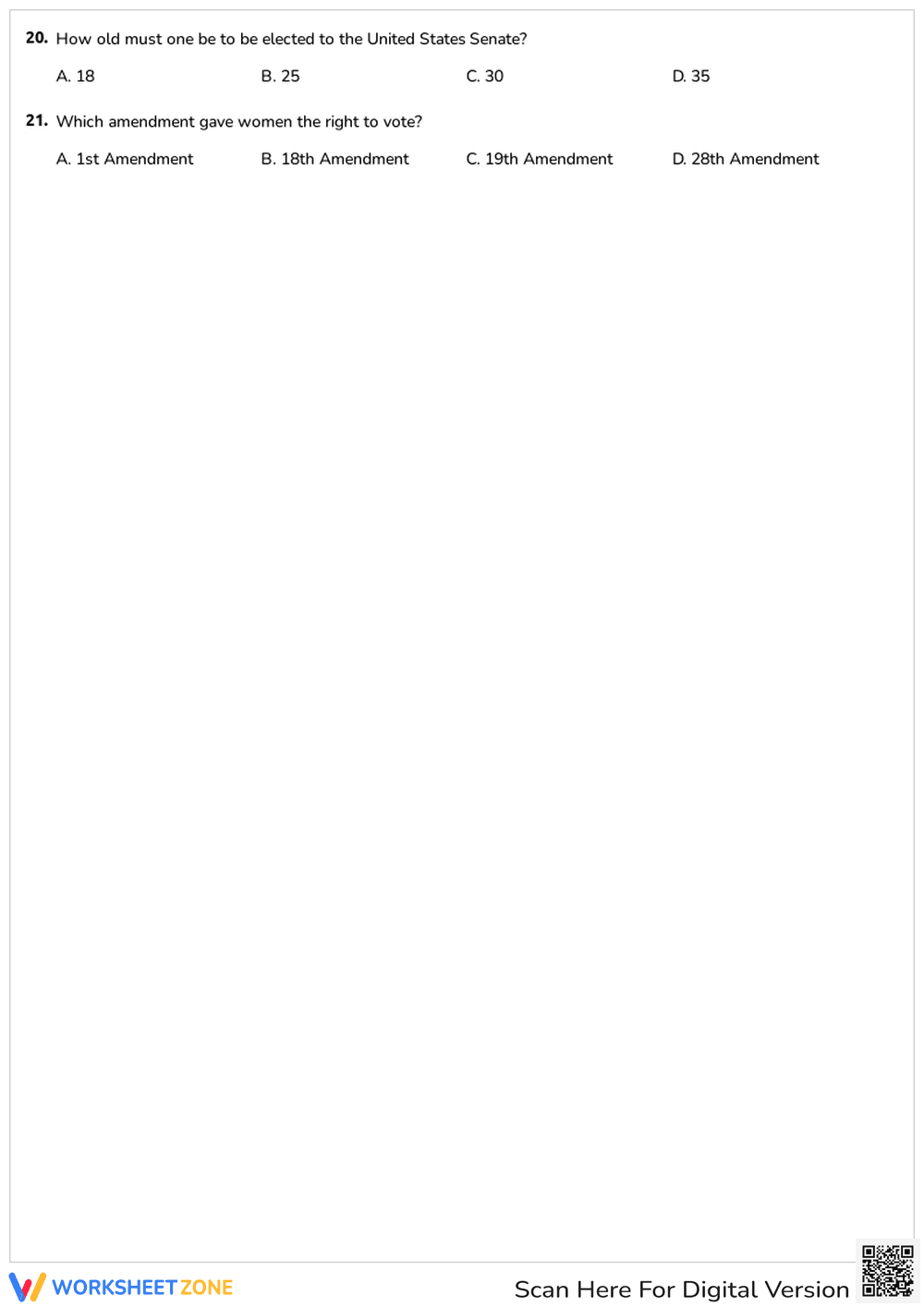
This comprehensive Social Studies worksheet helps students master the complexities of the United States government. By identifying specific powers, terms of office, and constitutional requirements, learners build a solid foundation in civic literacy. Students will demonstrate their understanding of how the three branches of government interact and function within the federal system.
At a Glance
At a Glance
- Grade: 5 · Subject: Social Studies
- Standard:
CCSS.ELA-LITERACY.RI.5.3— Explain the relationships between government branches and constitutional powers- Skill Focus: U.S. Government Structure
- Format: 4 pages · 21 problems · Answer key included · PDF
- Best For: Summative assessment or sub plan
- Time: 30–45 minutes
What's Inside
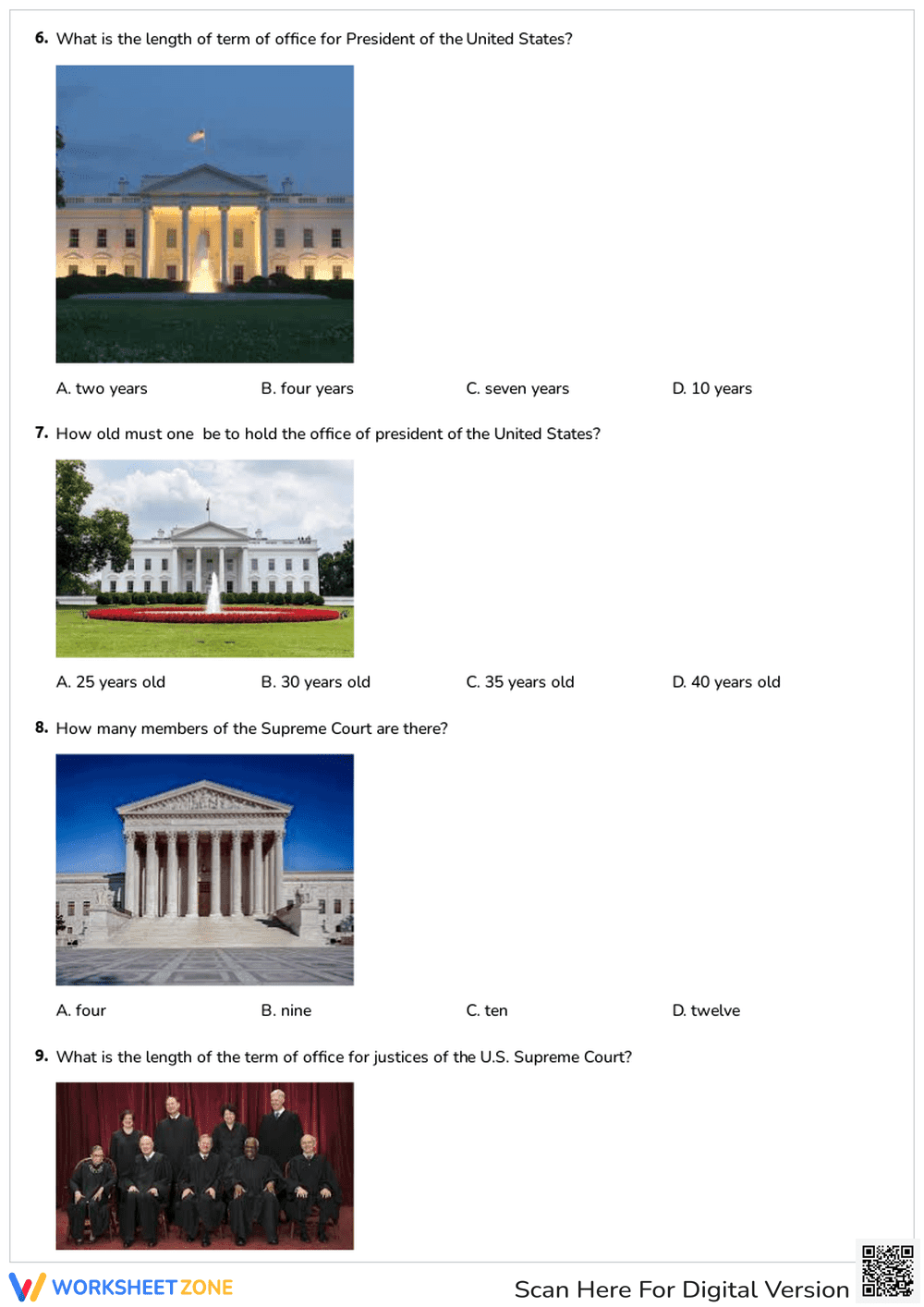
This 4-page PDF contains 21 multiple-choice questions designed to evaluate student knowledge of the executive, legislative, and judicial branches. The worksheet features high-quality visual aids, including images of the White House, the U.S. Senate chamber, and the Supreme Court, to provide context for the questions. A complete answer key is provided for rapid grading.
Zero-Prep Workflow
This resource is designed for immediate classroom implementation. First, print the 4-page document (30 seconds). Second, distribute the packets to students for independent work or a timed quiz (1 minute). Third, review the answers using the included key for immediate feedback (5 minutes). Total teacher preparation time is under 2 minutes, making it an ideal emergency sub plan.
Standards Alignment
The primary standard addressed is `CCSS.ELA-LITERACY.RI.5.3`: "Explain the relationships or interactions between two or more individuals, events, ideas, or concepts in a historical, scientific, or technical text based on specific information in the text." This worksheet specifically targets the conceptual relationships between constitutional amendments and federal powers. Both standard codes can be copied directly into lesson plans, IEP goals, or district curriculum mapping tools.
How to Use It
Use this worksheet as a summative assessment at the conclusion of a civics unit to gauge mastery of government roles. Alternatively, assign it as a pre-assessment before starting a unit on the Constitution to identify prior knowledge. Teachers should observe if students can distinguish between the specific qualifications for the House versus the Senate. Expected completion time is 35 minutes.
Who It's For
This resource is tailored for upper elementary students in grades 4 through 6. It is particularly effective for visual learners who benefit from the included architectural and symbolic imagery. It pairs naturally with a classroom anchor chart detailing the three branches of government or a primary source reading of the Bill of Rights.
According to the RAND AIRS 2024 report, structured multiple-choice assessments in social studies provide critical data points for tracking student progress toward civic proficiency. This worksheet focuses on the core competencies of U.S. government structure, specifically the division of powers and the amendment process defined in CCSS.ELA-LITERACY.RI.5.3. By requiring students to identify the specific roles and terms of federal officials, the resource reinforces the conceptual framework of the American political system. Research suggests that combining visual cues with technical text helps middle-grade learners internalize complex organizational structures. This 21-question assessment serves as a reliable tool for measuring mastery of foundational civics knowledge. The inclusion of specific data regarding terms of office and age requirements ensures that students engage with the precise legal standards of the United States Constitution, facilitating a deeper understanding of democratic governance.


