


























Views
Downloads
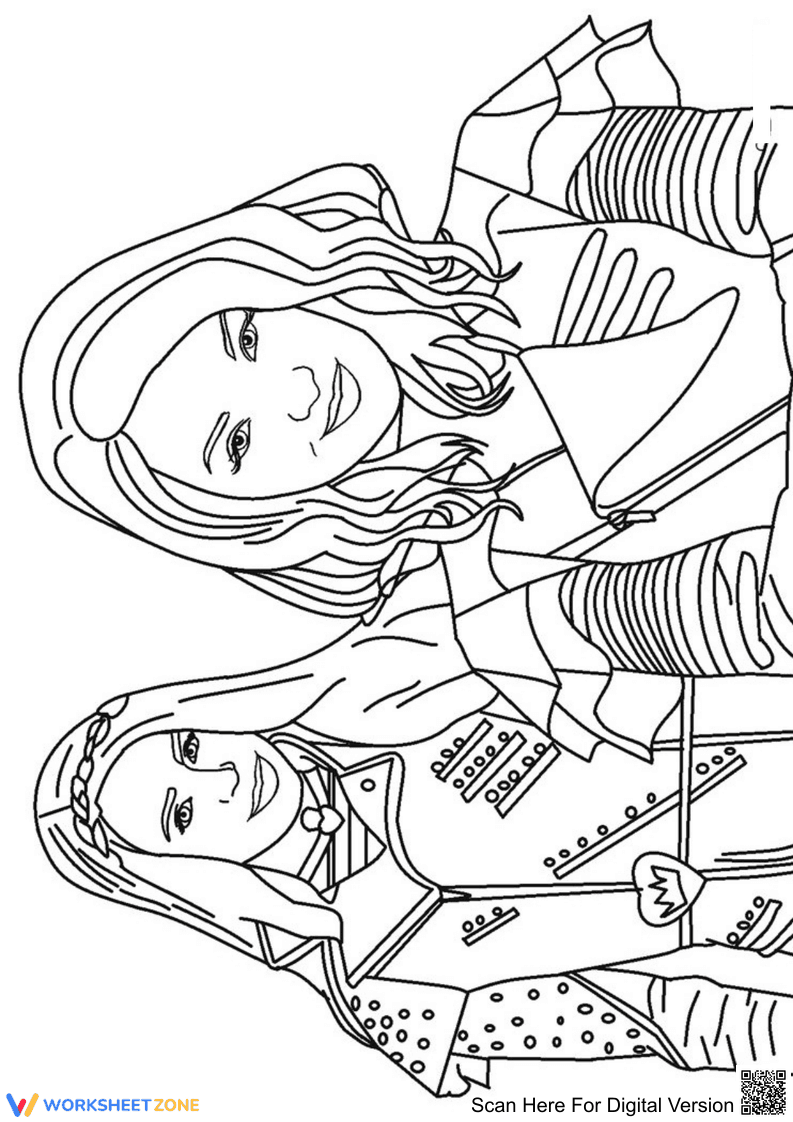

Grade 4 Teen Fashion Coloring — Printable No-Prep Worksheet
Paste this activity's link or code into your existing LMS (Google Classroom, Canvas, Teams, Schoology, Moodle, etc.).
Students can open and work on the activity right away, with no student login required.
You'll still be able to track student progress and results from your teacher account.
This printable teen fashion coloring worksheet engages fourth-grade students in visual character representation and fine motor development. Connecting media characters to visual arts, students explore color coordination and artistic design. This single-page activity provides an engaging creative outlet that reinforces visual storytelling concepts without requiring extensive teacher preparation.
At a Glance
- Grade: 4 · Subject: Fine Art & ELA
- Standard:
CCSS.ELA-LITERACY.RL.4.7— Connect visual representations of characters to story elements- Skill Focus: Visual representation and color application
- Format: 1 page · 1 problem · Open-ended answer format · PDF
- Best For: Independent practice and sub plans
- Time: 20–30 minutes
This single-page resource features a detailed illustration of two fashionable teenage friends with intricate hairstyles and textured jackets. The line art provides distinct boundaries for practicing shading and color blending. Designed as an open-ended creative task, it requires no formal answer key, allowing students to exercise artistic choice while focusing on detail.
This worksheet follows a zero-prep workflow designed for immediate classroom deployment:
- Print (30 seconds): Generate the single-page PDF for the class without complex collating.
- Distribute (30 seconds): Hand out sheets with standard supplies like colored pencils or markers.
- Review (1 minute): Instruct students to select color palettes reflecting character personalities.
Total teacher preparation time is under 2 minutes. This makes the worksheet excellent for emergency substitute plans, morning work, or quiet transitions between core subjects.
This activity aligns directly with CCSS.ELA-LITERACY.RL.4.7, requiring students to make connections between a story and a visual presentation of the text. By analyzing visual attributes in the illustration, students practice decoding character traits through costume and expression. A supporting focus includes visual arts standards for applying color schemes. Both standard codes can be copied directly into lesson plans, IEP goals, or district curriculum mapping tools.
Teachers can deploy this resource as an independent extension after a reading lesson on character traits, or during a fine arts block on color theory. For a formative-assessment observation tip: observe students selecting colors and ask them to explain how choices reflect character mood. Expected completion time ranges from 20 to 30 minutes, depending on shading detail.
This worksheet serves fourth-grade students benefiting from visual learning opportunities. For differentiation, teachers can prompt advanced students to write a descriptive paragraph on the back explaining their fashion choices, while developing learners focus on fine motor control. This resource pairs naturally with character study anchor charts or direct instruction lessons on visual characterization.
Integrating visual arts into literacy routines provides essential cognitive benefits for upper elementary students. This worksheet targets CCSS.ELA-LITERACY.RL.4.7 by developing the plain-English skill of connecting visual representations of characters to narrative elements. According to research from Fisher & Frey (2014), providing structured, low-barrier tasks like targeted visual analysis reinforces student engagement and supports independent learning habits during practice blocks. When students analyze character attire through coloring, they actively practice decoding visual texts, a foundational component of literacy. Furthermore, the open-ended nature of the coloring task encourages sustained attention and fine motor maintenance without cognitive fatigue. This single-page format ensures high instructional utility while maintaining rigorous alignment to educational standards, making it an effective tool for diverse classrooms.


