


























Views
Downloads

Essential Tracing Number 19 Worksheet | Kindergarten Math
Paste this activity's link or code into your existing LMS (Google Classroom, Canvas, Teams, Schoology, Moodle, etc.).
Students can open and work on the activity right away, with no student login required.
You'll still be able to track student progress and results from your teacher account.
Mastery of the number nineteen requires more than simple recognition; it demands a multi-sensory approach combining fine motor tracing, verbal labeling, and one-to-one correspondence. This three-page printable packet provides comprehensive practice for Kindergarten students, ensuring they can write the digit, spell the word, and quantify sets of objects with total confidence.
At a Glance
- Grade: Kindergarten · Subject: Math
- Standard:
K.CC.A.3— Write numbers from 0 to 20 and represent a number of objects- Skill Focus: Number 19 Tracing and Counting
- Format: 3 pages · 30+ tasks · Answer key included · PDF
- Best For: Individual practice or math center rotations
- Time: 15–20 minutes
What's Inside
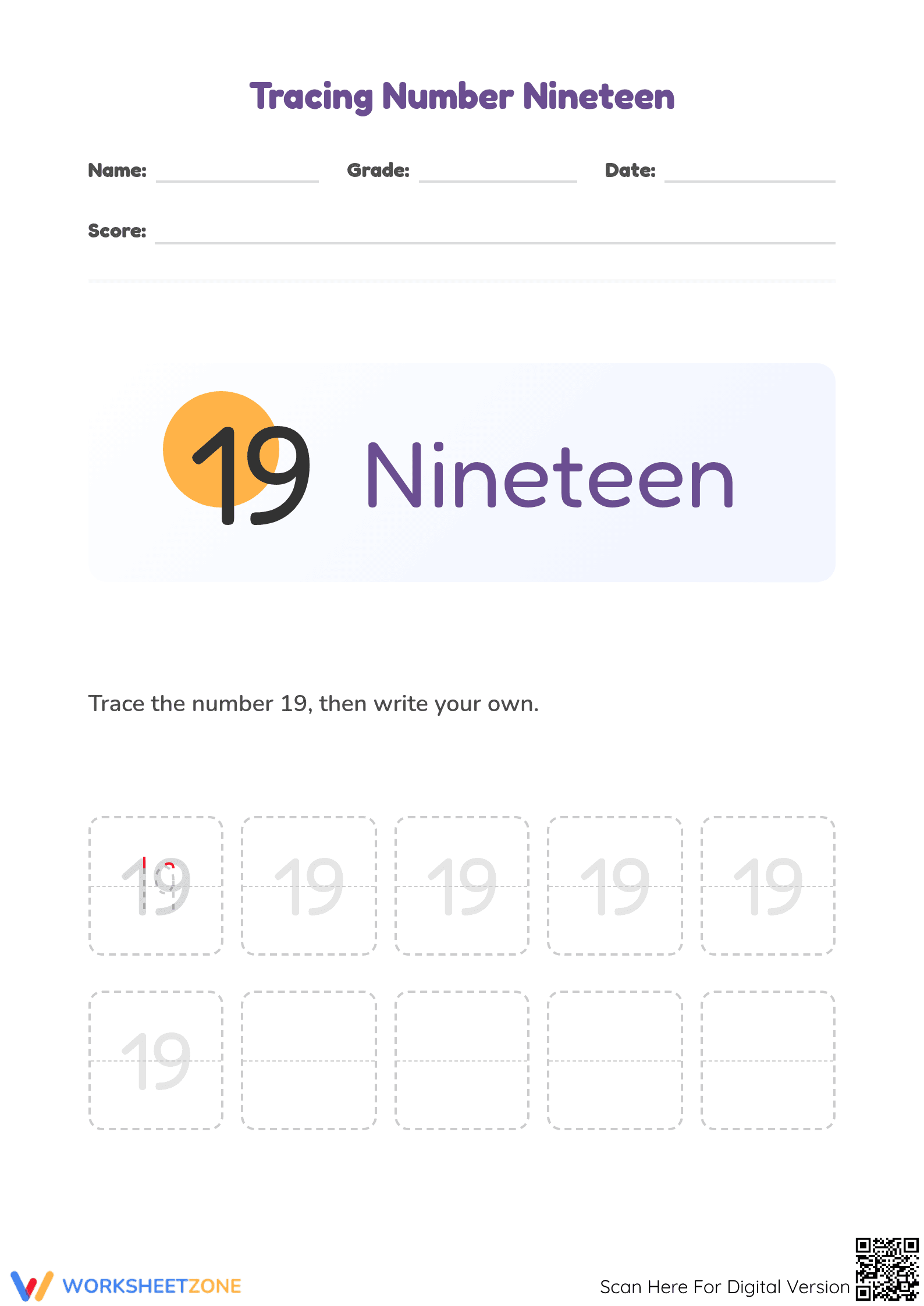
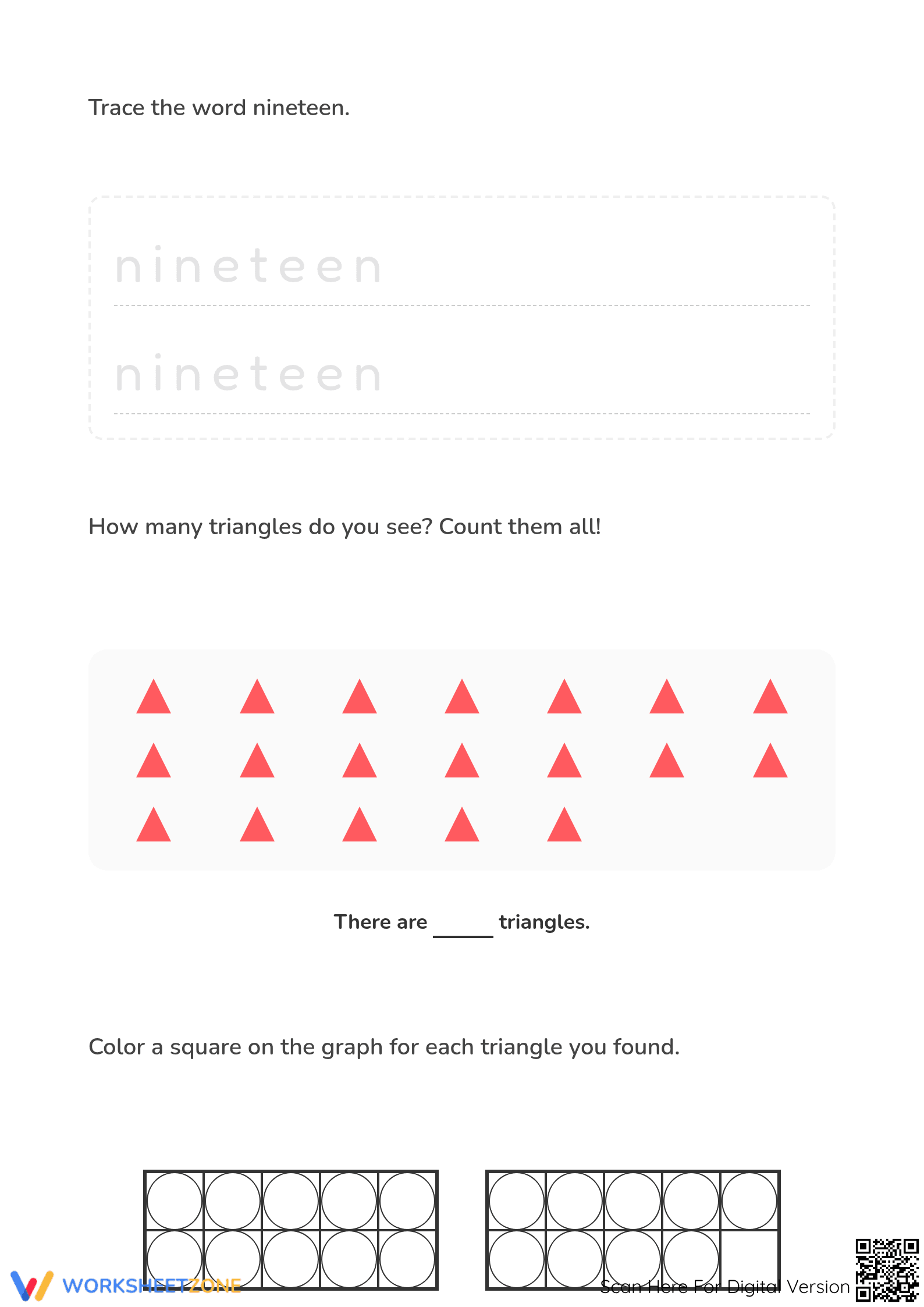
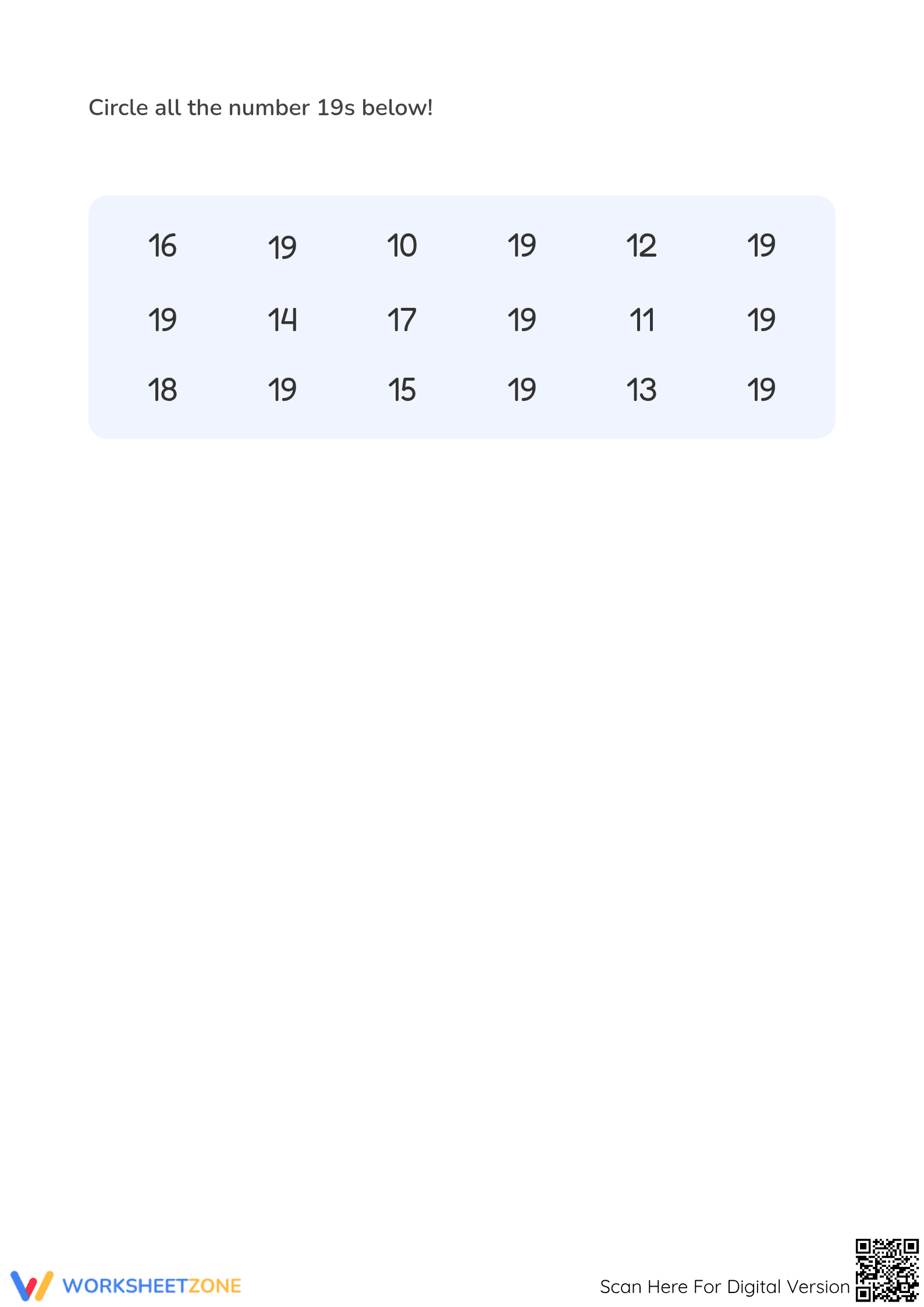
This packet features three distinct pages of instructional materials. The first page focuses on digit formation with five tracing guides and four independent writing boxes. The second page introduces the written word "nineteen" and includes a counting exercise with nineteen triangles and a ten-frame graphing activity. The final page concludes with a number identification grid where students must locate and circle every instance of the target number.
Skill Progression
- Guided Practice: Students begin by tracing the numeral 19 and the word "nineteen" with directional cues, building the muscle memory necessary for proper character formation.
- Supported Practice: The counting and graphing sections provide a scaffolded bridge between the abstract symbol and the concrete quantity, utilizing triangles and ten-frame visuals.
- Independent Practice: The final identification grid challenges students to distinguish nineteen from similar-looking numerals in a randomized set, reinforcing long-term retention.
The sequence follows a gradual-release model, moving from structured tracing to autonomous quantification and identification.
Standards Alignment
The primary focus is K.CC.A.3, which requires students to write numbers from 0-20 and represent a number of objects with a written numeral. Additionally, it supports K.CC.B.5 by asking students to count up to 20 objects arranged in a line. Both standard codes can be copied directly into lesson plans, IEP goals, or district curriculum mapping tools.
How to Use It
Use this resource during the "independent work" phase of your math block after a direct instruction lesson on the teens. It is also excellent for morning work or as a quiet-time activity for early finishers. For formative assessment, observe students during the triangle counting task to ensure they are using a "touch and count" strategy to maintain one-to-one correspondence.
Who It's For
This worksheet is designed specifically for Kindergarten students or preschool learners showing advanced readiness for teen numbers. It is particularly helpful for English Language Learners who need to pair the spoken word with the written digit and the written name. It pairs naturally with an anchor chart showing the composition of nineteen as 10 and 9.
According to the NAEP framework for early mathematics, fluency with numbers between 11 and 20 is a critical developmental milestone that predicts future success in place value concepts. This resource directly addresses the K.CC.A.3 standard, which emphasizes the connection between written numerals and their cardinal value. Research from Fisher & Frey (2014) suggests that the gradual release of responsibility—moving from the guided tracing of "nineteen" to independent identification—is the most effective way to solidify numeral formation in young learners. By integrating visual counting, ten-frame graphing, and fine motor tracing, this worksheet provides the "balanced instructional diet" necessary for Kindergarten mastery. This packet serves as a high-quality instructional artifact that can be used to document student progress toward foundational numeracy goals in any standards-aligned classroom.


