


























Views
Downloads

Trace Letter M Printable Worksheet | Kindergarten English
Paste this activity's link or code into your existing LMS (Google Classroom, Canvas, Teams, Schoology, Moodle, etc.).
Students can open and work on the activity right away, with no student login required.
You'll still be able to track student progress and results from your teacher account.
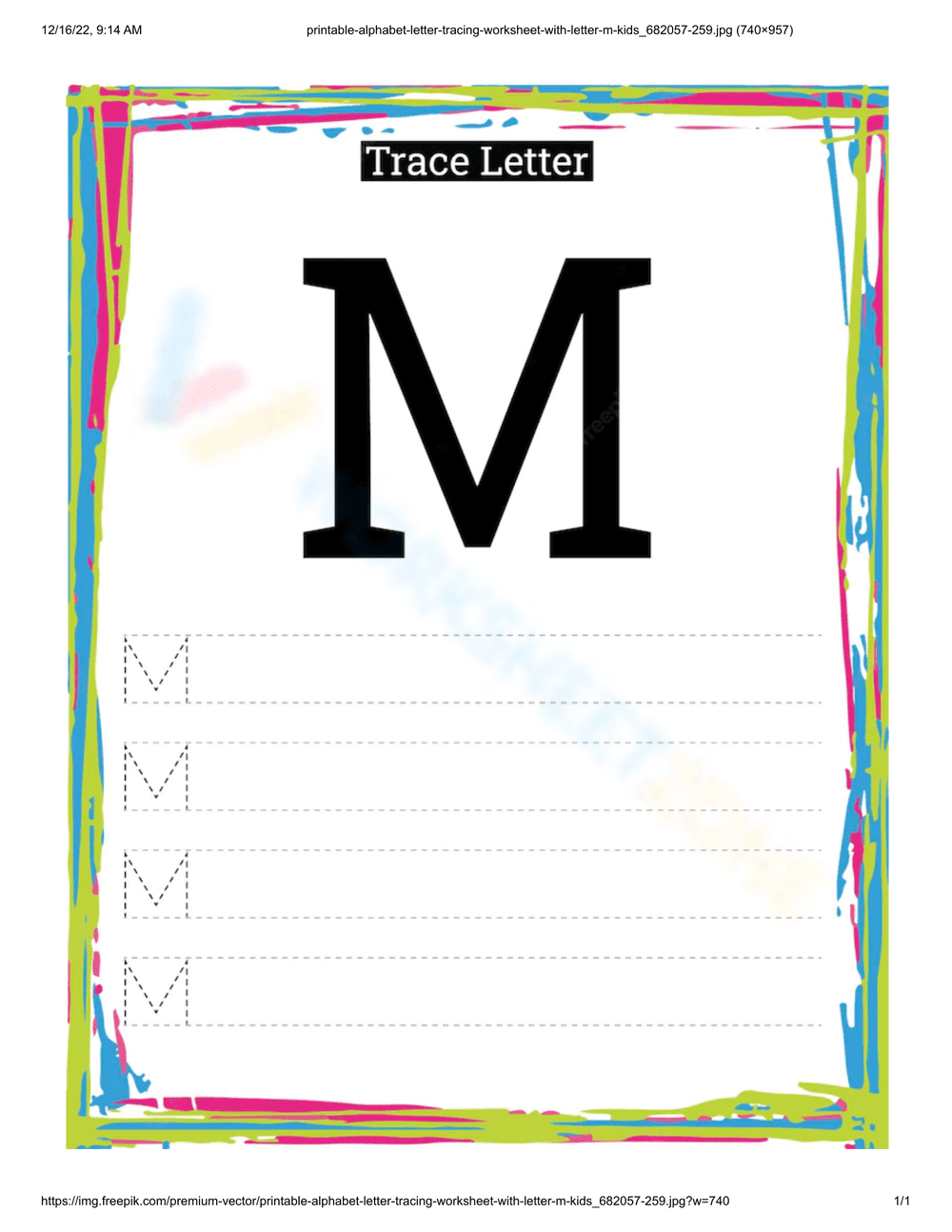
This printable letter M tracing worksheet helps Kindergarten students master uppercase letter formation through repetitive, guided practice. By focusing on the specific strokes required for the letter M, learners build the muscle memory and fine motor control necessary for legible handwriting and early literacy success.
At a Glance
- Grade: Kindergarten · Subject: English
- Standard:
CCSS.ELA-LITERACY.L.K.1.A— Print many upper- and lowercase letters- Skill Focus: Uppercase letter M formation
- Format: 1 page · 4 rows · Answer key not required · PDF
- Best For: Daily handwriting practice and phonics centers
- Time: 5–10 minutes
This single-page PDF features a large reference letter at the top to help students visualize the correct shape before beginning. Below the header, students find 4 distinct rows of dashed-line letters. Each row provides ample space for repeated tracing, ensuring that children get enough practice to feel confident in their penmanship.
Zero-Prep Workflow
- Print: Generate the required number of copies in less than 1 minute.
- Distribute: Hand out sheets during your phonics block or as a quiet morning activity.
- Review: Check student work in under 30 seconds by observing stroke order and line adherence.
This resource is specifically designed for high-efficiency classroom environments and works perfectly as a last-minute substitute plan or a supplementary homework task.
Standards Alignment
This resource aligns with CCSS.ELA-LITERACY.L.K.1.A, which requires students to print many upper- and lowercase letters. It also supports CCSS.ELA-LITERACY.RF.K.1.D by reinforcing letter recognition. Both standard codes can be copied directly into lesson plans, IEP goals, or district curriculum mapping tools.
How to Use It
Use this worksheet as a formative assessment during the independent practice phase of a gradual release lesson. It also functions well as a portable activity for literacy centers. Observe students to ensure they start their strokes at the top of the line, providing immediate corrective feedback. Completion typically takes 5 to 10 minutes.
Who It's For
This worksheet is ideal for Kindergarteners and Grade 1 students who need additional support with letter mechanics. It pairs naturally with an alphabet anchor chart or a tactile sand-tracing activity. For students struggling with grip, consider providing a triangular pencil or a rubber grip to accompany this practice sheet.
Handwriting instruction remains a foundational component of early literacy, as research from Fisher & Frey (2014) emphasizes the importance of guided practice in developing automaticity. This letter M worksheet provides the structured environment necessary for students to move from conscious effort to fluid writing. By focusing on CCSS.ELA-LITERACY.L.K.1.A, the resource ensures that students are meeting national benchmarks for letter production. The 4 rows of tracing tasks offer sufficient repetition to reinforce the motor pathways required for the letter M. Consistent use of such targeted handwriting materials has been shown to improve overall writing stamina and legibility in primary grades. This printable tool serves as a reliable bridge between letter recognition and independent composition, making it an essential addition to any early childhood classroom's phonics and writing toolkit. It supports the development of fine motor control while reinforcing the visual identity of the alphabet.


