


























1 / 2
0
Views
0
Downloads

0.0
0
Save
0 Likes
Share
3D Shapes from Different Perspectives
0 Views
0 Downloads
Paste this activity's link or code into your existing LMS (Google Classroom, Canvas, Teams, Schoology, Moodle, etc.).
Students can open and work on the activity right away, with no student login required.
You'll still be able to track student progress and results from your teacher account.
Information
Description
What It Is:
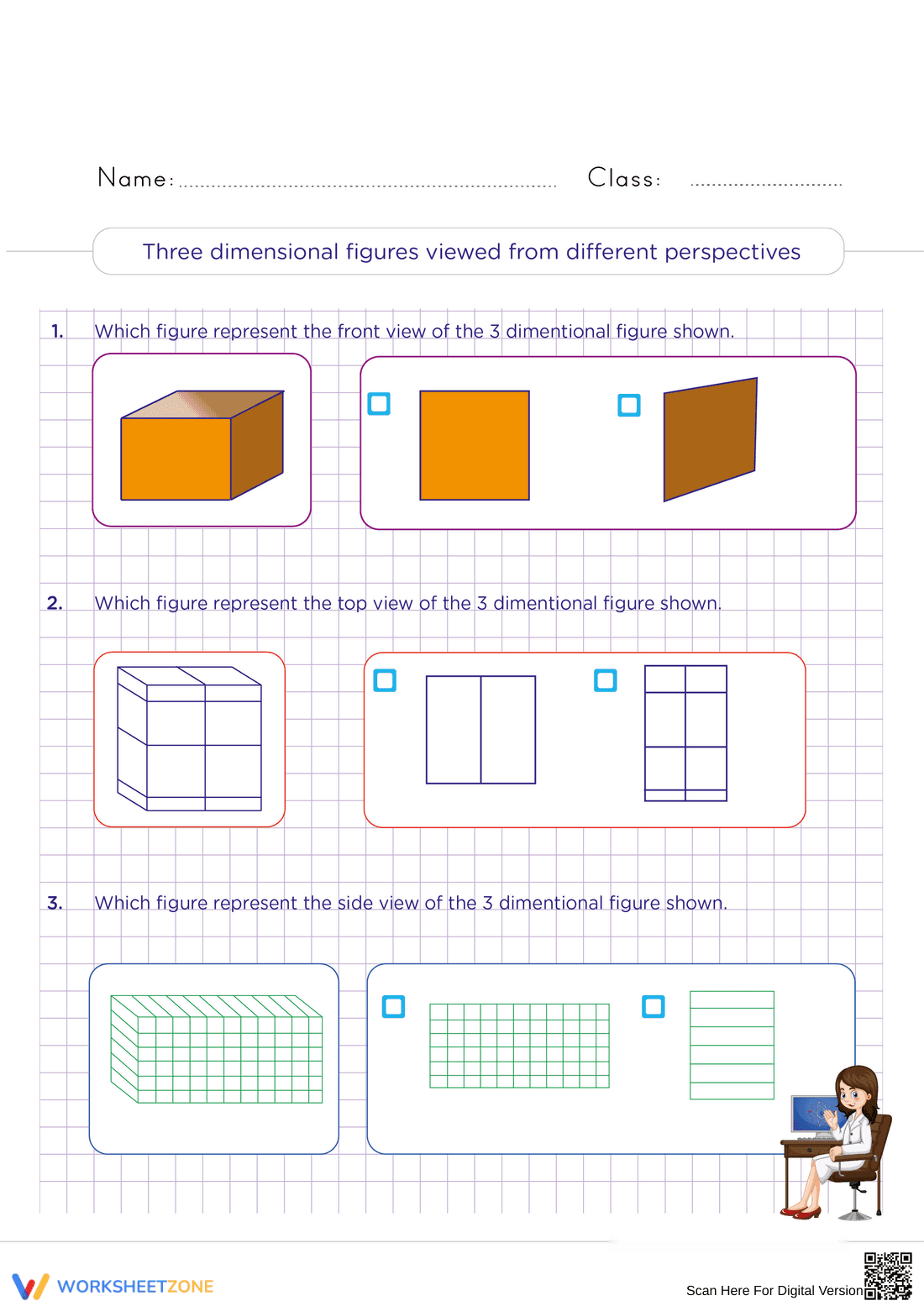
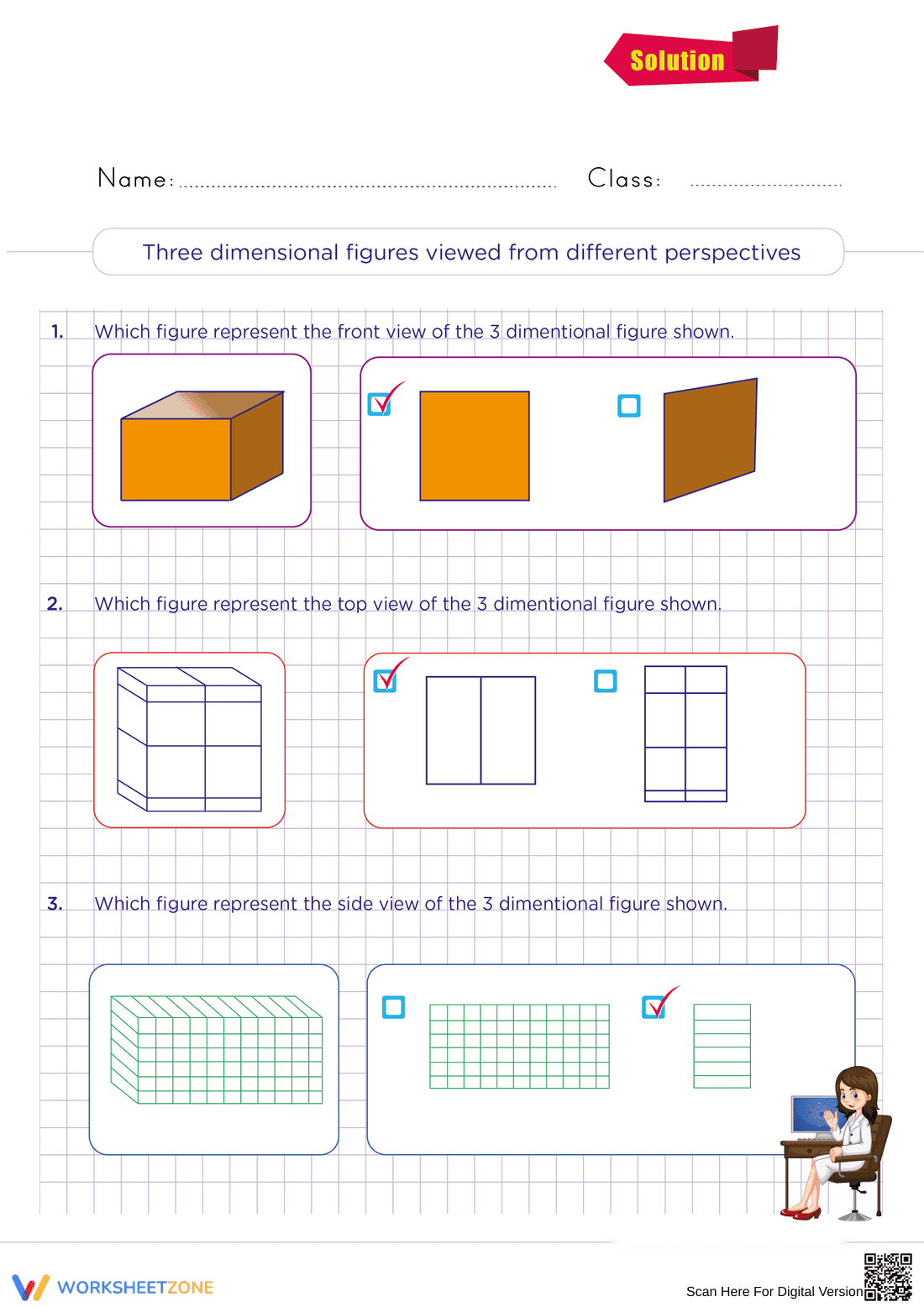
This is a math worksheet focusing on three-dimensional geometry. It presents three different 3D shapes (a rectangular prism, a cube constructed from smaller cubes, and a long rectangular prism) and asks students to identify the correct 2D representation of each shape when viewed from different perspectives: front, top, and side. Students select the correct answer from two choices given for each problem.
Grade Level Suitability:
This worksheet is most suitable for grades 2-4. The concept of visualizing 3D shapes from different viewpoints introduces spatial reasoning, which is a key concept in these grades. The simple shapes and multiple-choice format make it accessible to students in this age range.
Why Use It:
This worksheet helps students develop spatial reasoning skills, visual perception, and an understanding of how 3D objects can be represented in 2D. It strengthens their ability to visualize objects from different angles and improve their geometric thinking.
How to Use It:
Students should carefully examine the 3D shape provided in each question. Then, they need to visualize what that shape would look like from the specified perspective (front, top, or side). Finally, they select the 2D shape that correctly represents that view from the two options provided.
Target Users:
This worksheet is designed for elementary school students in grades 2-4 who are learning about 3D shapes and spatial reasoning. It's also helpful for students who need extra practice visualizing objects from different perspectives.
This is a math worksheet focusing on three-dimensional geometry. It presents three different 3D shapes (a rectangular prism, a cube constructed from smaller cubes, and a long rectangular prism) and asks students to identify the correct 2D representation of each shape when viewed from different perspectives: front, top, and side. Students select the correct answer from two choices given for each problem.
Grade Level Suitability:
This worksheet is most suitable for grades 2-4. The concept of visualizing 3D shapes from different viewpoints introduces spatial reasoning, which is a key concept in these grades. The simple shapes and multiple-choice format make it accessible to students in this age range.
Why Use It:
This worksheet helps students develop spatial reasoning skills, visual perception, and an understanding of how 3D objects can be represented in 2D. It strengthens their ability to visualize objects from different angles and improve their geometric thinking.
How to Use It:
Students should carefully examine the 3D shape provided in each question. Then, they need to visualize what that shape would look like from the specified perspective (front, top, or side). Finally, they select the 2D shape that correctly represents that view from the two options provided.
Target Users:
This worksheet is designed for elementary school students in grades 2-4 who are learning about 3D shapes and spatial reasoning. It's also helpful for students who need extra practice visualizing objects from different perspectives.


