


























Views
Downloads

Mastering There, Their, and They're | Essential Grammar
Paste this activity's link or code into your existing LMS (Google Classroom, Canvas, Teams, Schoology, Moodle, etc.).
Students can open and work on the activity right away, with no student login required.
You'll still be able to track student progress and results from your teacher account.
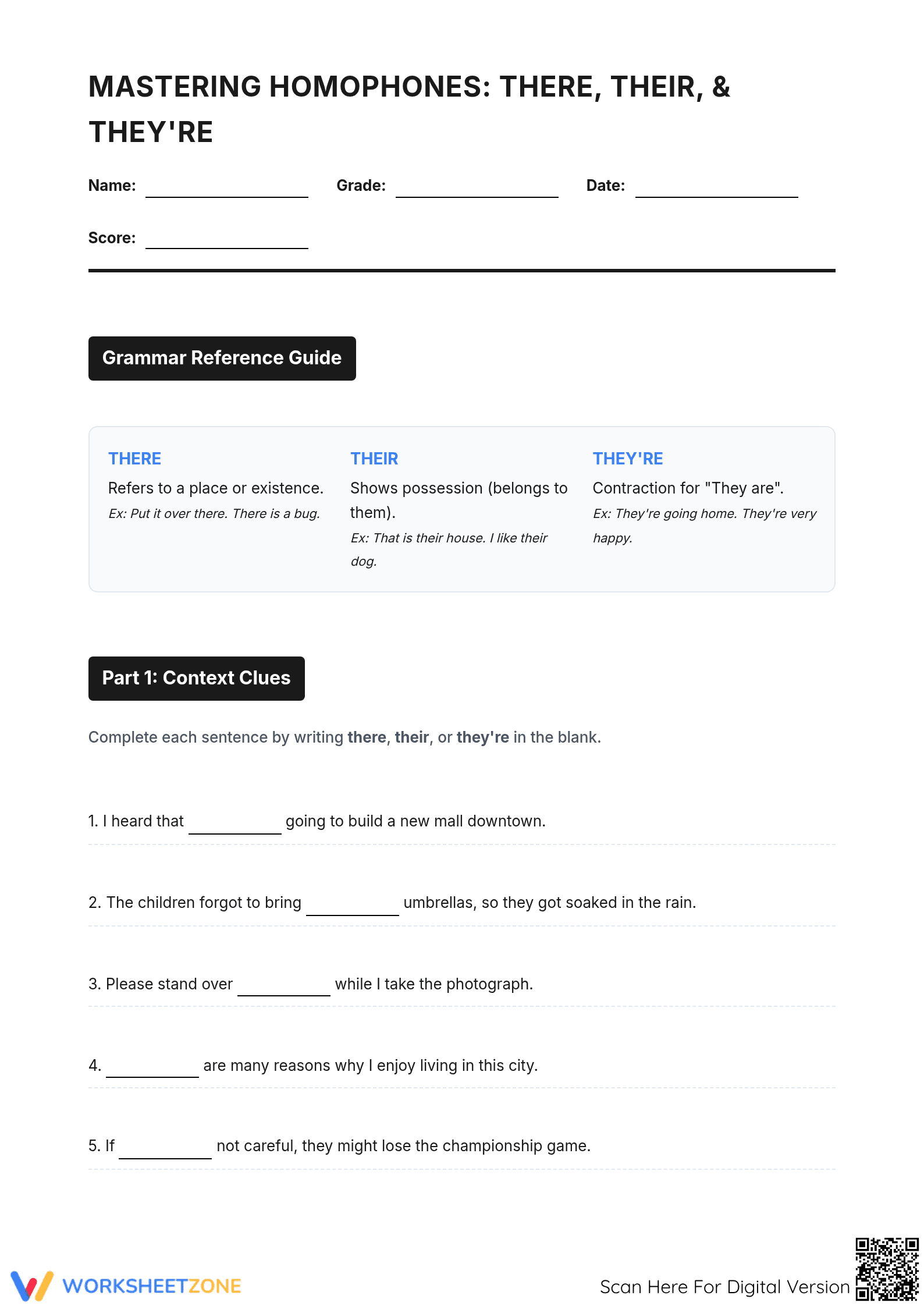
This Grade 6-9 grammar worksheet provides comprehensive practice for distinguishing between the homophones there, their, and they're. Students move from identifying definitions to applying usage in complex sentences, ensuring they can eliminate common spelling errors in their academic writing. The multi-page format allows for deep reinforcement of this foundational language skill.
At a Glance
- Grade: 6-9 · Subject: English Language Arts
- Standard:
CCSS.ELA-LITERACY.L.6.1— Demonstrate command of the conventions of standard English grammar and usage when writing.- Skill Focus: Homophone Differentiation (There/Their/They're)
- Format: 4 pages · 33 problems · Answer key included · PDF
- Best For: Grammar reinforcement and error correction practice
- Time: 25–35 minutes
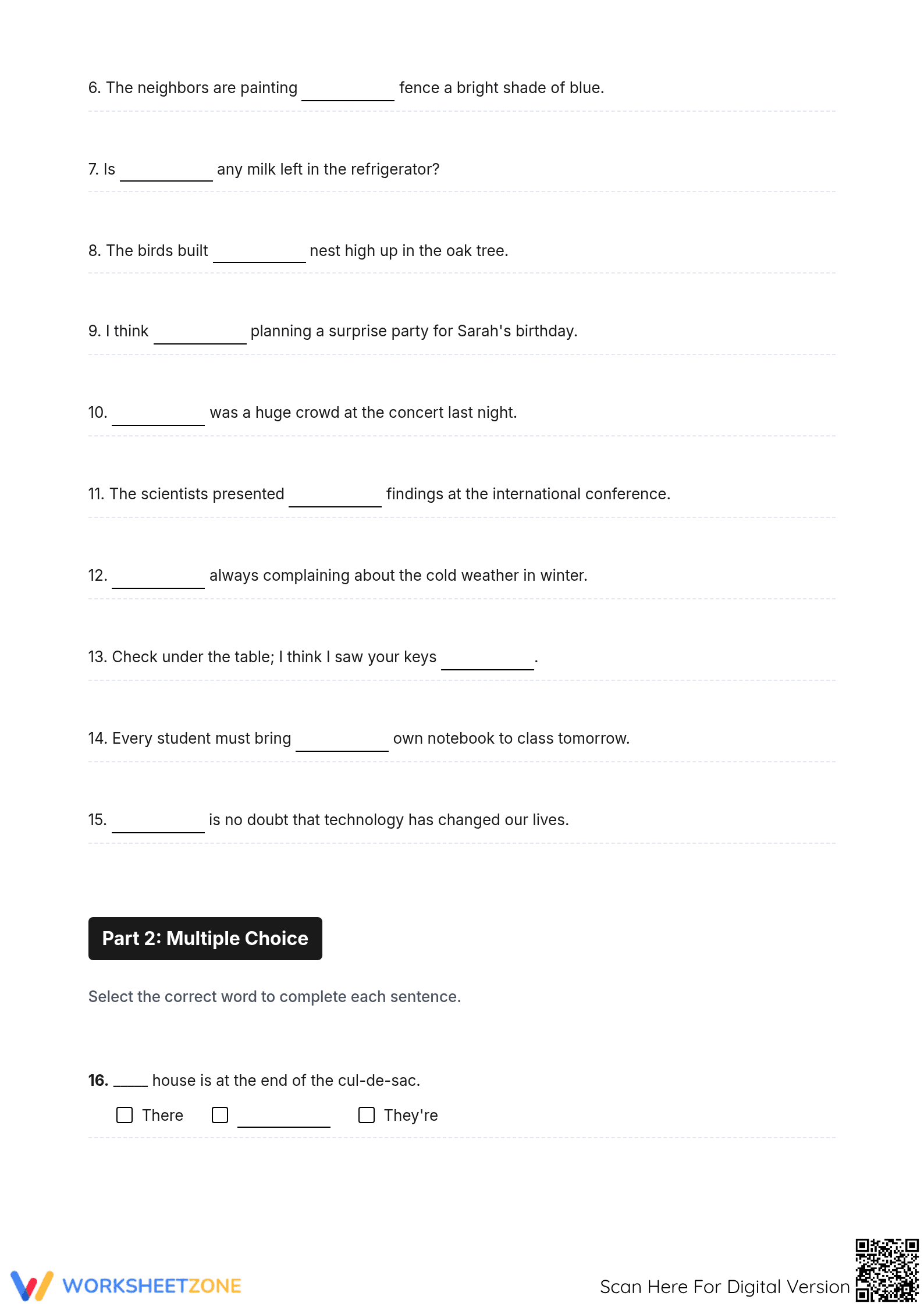
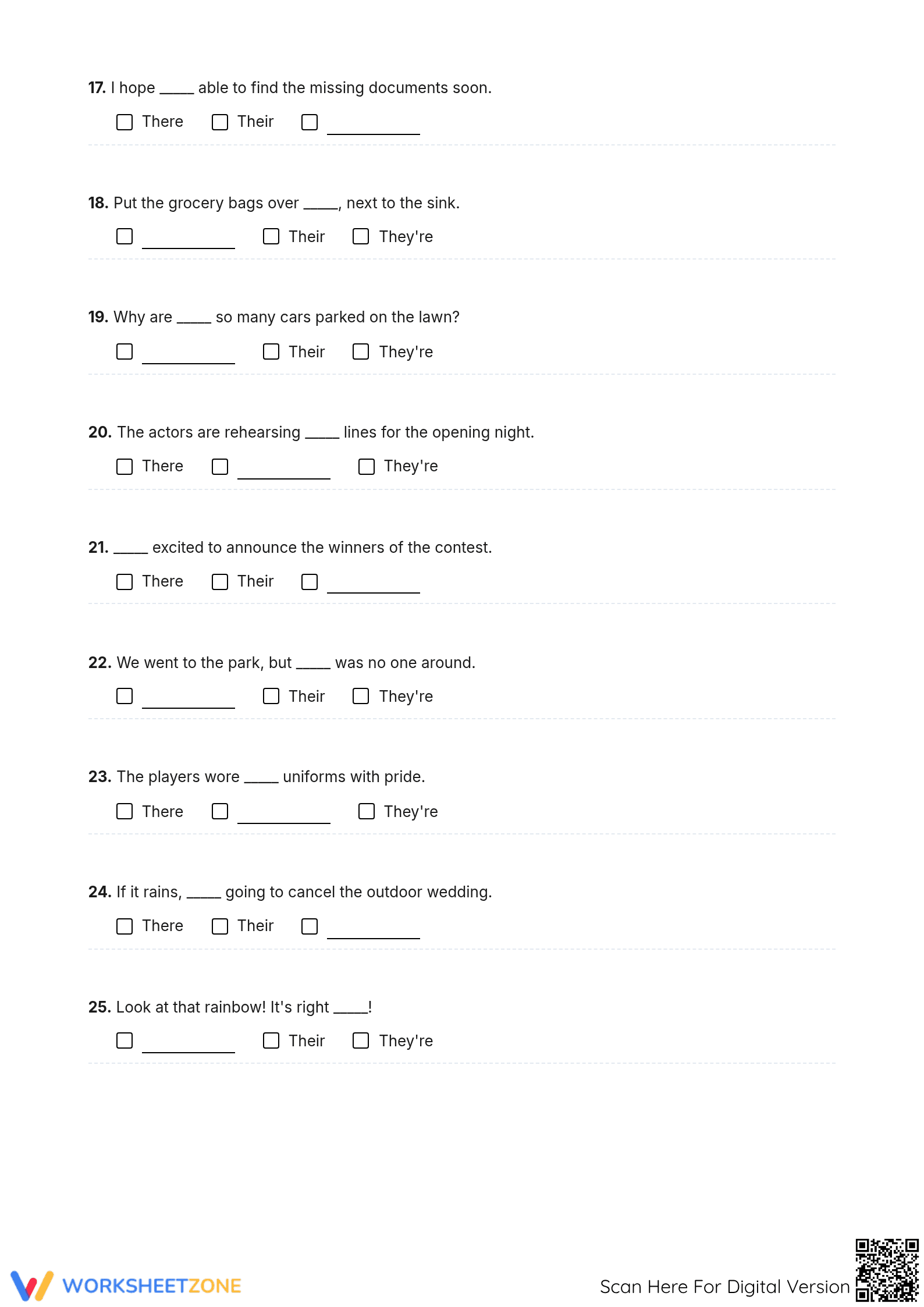
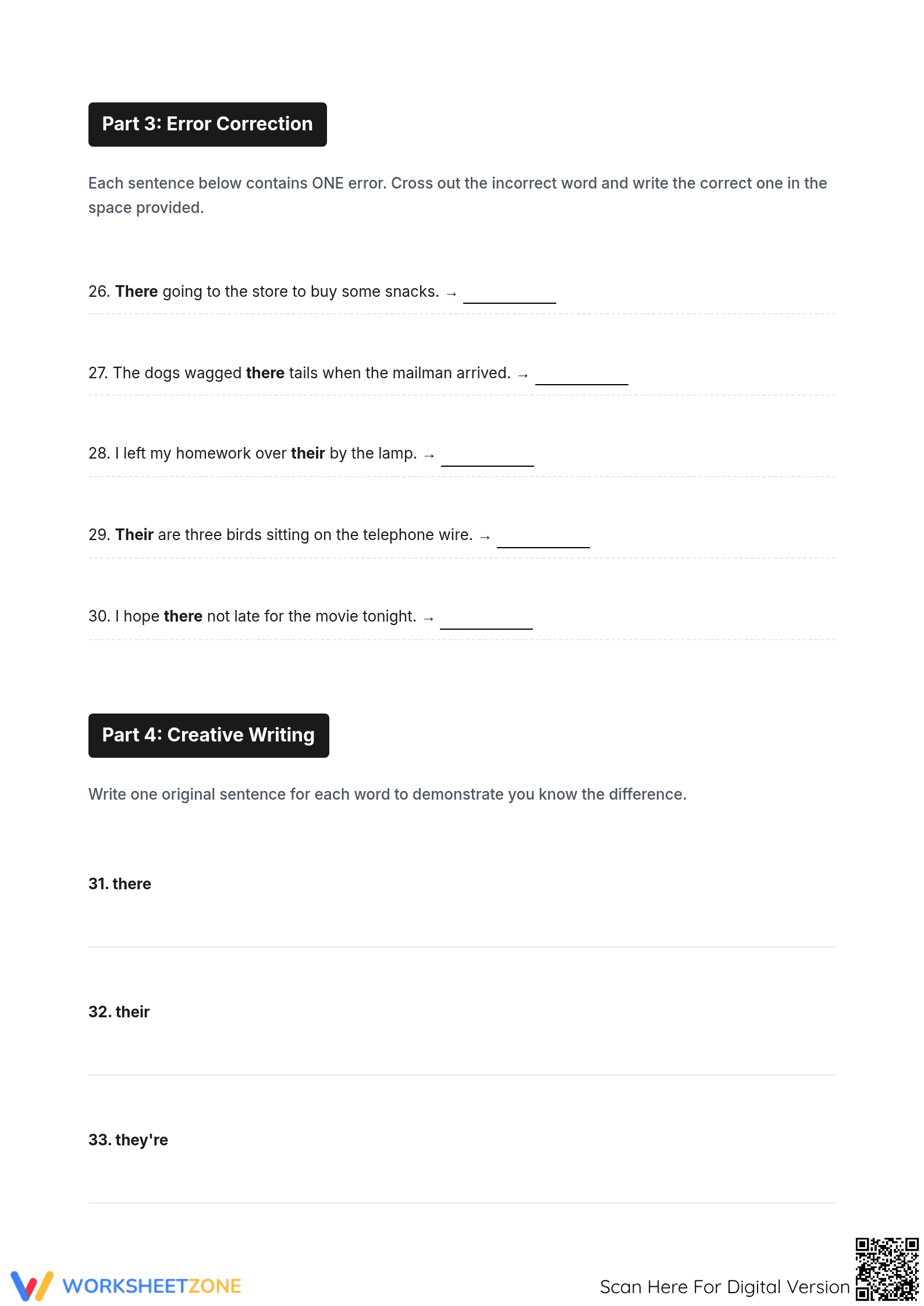
The resource contains a four-page student packet and a full answer key. It begins with a Grammar Reference Guide that provides clear definitions and examples for each word. The 33 tasks are divided into four distinct parts: context-based fill-in-the-blanks, multiple-choice selection, sentence-level error correction, and creative writing prompts. This variety ensures students engage with the material through multiple cognitive modalities.
Skill Progression
- Guided Practice: The worksheet opens with a reference guide and 15 context-clue sentences where students select the correct homophone based on surrounding syntax and parts of speech.
- Supported Practice: Part 2 and Part 3 offer 15 additional items using multiple-choice and error-correction formats, requiring students to analyze existing text for accuracy and justify corrections.
- Independent Practice: The final section requires students to generate three original sentences, demonstrating mastery by applying the rules without external prompts or word banks.
This structure follows a gradual-release model, moving from recognition to production to ensure students internalize the differences between these frequently confused words.
Standards Alignment
This resource is aligned with `CCSS.ELA-LITERACY.L.6.1`, which requires students to demonstrate command of the conventions of standard English grammar and usage. Specifically, it addresses the frequent confusion between possessive pronouns, contractions, and adverbs of place. Both standard codes can be copied directly into lesson plans, IEP goals, or district curriculum mapping tools.
How to Use It
Use this worksheet as a targeted intervention after a mini-lesson on homophones. It works effectively as a mid-week formative assessment to identify which students still struggle with possessive versus locative forms. Teachers should observe students during the "Error Correction" phase, as this typically reveals the deepest level of conceptual understanding. Expected completion time is 30 minutes.
Who It's For
This packet is designed for middle and early high school students (Grades 6-9) who continue to struggle with high-frequency homophone errors. It is particularly useful for English Language Learners (ELL) and students with IEP goals focused on mechanics. Pair this with a mentor text or a short narrative passage where students must highlight these specific words in context.
According to Fisher & Frey (2014), the gradual release of responsibility is essential for mastering linguistic conventions like homophones. This worksheet applies that research by transitioning students from scaffolded reference guides to independent sentence generation. By addressing CCSS.ELA-LITERACY.L.6.1 through 33 distinct tasks, the resource provides the repetitive exposure necessary for long-term retention. Research from the NAEP suggests that mechanical accuracy in writing significantly impacts overall composition scores in secondary education. This resource targets one of the most persistent errors identified in student writing samples, providing a structured pathway to mastery. The inclusion of an answer key allows for immediate feedback, a critical component of effective grammar instruction.


