


























Views
Downloads
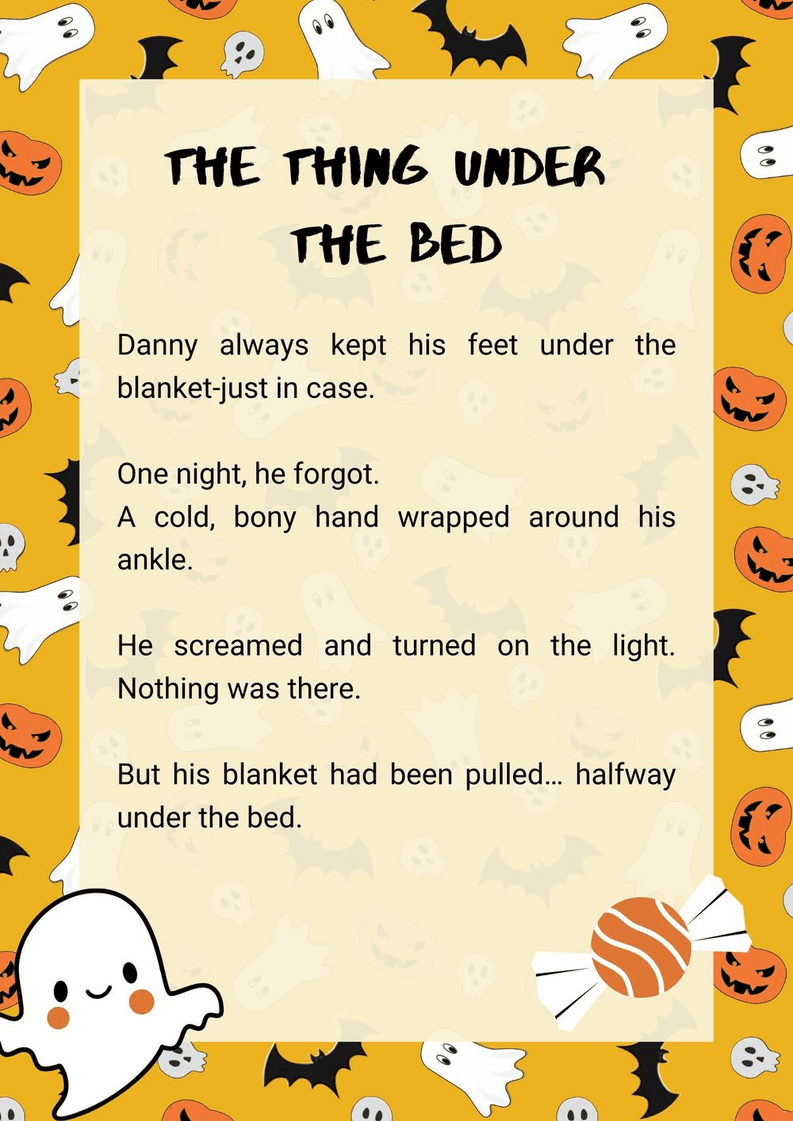

Printable Scary Story Reading Worksheet | Grade 5 ELA
Paste this activity's link or code into your existing LMS (Google Classroom, Canvas, Teams, Schoology, Moodle, etc.).
Students can open and work on the activity right away, with no student login required.
You'll still be able to track student progress and results from your teacher account.
This Grade 5 reading comprehension worksheet uses a suspenseful short story to build critical analysis skills. Students read the engaging narrative and answer text-dependent questions to demonstrate understanding. This resource helps learners practice citing textual evidence and drawing logical inferences from literary texts.
At a Glance
- Grade: Grade 5 · Subject: ELA Reading
- Standard:
CCSS.ELA-LITERACY.RL.5.1— Quote accurately from text to explain explicit details and draw inferences- Skill Focus: Textual evidence and inference
- Format: 2 pages · 4 problems · Answer key included · PDF
- Best For: Independent practice or quick reading assessment
- Time: 15–20 minutes
This resource contains a complete two-page learning package. The first page features the short story, designed with clear typography and engaging thematic illustrations to maintain student interest. The second page provides four structured comprehension questions that target key reading skills, including literal recall, vocabulary in context, and inferential reasoning. A comprehensive answer key is included to facilitate rapid grading.
This resource features a zero-prep workflow designed to save valuable planning time. First, print the double-sided PDF document in under one minute. Second, distribute the copies directly to your students at the start of the ELA block. Third, review student answers using the provided key in less than two minutes. This efficient structure makes the worksheet an ideal choice for emergency substitute lesson plans, morning work, or homework assignments.
Standards Alignment
This activity aligns directly with the Common Core State Standard CCSS.ELA-LITERACY.RL.5.1, which requires students to quote accurately from a text when explaining what the text says explicitly and when drawing inferences from the text. Additionally, it supports secondary standards related to analyzing story elements and character motivations. Both standard codes can be copied directly into lesson plans, IEP goals, or district curriculum mapping tools.
How to Use It
Use this worksheet during the independent practice phase of your reading lesson. After teaching a mini-lesson on drawing inferences, distribute the passage. As students work, circulate to observe if they refer back to the text to locate evidence. This activity takes approximately 15 to 20 minutes to complete and serves as an excellent formative assessment tool.
Who It's For
This resource is designed for fifth-grade students reading at or near grade level. It offers scaffolded support for struggling readers through its clear layout and manageable text length. Pair this worksheet with a graphic organizer for character analysis or use it alongside direct instruction on suspenseful narrative writing to deepen student engagement.
According to research from Fisher & Frey (2014) on the gradual release of responsibility, structured independent practice with short, high-interest texts is critical for consolidating reading comprehension skills. This worksheet aligns with those findings by providing a focused, single-session reading task that targets specific textual evidence standards. By requiring students to locate and cite details directly from the narrative, the activity reinforces the cognitive habits necessary for close reading. The structured format ensures that students engage deeply with the text without becoming overwhelmed by length. Educators can confidently integrate this resource into their daily routines, knowing it supports evidence-based literacy practices. The inclusion of standard CCSS.ELA-LITERACY.RL.5.1 ensures that student work directly maps to required grade-level benchmarks, facilitating accurate progress monitoring and data collection for instructional planning.


