


























Views
Downloads

Essential Sound Waves & Vibrations Guide | Grade 1 Science
Paste this activity's link or code into your existing LMS (Google Classroom, Canvas, Teams, Schoology, Moodle, etc.).
Students can open and work on the activity right away, with no student login required.
You'll still be able to track student progress and results from your teacher account.
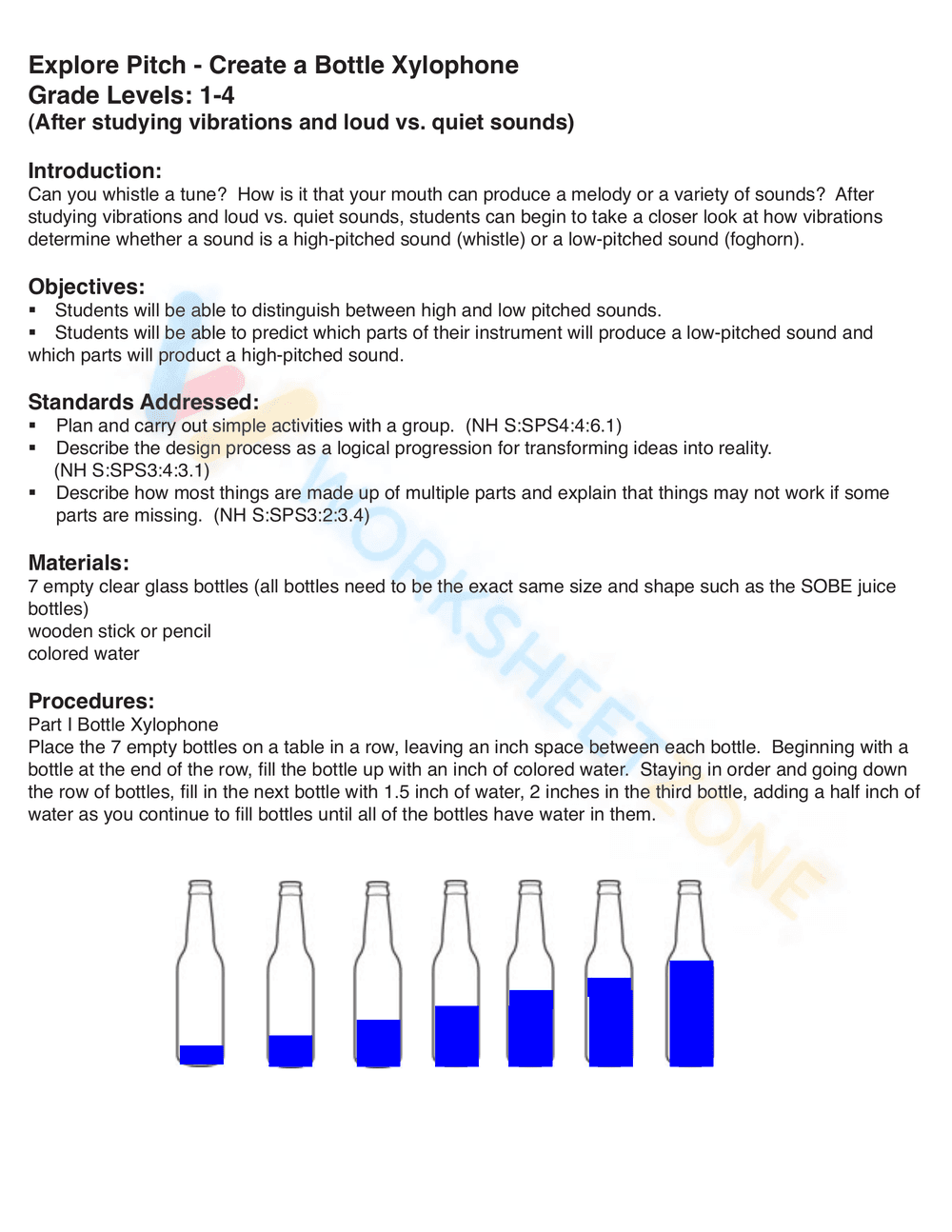
This Grade 1 science resource provides a comprehensive framework for investigating the physical properties of sound. Students explore how vibrations create noise, differentiate between volume levels, and experiment with pitch using a bottle xylophone. By engaging in these hands-on activities, learners develop a foundational understanding of energy and waves through direct observation and data collection.
At a Glance
- Grade: 1 · Subject: Science
- Standard:
1-PS4-1— Plan and conduct investigations to provide evidence that vibrating materials make sound- Skill Focus: Sound properties and vibrations
- Format: 6 pages · 4 activities · Teacher guide included · PDF
- Best For: Hands-on physical science lab rotations
- Time: 45–60 minutes
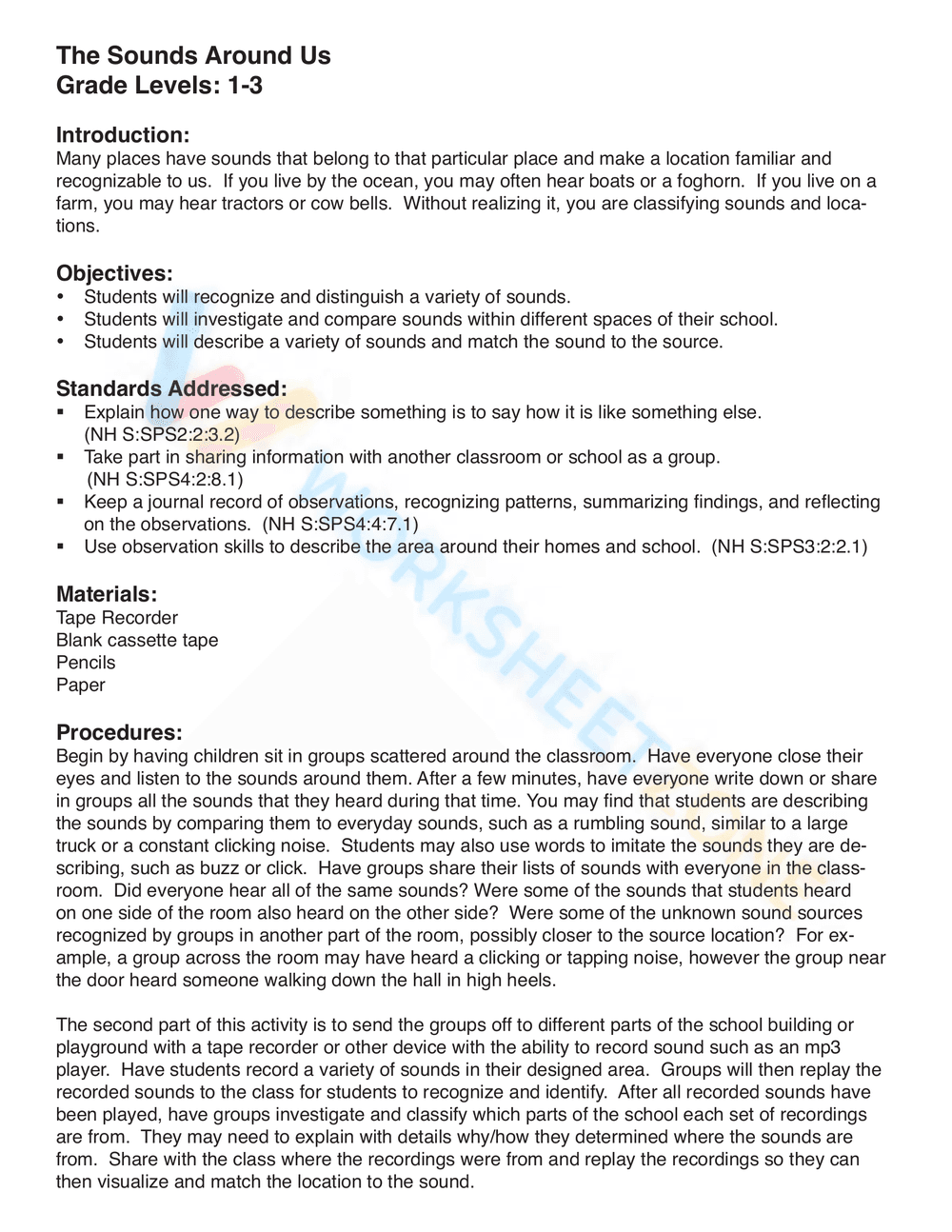
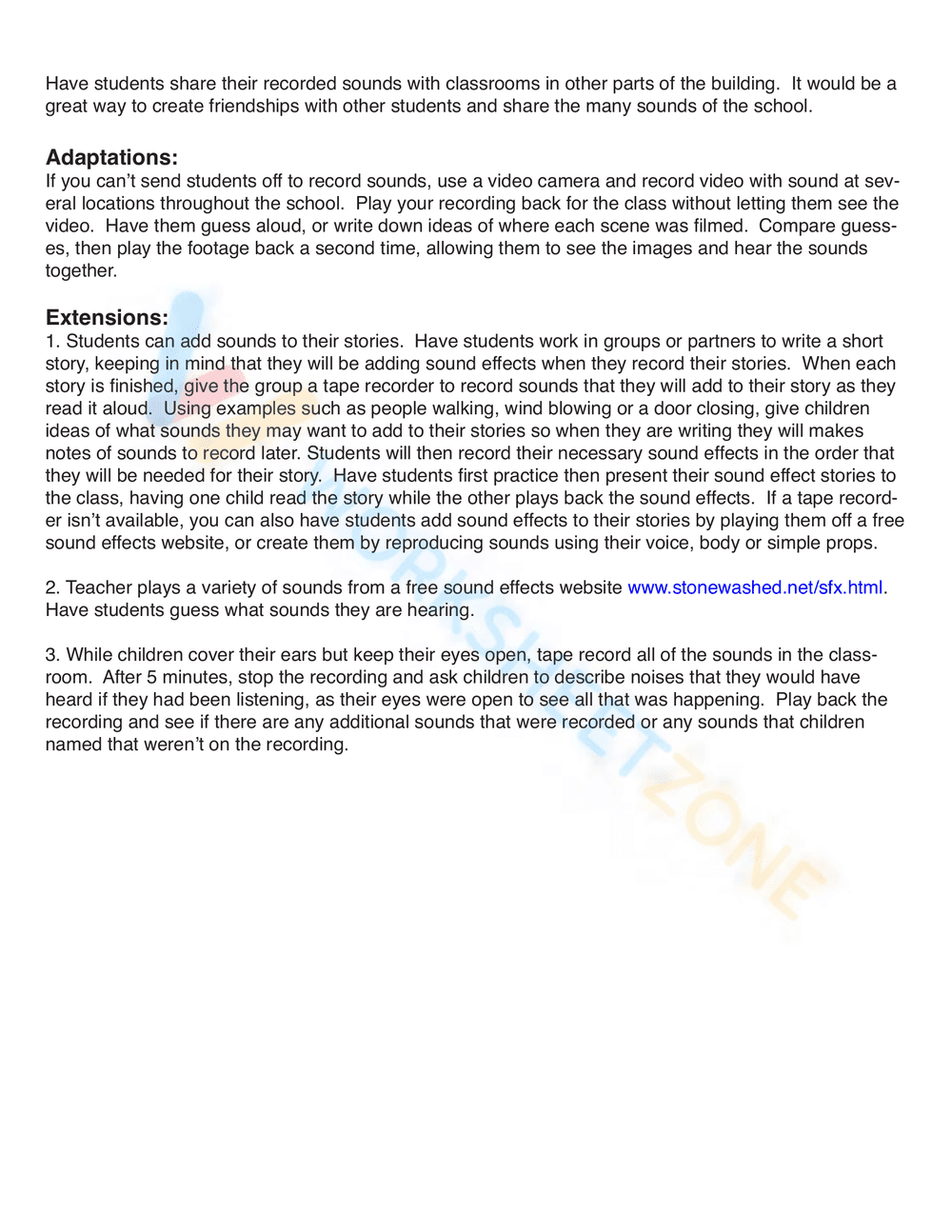
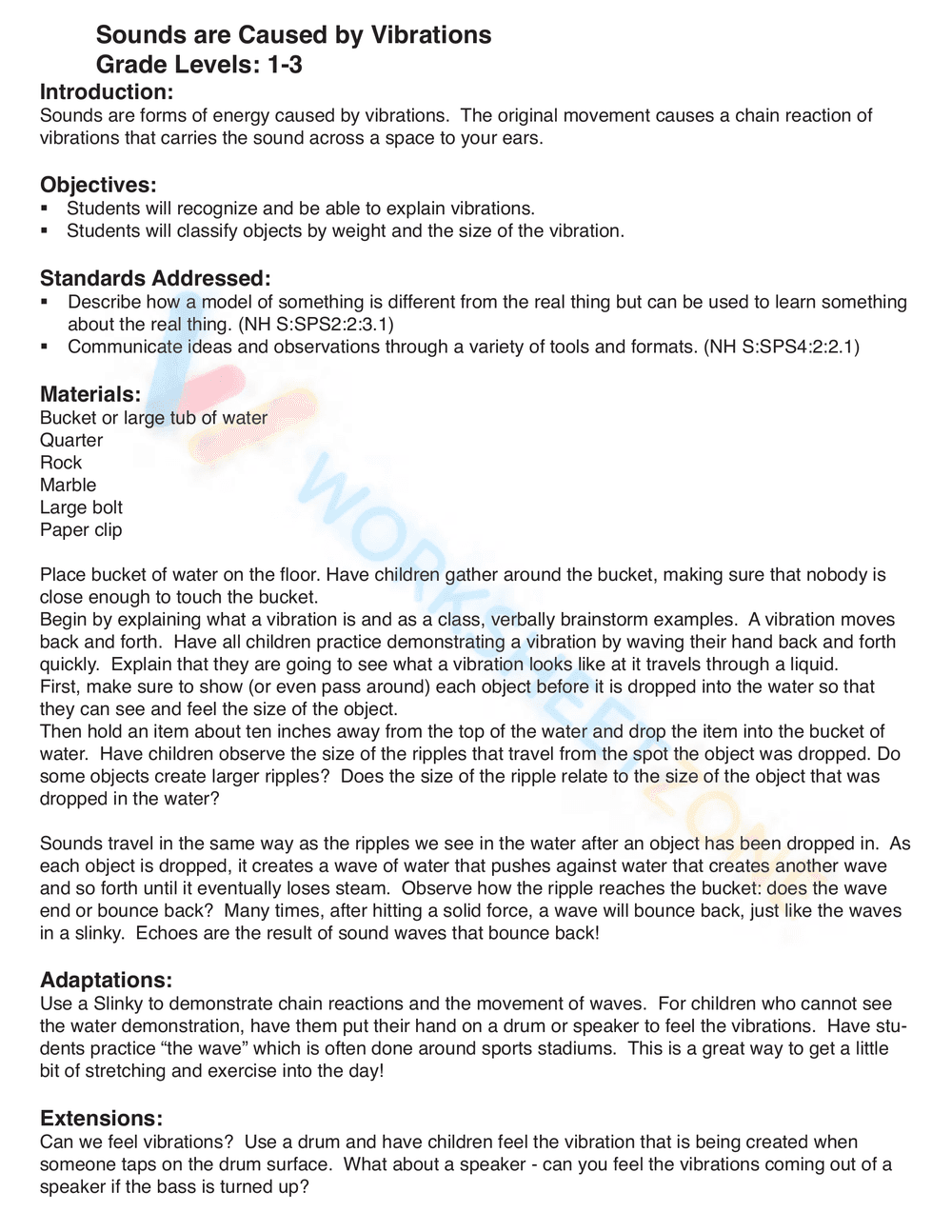
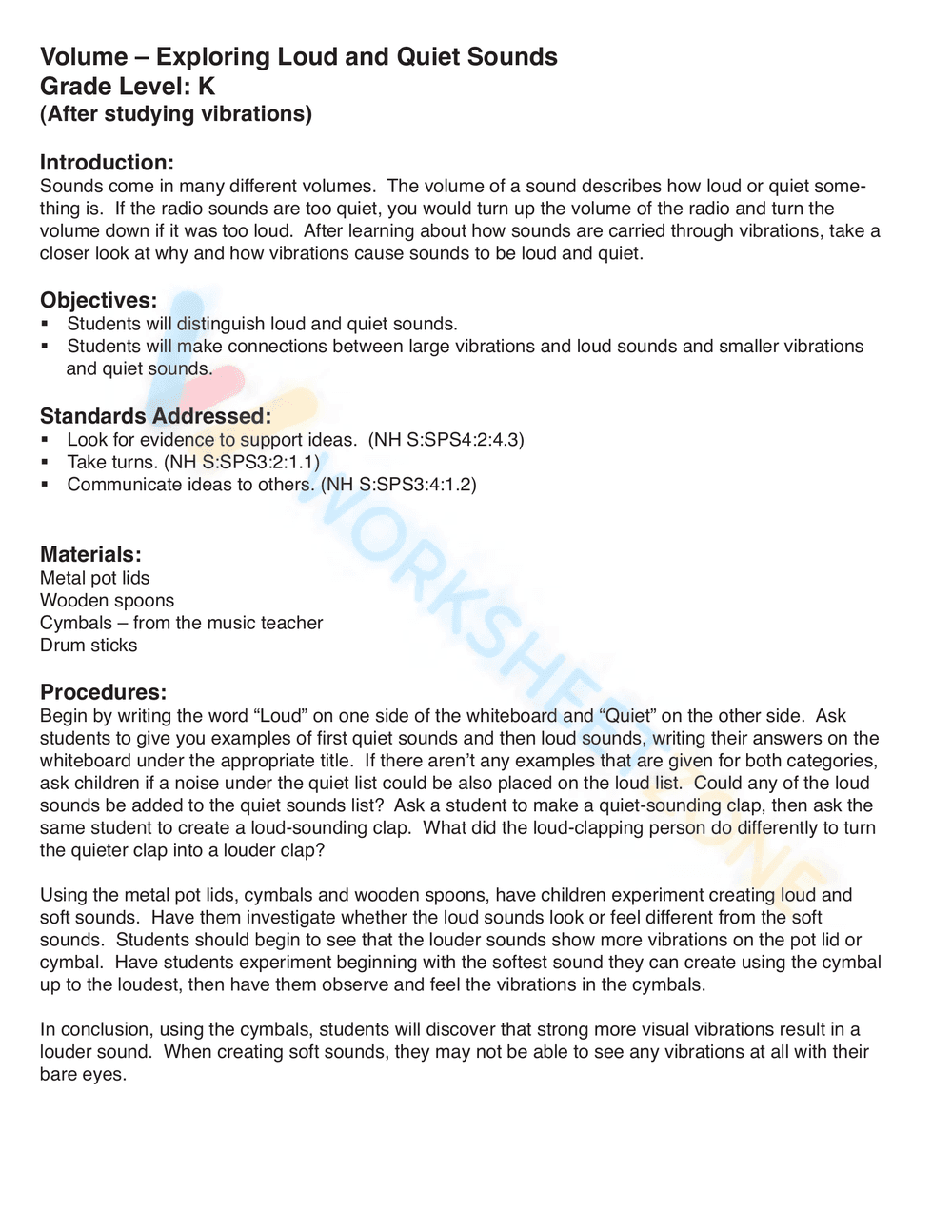
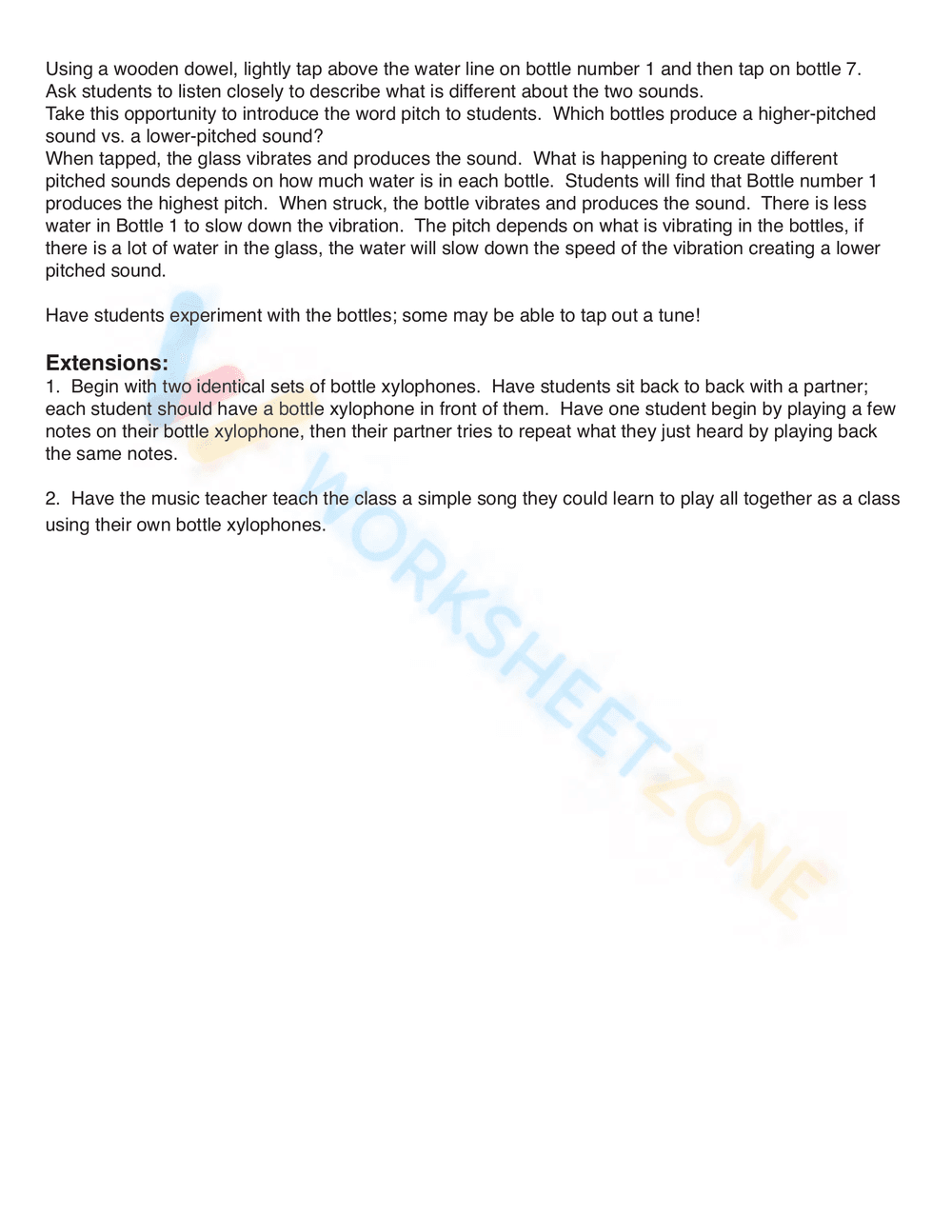
The 6-page PDF contains four distinct lesson modules: environmental sound identification, vibration visualization using water ripples, volume experimentation with percussion, and a pitch-focused bottle xylophone lab. Each section includes clear objectives, a materials list, step-by-step procedures, and specific adaptations for diverse learners. The guide also features extension tasks to challenge advanced students.
Teachers can implement these lessons with minimal lead time. First, print the 6-page guide and gather common household items like bottles and water (2 minutes). Next, distribute materials and lead students through the guided inquiry procedures (45 minutes). Finally, use the included discussion prompts to review findings and assess student comprehension (10 minutes). This structure is ideal for emergency sub plans.
This resource is primarily aligned with 1-PS4-1, which requires students to conduct investigations to prove that vibrating materials produce sound. It also supports supporting standards by having students use a bottle xylophone as a tool to communicate different pitches. Both standard codes can be copied directly into lesson plans, IEP goals, or district curriculum mapping tools.
Use the "Sounds are Caused by Vibrations" activity during your initial direct instruction to provide a concrete visual for an abstract concept. For a formative assessment, observe students during the bottle xylophone experiment to see if they can accurately predict how water levels affect pitch. These activities typically take 15-20 minutes each, allowing for flexible scheduling across a week-long unit.
This guide is designed for first-grade classrooms but is adaptable for Kindergarten through Grade 4. It is particularly effective for kinesthetic learners who benefit from tactile science experiments. Pair this resource with a visual anchor chart on sound waves or a non-fiction text about the human ear to create a multi-modal learning experience.
According to the RAND AIRS 2024 report on primary science education, hands-on inquiry-based learning significantly improves long-term retention of physical science concepts compared to passive reading. This resource leverages that research by focusing on the 1-PS4-1 standard, which emphasizes the relationship between vibrating materials and sound production. By engaging in the four structured activities—ranging from environmental sound classification to pitch manipulation—students move beyond rote memorization to active scientific discovery. Fisher & Frey (2014) highlight that such gradual release models in science help young learners build the confidence needed for independent investigation. This 6-page guide provides the necessary scaffolding, including adaptations and extensions, to ensure that all students can access the core curriculum. It serves as a robust tool for meeting NGSS requirements while fostering a genuine curiosity about the physical world.


