


























Views
Downloads
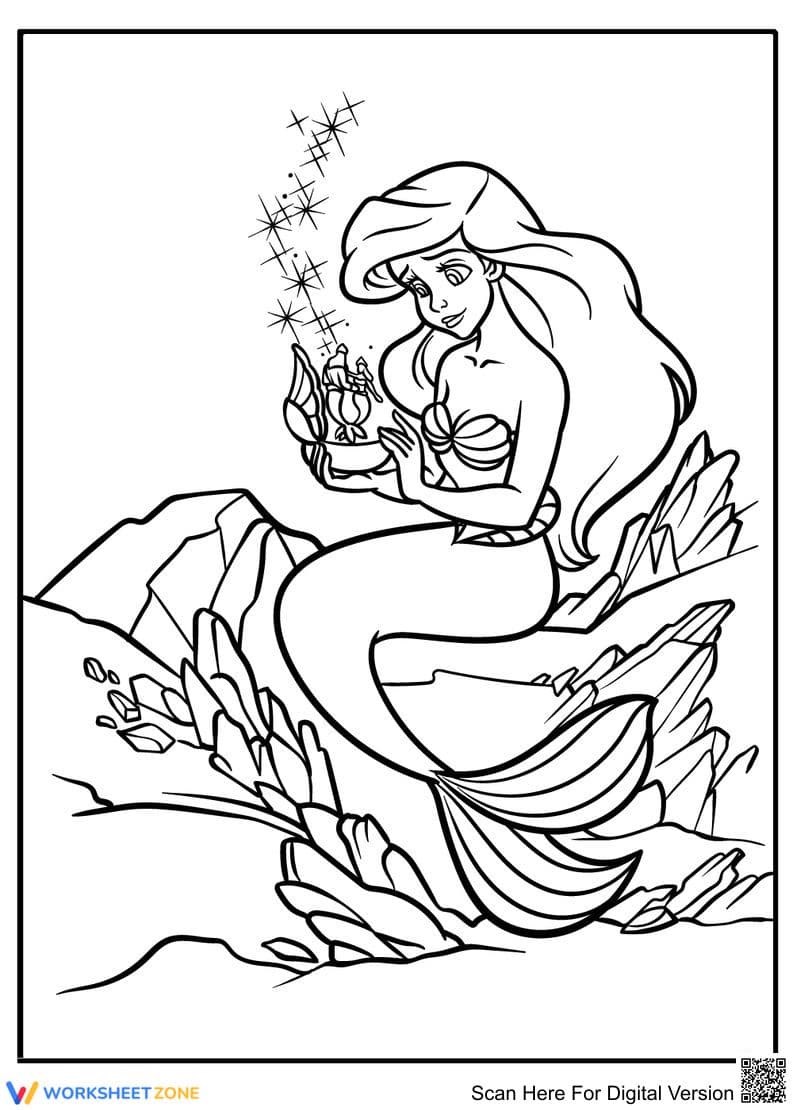

Ariel Music Box Coloring Page | Essential K-5 Printable
Paste this activity's link or code into your existing LMS (Google Classroom, Canvas, Teams, Schoology, Moodle, etc.).
Students can open and work on the activity right away, with no student login required.
You'll still be able to track student progress and results from your teacher account.
This Ariel coloring page provides a creative outlet for students to engage with narrative themes of family and happiness. By focusing on the iconic scene where Ariel discovers the music box, learners develop fine motor control while connecting visual art to storytelling. It is a perfect supplement for early elementary literacy or art blocks.
At a Glance
- Grade: K-5 · Subject: English
- Standard:
CCSS.ELA-LITERACY.SL.K.5— Add drawings or visual displays to descriptions to provide additional detail- Skill Focus: Fine motor development
- Format: 1 page · 1 task · Answer key included · PDF
- Best For: Early finishers and narrative visualization
- Time: 15–25 minutes
This single-page PDF features a high-quality line art illustration of Ariel holding her father's music box. The composition includes intricate details like magical sparkles, underwater rock formations, and coral, providing various textures for students to color. There are no complex instructions, making it accessible for independent work or as a quiet-time activity.
Zero-Prep Workflow: 1. Print: Select the single-page PDF and print enough copies for your group (30 seconds). 2. Distribute: Hand out the sheets along with crayons, colored pencils, or markers (1 minute). 3. Review: Encourage students to share the colors they chose for the magical elements (30 seconds). Total teacher prep time is under 2 minutes, making it an ideal sub plan or transition filler.
Standards Alignment: Primary standard: `CCSS.ELA-LITERACY.SL.K.5`. This standard asks students to add drawings or other visual displays to descriptions to provide additional detail. While this is a pre-made illustration, it serves as a scaffold for students to practice the visual representation of narrative details. Both standard codes can be copied directly into lesson plans, IEP goals, or district curriculum mapping tools.
How to Use It: Use this worksheet during a "Little Mermaid" themed literacy unit to help students visualize character emotions. It works best after a read-aloud or movie clip to reinforce the story's climax. As a formative assessment, observe how students handle small details like the sparkles to gauge fine motor readiness. Expected completion time is typically 15–25 minutes.
Who It's For: This resource is designed for Kindergarten through Grade 5 students, with a primary focus on early learners needing motor skill practice. It is an excellent pairing for a character trait anchor chart or a creative writing prompt about "What makes you happy?"
The use of coloring activities in early childhood education supports the development of the small muscles in the hands, which are foundational for writing endurance and pencil grip. According to Fisher & Frey (2014), integrating visual arts with narrative themes helps students internalize story structures and character motivations. This Ariel-themed worksheet aligns with CCSS.ELA-LITERACY.SL.K.5 by encouraging students to engage with visual details that represent specific story moments. Research from the RAND AIRS 2024 report suggests that low-stakes creative tasks can reduce academic anxiety in early elementary settings, providing a "soft entry" into more rigorous literacy tasks. By focusing on the plain-English skill of adding visual detail to a narrative context, teachers can bridge the gap between play and formal instruction. This 1-page printable is a reliable tool for supporting fine motor growth while maintaining high student engagement through familiar, beloved characters.


