


























Views
Downloads
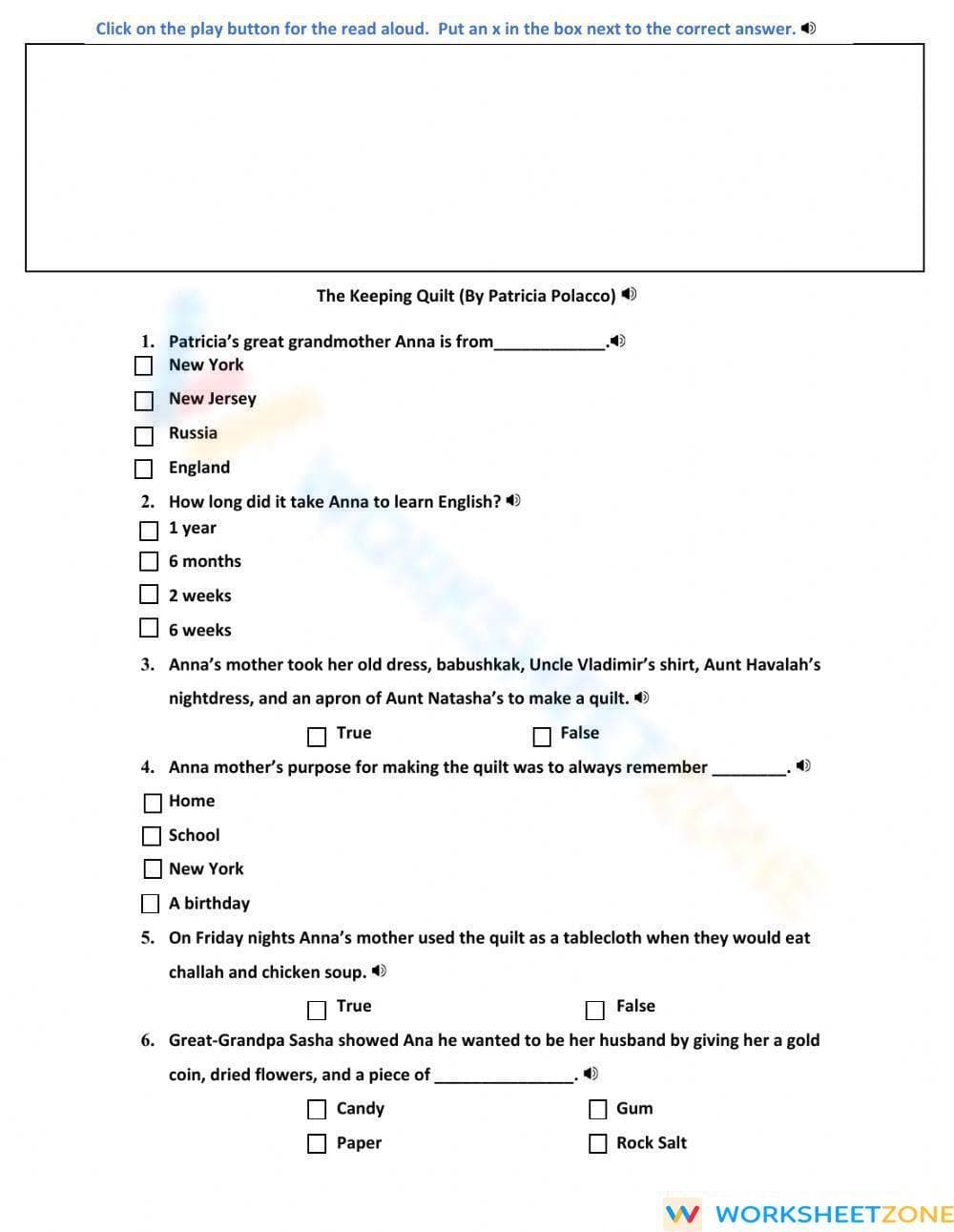
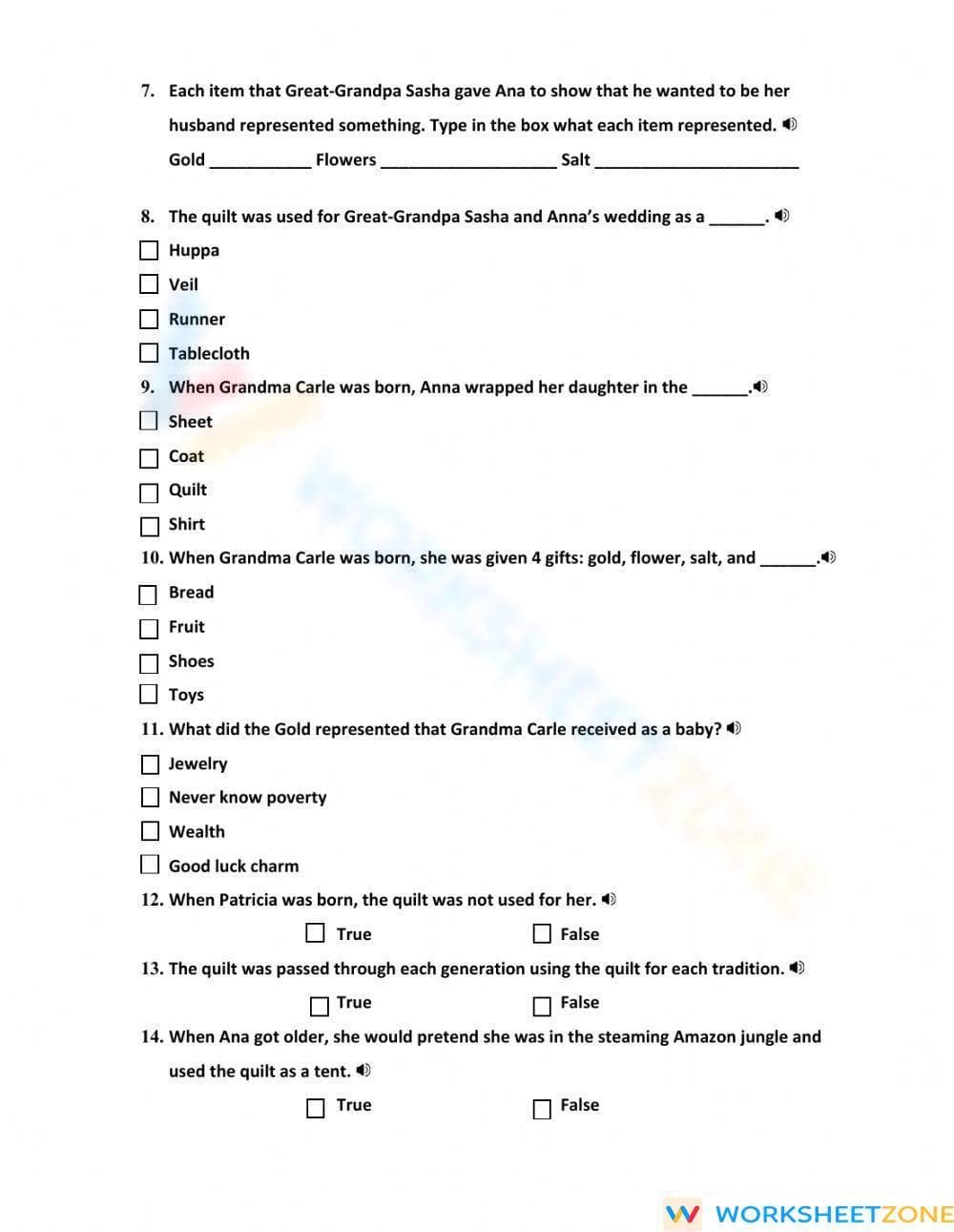

Grade 4 Story Sequence — Printable No-Prep Worksheet
Paste this activity's link or code into your existing LMS (Google Classroom, Canvas, Teams, Schoology, Moodle, etc.).
Students can open and work on the activity right away, with no student login required.
You'll still be able to track student progress and results from your teacher account.
Mastering Story Sequence with The Keeping Quilt
Mastering story sequencing is a vital skill for Grade 4 readers. This essential worksheet helps students accurately order key events in Patricia Polacco's beloved narrative, "The Keeping Quilt." By using a structured graphic organizer, students identify main plot points, reinforcing reading comprehension and analytical abilities. This activity provides a clear format for demonstrating mastery of narrative structure effectively.
At a Glance
- Grade: 4 · Subject: English Language Arts (ELA)
- Standard:
CCSS.ELA-LITERACY.RL.4.3— Describe a story's characters, setting, or events in depth with specific details.- Skill Focus: Sequence of Events
- Format: 2 pages · 7 problems · Answer key included · PDF
- Best For: Post-reading comprehension check
- Time: 20–30 minutes
What's Inside
This two-page PDF includes a sequence-of-events graphic organizer with six numbered boxes and a short-response question about family traditions. The second page provides a complete answer key. The document features professional typography and a clear layout that minimizes distraction while maximizing engagement with the literary text.
A Zero-Prep Workflow for Busy Teachers
Designed for maximum efficiency, this zero-prep worksheet is ideal for sub plans. The workflow involves three simple steps: First, Print (1 min) the PDF formatted for immediate use. Second, Distribute (1 min) the copies to students following the read-aloud. Third, Review (5 mins) the sequence using the provided answer key. With total teacher prep time under 2 minutes, this activity delivers targeted results without extra effort.
Standards Alignment
This worksheet aligns with CCSS.ELA-LITERACY.RL.4.3, requiring students to describe events in depth using text details. Completing the sequence chart helps students identify critical plot points. The standard code can be copied directly into lesson plans or IEP goals to ensure documentation accuracy for administrative reviews.
How to Use It
Use this as a formative assessment after reading to gauge student recall. Alternatively, assign it for independent practice or literacy centers. Observe students as they work to identify who uses specific text details. Completion typically takes 20 to 30 minutes, providing a clear snapshot of narrative comprehension.
Who It's For
Designed for Grade 4 students, this resource provides focused practice for strengthening reading comprehension. It pairs well with anchor charts on transition words. The accessible layout supports diverse learners, offering ample space for handwriting while maintaining a logical timeline of story events.
Targeted practice in sequencing events is a foundational skill for literary analysis, according to research from RAND AIRS 2024. This resource provides a scaffolded opportunity to meet standard CCSS.ELA-LITERACY.RL.4.3 by requiring students to describe events in depth. The graphic organizer format effectively lowers cognitive load, allowing students to focus on the analytical work of identifying and ordering six key moments in "The Keeping Quilt." By engaging in this structured task, students are not just recalling a story; they are actively practicing the cognitive routines that skilled readers use to make sense of complex narratives. This systematic approach ensures that students develop the necessary mental models for how time and events interact within a text, leading to better long-term retention of story elements and improved writing capabilities in subsequent tasks. It successfully bridges the critical gap between basic recall and deep analytical thinking required for mastery.


