




























Views
Downloads

The Hydrophobic Skunk Reading Worksheet | Ready Grade 8

Paste this activity's link or code into your existing LMS (Google Classroom, Canvas, Teams, Schoology, Moodle, etc.).
Students can open and work on the activity right away, with no student login required.
You'll still be able to track student progress and results from your teacher account.
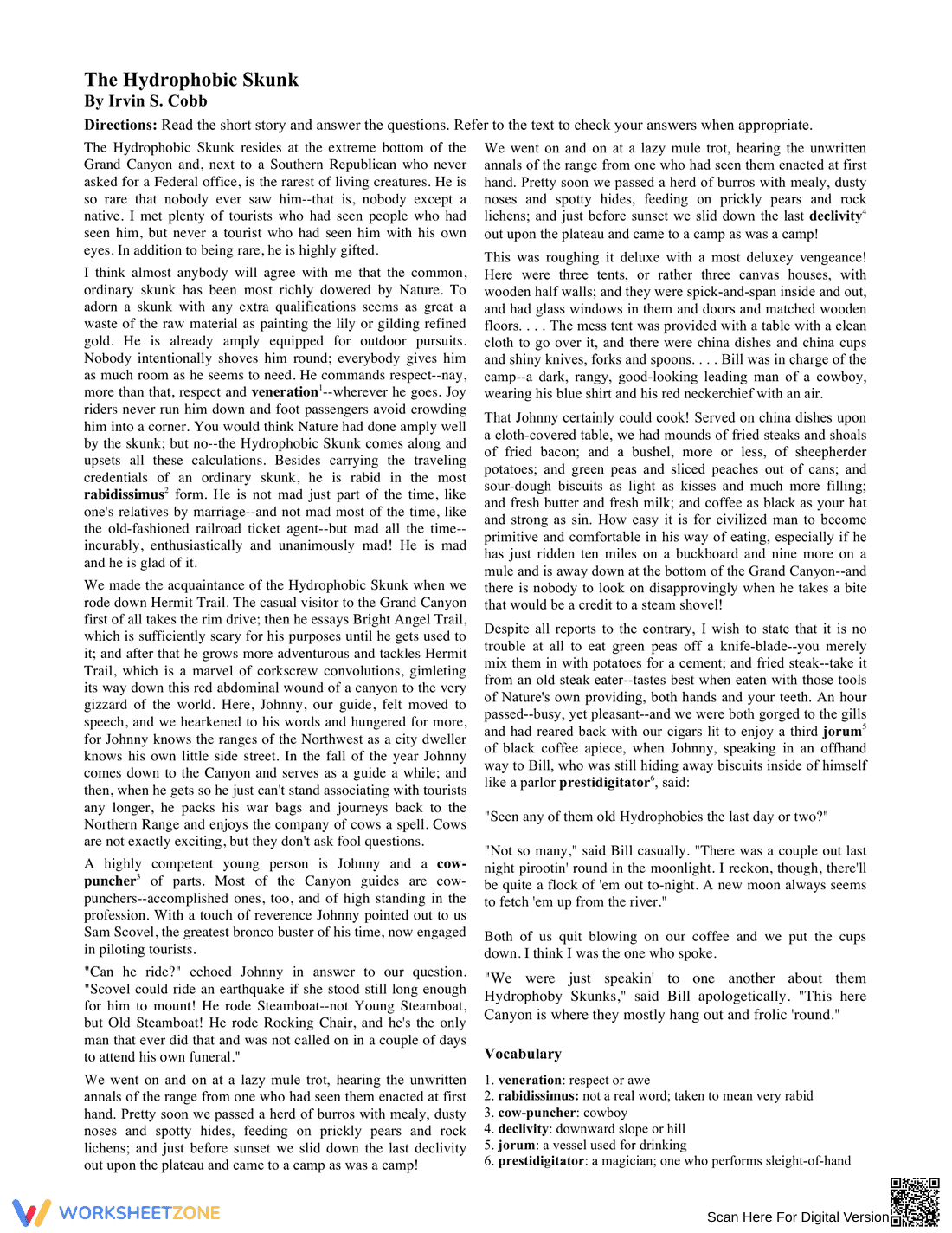
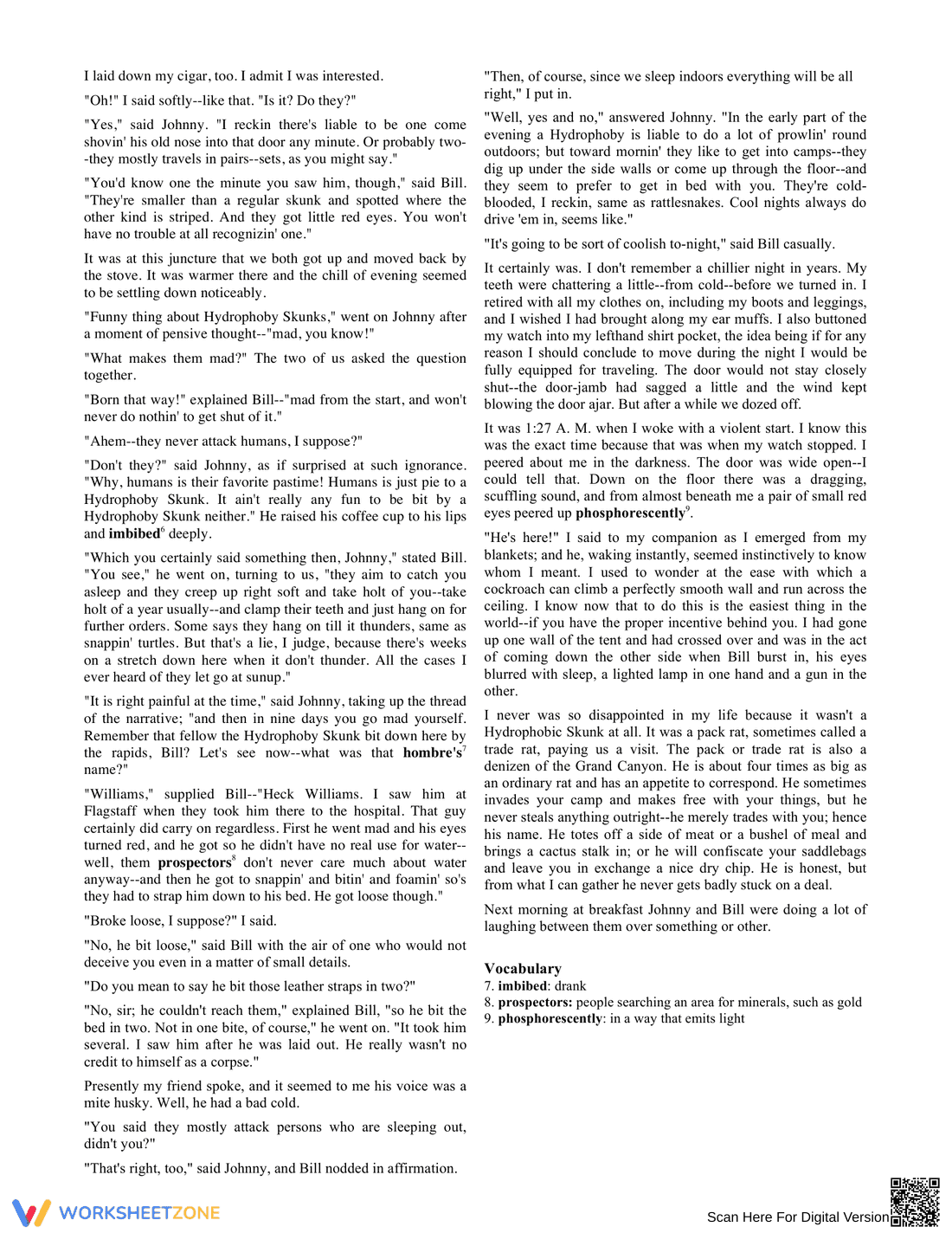
This Grade 8 reading comprehension worksheet uses Irvin S. Cobb's humorous short story to build critical text analysis skills. Students read the narrative and answer targeted questions to demonstrate deep understanding. This resource helps middle schoolers cite textual evidence and analyze character interactions to strengthen core literacy capabilities.
At a Glance
- Grade: Grade 8 · Subject: ELA Reading
- Standard:
CCSS.ELA-LITERACY.RL.8.1— Cite textual evidence to support analysis of what the text says explicitly- Skill Focus: Textual evidence and summarization
- Format: 4 pages · 12 problems · No answer key · PDF
- Best For: Independent reading practice and assessment
- Time: 30–45 minutes
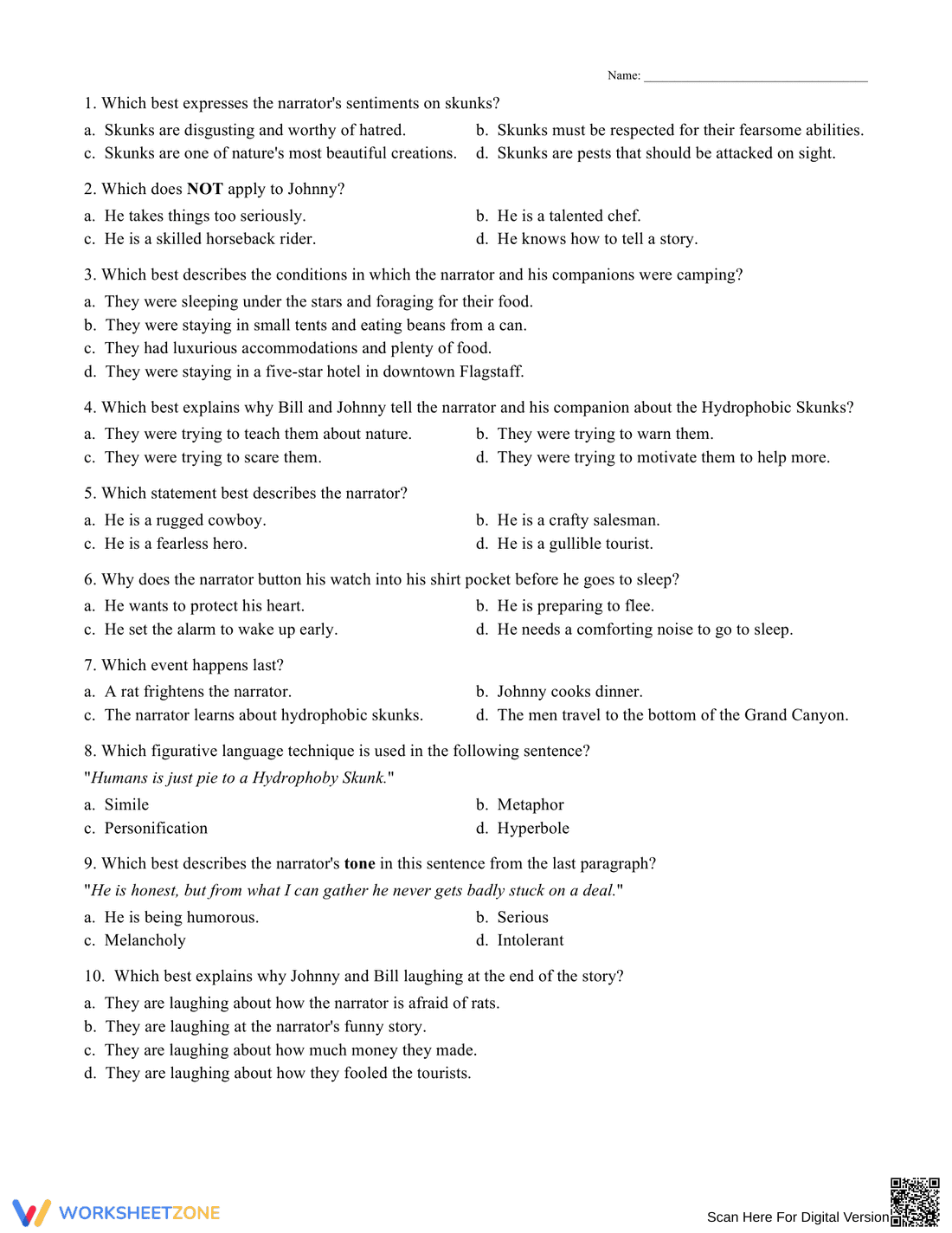
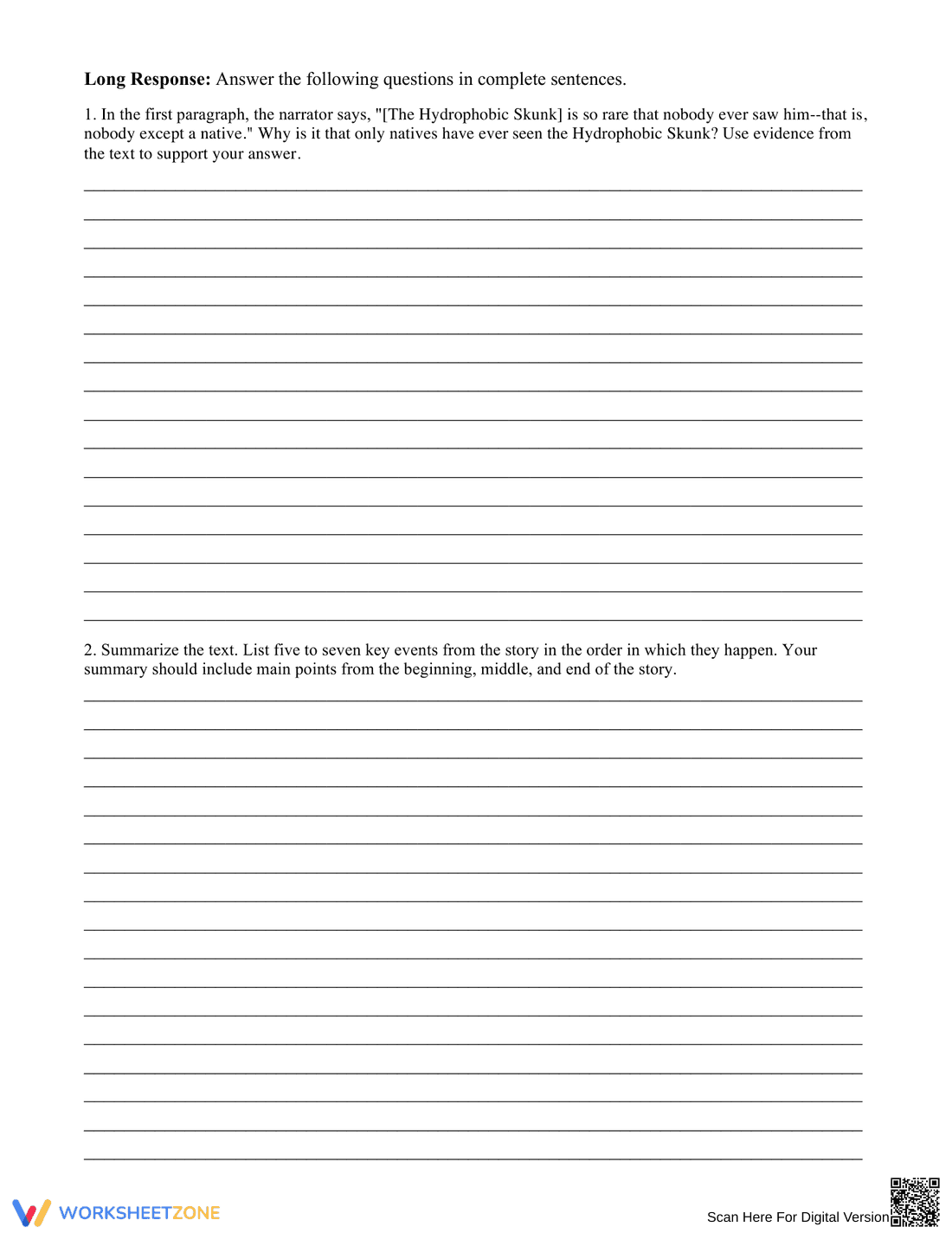
This comprehensive four-page printout contains the complete text of the classic short story, complete with helpful vocabulary footnotes to scaffold student reading. Following the text, the worksheet provides ten multiple-choice questions targeting literal comprehension, figurative language, tone, and character motivation. The final page features two extended-response prompts requiring students to write a summary and cite specific evidence.
The worksheet follows a structured skill progression designed to guide students toward independent mastery. First, the vocabulary footnotes provide guided support during the initial reading phase. Next, the ten multiple-choice questions offer supported practice, prompting students to analyze specific sentences and literary devices. Finally, the two long-response questions require independent practice, challenging students to synthesize the text and write coherent summaries without scaffolding. This gradual-release model ensures students build confidence as they transition from basic recall to deep analysis.
Standards Alignment
This resource aligns directly with the Common Core State Standard CCSS.ELA-LITERACY.RL.8.1, which requires students to cite textual evidence that most strongly supports an analysis of what the text says explicitly as well as inferences drawn from the text. Additionally, the summarizing task supports CCSS.ELA-LITERACY.RL.8.2 by asking students to provide an objective summary of the text. Both standard codes can be copied directly into lesson plans, IEP goals, or district curriculum mapping tools.
How to Use It
Use this worksheet as a summative assessment after a unit on narrative structure or irony. Alternatively, assign it as a structured independent reading activity during station rotations. While students work, observe their ability to locate evidence for the multiple-choice questions to identify who needs targeted intervention. Expect completion within 30 to 45 minutes.
Who It's For
This activity is designed for eighth-grade students working on reading comprehension and textual analysis. It is highly beneficial for general education classrooms, structured ELA intervention groups, or homework assignments. Pair this worksheet with a lesson on identifying author's tone or a graphic organizer for summarizing narrative texts to maximize student growth.
This reading comprehension resource targets the core requirements of CCSS.ELA-LITERACY.RL.8.1 by prompting eighth-grade students to analyze text and cite evidence. According to research from Fisher & Frey (2014) on the gradual release of responsibility, scaffolding complex texts with vocabulary support and structured questioning pathways improves student comprehension. By moving students systematically from vocabulary acquisition to multiple-choice analysis and finally to independent written summaries, this worksheet reinforces critical thinking. The inclusion of 12 distinct tasks ensures teachers can accurately measure student progress toward standard mastery. This structured approach aligns with evidence-based literacy practices that emphasize the importance of close reading and text-dependent questioning in middle school. Educators can integrate this resource into their curriculum to support standards-based instruction.


