


























Views
Downloads



Essential History of Easter Worksheet | Grade 1 Printable
Paste this activity's link or code into your existing LMS (Google Classroom, Canvas, Teams, Schoology, Moodle, etc.).
Students can open and work on the activity right away, with no student login required.
You'll still be able to track student progress and results from your teacher account.
Grade 1 students explore holiday origins while building foundational reading comprehension skills. This printable set bridges informational reading with vocabulary acquisition, ensuring young learners understand key details about traditions and symbols. Students will identify core facts from the text to demonstrate mastery of evidence-based answering and literal recall during this seasonal literacy activity.
At a Glance
- Grade: 1 · Subject: ELA - Reading Comprehension
- Standard:
CCSS.ELA-LITERACY.RI.1.1— Ask and answer questions about key details in a text to demonstrate understanding.- Skill Focus: Foundational Reading & Vocabulary
- Format: 3 pages · 9 problems · Answer key included · PDF
- Best For: Holiday thematic units and literacy centers
- Time: 20–30 minutes
What's Inside
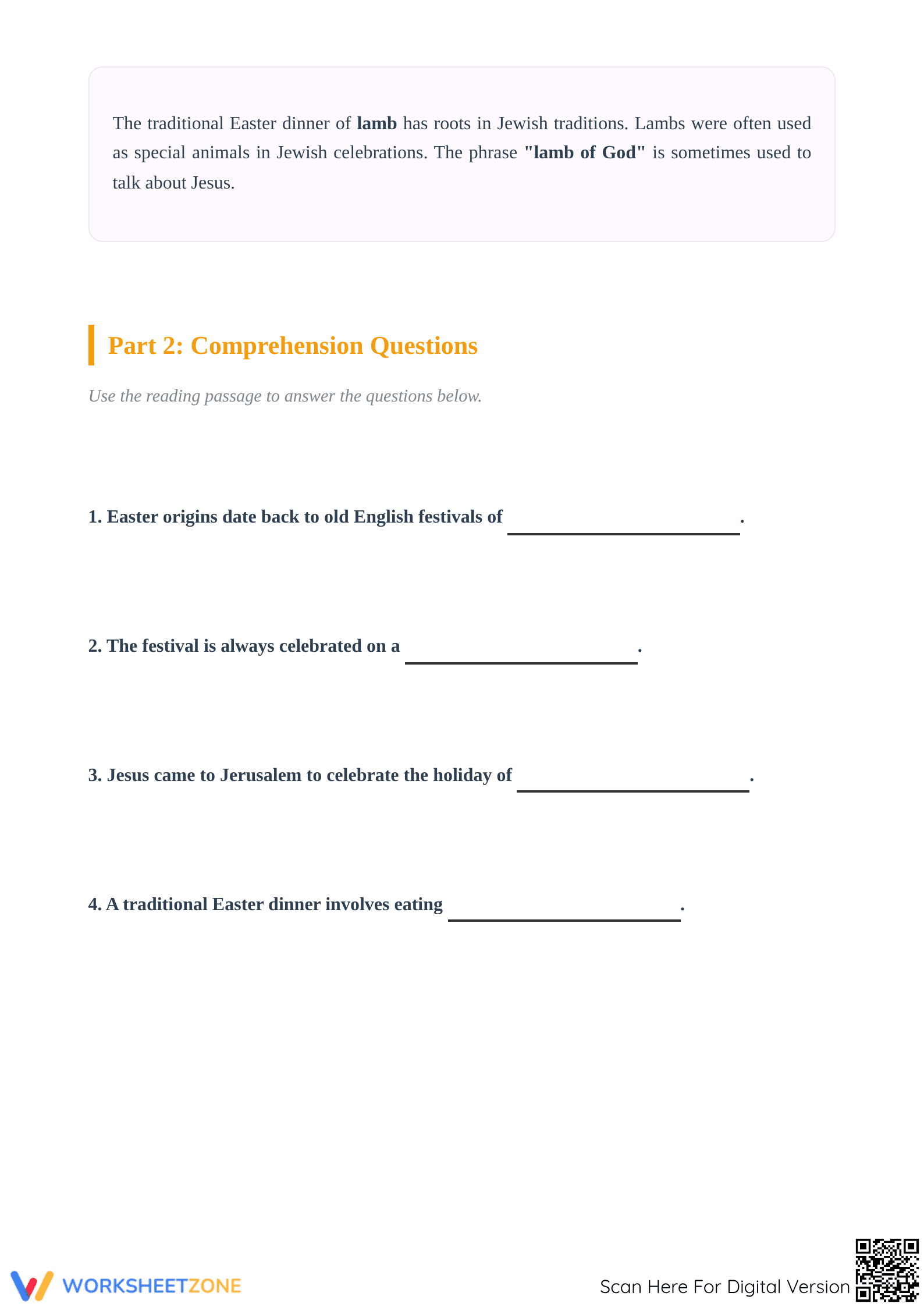
This comprehensive 3-page packet includes a focused reading passage, four evidence-based comprehension questions, four vocabulary matching tasks (fertility, resurrection, Passover, and procession), and a creative drawing exercise. The structured layout features clear fonts and ample whitespace, making it accessible for primary readers. A full answer key is provided for quick grading and immediate feedback.
Zero-Prep Workflow
This resource is designed for maximum efficiency in busy classrooms. Teachers can follow a simple three-step process: Print the multi-page PDF (30 seconds), distribute the packets to students (1 minute), and review the answers using the included key (15 minutes). With a total teacher prep time of under two minutes, this set is ideal for unexpected sub plans or morning work.
Standards Alignment
The primary focus is `CCSS.ELA-LITERACY.RI.1.1`: "Ask and answer questions about key details in a text." By requiring students to locate specific information about Easter traditions within the provided passage, the worksheet reinforces text-dependency. This standard code can be copied directly into lesson plans, IEP goals, or district curriculum mapping tools to ensure instructional alignment.
How to Use It
Utilize this worksheet during a whole-group social studies or ELA block to introduce holiday history. It also functions effectively as an independent literacy center task. Educators should observe if students are returning to the text to find answers; this formative-assessment observation tip helps identify readers who may need additional scaffolding with informational text structures.
Who It's For
This resource is tailored for Grade 1 students, though it provides excellent support for ELLs needing cultural context for Western holidays. It pairs naturally with an Easter-themed anchor chart or a direct instruction lesson on spring traditions. The blend of reading, vocabulary, and art ensures that different learning modalities are addressed within a single cohesive assignment.
The use of informational text in early childhood education facilitates the development of background knowledge, a critical component of reading comprehension. Aligned with CCSS.ELA-LITERACY.RI.1.1, this worksheet requires students to ask and answer questions about key details, a skill that Fisher & Frey (2014) identify as foundational for the gradual release of responsibility model. By engaging with the plain-English skill of identifying evidence within a passage, Grade 1 students build the stamina needed for complex literacy tasks. Research suggests that thematic units, such as the history of Easter, increase student engagement and provide the necessary scaffolding for vocabulary acquisition. This resource serves as a vital bridge between literal comprehension and critical thinking, allowing educators to monitor student progress through structured evidence-based responses. The inclusion of multi-modal tasks, such as drawing and matching, ensures that diverse learners can access the curriculum while meeting rigorous state and national standards for primary literacy development.


