


























Views
Downloads
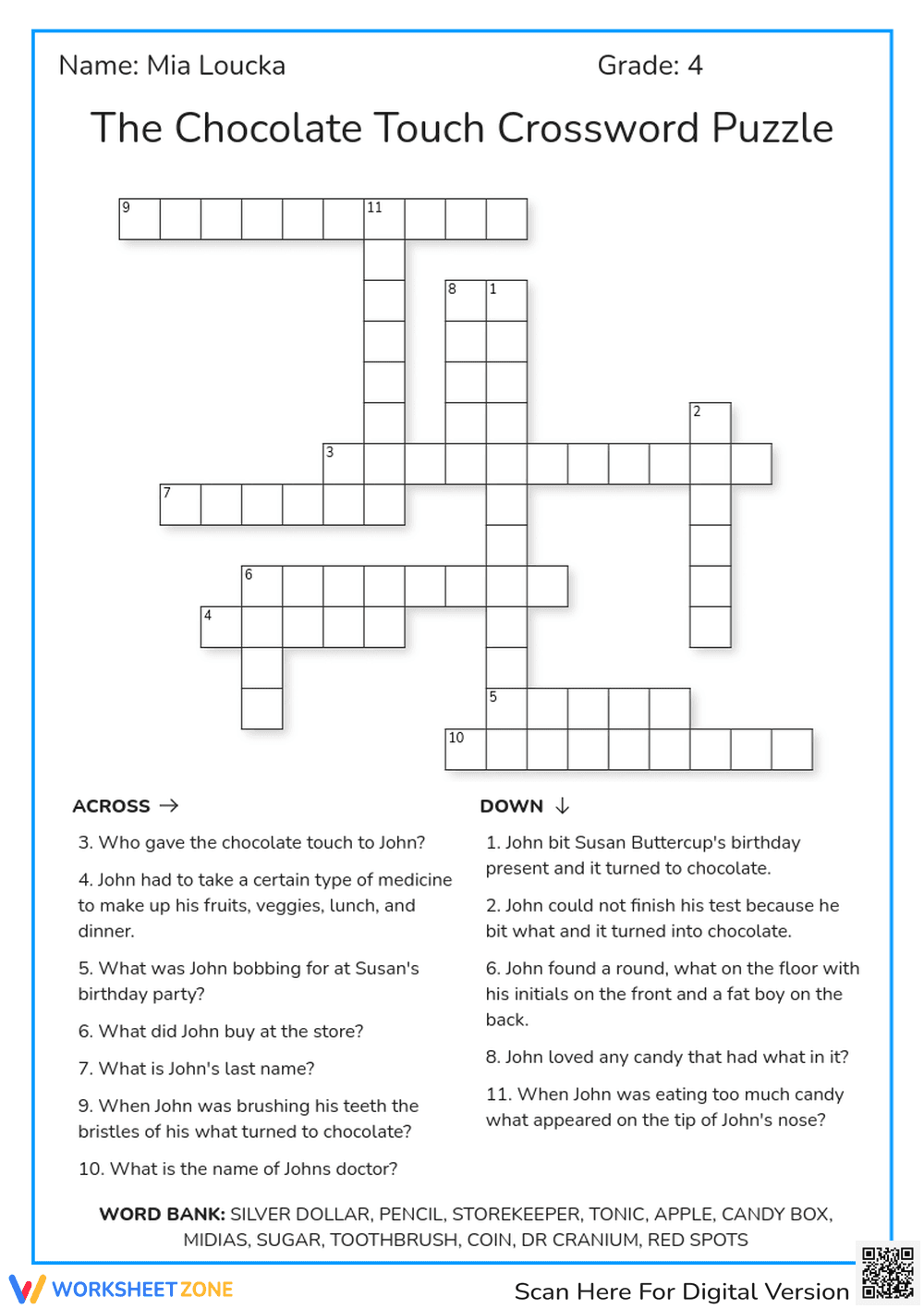

Printable Chocolate Touch Crossword | Grade 4 ELA
Paste this activity's link or code into your existing LMS (Google Classroom, Canvas, Teams, Schoology, Moodle, etc.).
Students can open and work on the activity right away, with no student login required.
You'll still be able to track student progress and results from your teacher account.
This Grade 4 reading comprehension worksheet reinforces key details from The Chocolate Touch through an engaging crossword format. Students recall specific plot points, character names, and events to complete the puzzle, strengthening their text retention and literary analysis skills in a fun, accessible way.
At a Glance
- Grade: 4 · Subject: ELA
- Standard:
CCSS.ELA-LITERACY.RL.4.1— Refer to details and examples in a text.- Skill Focus: Reading Comprehension
- Format: 1 page · 12 problems · Answer key included · PDF
- Best For: Novel study review
- Time: 15–20 minutes
This single-page resource features a 12-clue crossword puzzle focused entirely on the events of The Chocolate Touch. It includes seven across clues and five down clues that prompt students to remember specific story elements, such as John's doctor and the items that turned to chocolate. A helpful 12-word bank is provided at the bottom of the page to support spelling and guide students who might need a quick memory prompt. A complete answer key is included for fast grading.
Zero-Prep Workflow
- Print (1 minute): Simply print the PDF.
- Distribute (1 minute): Hand out the puzzle to students as they finish reading the corresponding chapters or the entire book.
- Review (3 minutes): Use the included answer key to quickly check student work or project it on the board for self-correction.
With a total teacher prep time of under two minutes, this activity is an excellent addition to any emergency sub plan or Friday afternoon literacy block.
Standards Alignment
This activity is aligned to primary standard CCSS.ELA-LITERACY.RL.4.1, requiring students to refer to details and examples in a text when explaining what the text says explicitly. By recalling specific plot points to solve the clues, students demonstrate their literal comprehension of the novel. Both standard codes can be copied directly into lesson plans, IEP goals, or district curriculum mapping tools.
How to Use It
This crossword puzzle serves as an excellent post-reading activity after students complete The Chocolate Touch. Assign it as independent seatwork to assess retention, or use it as a collaborative partner activity. Expect completion to take between 15 and 20 minutes. As a formative assessment observation tip, watch which clues students struggle to answer; this can indicate which parts of the plot they may have skimmed or misunderstood, guiding your subsequent review discussions.
Who It's For
This resource is designed for fourth-grade students participating in a novel study or literature circle. The included word bank provides built-in differentiation, making the puzzle accessible for English Language Learners or students who struggle with spelling, while still challenging them to match the correct vocabulary to the context clues. It pairs perfectly with a direct instruction lesson on summarizing fictional texts or a character analysis anchor chart.
Effective reading comprehension requires students to actively recall and synthesize information from a text. Aligning with CCSS.ELA-LITERACY.RL.4.1, which asks students to refer to details and examples in a text, this crossword puzzle provides a structured opportunity for literal comprehension practice. According to Fisher & Frey (2014), providing students with interactive, low-stakes retrieval practice significantly improves their long-term retention of academic content and narrative structures. By transforming standard reading check questions into a puzzle format with a supportive word bank, educators can reduce cognitive overload while still demanding accurate textual recall. This method ensures that students are not merely passively consuming literature, but actively engaging with the material to solidify their understanding of plot dynamics and character development. This targeted practice builds a strong foundation for future literary analysis.


