


























Views
Downloads



Printable CCSS.ELA-LITERACY.RI.3.1 Grade 3 Diagnostic
Paste this activity's link or code into your existing LMS (Google Classroom, Canvas, Teams, Schoology, Moodle, etc.).
Students can open and work on the activity right away, with no student login required.
You'll still be able to track student progress and results from your teacher account.
This comprehensive Grade 3 ELA diagnostic test evaluates student proficiency in reading comprehension, vocabulary, and functional language. By assessing multiple literacy components in a single session, it provides a clear baseline of student strengths and areas for growth. Students demonstrate their ability to extract meaning from text and apply language rules effectively.
At a Glance
- Grade: 3 · Subject: English Language Arts
- Standard:
CCSS.ELA-LITERACY.RI.3.1— Ask and answer questions to demonstrate understanding of a text- Skill Focus: Reading comprehension & vocabulary
- Format: 9 pages · 29 problems · Answer key included · PDF
- Best For: End-of-term assessment or diagnostic baseline
- Time: 35–45 minutes
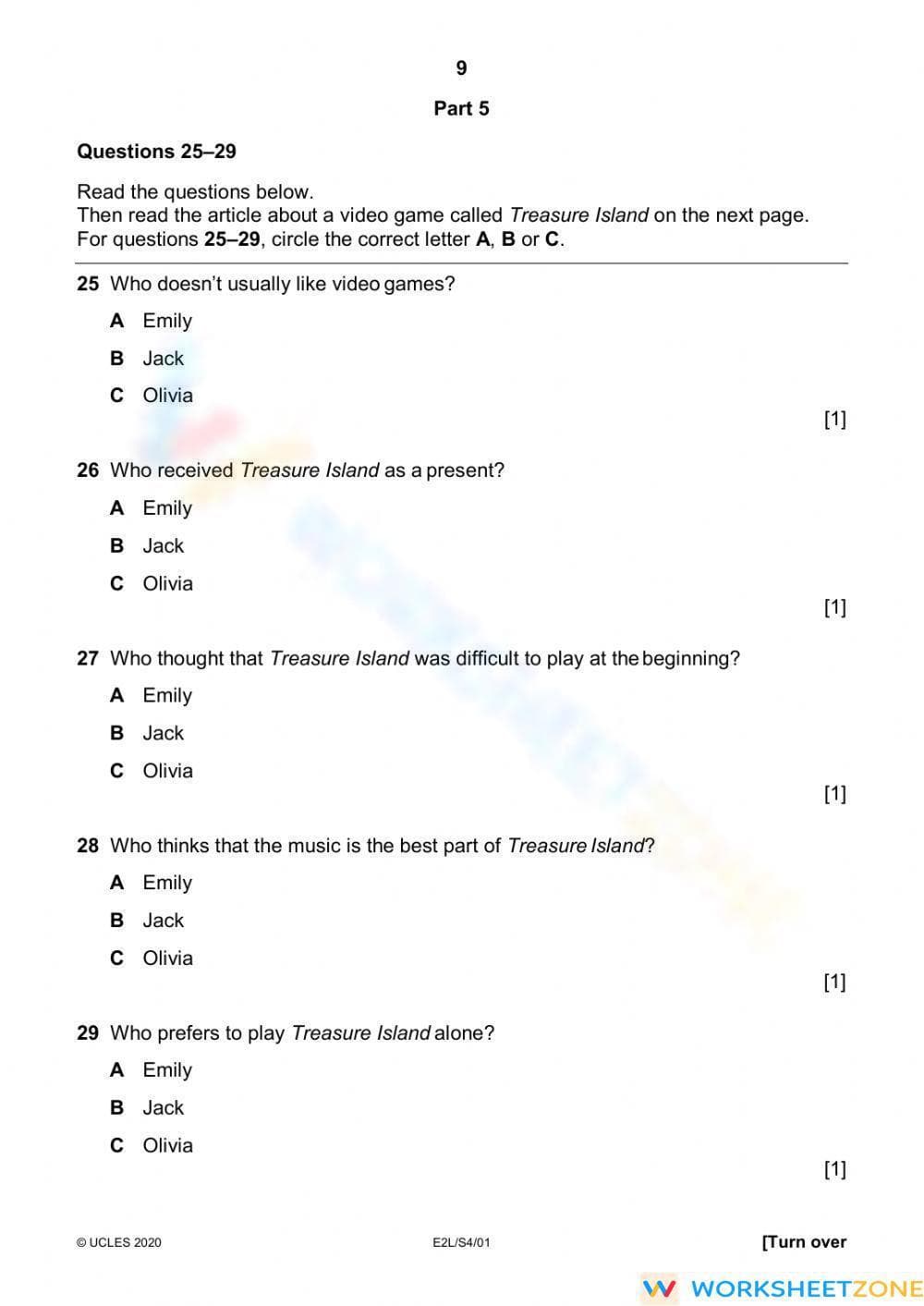
This multi-part assessment includes five distinct sections across 9 pages. It features visual vocabulary matching, signage interpretation, conversational response selection, a grammar-focused cloze text on history, and detailed reading comprehension questions. The structure includes 29 specific tasks and a total mark of 34, allowing for precise scoring of student performance across different language domains.
Mastery Evidence
The assessment is structured to provide evidence of mastery across varying levels of complexity. Part 1 maps to basic identification, while Parts 4 and 5 require higher-order synthesis and contextual inference. These results can be entered directly into gradebooks or IEP progress notes to track longitudinal growth against the CCSS.ELA-LITERACY.RI.3.1 benchmark and international Cambridge Stage 4 standards.
Standards Alignment
The primary alignment is `CCSS.ELA-LITERACY.RI.3.1`, which requires students to ask and answer questions to demonstrate understanding of a text, referring explicitly to the text as the basis for the answers. This resource also supports CCSS.ELA-LITERACY.L.3.4 for vocabulary acquisition through context clues. Both standard codes can be copied directly into lesson plans, IEP goals, or district curriculum mapping tools.
How to Use It
Administer this test as a summative assessment at the end of a unit or as a diagnostic tool at the start of a term. Use the functional language section to observe how students handle real-world communicative scenarios. We recommend a 35-minute testing window to simulate standard assessment conditions while allowing for focused student reflection. Review the vocabulary section to identify specific lexical gaps.
Who It's For
This resource is designed for Grade 3 and Grade 4 students, including English Language Learners (ELL) who benefit from visual scaffolding in the initial sections. It pairs naturally with grade-level reading passages or anchor charts focusing on signal words and context clues. The diagnostic nature makes it ideal for identifying students requiring Tier 2 intervention or additional support.
Standardized diagnostic assessments play a critical role in identifying literacy gaps before they compound in later grades. This worksheet aligns with CCSS.ELA-LITERACY.RI.3.1 by requiring students to demonstrate reading comprehension through evidence-based questioning. According to research in the RAND AIRS 2024 report, frequent low-stakes diagnostic testing improves student retention of core literacy skills by up to 22% by providing immediate feedback loops. The inclusion of varied task types—from visual matching to complex cloze procedures—supports the multi-modal learning strategies advocated by Fisher & Frey (2014) for effective gradual release of responsibility. By evaluating 29 distinct tasks across 9 pages, this tool ensures a robust data set for teacher analysis. Educational outcomes are maximized when educators use these diagnostic findings to personalize instruction, ensuring that every student meets the rigorous demands of early elementary literacy standards through proven assessment methodologies and evidence-based practice.


