


























Views
Downloads
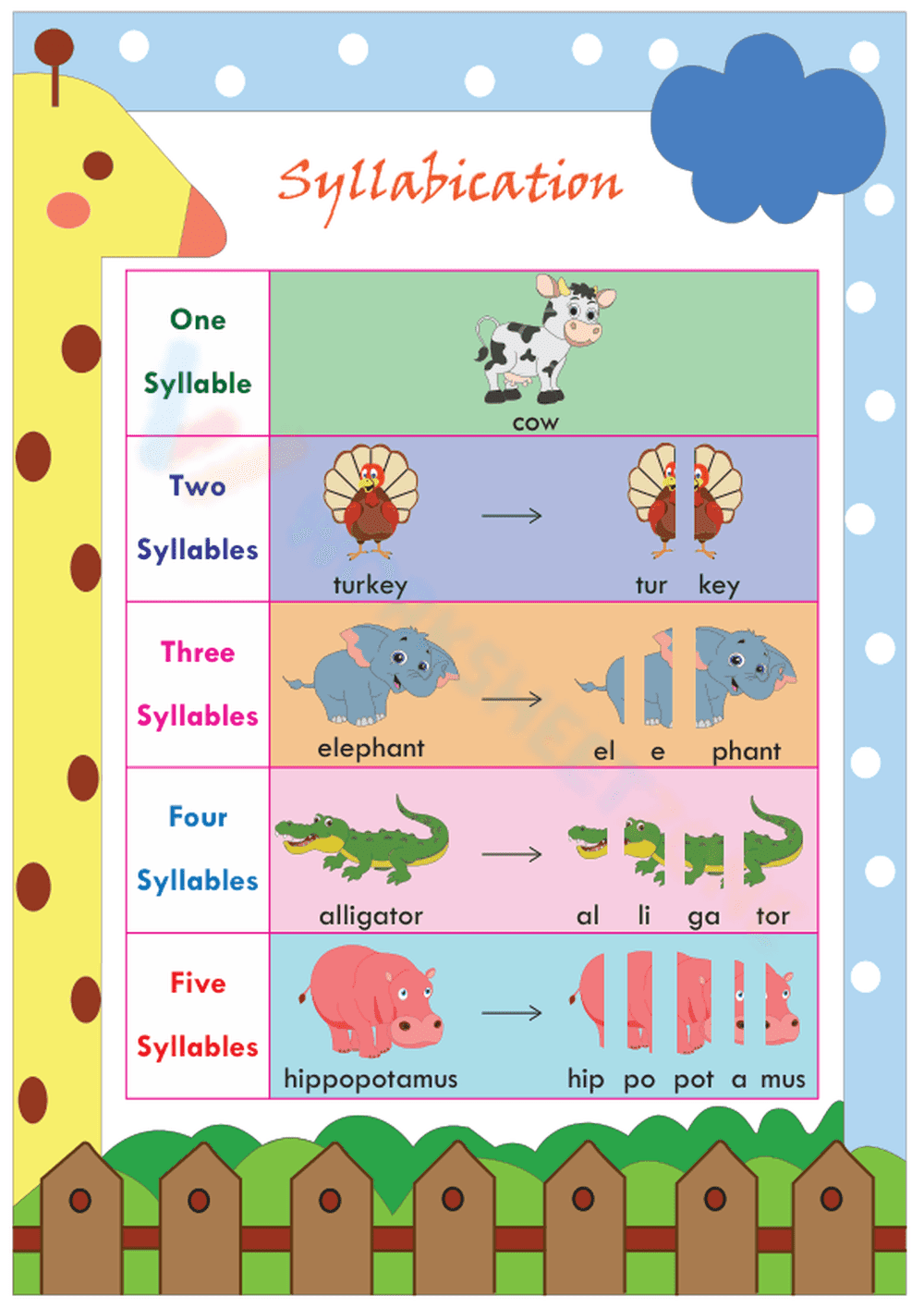

Essential Syllable Poster: Grade 1 Phonics — Ready to Print
Paste this activity's link or code into your existing LMS (Google Classroom, Canvas, Teams, Schoology, Moodle, etc.).
Students can open and work on the activity right away, with no student login required.
You'll still be able to track student progress and results from your teacher account.
This attractive Syllabication poster helps young learners master the essential skill of segmenting words into sound units. By providing clear visual cues from monosyllabic to five-syllabic words, this resource simplifies phonological awareness. Students gain confidence as they visualize how words are built and broken down, leading to improved reading fluency and pronunciation in early literacy.
At a Glance
- Grade: K–1 · Subject: English Language Arts (ELA)
- Standard:
CCSS.ELA-LITERACY.RF.K.2.B— Count, pronounce, blend, and segment syllables in spoken words- Skill Focus: Syllable segmentation and phonological awareness
- Format: 1 page · Reference tool · Poster format · Answer key not needed · PDF
- Best For: Small group instruction and anchor charts
- Time: 5–10 minutes
This high-quality reference tool features five distinct examples of syllabication, ranging from simple one-syllable words to complex five-syllable terms. The poster uses animal illustrations—cow, turkey, elephant, alligator, and hippopotamus—to demonstrate word segmenting. Each section displays the full word and a visual breakdown of its component syllables, making sound units tangible for young students.
Zero-Prep Workflow
Implementing this resource is incredibly efficient. First, print the single-page PDF (30 seconds). Second, display it in your phonics center or distribute it as a desk reference (30 seconds). Third, review the examples during your morning meeting or as a warm-up before a reading block (1 minute). Total teacher preparation time is under two minutes, making it an ideal choice for busy classrooms or emergency sub-plans.
Standards Alignment
This resource is aligned with `CCSS.ELA-LITERACY.RF.K.2.B`, which requires students to count, pronounce, blend, and segment syllables in spoken words. It also supports RF.1.3 by helping students recognize phonological structures. The clear segmentation shown in the alligator and hippopotamus examples provides a direct model for foundational literacy. This standard code can be copied directly into lesson plans, IEP goals, or curriculum mapping tools.
How to Use It
Use this poster during direct instruction to model how the mouth moves for sound units. Point to visual breaks as you clap out syllables together. It also serves as a formative-assessment tool; observe if students can look at the "elephant" example and independently predict the segments. This quick check takes 5 minutes and provides immediate insight into student mastery.
Who It's For
This resource is for Kindergarten and Grade 1 students starting their phonics journey. It is especially helpful for English Language Learners who benefit from the visual-word association. Pair this poster with a syllable-clapping activity or a printed passage to reinforce the connection between spoken sounds and written word structures in any primary classroom or literacy center.
Syllabication is a cornerstone of phonological awareness per `CCSS.ELA-LITERACY.RF.K.2.B`. Research from `Fisher & Frey (2014)` emphasizes that clear visual anchor charts help students transition from oral language to printed text by making phonemic structures visible. This poster bridges that gap by using familiar vocabulary and sequential complexity, moving from simple words to multi-syllabic terms. Systematic instruction in syllable segmenting is a proven predictor of reading success, allowing students to decode unfamiliar words with accuracy. By displaying this reference tool, educators provide a constant scaffold that supports independent decoding and improves literacy outcomes. The animal-themed approach ensures high student engagement while maintaining rigorous alignment with foundational standards. This document provides a robust framework for early ELA instruction and serves as an essential component of a comprehensive phonics curriculum.


