


























Views
Downloads

Printable Number 7 Worksheet: Essential Kindergarten Math
Paste this activity's link or code into your existing LMS (Google Classroom, Canvas, Teams, Schoology, Moodle, etc.).
Students can open and work on the activity right away, with no student login required.
You'll still be able to track student progress and results from your teacher account.
This printable Kindergarten worksheet provides comprehensive practice for the number 7, guiding young learners through recognition, tracing, and counting. Students will master the formation and quantity of seven through interactive and engaging tasks designed for early mathematical success. By combining visual, motor, and cognitive exercises, this resource ensures a solid foundation in early numeracy skills.
At a Glance
- Grade: Kindergarten · Subject: Math
- Standard:
CCSS.MATH.CONTENT.K.CC.A.3— Write numbers from 0 to 20 and represent objects with a written numeral- Skill Focus: Number 7 Recognition, Tracing, and Counting
- Format: 5 pages · 5 tasks · Answer key included · PDF
- Best For: Daily math centers or morning work
- Time: 15–20 minutes
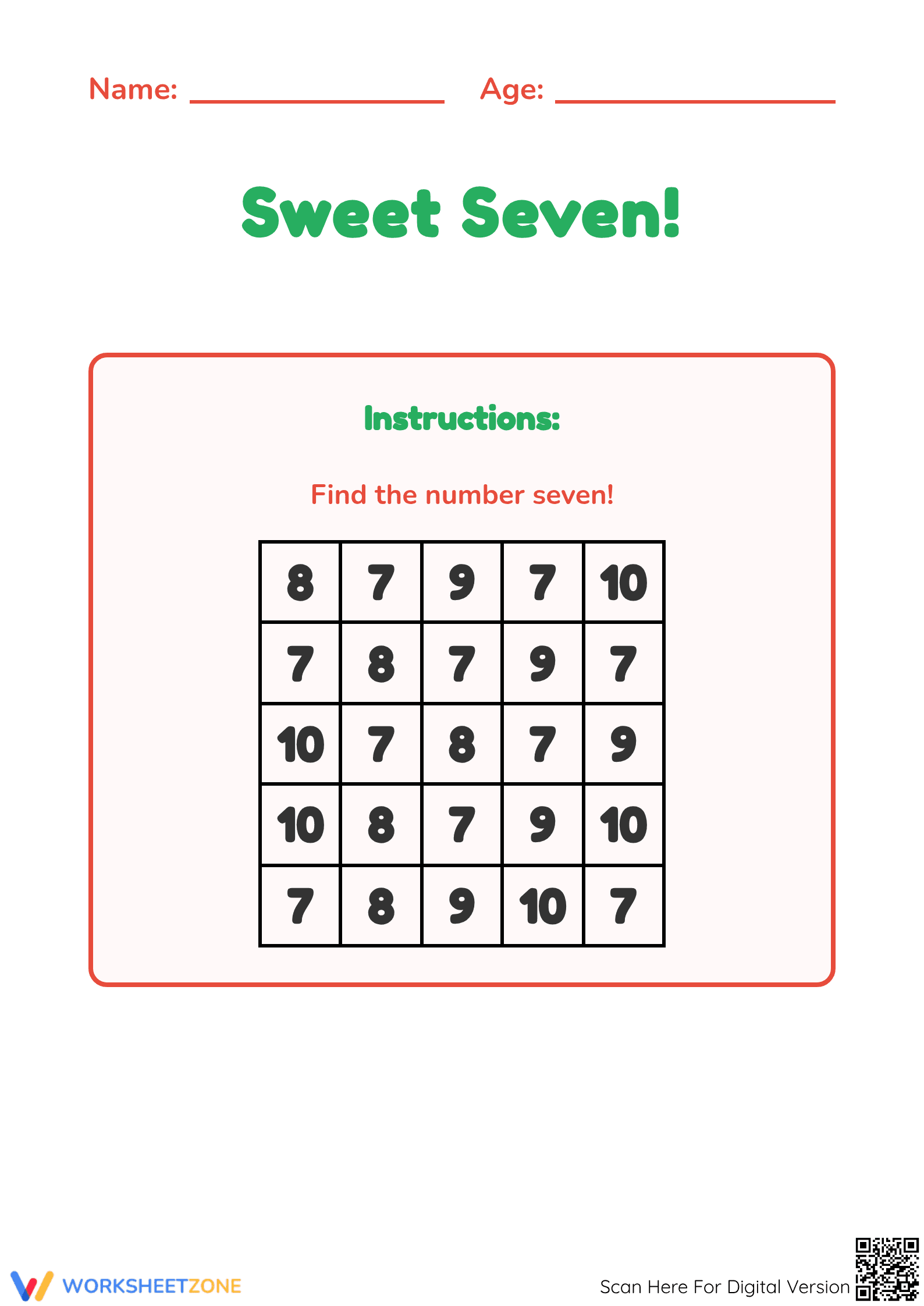
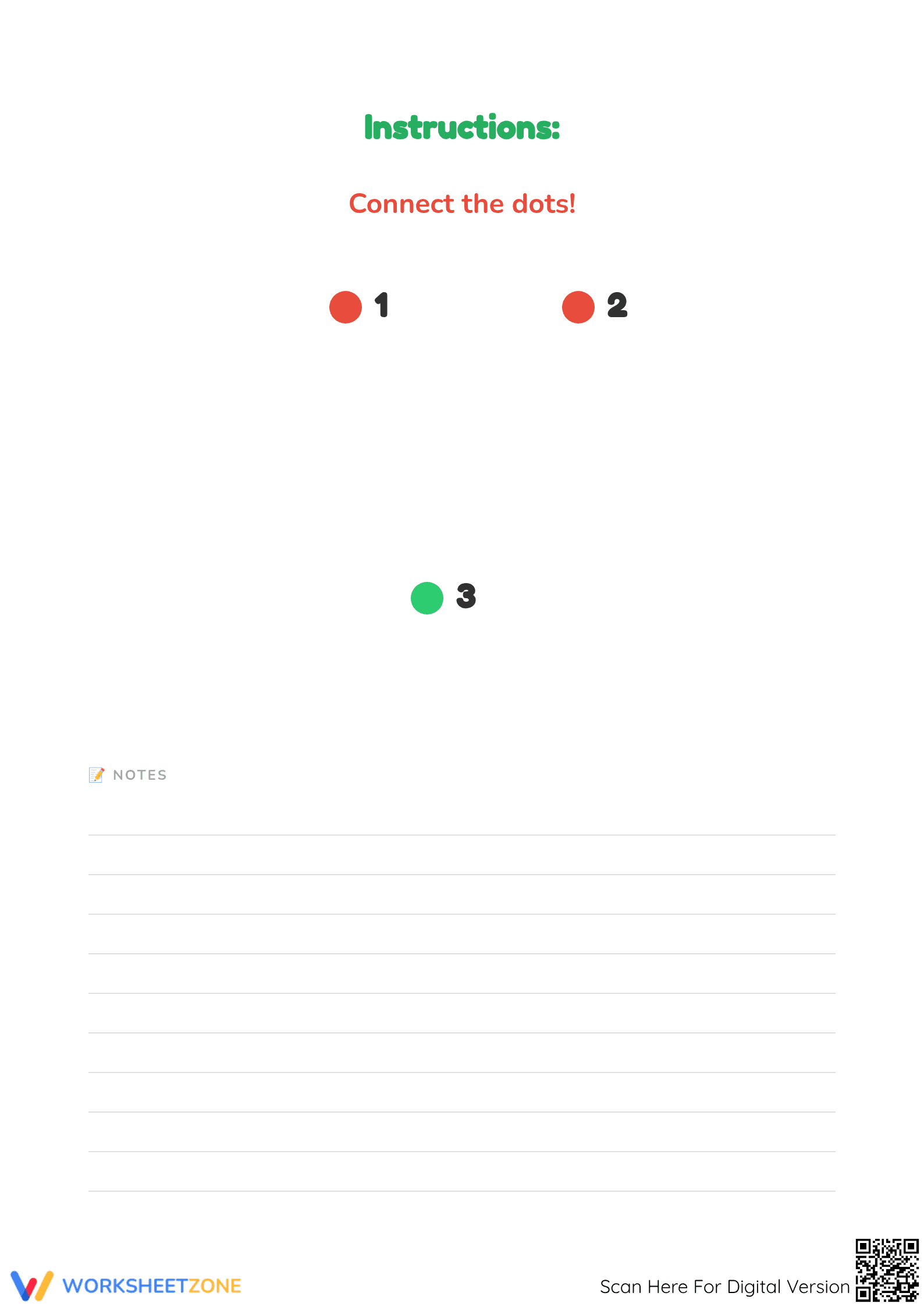
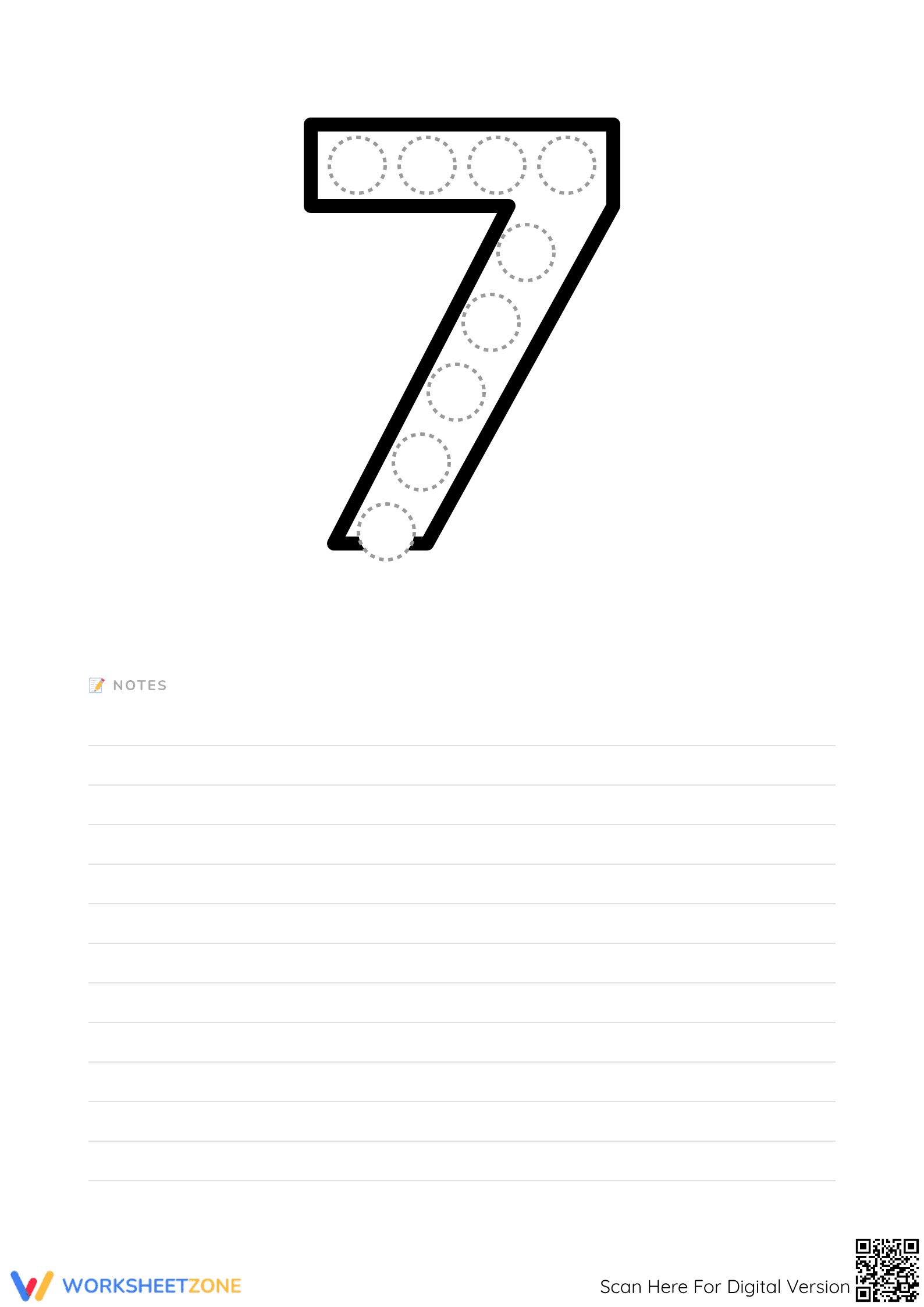
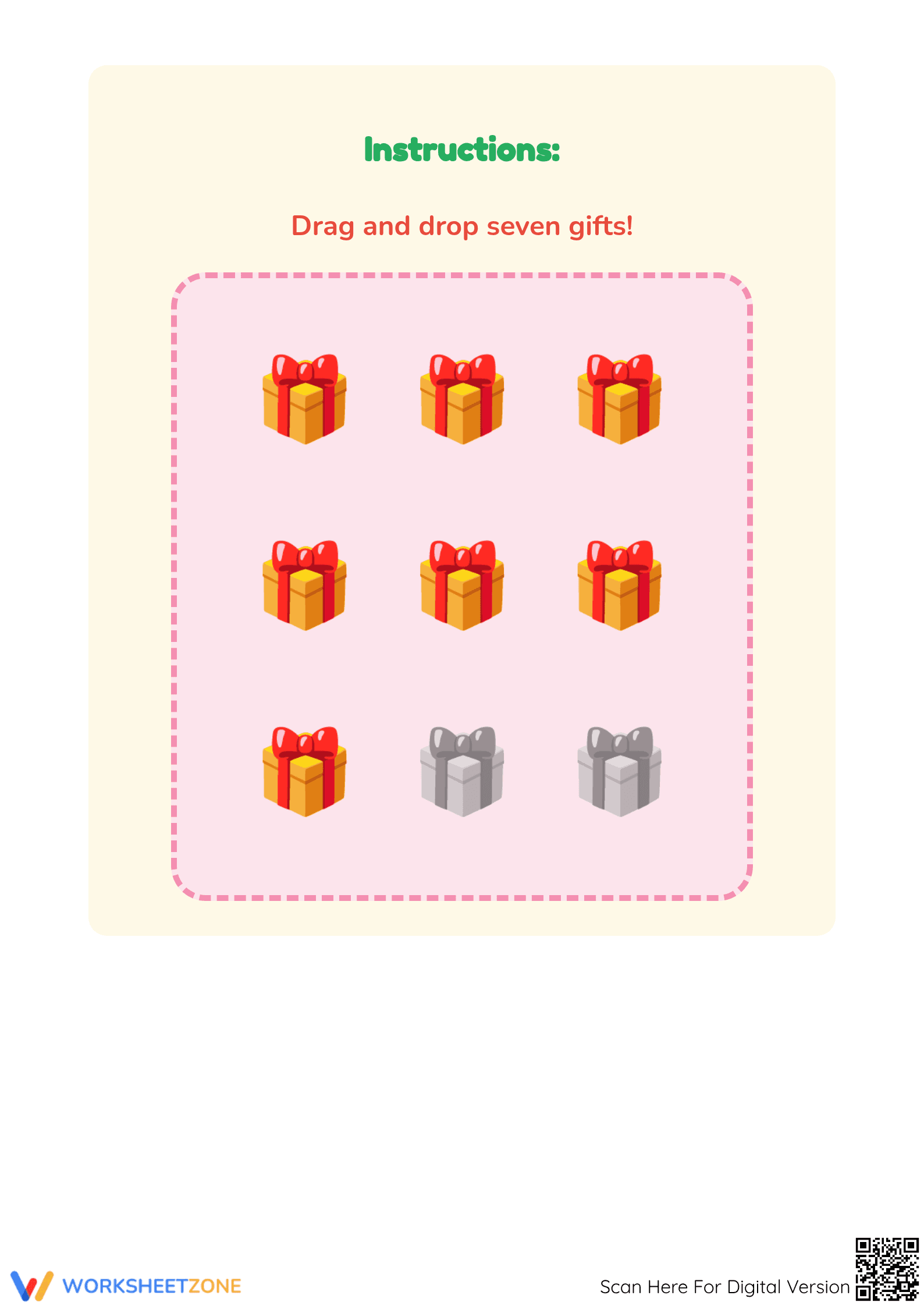
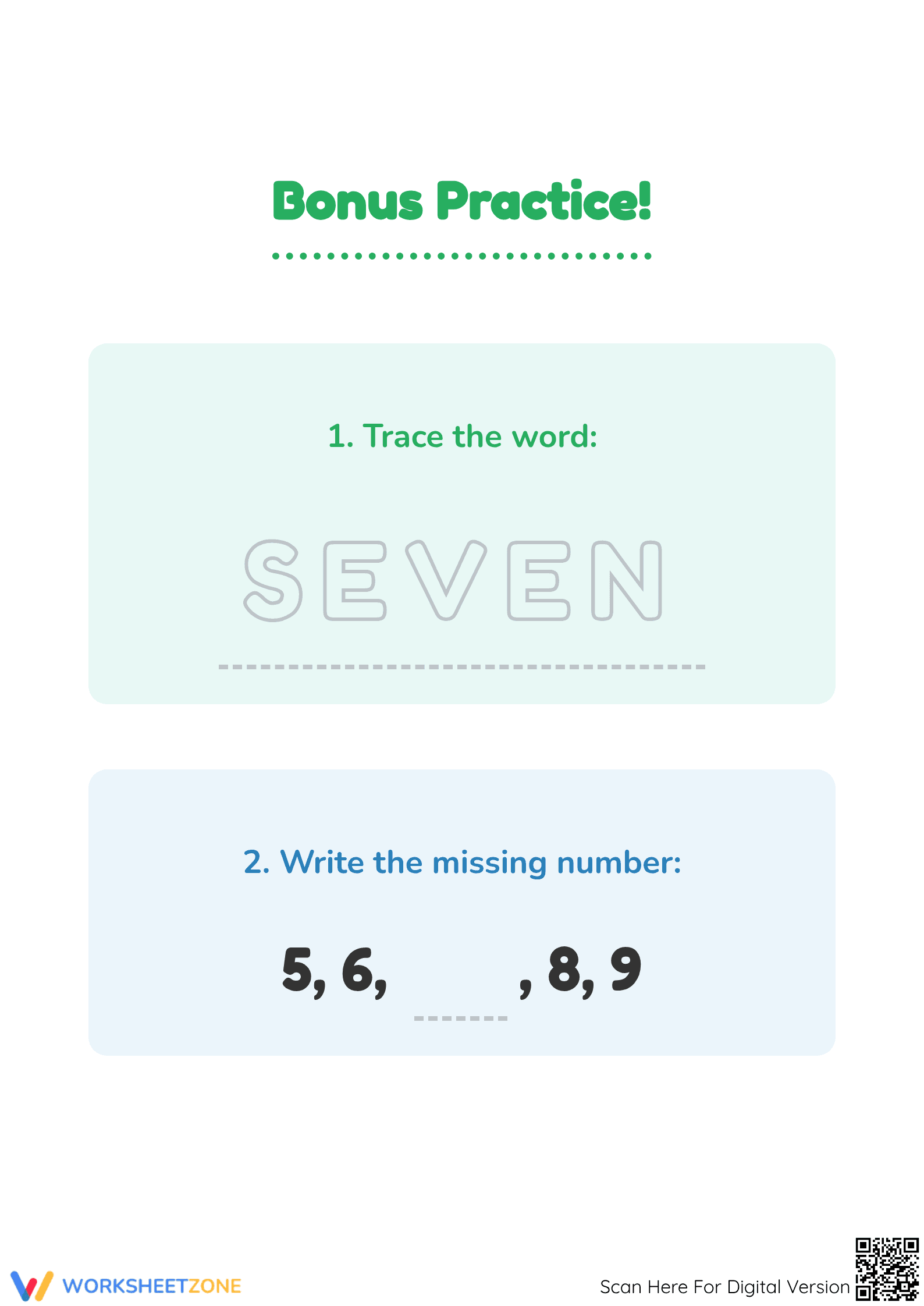
This 5-page packet features a variety of task types including a number search grid, a connect-the-dots activity, large-format digit tracing, a counting-and-selection exercise with visual "gifts," and bonus word tracing with number sequencing. The clear layouts and large fonts make it ideal for small hands developing fine motor skills and number sense. Each page is designed to keep students focused on a single aspect of the number seven to prevent cognitive overwhelm.
Zero-Prep Workflow
Implementing this resource is effortless: Print the 5-page PDF in under 1 minute, Distribute the copies to students for an immediate 15-minute instructional block, and Review the results using the included answer key. Total teacher preparation time is less than 2 minutes, making this an ideal "emergency" sub plan or a reliable component of a daily math routine. The intuitive design allows students to work independently once the initial instructions are given.
Standards Alignment
The primary focus of this resource is CCSS.MATH.CONTENT.K.CC.A.3: "Write numbers from 0 to 20. Represent a number of objects with a written numeral 0-20." Additionally, the counting tasks support K.CC.B.4 by reinforcing the relationship between numbers and quantities through visual representation. Both standard codes can be copied directly into lesson plans, IEP goals, or district curriculum mapping tools to ensure compliance with state and national frameworks.
How to Use It
Use this worksheet during your initial introduction to the number 7 as a whole-group activity where students follow along with tracing exercises. As a formative assessment, observe students during the "Find the Number Seven" grid task to identify those who may still confuse 7 with similar digits like 1 or 4. Expect students to complete the full packet in approximately 18 minutes, making it a perfect fit for a single math rotation block.
Who It's For
Designed for preschool and kindergarten students, this resource offers scaffolded support for learners just beginning their numeracy journey. It is also an excellent tool for Tier 2 intervention or for English Language Learners (ELL) needing visual reinforcement of number words. Educators can pair this with a physical ten-frame or counting bears for a multi-sensory learning experience that bridges the gap between abstract numerals and concrete quantities.
According to the NAEP framework, early mastery of number representation and counting is a critical predictor of later mathematical fluency. This "Sweet Seven" worksheet aligns with research emphasizing the importance of multi-modal digit exposure—combining visual recognition, physical tracing, and quantitative counting. Fisher & Frey (2014) highlight that such scaffolded structures, as seen in the progression from large tracing to independent sequencing, are essential for cognitive load management in early learners. By providing five distinct ways to interact with the number seven, this resource ensures that students move beyond rote memorization toward a functional understanding of numerical value. This comprehensive approach is supported by ScienceDirect TpT Analysis, which identifies variety and clear visual cues as the most effective elements in early childhood worksheets. Educators can confidently integrate this standard-aligned tool into their core curriculum to meet foundational CCSS requirements.


