


























Views
Downloads
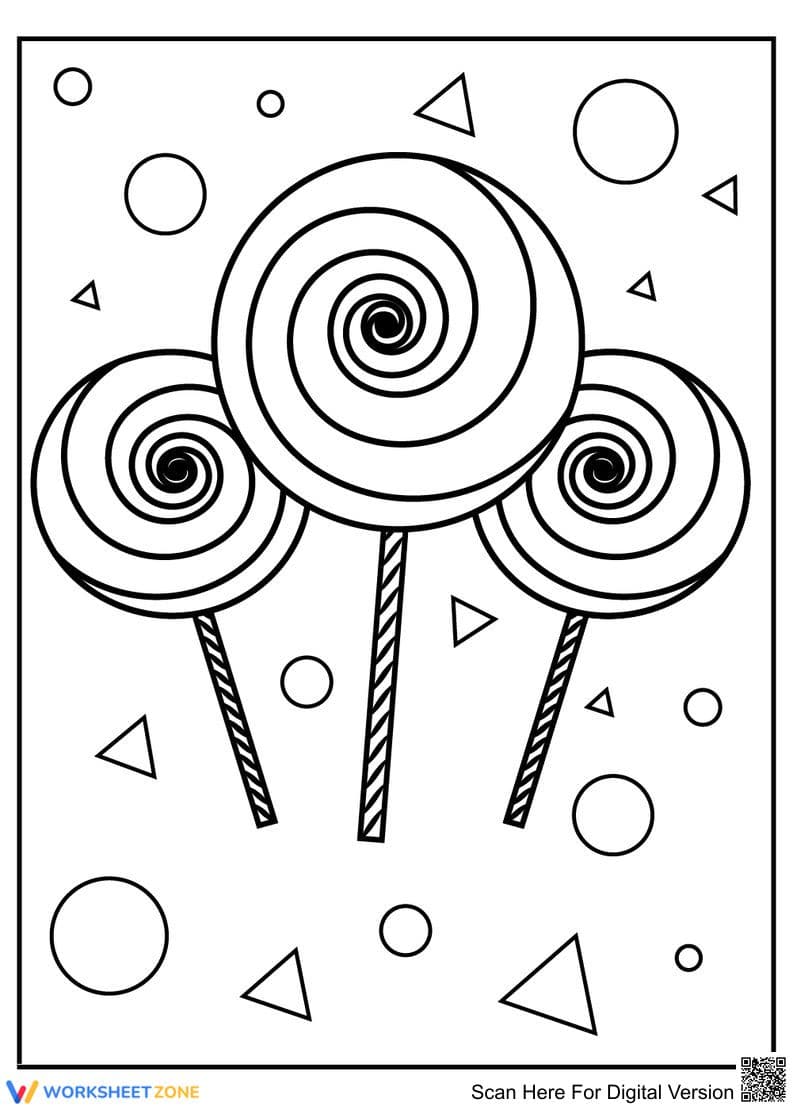

Sweet Candy Coloring Page | Essential Grade K-2 Ready
Paste this activity's link or code into your existing LMS (Google Classroom, Canvas, Teams, Schoology, Moodle, etc.).
Students can open and work on the activity right away, with no student login required.
You'll still be able to track student progress and results from your teacher account.
This Sweet Candy coloring worksheet provides early learners with a creative way to develop fine motor control and hand-eye coordination. By engaging with familiar treats and geometric patterns, students build the foundational strength needed for writing while exploring artistic expression. It is a perfect supplemental activity for early elementary classrooms or home learning environments.
At a Glance
- Grade: Kindergarten · Subject: Arts & Crafts
- Standard:
CCSS.MATH.CONTENT.K.G.A.2— Correctly name shapes regardless of their orientations or overall size- Skill Focus: Fine Motor & Shape Recognition
- Format: 1 page · 1 task · No answer key · PDF
- Best For: Morning work or early finishers
- Time: 15–20 minutes
What's Inside
This single-page PDF features a high-quality line art illustration of three large lollipops surrounded by various geometric shapes, including circles and triangles of different sizes. The clean, bold outlines are designed specifically for young children who are still mastering the ability to color within the lines. No additional teacher setup or materials are required beyond standard coloring supplies.
Zero-Prep Workflow
- Print: Select the single-page PDF and print enough copies for your group (30 seconds).
- Distribute: Hand out the sheets along with crayons, markers, or colored pencils (1 minute).
- Review: Allow students to work independently while you provide verbal feedback on their shape identification (0 minutes prep).
Total teacher preparation time is under two minutes, making this an ideal choice for emergency sub plans or unexpected schedule gaps.
Standards Alignment
The primary alignment for this activity is CCSS.MATH.CONTENT.K.G.A.2, which requires students to correctly name shapes regardless of their orientations or overall size. While primarily an artistic activity, the inclusion of distinct circles and triangles allows for integrated math talk during the coloring process. Both standard codes can be copied directly into lesson plans, IEP goals, or district curriculum mapping tools.
How to Use It
Use this worksheet during the settling in period of the morning or as a transition activity between core subjects. It serves as an excellent formative assessment tool; observe if students can distinguish between the circular lollipops and the triangular background elements. Expected completion time ranges from 15 to 20 minutes depending on the student's attention to detail.
Who It's For
This resource is ideal for Kindergarten and First Grade students, as well as older students requiring fine motor intervention or occupational therapy support. It pairs naturally with a read-aloud about sweets or a math lesson focused on identifying 2D shapes in the environment.
This Sweet Candy coloring worksheet is a practical tool for developing the fine motor skills essential for early literacy and numeracy. By focusing on CCSS.MATH.CONTENT.K.G.A.2, the activity encourages students to identify and name shapes like circles and triangles within a whimsical, high-interest context. According to Fisher & Frey (2014), purposeful independent practice that integrates creative expression with academic content helps solidify student engagement and retention. Research from the NAEP suggests that early exposure to geometric patterns and fine motor tasks correlates with later success in spatial reasoning and handwriting. This 1-page printable requires zero teacher preparation, making it an efficient choice for busy educators. The clear boundaries and varied shape sizes provide a natural scaffold for students at different developmental stages. This resource is a reliable addition to any early childhood curriculum focusing on the intersection of art and foundational math skills.


