


























Views
Downloads

Analyzing Suspense Worksheet (3 Levels) | Grade 8 Ready
Paste this activity's link or code into your existing LMS (Google Classroom, Canvas, Teams, Schoology, Moodle, etc.).
Students can open and work on the activity right away, with no student login required.
You'll still be able to track student progress and results from your teacher account.
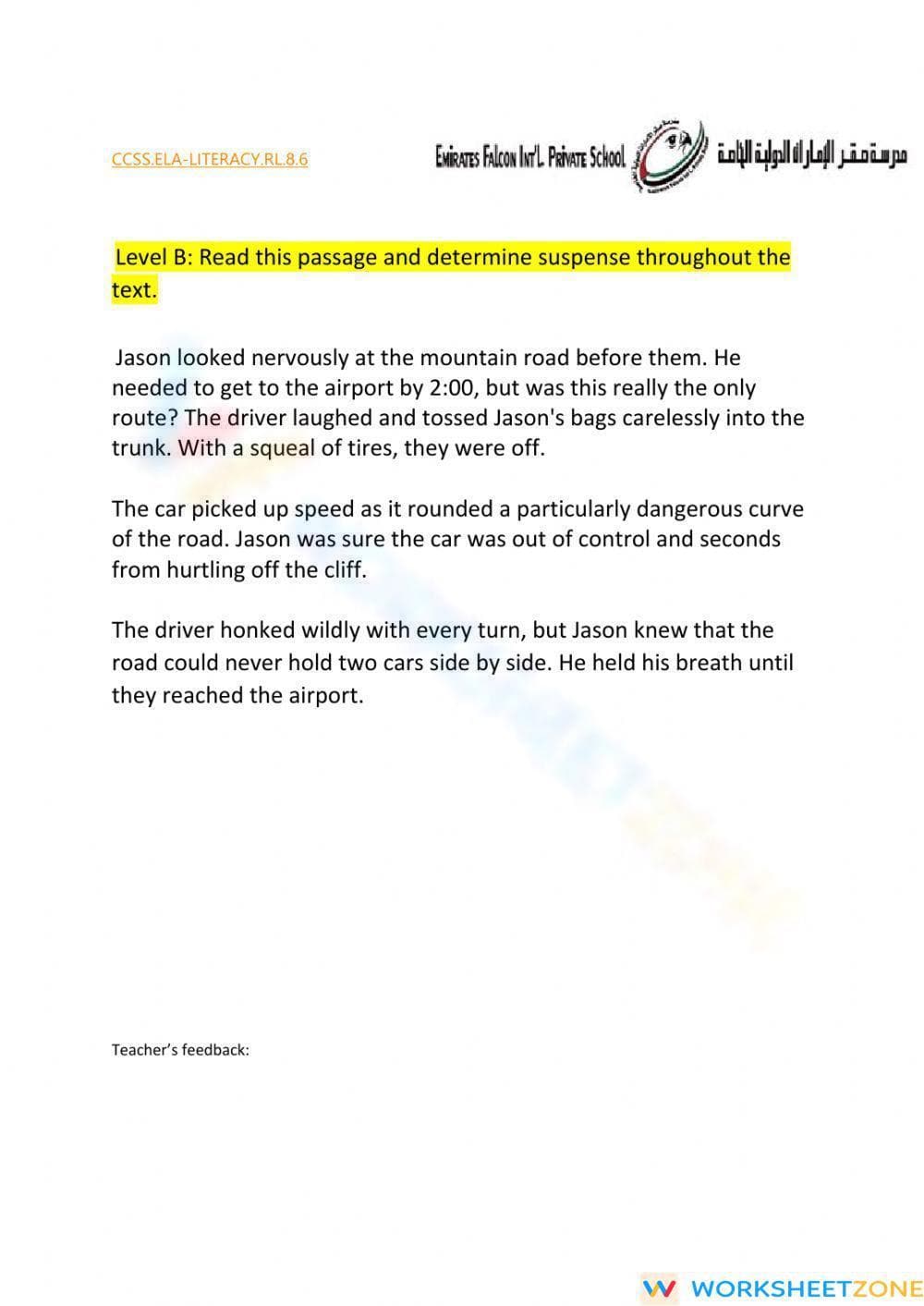
This Grade 8 reading comprehension worksheet helps students analyze how authors create suspense through character perspective and narrative pacing. By examining specific sensory details and plot developments in the provided passage, learners develop critical literary analysis skills. This resource ensures students can identify and explain the mechanics of tension in narrative texts.
At a Glance
- Grade: 8 · Subject: English Language Arts
- Standard:
CCSS.ELA-LITERACY.RL.8.6— Analyze how differences in character and reader perspectives create suspense- Skill Focus: Narrative Suspense Analysis
- Format: 1 page · 1 task · Answer key included · PDF
- Best For: Literary analysis practice and formative assessment
- Time: 15–20 minutes
What's Inside
This resource features a targeted reading passage centered on a high-tension car ride to an airport, providing rich material for textual evidence. The worksheet includes a dedicated space for student responses and a "Teacher's feedback" box to facilitate direct communication during the grading process. The single-page layout is designed for clarity, featuring the specific Common Core standard for easy lesson planning.
Differentiation Levels
- Below Grade (Level A): Focuses on identifying basic sensory details that contribute to a nervous mood or tone.
- On Grade (Level B): Challenges students to determine how specific plot points and character reactions sustain suspense throughout the text.
- Above Grade (Level C): Requires an analysis of dramatic irony or the specific manipulation of time to amplify tension.
All three versions are included to ensure that every learner in your classroom can access the core curriculum while receiving appropriate scaffolds.
Standards Alignment
This worksheet is strictly aligned with CCSS.ELA-LITERACY.RL.8.6, which requires students to analyze how the differences in the points of view of the characters and the audience create effects like suspense or humor. By focusing on Jason's internal monologue versus the driver's outward actions, students engage directly with the core requirements of this middle-school benchmark. Both standard codes can be copied directly into lesson plans or IEP goals.
How to Use It
Assign this worksheet as a focused exit ticket after a direct instruction lesson on literary devices or narrative tension. Teachers should observe whether students can distinguish between the character's fear and the actual events described to gauge their understanding of perspective. This activity typically takes 15 to 20 minutes to complete.
Who It's For
This resource is ideal for Grade 8 students working toward mastery of literary analysis, though the tiered leveling makes it accessible for Grade 7 or 9 differentiation. It pairs naturally with a short story unit or a passage on point of view to reinforce how narrative choices impact the reader's emotional experience.
CCSS.ELA-LITERACY.RL.8.6 focuses on the interplay between character perspective and reader experience, a foundational skill in middle school literacy. Research by Fisher & Frey (2014) emphasizes that "gradual release of responsibility" through leveled practice, like this suspense analysis task, is critical for moving students from surface-level comprehension to deep structural analysis. By isolating the mechanics of tension in a short passage, students build the cognitive stamina required for complex narratives. This Grade 8 worksheet provides a scaffolded environment where students can master the plain-English skill of explaining how an author makes a reader feel anxious or uncertain. The feedback loop provided by the teacher's box aligns with best practices for formative assessment, ensuring that standard alignment translates directly into measurable student growth. All content reflects current pedagogical standards found in the RAND AIRS 2024 literature review.


