


























Views
Plays
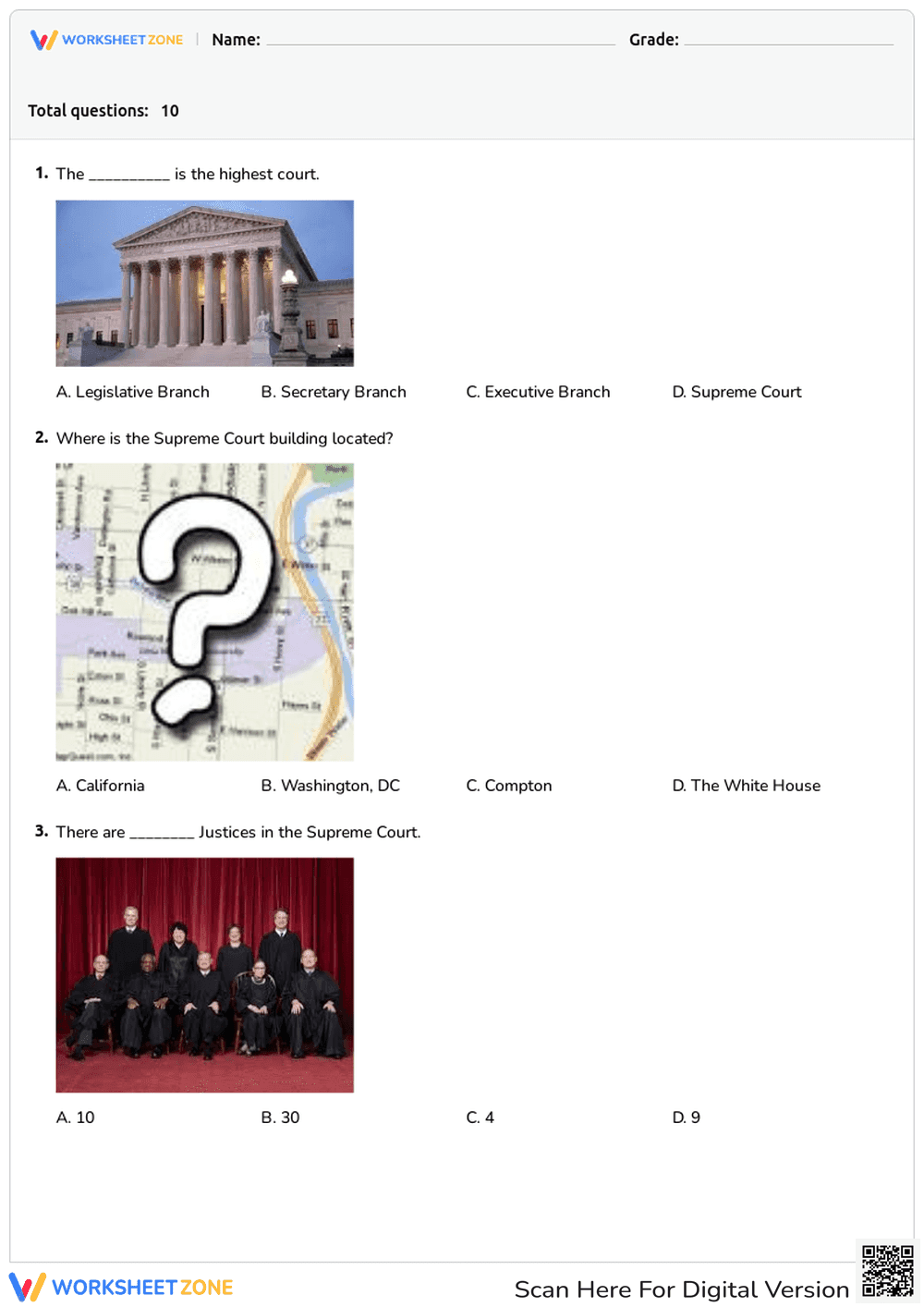
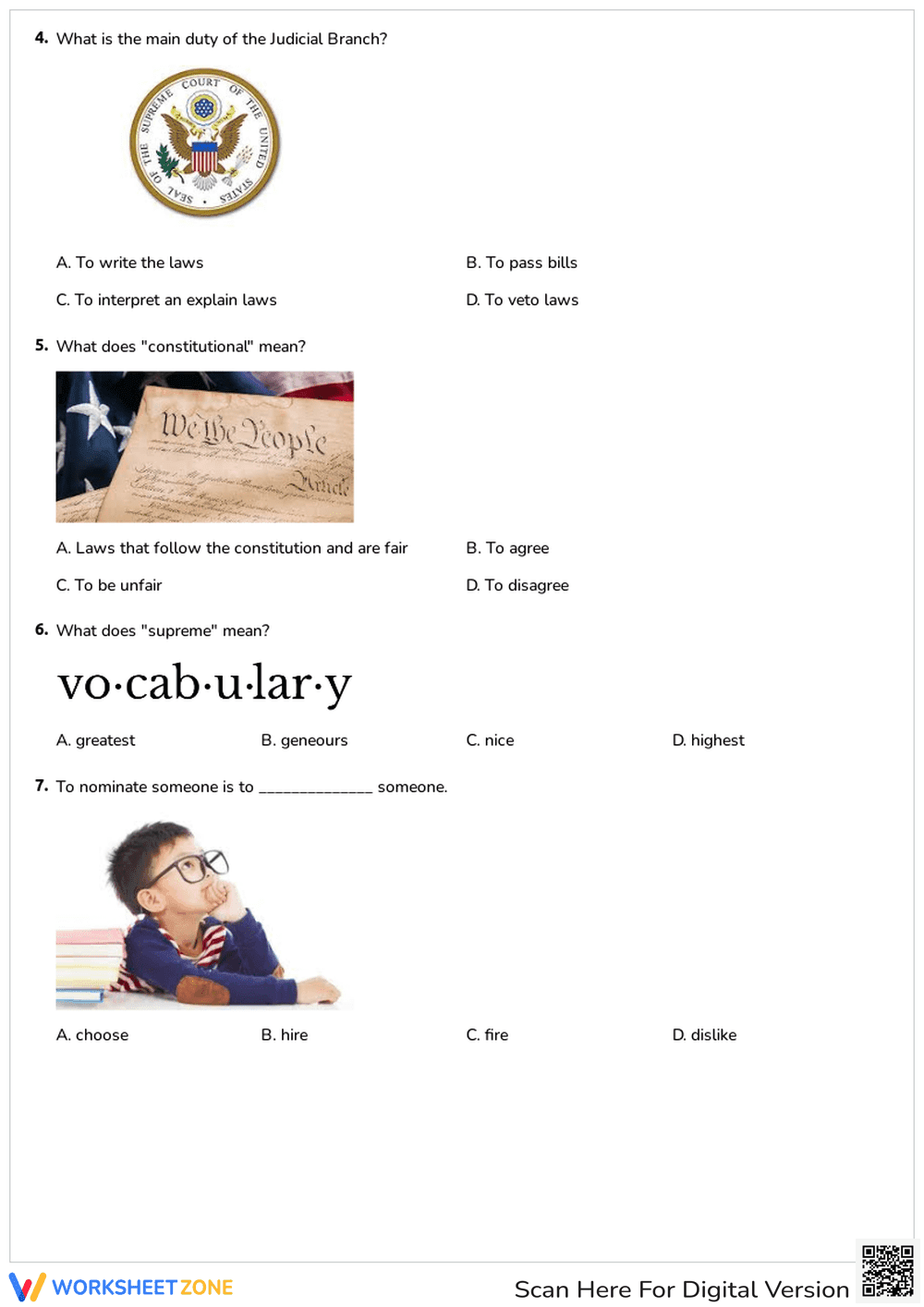
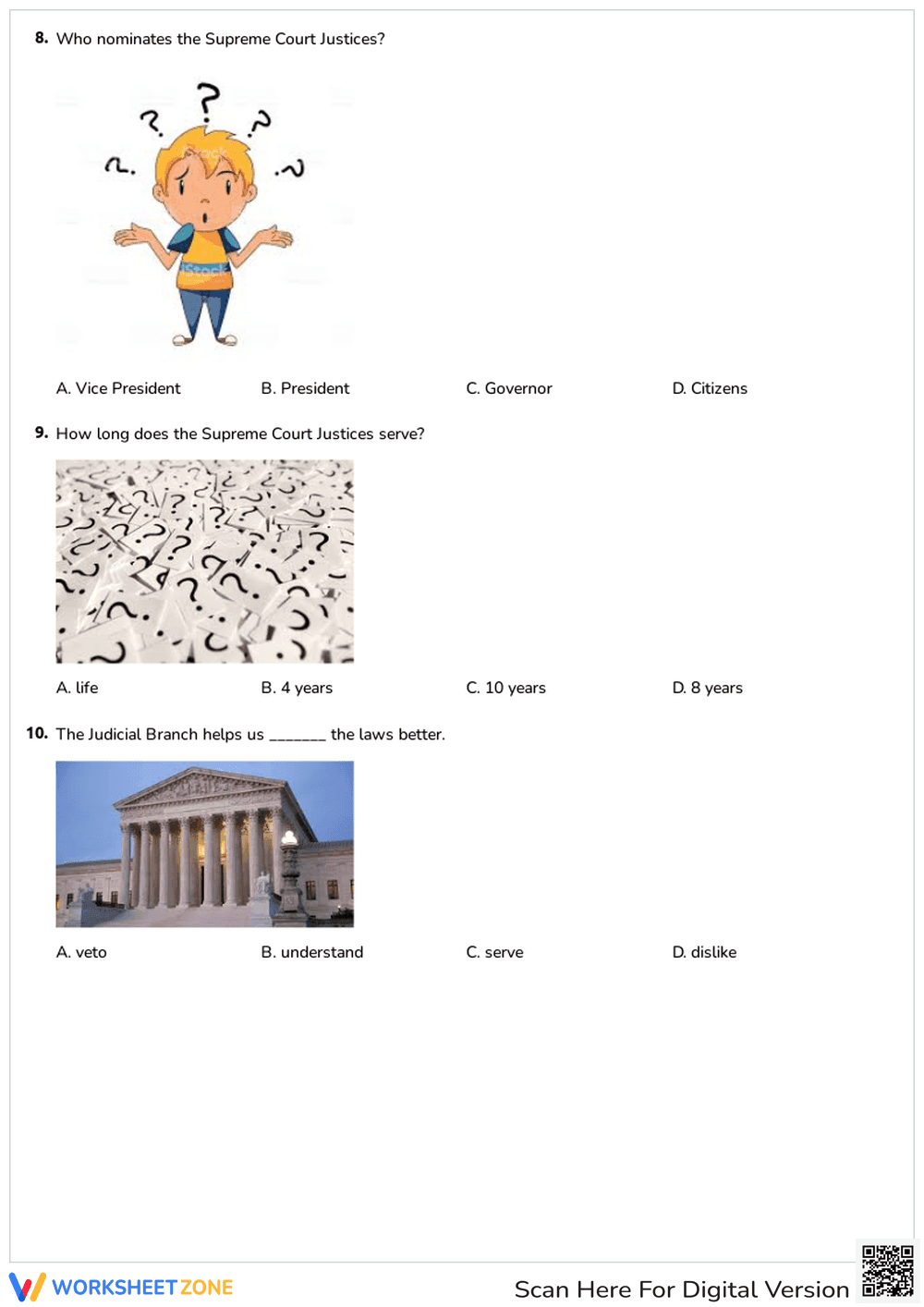

Supreme Court & Judicial Branch Printable | Grade 4 Civics
Paste this activity's link or code into your existing LMS (Google Classroom, Canvas, Teams, Schoology, Moodle, etc.).
Students can open and work on the activity right away, with no student login required.
You'll still be able to track student progress and results from your teacher account.
This Grade 4 civics worksheet gives students focused practice on identifying the roles and responsibilities of the Judicial Branch. By answering targeted multiple-choice questions, learners will demonstrate their understanding of the Supreme Court, the nomination process, and key constitutional vocabulary essential for foundational government knowledge.
At a Glance
- Grade: 4 · Subject: Social Studies
- Standard:
CCSS.ELA-LITERACY.RI.4.4— Determine the meaning of domain-specific words- Skill Focus: Judicial Branch and Supreme Court facts
- Format: 3 pages · 10 problems · Answer key included · PDF
- Best For: Formative assessment or independent practice
- Time: 15–20 minutes
Inside this resource, educators will find a straightforward, three-page assessment featuring ten multiple-choice questions. The task types range from factual recall about the Supreme Court's location and justice count to vocabulary identification for terms like "constitutional" and "nominate." Each question is paired with a visual cue to support comprehension, and a complete answer key is provided for quick grading.
This resource is designed for immediate classroom implementation with a simple three-step workflow:
- Print (1 minute): The PDF format ensures formatting remains intact, making it easy to run off class sets quickly.
- Distribute (1 minute): Hand out the assessment as a standalone activity or alongside a civics reading passage.
- Review (3 minutes): Use the included answer key to grade submissions rapidly or facilitate a whole-class review session.
With under two minutes of total teacher prep time required, this worksheet is an excellent addition to any emergency sub plan or busy instructional week.
This material aligns with CCSS.ELA-LITERACY.RI.4.4, requiring students to determine the meaning of domain-specific words in a grade 4 text. It also supports social studies frameworks regarding the structure of the United States government. These standard codes can be copied directly into lesson plans, IEP goals, or curriculum mapping tools.
Teachers can utilize this worksheet as a formative assessment after direct instruction on the three branches of government. Alternatively, it serves well as an independent practice activity during a civics unit. As a formative observation tip, monitor how students approach the vocabulary questions; if they struggle with terms like "nominate" or "supreme," it may indicate a need for targeted word-study interventions before moving on to complex constitutional concepts. Expect students to complete the ten questions in 15 to 20 minutes.
This resource is primarily designed for fourth-grade students, though it is easily adaptable for third and fifth graders studying basic U.S. government structures. The inclusion of visual aids alongside each question provides helpful scaffolding for English Language Learners and visual learners. For a comprehensive lesson, pair this quiz with an anchor chart detailing the checks and balances system or a short reading passage about a landmark Supreme Court case.
Integrating domain-specific vocabulary practice into social studies instruction improves reading comprehension and content retention. Research indicates that students who engage with targeted, vocabulary-rich assessments on government structures demonstrate higher proficiency in understanding democratic processes. This worksheet supports that research by aligning with CCSS.ELA-LITERACY.RI.4.4, challenging students to determine the meaning of domain-specific words while reinforcing factual knowledge about the Judicial Branch. By combining visual cues with structured multiple-choice questions, educators can efficiently measure student mastery of foundational civics concepts. Consistent exposure to these essential academic terms ensures that young learners are better prepared for advanced historical analysis and active civic participation as they progress.


