


























Views
Downloads
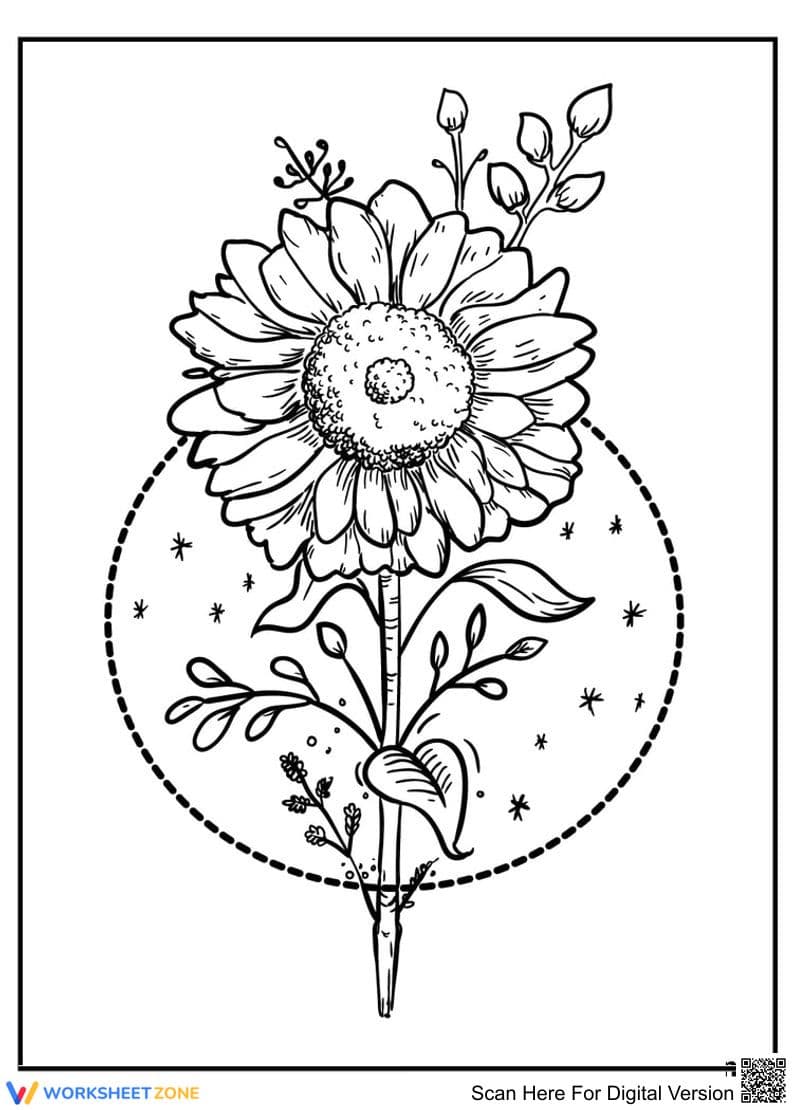

Sunflower Coloring Page | Grade K-5 Printable
Paste this activity's link or code into your existing LMS (Google Classroom, Canvas, Teams, Schoology, Moodle, etc.).
Students can open and work on the activity right away, with no student login required.
You'll still be able to track student progress and results from your teacher account.
This sunflower coloring page provides students with a creative outlet to develop fine motor control while engaging with botanical imagery. By focusing on the intricate details of the petals and stem, learners improve their hand-eye coordination and concentration. It serves as an excellent supplemental activity for science units or a calming mindfulness exercise.
At a Glance
- Grade: K-5 · Subject: Science & Art
- Standard:
K-LS1-1— Use observations to describe patterns of what plants and animals need to survive- Skill Focus: Fine motor development
- Format: 1 page · 1 task · No answer key required · PDF
- Best For: Morning work or early finishers
- Time: 15–20 minutes
Inside this resource, you will find a single-page, high-resolution PDF featuring a detailed sunflower illustration. The design includes a central flower, leaves, and a decorative circular border with star accents. This layout encourages students to experiment with color blending and shading within defined boundaries, requiring no additional teacher preparation or complex instructions.
The zero-prep workflow is designed for maximum efficiency in busy classrooms. First, print the single PDF page for your entire class in under 30 seconds. Second, distribute the sheets along with crayons, colored pencils, or markers. Third, allow students to work independently while you transition between lessons or manage small groups. Total teacher prep time is under 2 minutes, making this an ideal sub plan addition.
This activity aligns with `K-LS1-1`, as it allows students to observe and identify the physical structures of a plant, such as the stem, leaves, and flower head. It also supports National Core Arts Standards for creative expression and visual literacy. Both standard codes can be copied directly into lesson plans, IEP goals, or district curriculum mapping tools.
Use this worksheet as a quiet bell-ringer activity to start the day or as a reward for completing a primary science lesson on life cycles. Teachers can use this as a formative assessment by observing a student's ability to grip writing utensils correctly and follow visual boundaries. Expected completion typically takes 15 to 20 minutes depending on the detail level chosen by the student.
This resource is ideal for elementary students in grades K-5, particularly those needing extra practice with fine motor skills. It pairs naturally with a nature-themed anchor chart or a read-aloud book about plant growth. It is also highly effective for inclusion classrooms where students benefit from low-stress, tactile activities that reinforce classroom concepts.
Research from Fisher & Frey (2014) emphasizes the importance of scaffolded activities that allow for creative expression while reinforcing content-area vocabulary. This sunflower coloring page serves as a non-linguistic representation of botanical structures, helping students internalize the parts of a plant as defined in the `K-LS1-1` standard. By engaging in the physical act of coloring, students build the muscular endurance necessary for more intensive writing tasks later in the curriculum. According to the RAND AIRS 2024 report, integrating art-based activities into STEM subjects increases student engagement and retention of scientific concepts. This worksheet provides a structured yet flexible environment for students to demonstrate their understanding of nature through visual media. It is a practical tool for any educator looking to bridge the gap between artistic play and standards-based observation in the early childhood classroom, ensuring that even simple tasks contribute to long-term academic mastery and motor skill proficiency.


