


























1 / 4
0
Views
0
Downloads



0.0
0
Save
0 Likes
Share
Story Sequencing: Tyler's Day
0 Views
0 Downloads
Paste this activity's link or code into your existing LMS (Google Classroom, Canvas, Teams, Schoology, Moodle, etc.).
Students can open and work on the activity right away, with no student login required.
You'll still be able to track student progress and results from your teacher account.
Information
Description
What It Is:
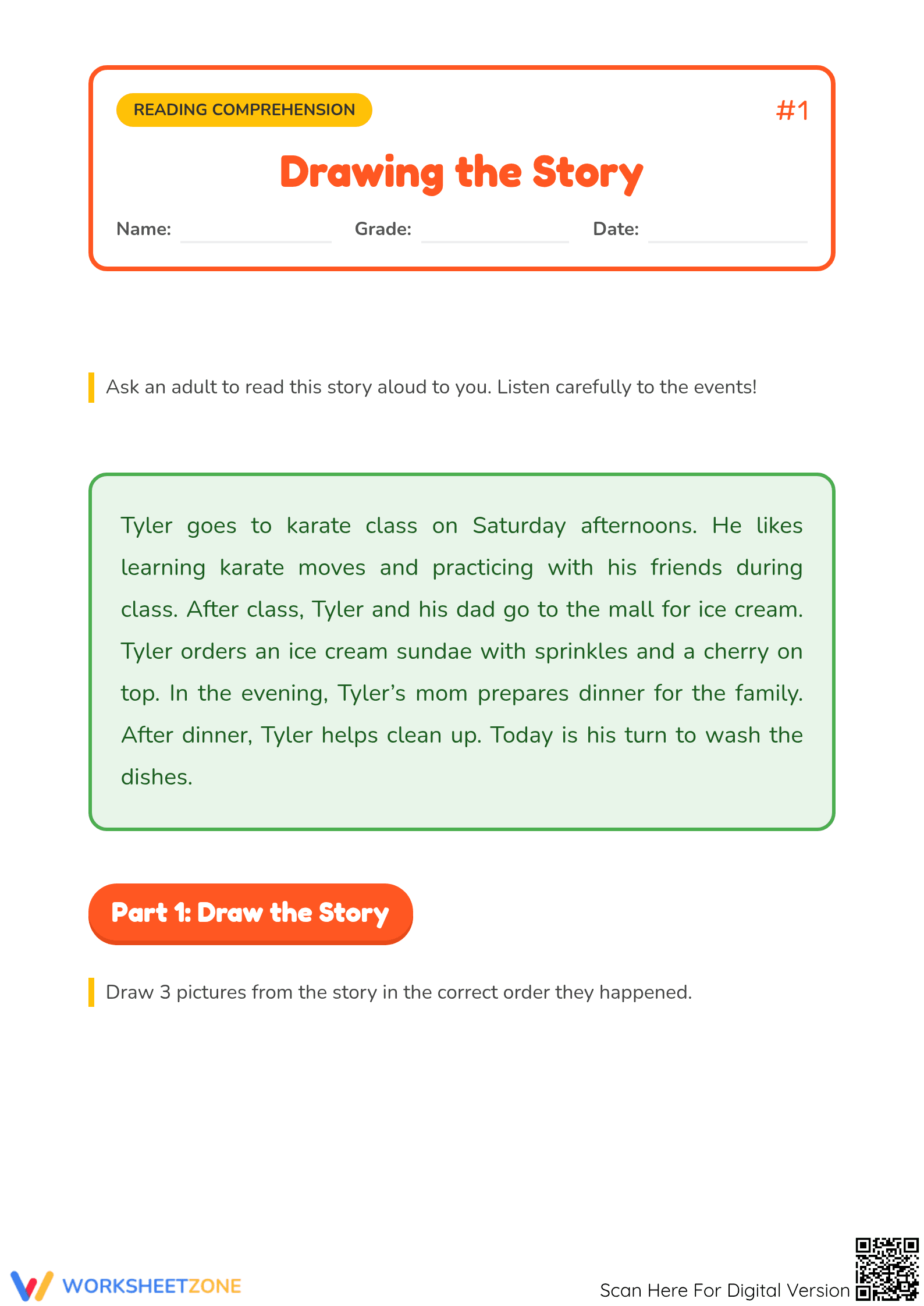
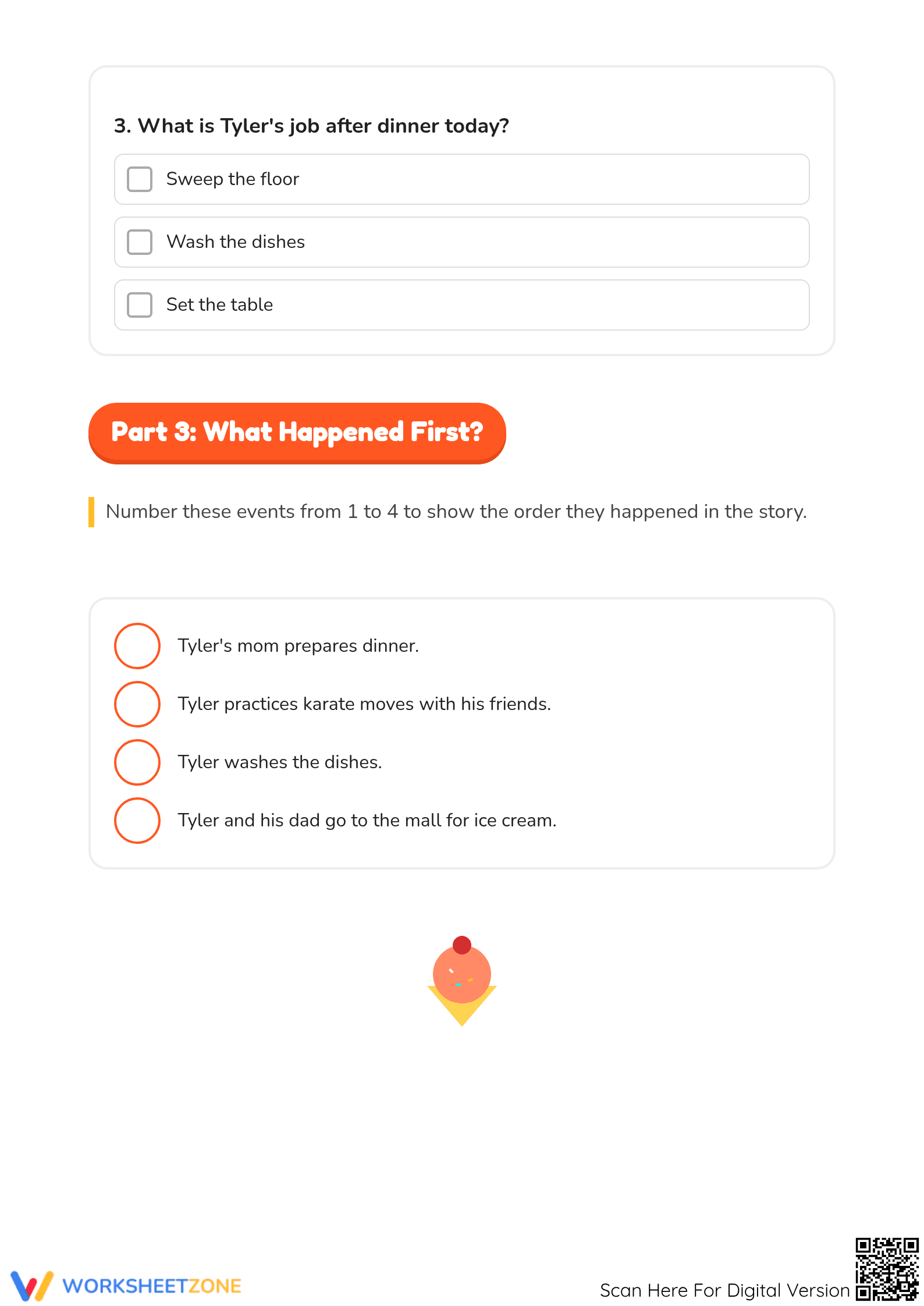
This worksheet is a reading comprehension activity where students read a short story about Tyler’s Saturday routine and then draw three pictures that represent key events in the correct order. The activity helps students understand sequencing, recognize key story elements, and visualize the plot. It encourages creativity while reinforcing comprehension skills.
Why Use It:
Sequencing is an essential skill in reading comprehension. This activity not only reinforces students' ability to recall and organize events from a story but also enhances their creative thinking as they visually represent the sequence. The use of the "first, next, last" structure helps students better understand the structure of a narrative.
How to Use It:
• Read the story aloud to the students or have them read it independently.
• After reading, discuss the key events in the story.
• Encourage students to draw pictures for the "first," "next," and "last" sections to depict the events in the correct order.
• Review the completed worksheets together to assess students' understanding of the story sequence.
Grade Suitability:
Best suited for Grades 1–3.
• Grade 1-2: Introduction to sequencing and comprehension through drawing.
• Grade 3: Reinforcement of sequencing skills and comprehension.
Target Users:
Elementary students, teachers, special education teachers, and homeschool families focusing on reading comprehension, sequencing, and storytelling.
This worksheet is a reading comprehension activity where students read a short story about Tyler’s Saturday routine and then draw three pictures that represent key events in the correct order. The activity helps students understand sequencing, recognize key story elements, and visualize the plot. It encourages creativity while reinforcing comprehension skills.
Why Use It:
Sequencing is an essential skill in reading comprehension. This activity not only reinforces students' ability to recall and organize events from a story but also enhances their creative thinking as they visually represent the sequence. The use of the "first, next, last" structure helps students better understand the structure of a narrative.
How to Use It:
• Read the story aloud to the students or have them read it independently.
• After reading, discuss the key events in the story.
• Encourage students to draw pictures for the "first," "next," and "last" sections to depict the events in the correct order.
• Review the completed worksheets together to assess students' understanding of the story sequence.
Grade Suitability:
Best suited for Grades 1–3.
• Grade 1-2: Introduction to sequencing and comprehension through drawing.
• Grade 3: Reinforcement of sequencing skills and comprehension.
Target Users:
Elementary students, teachers, special education teachers, and homeschool families focusing on reading comprehension, sequencing, and storytelling.


