




























Views
Downloads

Spring Reading Worksheet | Grade 1 Printable Essential

Paste this activity's link or code into your existing LMS (Google Classroom, Canvas, Teams, Schoology, Moodle, etc.).
Students can open and work on the activity right away, with no student login required.
You'll still be able to track student progress and results from your teacher account.
This Grade 1 Spring reading comprehension worksheet helps early readers identify key details and master seasonal vocabulary through a structured three-page interactive format. Students transition from reading a short informational text to answering evidence-based questions, engaging in true/false verification, and matching vocabulary terms. It is a complete resource for developing foundational literacy during the spring season.
At a Glance
- Grade: 1 · Subject: English Language Arts
- Standard:
CCSS.ELA-LITERACY.RI.1.1— Ask and answer questions about key details in a text to demonstrate understanding.- Skill Focus: Reading comprehension and spring vocabulary
- Format: 3 pages · 9 problems · Answer key included · PDF
- Best For: Independent literacy centers or sub plans
- Time: 15–20 minutes
What's Inside
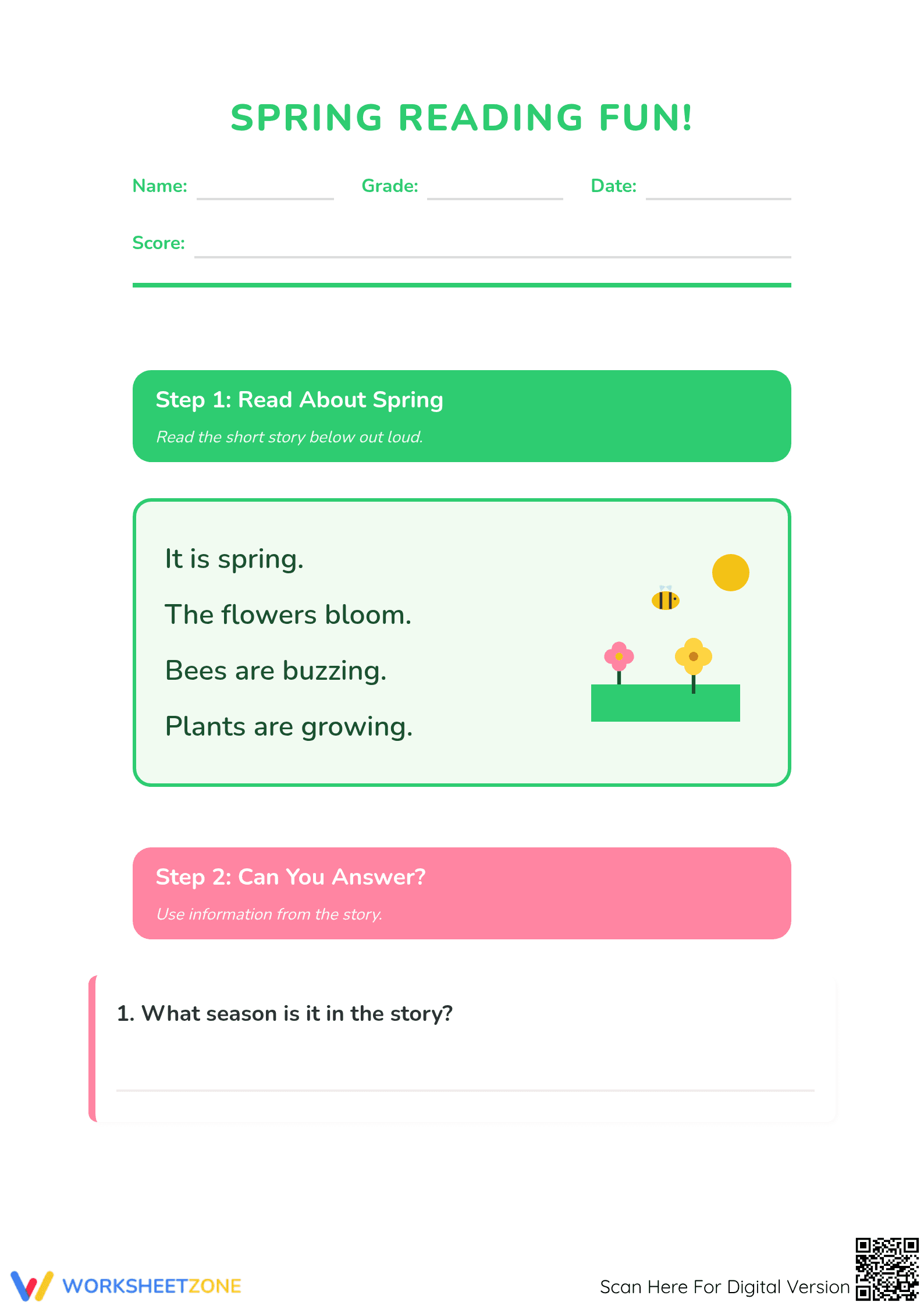
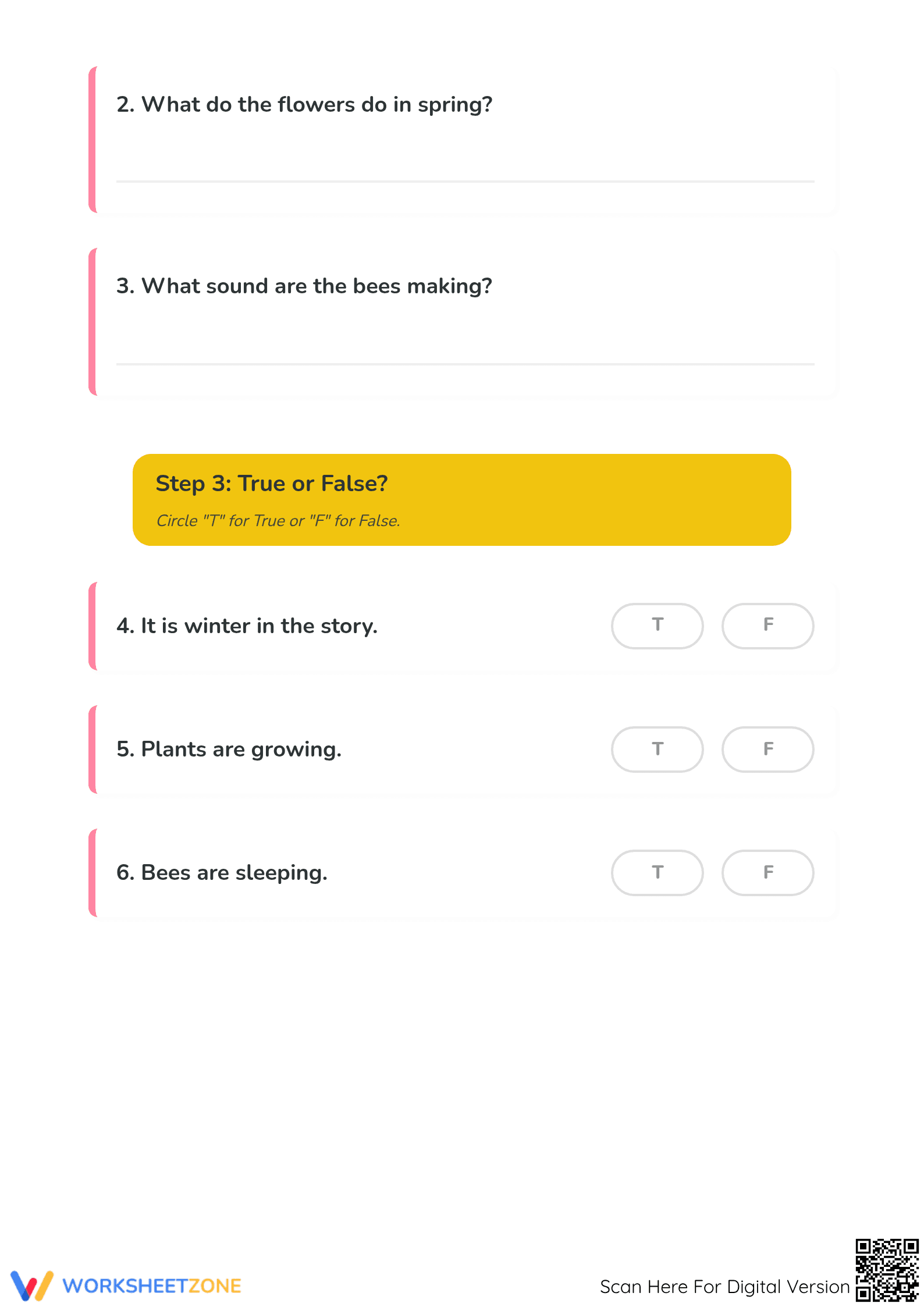
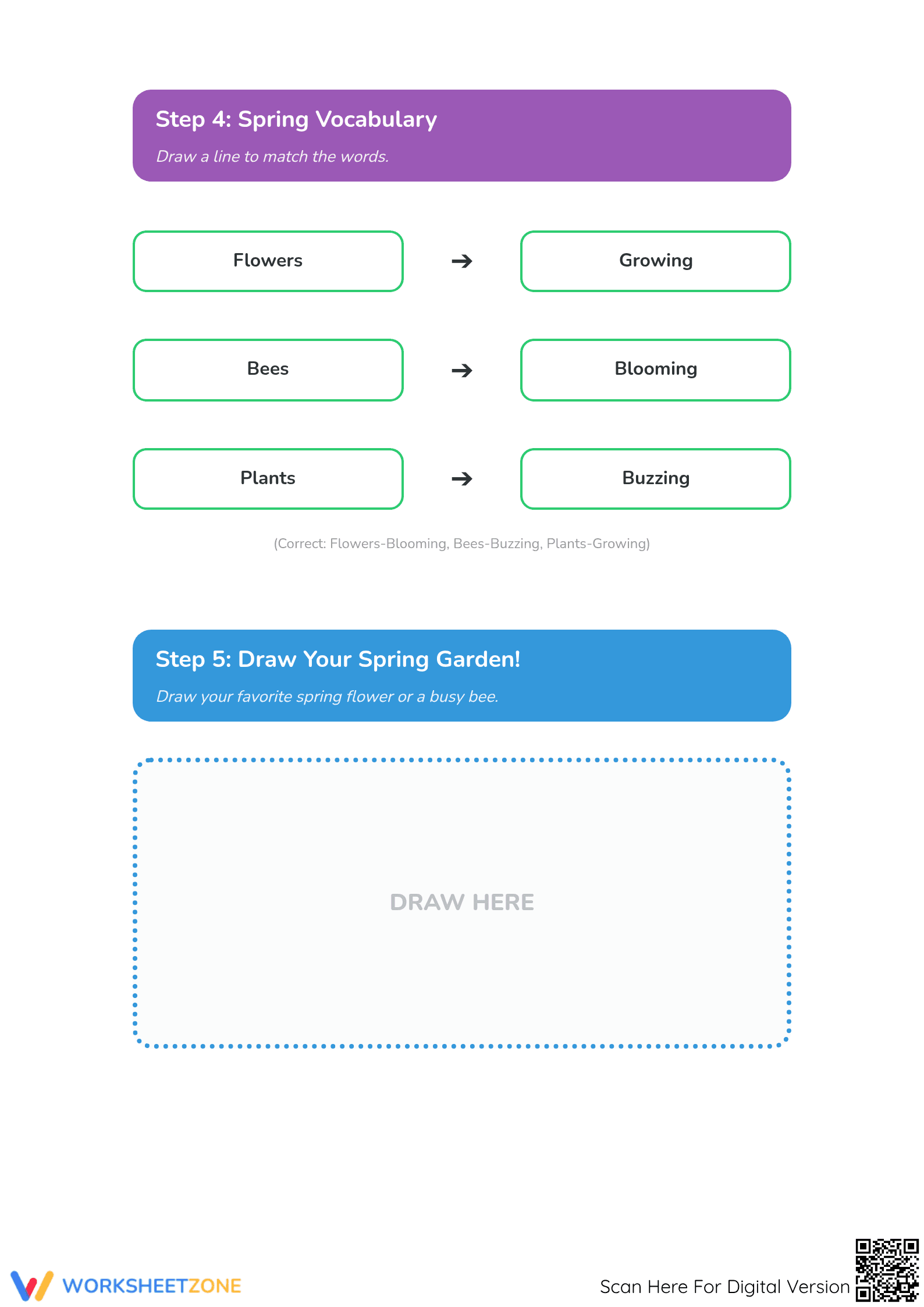
The resource consists of three pages. Page one features a "Read About Spring" text box with simple sentences, followed by an evidence-based question. Page two assesses with short-answer questions and a "True or False" section. Page three includes vocabulary matching and a creative drawing prompt, ensuring a balanced mix of cognitive tasks and fine motor engagement.
Zero-Prep Workflow
This resource is designed to minimize teacher workload with a three-step cycle that takes under two minutes of active preparation:
- Print: Send the three-page PDF to your printer (30 seconds).
- Distribute: Hand out packets for independent literacy center work (30 seconds).
- Review: Use the included answer key for quick grading or student self-check (60 seconds).
The total preparation time is minimal, making this an ideal choice for emergency sub plans or last-minute literacy block adjustments.
Standards Alignment
Primary alignment is to `CCSS.ELA-LITERACY.RI.1.1`, requiring students to answer questions about key details in a text. The worksheet provides evidence of mastery for this standard. It also supports `CCSS.ELA-LITERACY.L.1.6` through the acquisition and use of domain-specific spring vocabulary. Both standard codes can be copied directly into lesson plans, IEP goals, or district curriculum mapping tools.
How to Use It
Assign this packet after a shared reading session about seasonal changes. For intervention, use page one in a small group to model evidence-hunting strategies. Observe if students refer back to the text box when answering; this identifies those needing support with text-dependent skills. Completion typically takes 15 to 20 minutes depending on writing speed.
Who It's For
This resource is tailored for Grade 1 students but is also appropriate for Kindergarteners ready for more challenge or Grade 2 students needing a review of basic informational text structures. It pairs naturally with a spring-themed picture book or an anchor chart listing seasonal vocabulary to support visual learners.
The "Spring Reading Fun!" worksheet is rigorously aligned to CCSS.ELA-LITERACY.RI.1.1, focusing on the fundamental literacy skill of extracting key details from informational text. According to Fisher & Frey (2014) in their research on the Gradual Release of Responsibility, providing structured, independent practice through scaffolding is essential for students to internalize comprehension strategies. This worksheet applies those principles by moving students from guided reading to independent question-answering and vocabulary synthesis. By integrating visual cues with text-based evidence, the resource supports the development of mental models for early readers, a critical milestone in primary ELA. It offers a balanced approach to literacy that aligns with NAEP frameworks for reading assessment, ensuring that students are not only reading for fluency but also for deep understanding and conceptual vocabulary acquisition within a seasonal, high-interest context.


