


























Views
Downloads

Essential Spending Money Math Worksheet | Grades 2-4
Paste this activity's link or code into your existing LMS (Google Classroom, Canvas, Teams, Schoology, Moodle, etc.).
Students can open and work on the activity right away, with no student login required.
You'll still be able to track student progress and results from your teacher account.
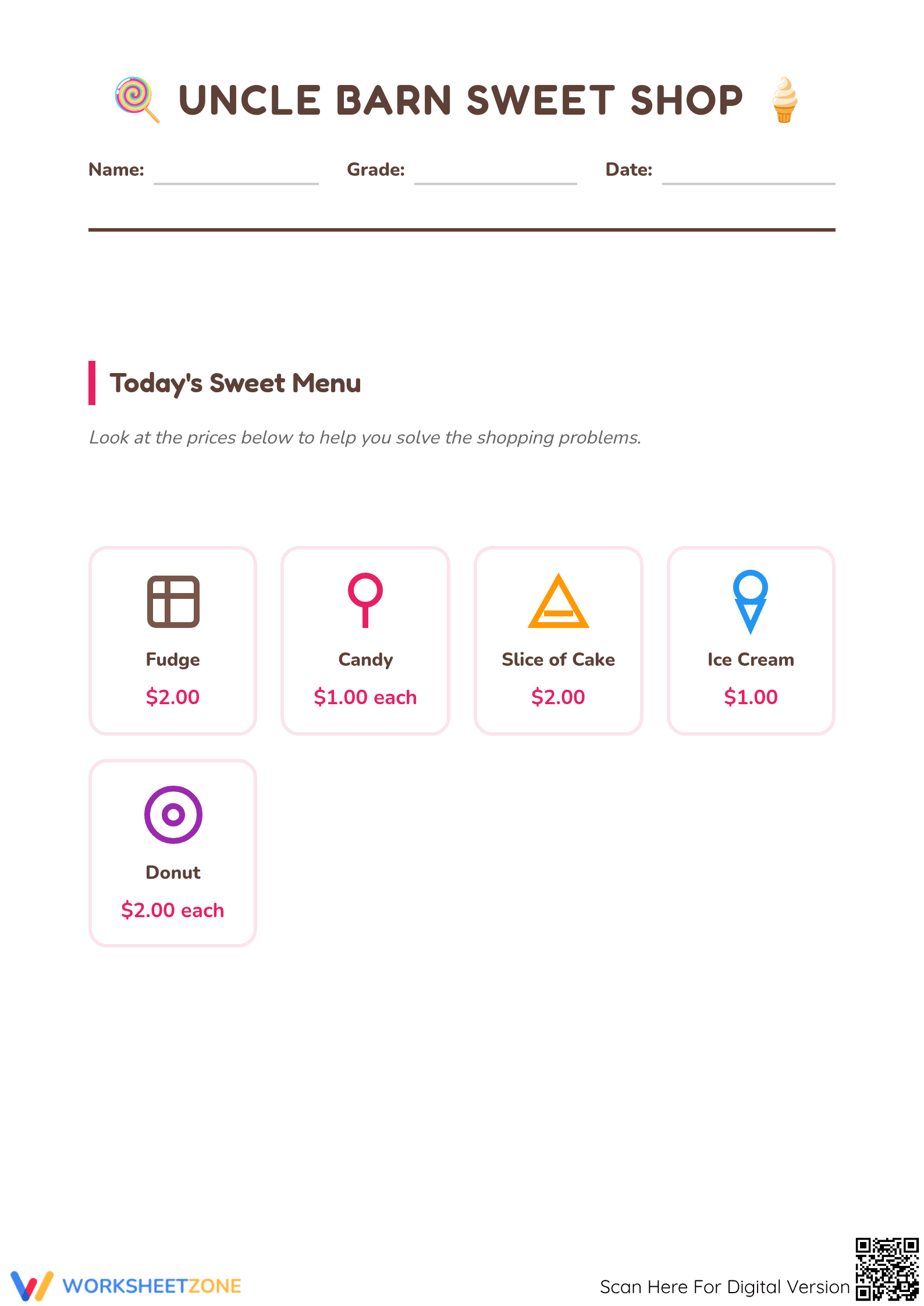
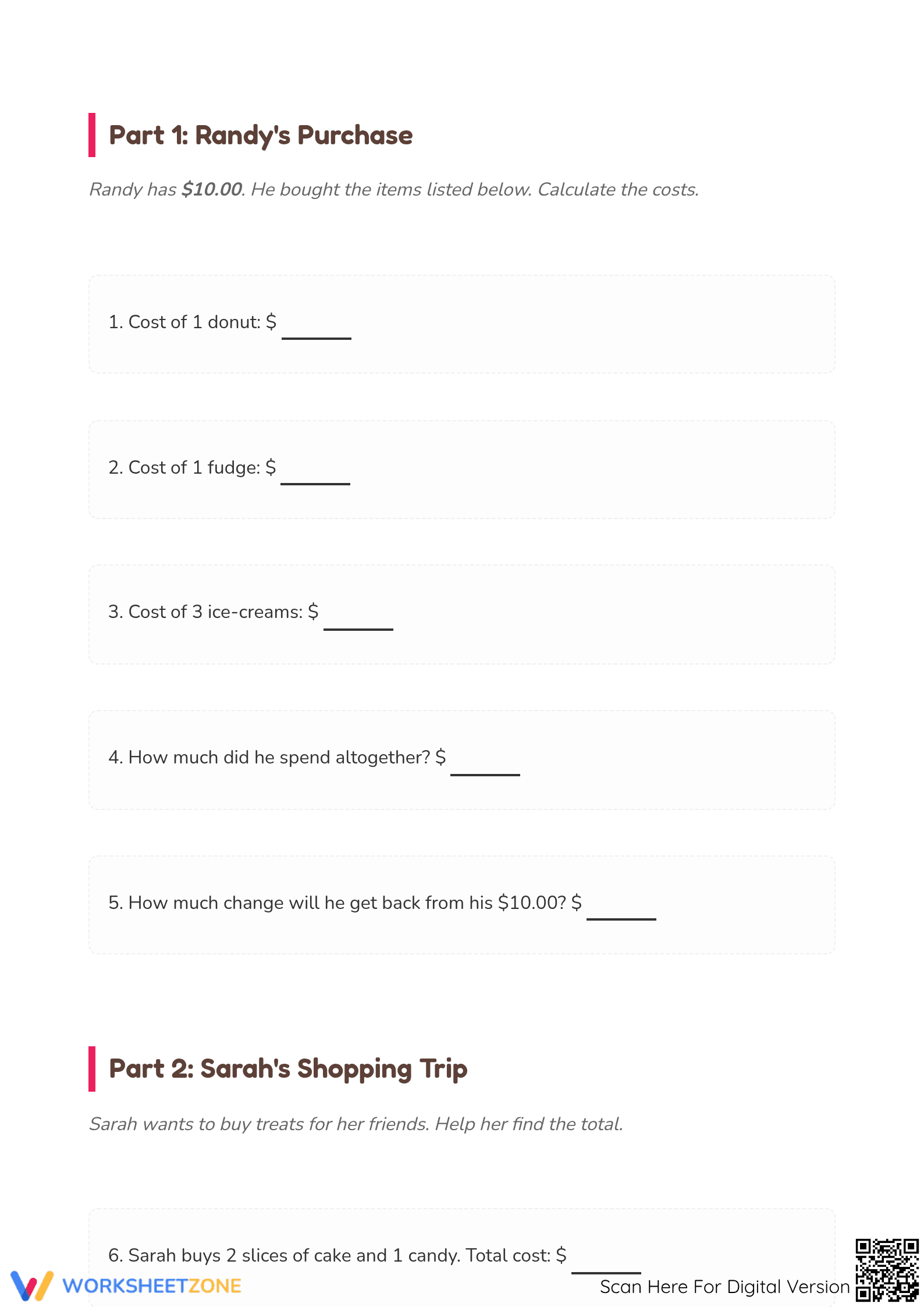
This interactive math worksheet transforms the classroom into "Uncle Barn’s Sweet Shop," helping students master real-world money transactions. By calculating totals for fudge, donuts, and cake, learners develop essential fluency in addition and subtraction within ten dollars. It provides a practical, engaging context for multi-step problem solving and making change.
At a Glance
- Grade: 2-4 · Subject: Math
- Standard:
2.MD.C.8— Solve word problems involving dollar bills and making change from ten dollars.- Skill Focus: Money operations and financial literacy
- Format: 4 pages · 18 problems · Answer key included · PDF
- Best For: Independent practice or small group instruction
- Time: 25–35 minutes
What's Inside
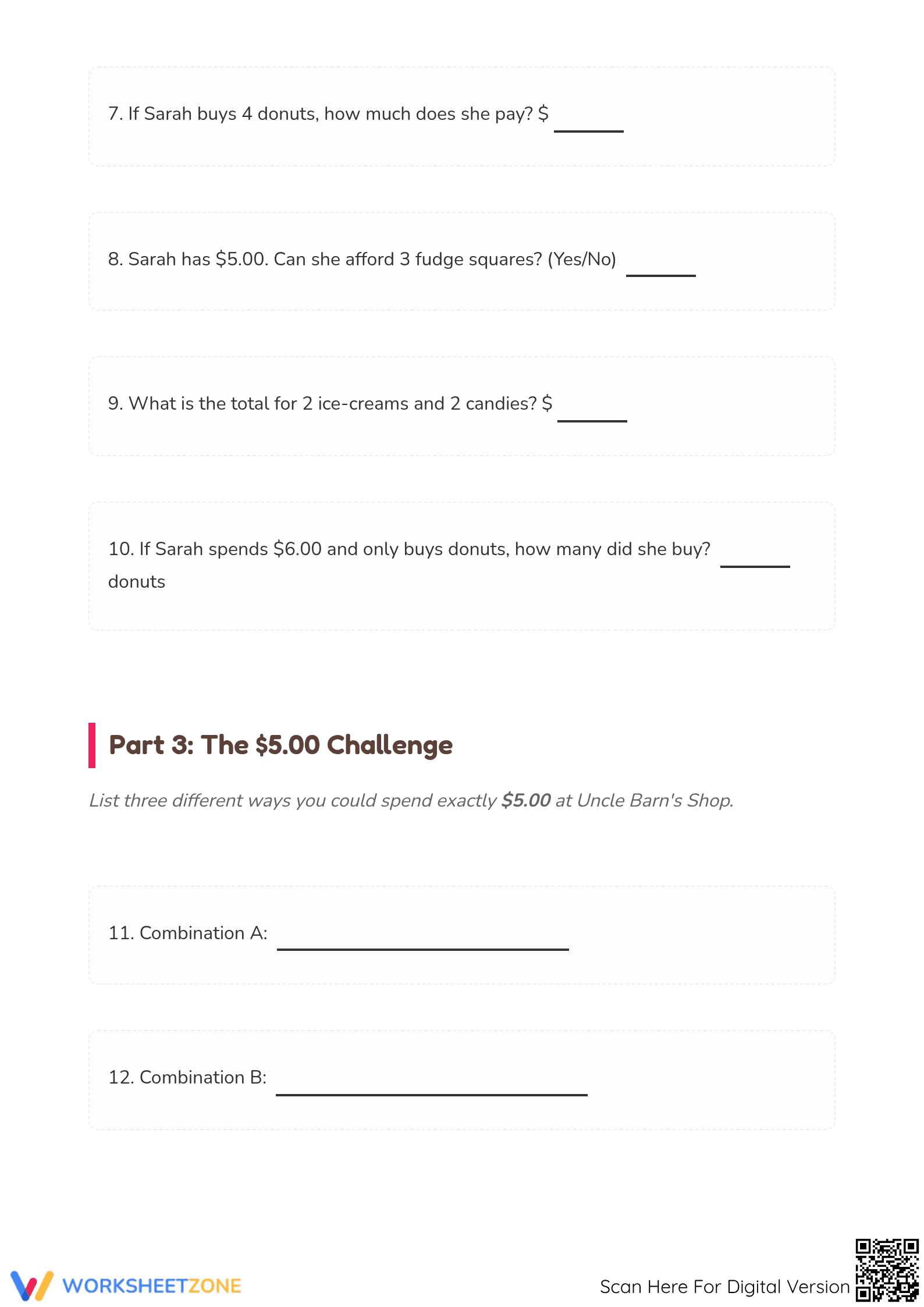
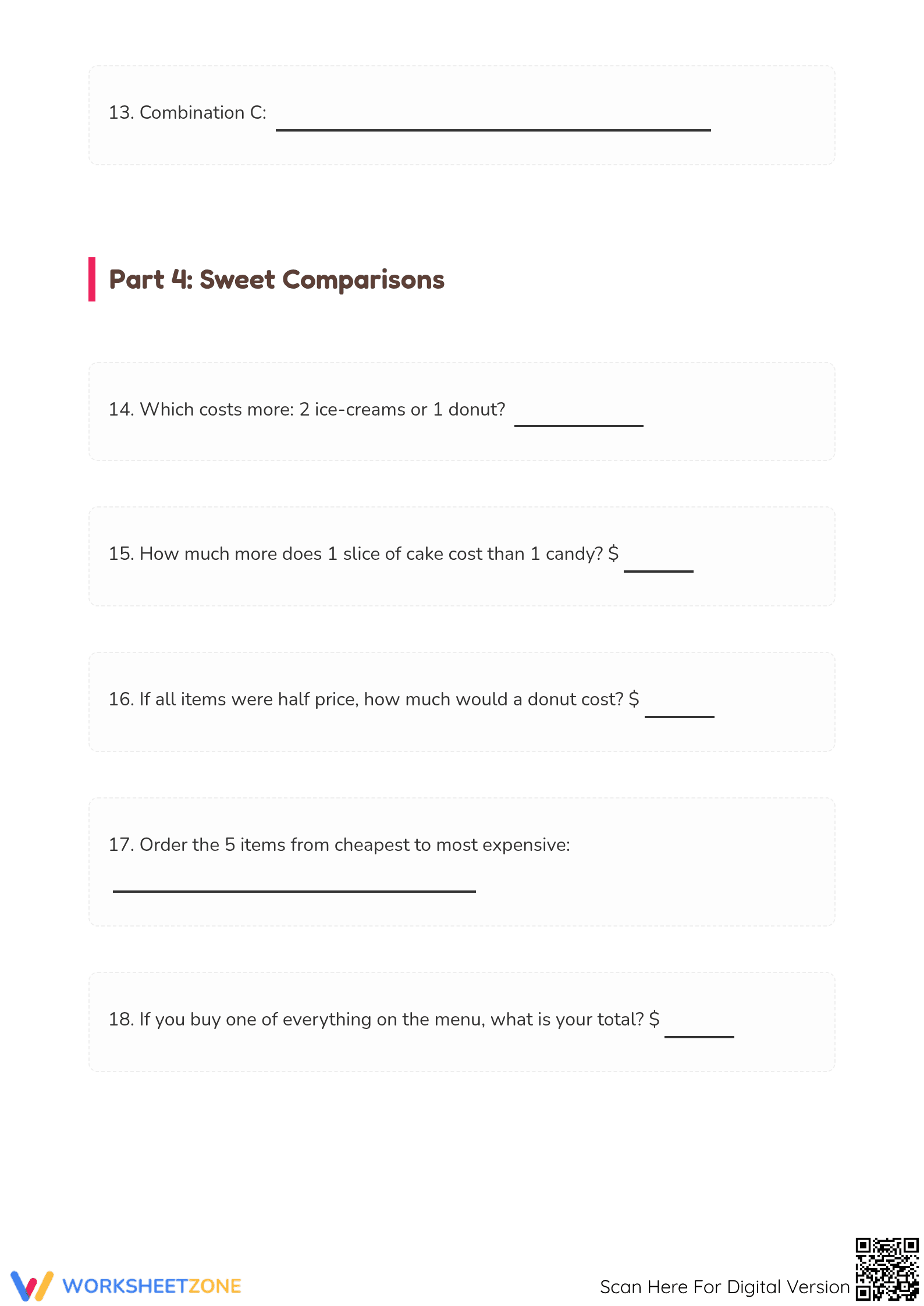
The packet includes a visual "Sweet Menu" and 18 questions across three pages. Students tackle four sections: Randy’s Purchase, Sarah’s Shopping Trip, The $5.00 Challenge, and Sweet Comparisons. It features open-response lines, yes/no checks, and multi-line combination tasks that build complexity.
Zero-Prep Workflow
This resource requires zero setup. Print the four-page packet in 30 seconds, distribute menus in 1 minute, and review the 18 answers in 5 minutes. The self-explanatory format makes it an ideal sub plan or fast-finisher activity that maintains rigor with under two minutes of prep.
Standards Alignment
The primary alignment is 2.MD.C.8, solving word problems involving dollar bills and making change. It also supports 4.MD.A.2 by using the four operations for money problems. Both standard codes can be copied directly into lesson plans, IEP goals, or district curriculum mapping tools.
How to Use It
Use this as a summative assessment after units on addition and subtraction. Observe students during "The $5.00 Challenge" to identify those struggling with mental math combinations. It works well as a 30-minute math station where students "shop" for treats.
Who It's For
Ideal for Grade 2-4 learners who benefit from thematic math. It offers natural differentiation; struggling students focus on single-item costs, while advanced learners tackle half-price logic. Pair this with play money or a "Sweet Shop" anchor chart for high engagement.
The integration of thematic "shopping" scenarios in mathematics instruction is supported by Fisher & Frey (2014), who emphasize that situated learning—where students apply arithmetic to recognizable social contexts—increases both retention and cognitive engagement. By requiring students to calculate change and compare prices, this worksheet moves beyond rote calculation into functional numeracy. Research from the NAEP consistently highlights that students struggle most with multi-step word problems involving real-world constraints; this resource addresses that gap by scaffolding 18 progressive tasks. The Uncle Barn Sweet Shop framework aligns with RAND AIRS 2024 findings, which suggest that curriculum-embedded assessments with clear visual aids significantly reduce math anxiety in elementary learners. Educators utilizing this aligned 2.MD.C.8 resource ensure that their students are not just computing numbers, but are developing the critical financial reasoning skills necessary for late elementary and middle school mathematics success.


