


























Views
Downloads

Grade 1 Spelling Words — Printable No-Prep Worksheet
Paste this activity's link or code into your existing LMS (Google Classroom, Canvas, Teams, Schoology, Moodle, etc.).
Students can open and work on the activity right away, with no student login required.
You'll still be able to track student progress and results from your teacher account.
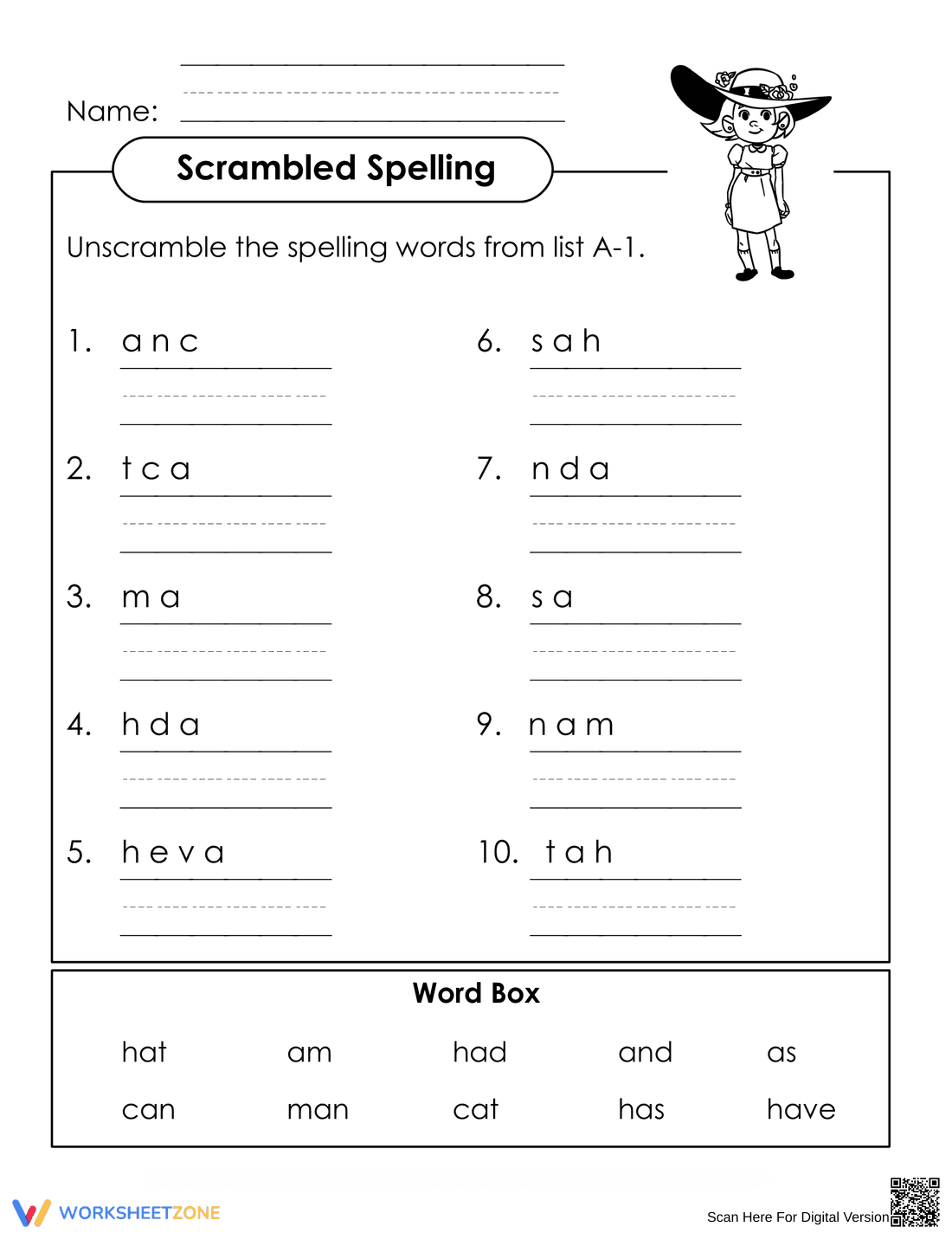
This Grade 1 spelling worksheet helps students master common sight words and CVC words through an engaging unscramble activity. By deciphering jumbled letters and writing the correct words on handwriting lines, early readers reinforce their phonics skills, improve spelling accuracy, and build essential foundational literacy.
At a Glance
- Grade: 1 · Subject: ELA
- Standard:
CCSS.ELA-LITERACY.L.1.2.D— Spell words with common patterns and irregular words- Skill Focus: Spelling and Word Recognition
- Format: 2 pages · 10 problems · Answer key included · PDF
- Best For: Independent practice or morning work
- Time: 10–15 minutes
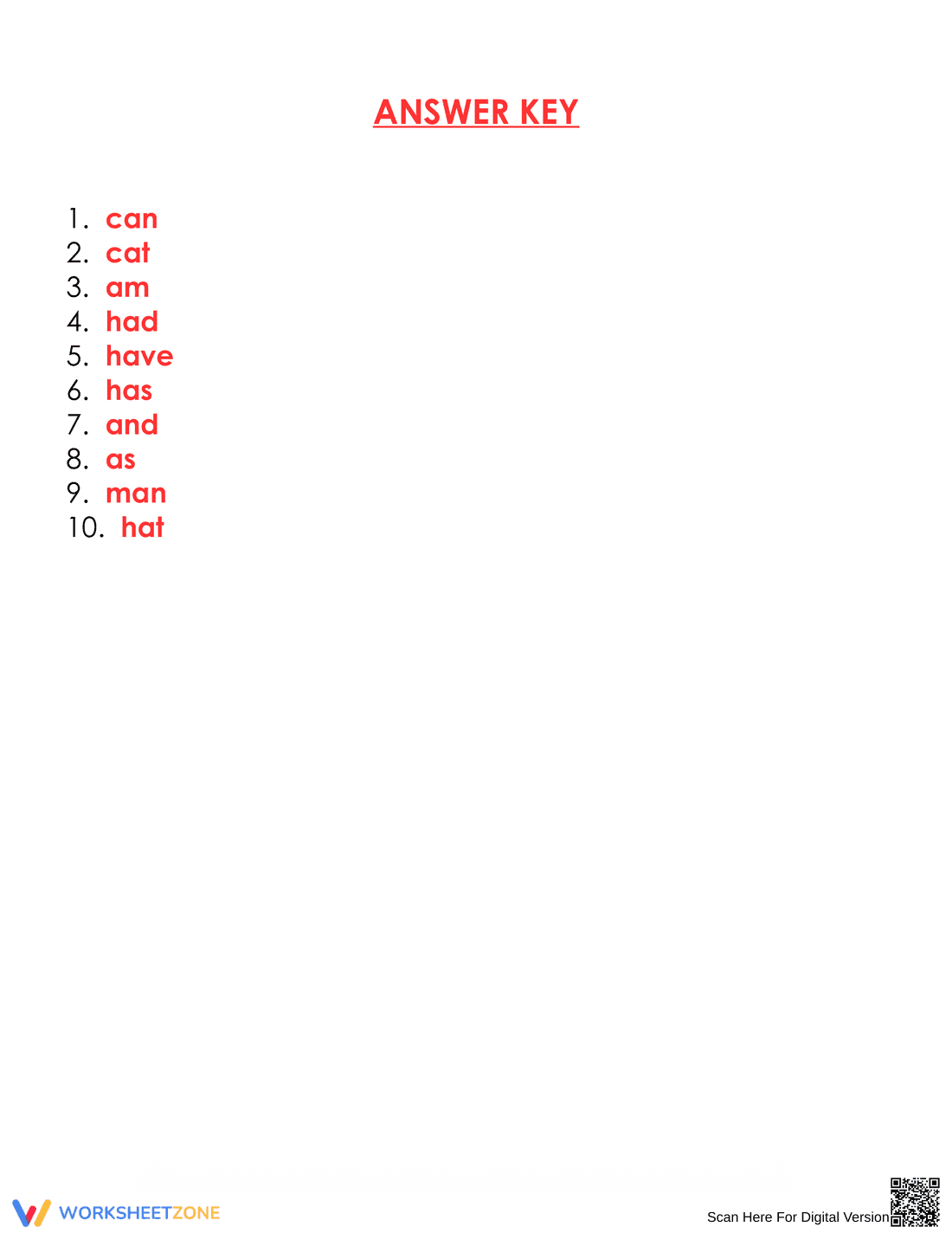
This resource features a single-page student worksheet containing 10 scrambled spelling words. A helpful word box is provided at the bottom of the page, offering visual support and allowing students to cross off words as they solve each puzzle. Primary handwriting lines are included for each answer to encourage proper letter formation. A complete, separate answer key page is also provided for quick and accurate grading.
Zero-Prep Workflow
- Print (1 minute): Simply print the single-page student worksheet. The black-and-white design is ink-friendly and requires no special formatting.
- Distribute (1 minute): Hand out the worksheet to students. The clear instructions and included word bank mean students can begin working immediately with minimal guidance.
- Review (2 minutes): Use the provided answer key to quickly check student work or project it on the board for self-correction.
Total teacher prep time is under two minutes, making this an ideal resource for emergency sub plans, morning work, or quick literacy center rotations.
This worksheet aligns directly with CCSS.ELA-LITERACY.L.1.2.D: Use conventional spelling for words with common spelling patterns and for frequently occurring irregular words. It also supports foundational reading skills by requiring students to decode and encode familiar vocabulary. Both standard codes can be copied directly into lesson plans, IEP goals, or district curriculum mapping tools.
Deploy this worksheet during morning work to settle students into the day with a familiar, structured task. Alternatively, place it in a literacy center for independent practice while you conduct small group reading instruction. As a formative assessment tip, observe which students rely heavily on the word box versus those who can unscramble the letters mentally. Expect students to complete the 10 problems within 10 to 15 minutes.
This activity is designed for first-grade students, though it serves as excellent review for second graders or targeted intervention for kindergarteners ready for a challenge. The included word bank provides built-in differentiation for students who need extra vocabulary support. Pair this worksheet with a phonics anchor chart or a direct instruction lesson on CVC word families to maximize its effectiveness.
Mastering conventional spelling requires repeated exposure and active manipulation of letter sequences. Aligned with CCSS.ELA-LITERACY.L.1.2.D, this resource requires students to spell words with common patterns and irregular words by unscrambling them. According to a 2024 report by EdReports, structured phonics and spelling practice that includes encoding activities significantly improves early word recognition and reading fluency. By integrating a word bank and handwriting lines, this worksheet reduces cognitive overload, allowing young learners to focus specifically on letter-sound correspondence and correct spelling patterns. Activities that prompt students to actively reconstruct words from scrambled letters strengthen their orthographic mapping skills, which are critical for long-term vocabulary retention. This targeted practice ensures students build the automaticity needed for fluent reading and writing, making it a highly effective tool for early elementary literacy instruction.


