


























Views
Downloads
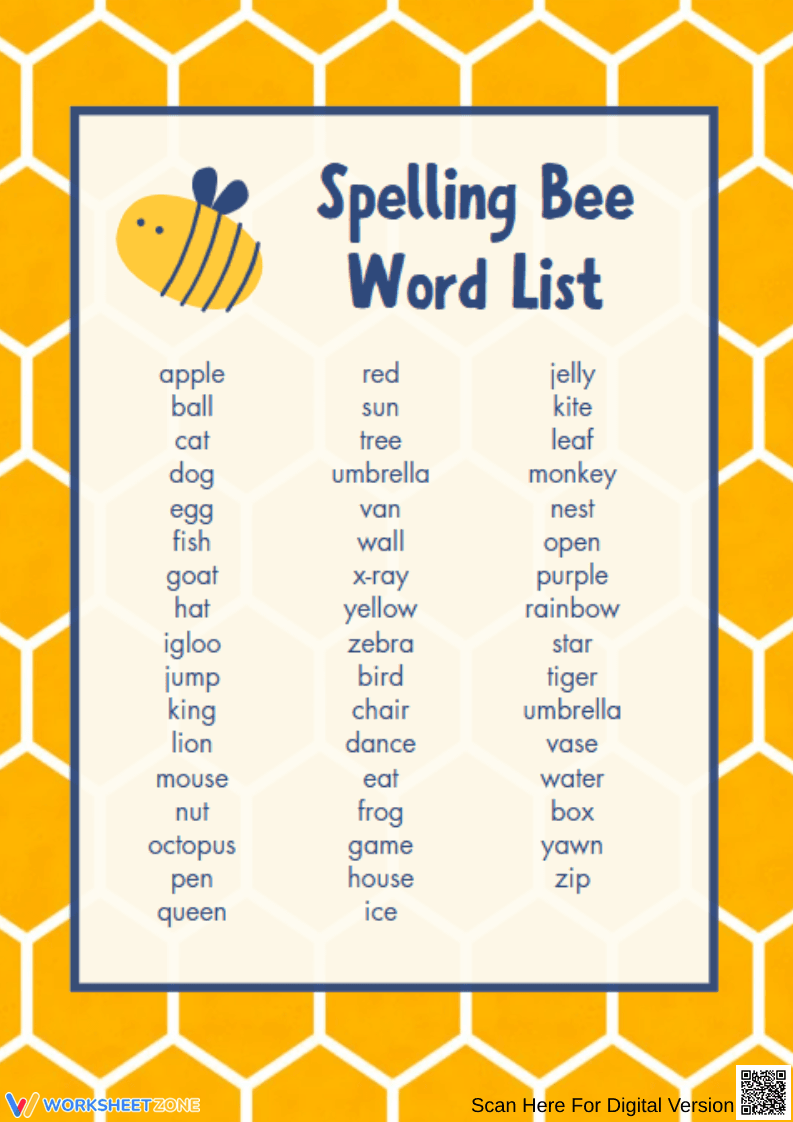

Printable Spelling Bee Word List for Grade 1
Paste this activity's link or code into your existing LMS (Google Classroom, Canvas, Teams, Schoology, Moodle, etc.).
Students can open and work on the activity right away, with no student login required.
You'll still be able to track student progress and results from your teacher account.
This Grade 1 spelling bee word list worksheet helps young learners master foundational spelling patterns and phonics rules through structured word recognition. By practicing these fifty high-frequency and phonetically regular words, students build the orthographic mapping skills necessary for reading fluency and spelling competition success.
At a Glance
- Grade: Grade 1 · Subject: English Language Arts
- Standard:
CCSS.ELA-LITERACY.L.1.2— Spell untaught words phonetically using phonemic awareness and spelling conventions- Skill Focus: Spelling bee preparation and phonics
- Format: 1 page · 50 words · Reference list · PDF
- Best For: Daily spelling practice and review
- Time: 10–15 minutes
This single-page PDF resource features a clean, three-column layout containing fifty carefully selected spelling words. The list includes simple CVC words like "cat" and "dog," alongside more complex phonetic patterns such as "umbrella" and "rainbow." The worksheet serves as a direct reference sheet without distracting clutter, allowing students to focus entirely on word structure, letter-sound correspondences, and pronunciation during study sessions.
This zero-prep worksheet integrates into daily routines with a total teacher setup time of under two minutes. First, print the single-page document (1 minute). Next, distribute copies to students for independent study or folder insertion (30 seconds). Finally, review the words aloud as a class to model correct pronunciation (30 seconds). This straightforward workflow makes the resource an ideal choice for emergency sub plans, morning work, or quick homework assignments.
Standards Alignment
This spelling resource aligns directly with the primary standard `CCSS.ELA-LITERACY.L.1.2`, which requires students to demonstrate command of the conventions of standard English capitalization, punctuation, and spelling when writing. Additionally, it supports `CCSS.ELA-LITERACY.RF.1.3` by encouraging students to apply grade-level phonics and word analysis skills in decoding words. Both standard codes can be copied directly into lesson plans, IEP goals, or district curriculum mapping tools.
How to Use It
Use this worksheet during small-group phonics instruction or as a post-instruction spelling assessment tool. For formative assessment, observe students as they read the list aloud, noting which phonetic patterns (such as blends or digraphs) cause hesitation. Students typically complete a self-paced reading or writing practice session with this list in ten to fifteen minutes.
Who It's For
This resource targets first-grade students preparing for spelling bees or working on general vocabulary development. It accommodates diverse learners, offering spelling challenges for advanced kindergarteners or remedial support for second-grade students. Pair this list with a phonics anchor chart or a decodable reading passage to reinforce letter-sound relationships during literacy blocks.
According to research on early literacy acquisition by Fisher & Frey (2014), systematic exposure to structured word lists accelerates orthographic mapping and word recognition in primary grade students. This Grade 1 spelling worksheet aligns with standard code CCSS.ELA-LITERACY.L.1.2, focusing on the plain-English skill of spelling words phonetically using phonemic awareness. By providing a clear, organized reference of fifty words, the resource helps students transition from phonetic spelling to conventional spelling patterns. Utilizing structured lists in daily routines supports cognitive retention and builds the confidence necessary for spelling bee participation. Educators can confidently integrate this tool into evidence-based reading programs to track student progress and support foundational literacy development in early childhood classrooms, ensuring all learners meet essential benchmarks.


