


























Views
Downloads

Essential Grade 3 Light Reflection — No-Prep Worksheet
Paste this activity's link or code into your existing LMS (Google Classroom, Canvas, Teams, Schoology, Moodle, etc.).
Students can open and work on the activity right away, with no student login required.
You'll still be able to track student progress and results from your teacher account.
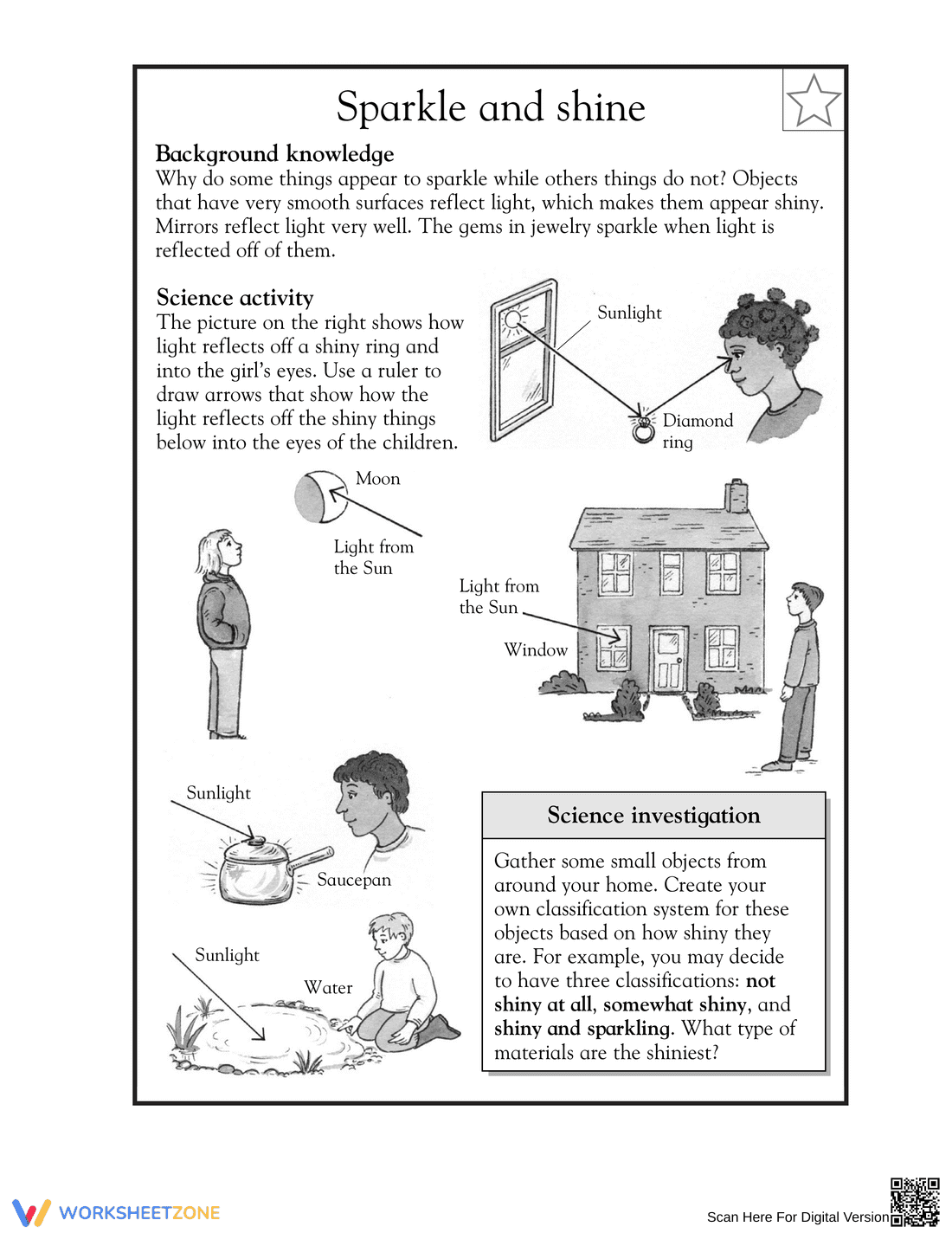
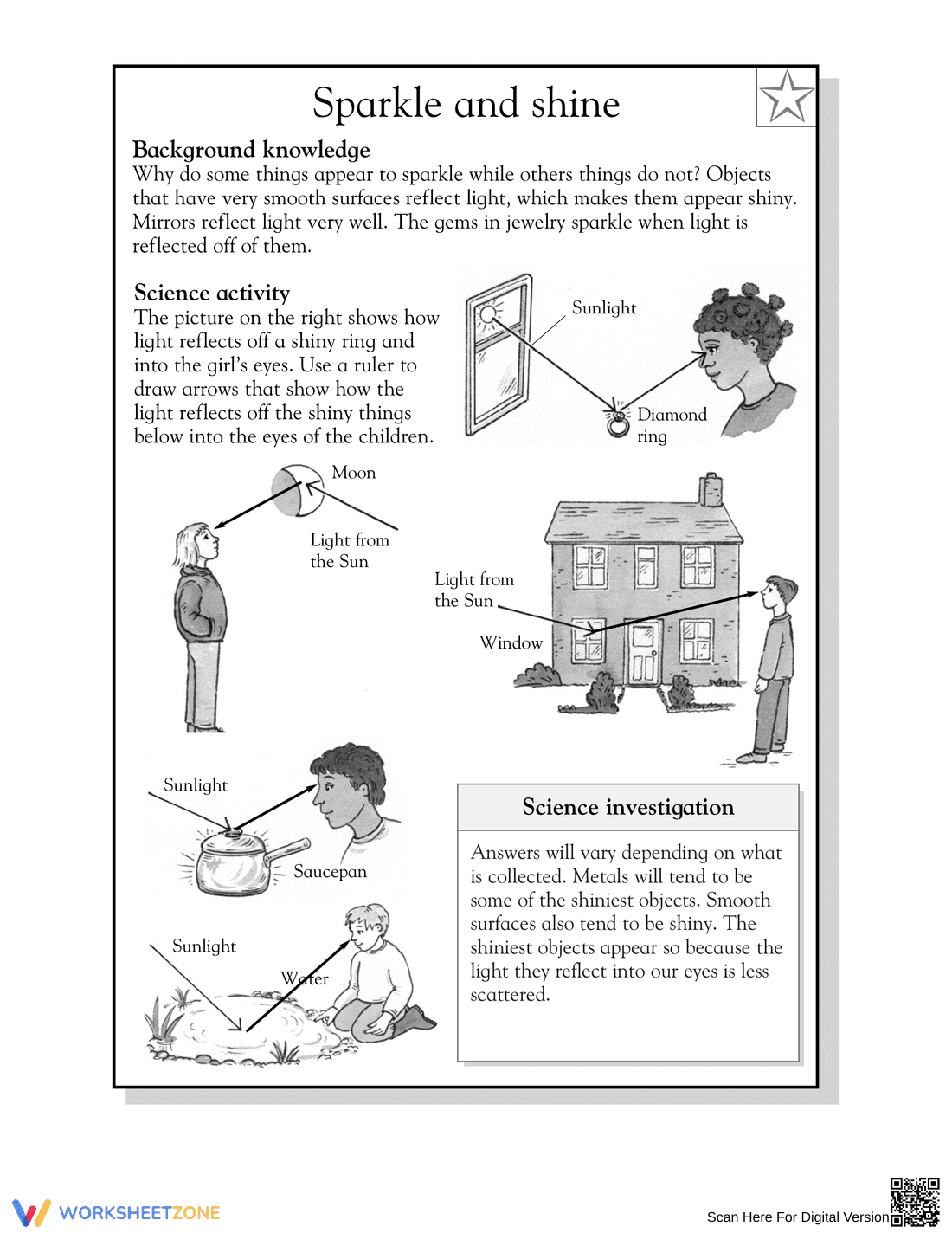
This Grade 3 science worksheet provides a focused exploration of how light reflection allows us to see objects and why different materials appear shiny or dull. Students will apply their knowledge by drawing reflection diagrams and conducting a hands-on investigation, building a foundational understanding of light properties.
At a Glance
- Grade: 3 · Subject: Science
- Standard:
4-PS4-2— Describe how light reflecting from objects enters the eye, allowing them to be seen.- Skill Focus: Light reflection, properties of materials
- Format: 1 page · 2 problems · No answer key · PDF
- Best For: Introduction to light, hands-on science center, substitute plan
- Time: 20–30 minutes
What's Inside
This single-page PDF offers a background knowledge section on light reflection. It has two tasks: a "Science Activity" for modeling how light travels to the eye, and a "Science Investigation" for classifying real-world objects by shininess. The layout is self-contained and ready for immediate use.
A Zero-Prep Workflow
Designed for efficiency, this worksheet takes under two minutes to prep. The workflow is simple: 1. Print: Instantly print the page for each student. 2. Distribute: Hand out the worksheet; students only need a pencil, ruler, and common objects. 3. Review: Discuss the investigation findings as a class to build a collective understanding. Its self-explanatory nature makes it an ideal resource for substitute plans or independent science centers.
Standards Alignment
This worksheet supports NGSS standard 4-PS4-2, where students "develop a model to describe that light reflecting from objects and entering the eye allows objects to be seen." While benchmarked for fourth grade, it's an accessible introduction for third-graders. The standard code can be copied directly into lesson plans or curriculum maps.
How to Use It
Use this worksheet to introduce light reflection. After instruction, students can complete the "Science Activity" to check for understanding. The "Science Investigation" works well as a small-group, hands-on activity. For a formative check, listen for students using terms like "reflect" and "shiny." Expect completion in 20-30 minutes.
Who It's For
Designed for third-grade students learning about light, the clear diagrams support all learners. For students needing support, pre-teach vocabulary like "reflect" and "surface." Pair this worksheet with an anchor chart showing different reflective objects to reinforce the concepts.
This worksheet provides an introductory model for NGSS standard 4-PS4-2, where students describe how light reflecting from objects enters the eye, allowing them to be seen. By engaging in both a diagramming task and a hands-on investigation, learners build a concrete, evidence-based understanding of a key physical science concept. According to the RAND AIRS 2024 report on science education, early exposure to hands-on, inquiry-based activities is critical for developing scientific reasoning skills that persist through later grades. This single-page resource requires students to make observations and classify materials based on their physical properties (shininess), a foundational practice that directly supports more complex scientific modeling. The combination of a guided activity and an open-ended investigation ensures students are not just receiving information but are actively constructing knowledge about how light interacts with the world around them.


