




























1 / 2
0
Views
0
Downloads

Save
0 Likes
Share
Solid, Liquid, and Gas Sorting Activity
0 Views
0 Downloads

Paste this activity's link or code into your existing LMS (Google Classroom, Canvas, Teams, Schoology, Moodle, etc.).
Students can open and work on the activity right away, with no student login required.
You'll still be able to track student progress and results from your teacher account.
Information
Description
What It Is:
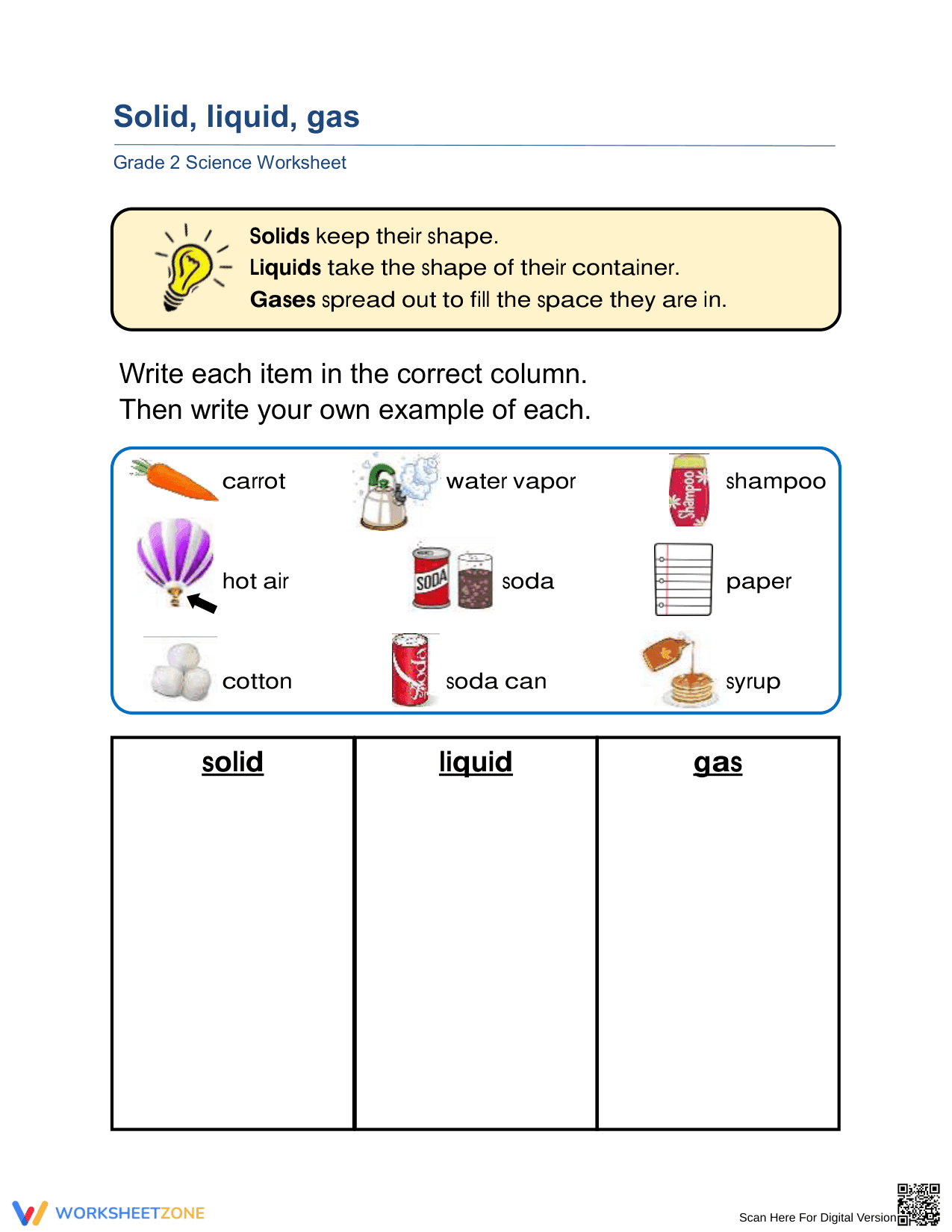
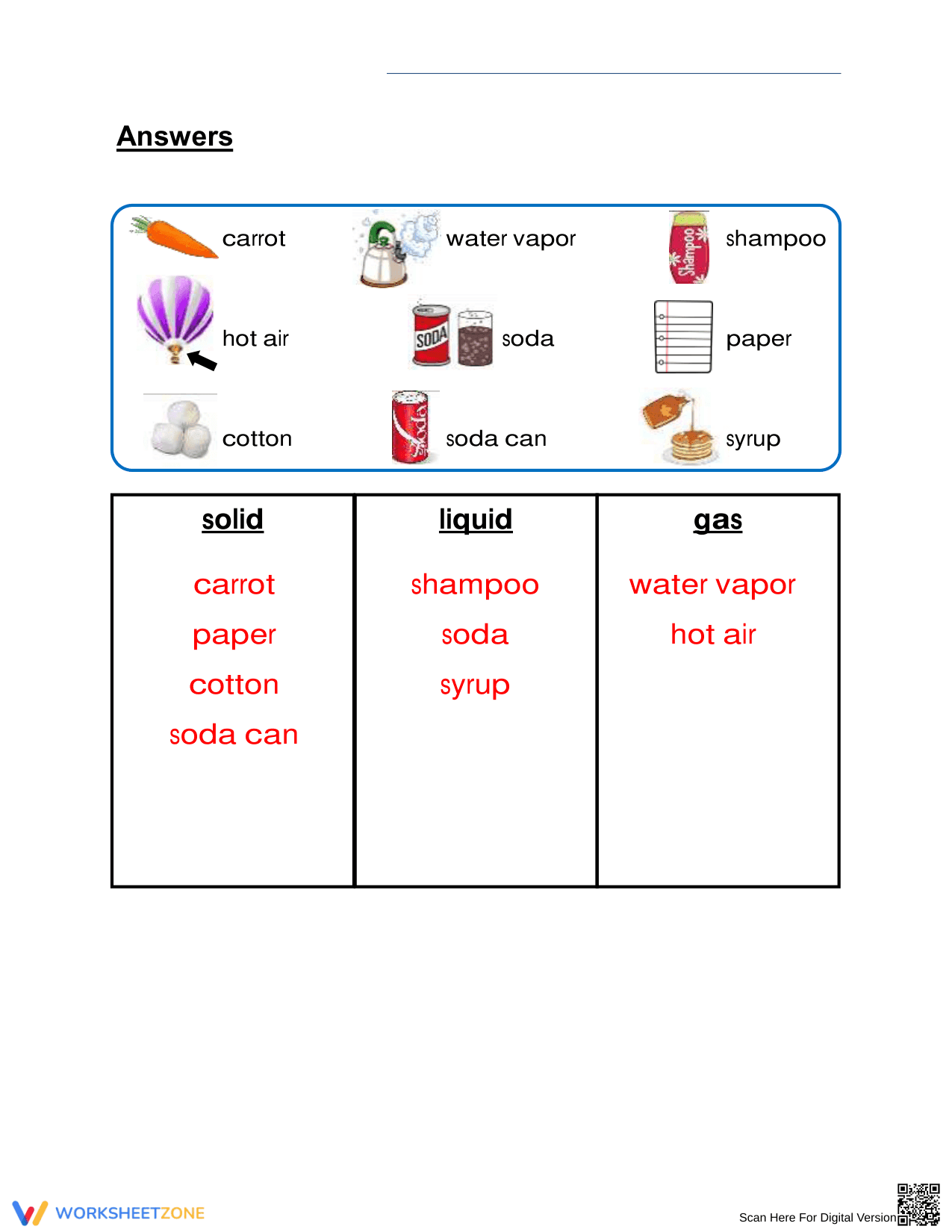
This science worksheet helps students explore the three states of matter—solids, liquids, and gases. It includes a helpful reference box with clear definitions, nine colorful illustrations of everyday items like a carrot, shampoo, and water vapor, and a classification table for sorting.
Why Use It:
It reinforces essential science concepts by encouraging students to observe physical properties and categorize objects based on whether they maintain their shape, flow as liquids, or expand as gases.
How to Use It:
• Step 1: Read the descriptions in the yellow box to review the unique properties of solids, liquids, and gases.
• Step 2: Examine the nine illustrated items and decide which state of matter each one represents.
• Step 3: Write the name of each item in the correct column of the classification table and challenge yourself to add your own unique examples.
Grade Suitability:
Best for Grade 1 - Grade 3.
• Younger kids focus area: Identifying common objects and learning basic science vocabulary.
• Older students focus area: Understanding the distinct physical properties and characteristics that define states of matter.
Target Users:
Perfect for elementary school teachers, homeschooling parents, and students exploring basic physical science.
This science worksheet helps students explore the three states of matter—solids, liquids, and gases. It includes a helpful reference box with clear definitions, nine colorful illustrations of everyday items like a carrot, shampoo, and water vapor, and a classification table for sorting.
Why Use It:
It reinforces essential science concepts by encouraging students to observe physical properties and categorize objects based on whether they maintain their shape, flow as liquids, or expand as gases.
How to Use It:
• Step 1: Read the descriptions in the yellow box to review the unique properties of solids, liquids, and gases.
• Step 2: Examine the nine illustrated items and decide which state of matter each one represents.
• Step 3: Write the name of each item in the correct column of the classification table and challenge yourself to add your own unique examples.
Grade Suitability:
Best for Grade 1 - Grade 3.
• Younger kids focus area: Identifying common objects and learning basic science vocabulary.
• Older students focus area: Understanding the distinct physical properties and characteristics that define states of matter.
Target Users:
Perfect for elementary school teachers, homeschooling parents, and students exploring basic physical science.


