


























Views
Downloads

Printable Snowman Templates | Grade 1-2 Fine Art
Paste this activity's link or code into your existing LMS (Google Classroom, Canvas, Teams, Schoology, Moodle, etc.).
Students can open and work on the activity right away, with no student login required.
You'll still be able to track student progress and results from your teacher account.
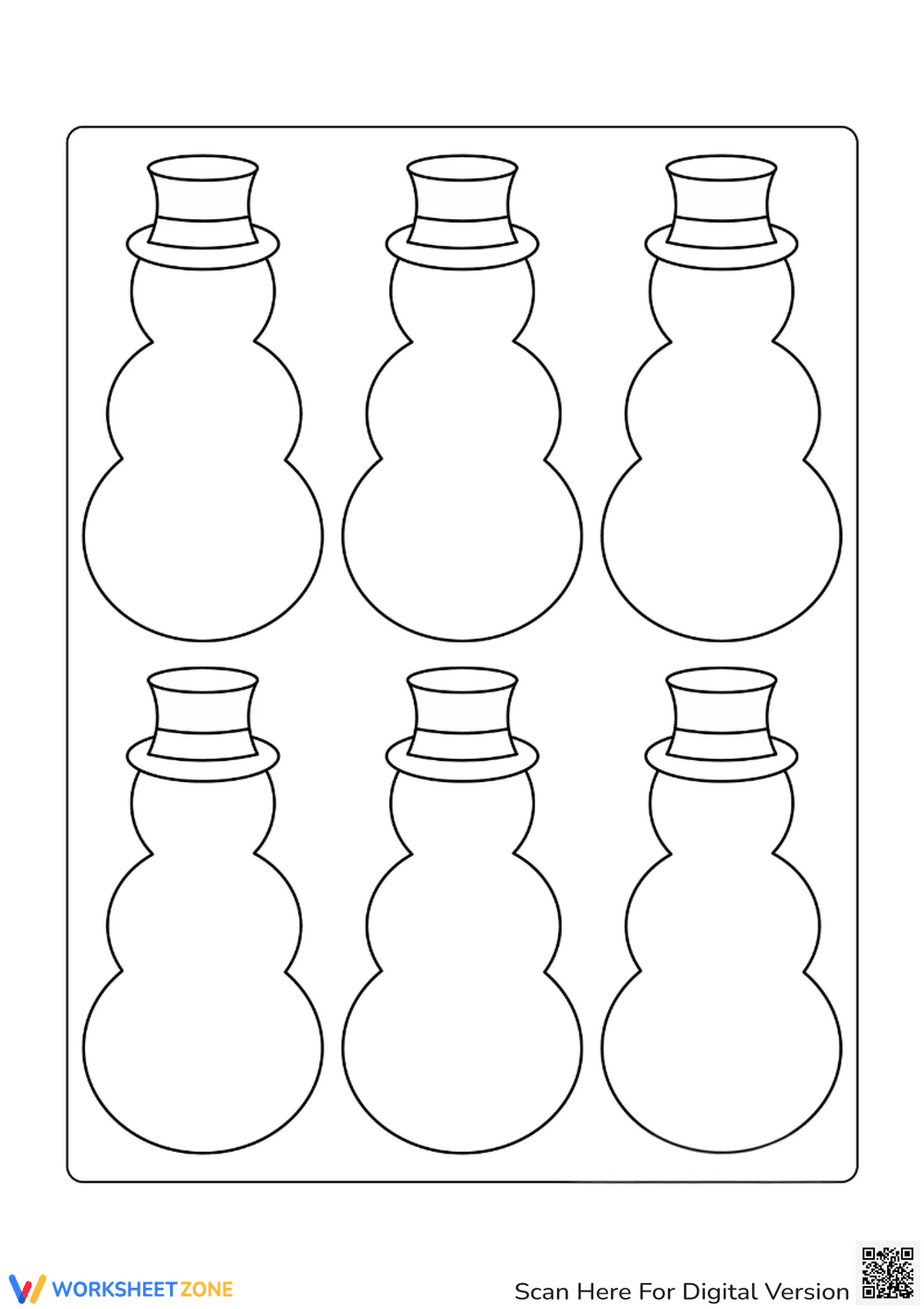
These printable snowman templates provide a versatile canvas for young learners to express their creativity during the winter season. By focusing on fine motor development and artistic expression, students can transform these six blank shapes into unique characters. This resource is designed to support seasonal classroom activities while maintaining a focus on visual communication and design.
At a Glance
- Grade: 1-2 · Subject: Fine Art & English
- Standard:
CCSS.ELA-LITERACY.SL.1.5— Add visual displays to descriptions to clarify ideas and feelings- Skill Focus: Fine Motor & Creative Design
- Format: 1 page · 6 shapes · No answer key needed · PDF
- Best For: Winter crafts and creative writing prompts
- Time: 15–30 minutes
What's Inside: This single-page PDF features six identical, high-contrast snowman outlines, each sporting a classic top hat. The minimalist design ensures that students have maximum space to add their own details, such as faces, buttons, scarves, or background elements. The clean lines are optimized for easy printing and provide a clear boundary for students practicing their coloring-within-the-lines skills.
Zero-Prep Workflow: This resource is designed for immediate classroom implementation. First, print the required number of copies for your group (30 seconds). Second, distribute the sheets along with crayons, markers, or colored pencils (1 minute). Third, allow students to work independently while you facilitate a discussion about winter weather or character traits (20 minutes). Total teacher preparation time is under two minutes, making it an ideal choice for morning work or unexpected sub plans.
Standards Alignment: The primary standard addressed is `CCSS.ELA-LITERACY.SL.1.5`, which encourages students to add drawings or other visual displays to descriptions when appropriate to clarify ideas, thoughts, and feelings. By decorating these templates to match a specific narrative or descriptive sentence, students bridge the gap between visual art and linguistic expression. This standard code can be copied directly into lesson plans, IEP goals, or district curriculum mapping tools.
How to Use It: Use this worksheet during a "Winter Wonders" unit as a formative assessment of fine motor control. Observe how students handle coloring tools and their ability to follow multi-step directions if you assign specific colors to different snowmen. Alternatively, use it as a brainstorming tool for a creative writing assignment where each snowman represents a different character in a student-authored story. Completion typically takes 15 to 30 minutes depending on the level of detail.
Who It's For: This resource is tailored for first and second-grade students, though it is accessible for kindergarteners needing fine motor practice. It is particularly effective for English Language Learners (ELLs) who can use the visual medium to demonstrate comprehension of winter vocabulary. Pair this template with a read-aloud of "The Snowy Day" or a simple anchor chart detailing winter clothing.
Research from Fisher & Frey (2014) emphasizes the importance of visual representation in the early stages of literacy development, noting that drawing serves as a critical scaffold for complex writing tasks. This worksheet, aligned with `CCSS.ELA-LITERACY.SL.1.5`, facilitates this developmental bridge by providing a structured yet open-ended visual task. By engaging with these six blank snowman shapes, students practice the fine motor precision necessary for handwriting while simultaneously exploring the creative boundaries of visual storytelling. According to the NAEP, students who engage in regular artistic expression within the core curriculum show higher levels of engagement and better retention of thematic content. This resource provides a high-utility, low-barrier entry point for integrating art into the ELA block, ensuring that all learners, regardless of their current writing proficiency, can participate in meaningful classroom discourse about seasonal changes and character development.


