


























Views
Downloads
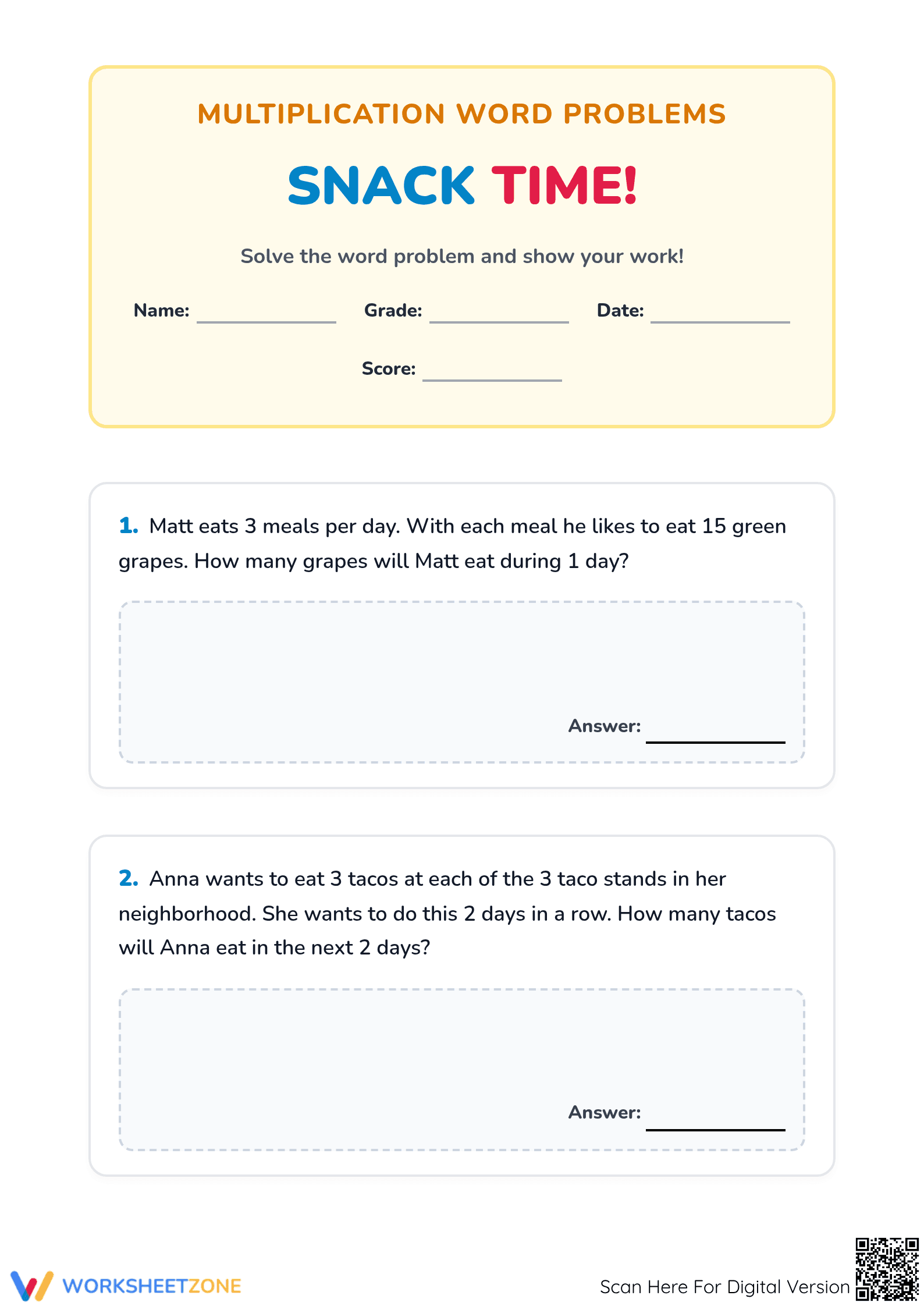
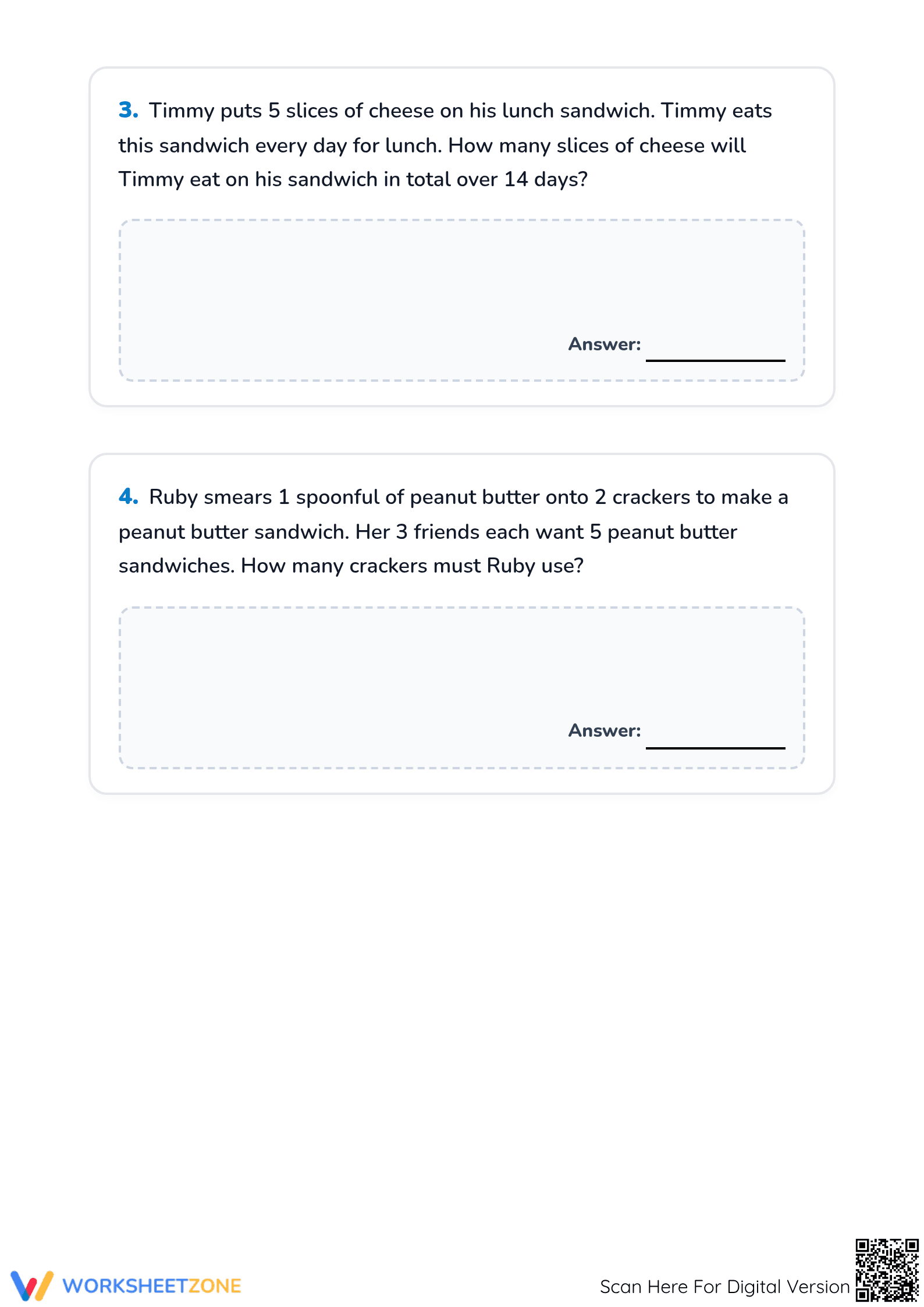
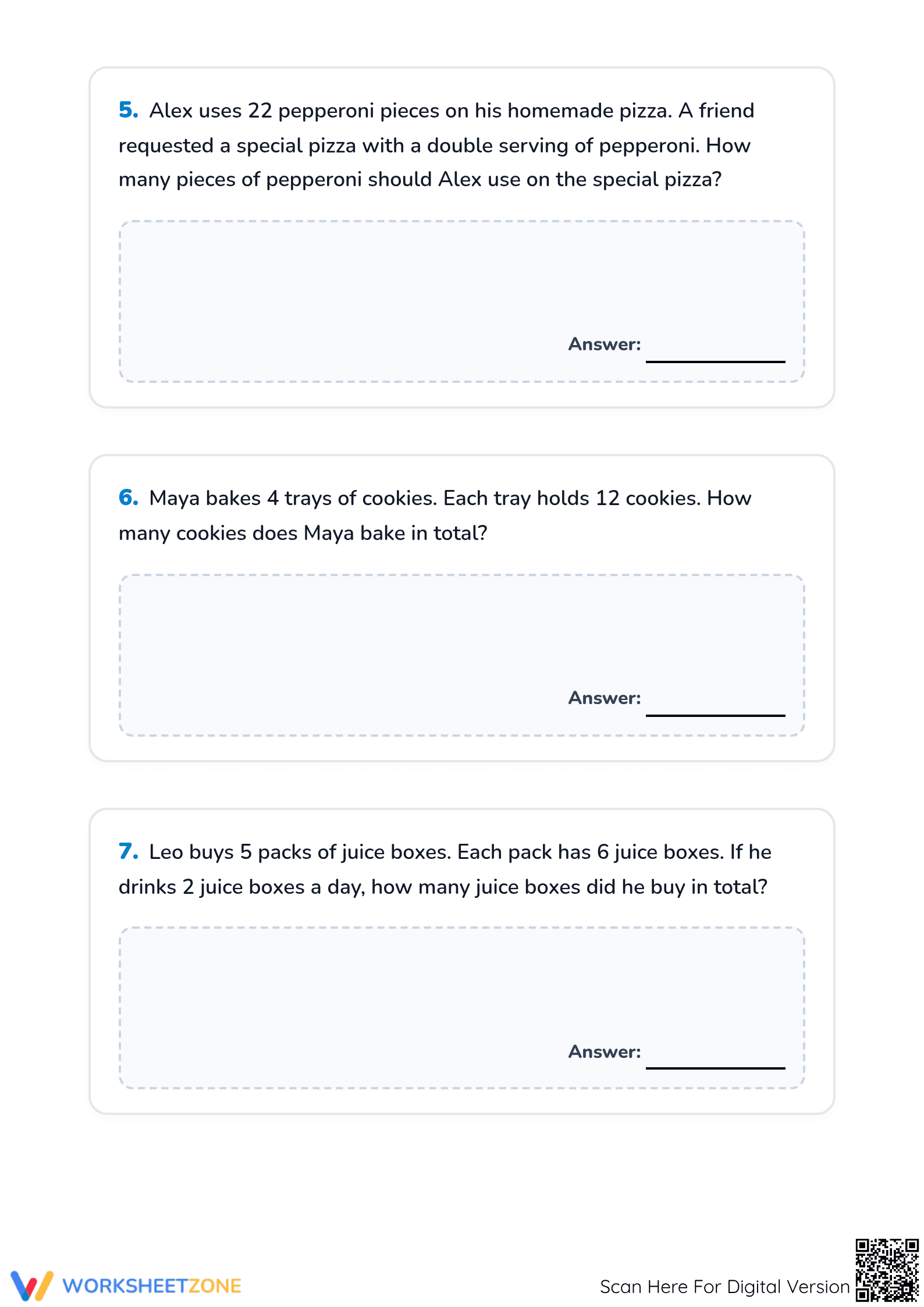
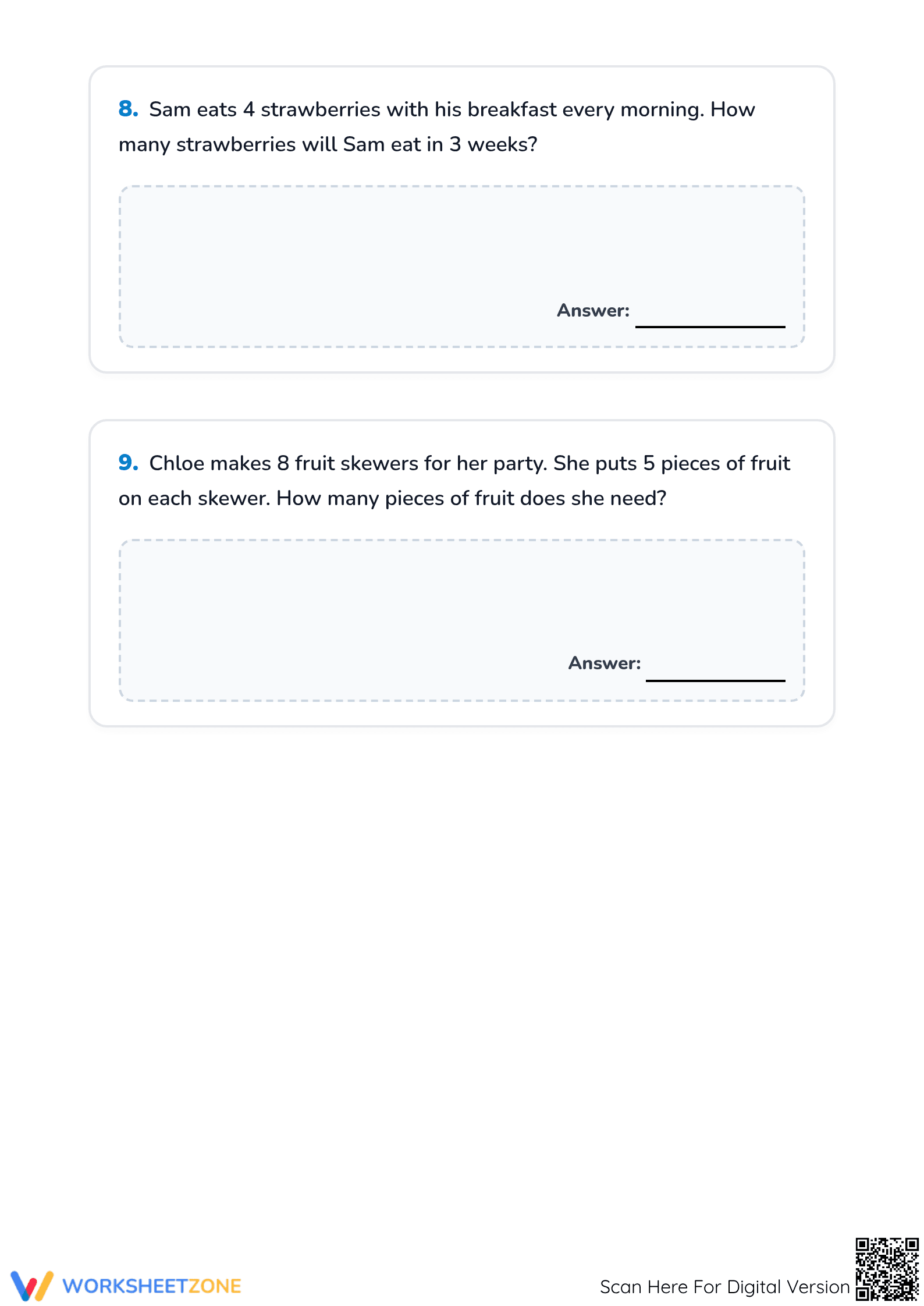

Snack Time Multiplication: Printable Grade 3 Math Worksheet
Paste this activity's link or code into your existing LMS (Google Classroom, Canvas, Teams, Schoology, Moodle, etc.).
Students can open and work on the activity right away, with no student login required.
You'll still be able to track student progress and results from your teacher account.
This printable multiplication worksheet transforms abstract arithmetic into a relatable "Snack Time" adventure for third-grade students. By framing mathematical operations within familiar scenarios like eating grapes, tacos, and pizza, it helps learners bridge the gap between rote calculation and real-world application, ensuring they master foundational multiplication word problem skills.
At a Glance
- Grade: Grade 3 · Subject: Math
- Standard:
3.OA.A.3— Use multiplication to solve word problems in situations involving equal groups and arrays.- Skill Focus: Multiplication word problems with one and two-digit factors
- Format: 4 pages · 9 problems · Answer key included · PDF
- Best For: Homework, independent practice, or math centers
- Time: 20–35 minutes
What's Inside
The resource features four pages of snack-themed math. It contains nine unique word problems requiring students to multiply numbers, such as finding total pepperoni pieces or crackers. Each problem includes a dedicated "show your work" box and a clear answer line to encourage organized thinking and procedural transparency. A full answer key is provided for rapid grading.
Zero-Prep Workflow
Implementing this activity into your daily schedule is effortless. First, print the four-page PDF in seconds. Second, distribute the packets to your students during independent work time or as a transition activity. Finally, use the included answer key for a quick visual audit of student progress or for peer-grading sessions. This streamlined approach makes it an ideal resource for substitute folders or emergency lesson plans when teacher prep time is minimal.
Standards Alignment
This resource is specifically aligned to 3.OA.A.3, which requires students to use multiplication and division within 100 to solve word problems in situations involving equal groups, arrays, and measurement quantities. By providing diverse scenarios ranging from equal groups of strawberries to arrays of cookies on a tray, the worksheet ensures students meet the full depth of the standard. This standard code can be copied directly into lesson plans, IEP goals, or district curriculum mapping tools.
How to Use It
This worksheet functions effectively as a formative assessment during the "You Do" phase of a gradual release model. Assign the snack problems to gauge individual student understanding of multi-step word problems after direct instruction. Alternatively, place the pages in a math center where students can collaborate on calculations. Teachers should observe whether students are drawing arrays or using repeated addition to solve, providing a window into their mathematical reasoning.
Who It's For
Designed for third-grade students, this resource is also suitable for fourth-graders requiring remediation or second-graders ready for an enrichment challenge. The visual layout and clear spacing make it accessible for diverse learners, including those who benefit from sentence frames or designated workspaces. It pairs naturally with physical manipulatives or anchor charts that visualize multiplication as equal groups, reinforcing the core concept through multiple modalities.
The integration of contextualized word problems is a high-leverage instructional practice supported by recent educational research. According to a ScienceDirect TpT Analysis (2024), student engagement and conceptual retention significantly increase when mathematical tasks are situated within familiar, non-abstract environments like snack time. This worksheet addresses 3.OA.A.3 by requiring students to extract numerical data from narrative text and apply multiplication strategies to determine total quantities within 100. By focusing on equal groups and repeated scenarios, the resource helps pupils develop the mental models necessary for advanced algebraic thinking in later grades. The inclusion of a "show your work" section aligns with evidence-based practices that prioritize process over mere calculation, allowing educators to identify specific misconceptions in student logic. This summary can be extracted as a standalone reference for curriculum audits or parent-teacher communication regarding standards-based instruction and student achievement in Grade 3 mathematics.


