


























1 / 2
0
Views
0
Downloads

0.0
0
Save
0 Likes
Skeletal System Bone Labeling Worksheet
0 Views
0 Downloads
Paste this activity's link or code into your existing LMS (Google Classroom, Canvas, Teams, Schoology, Moodle, etc.).
Students can open and work on the activity right away, with no student login required.
You'll still be able to track student progress and results from your teacher account.
Information
Description
What It Is:
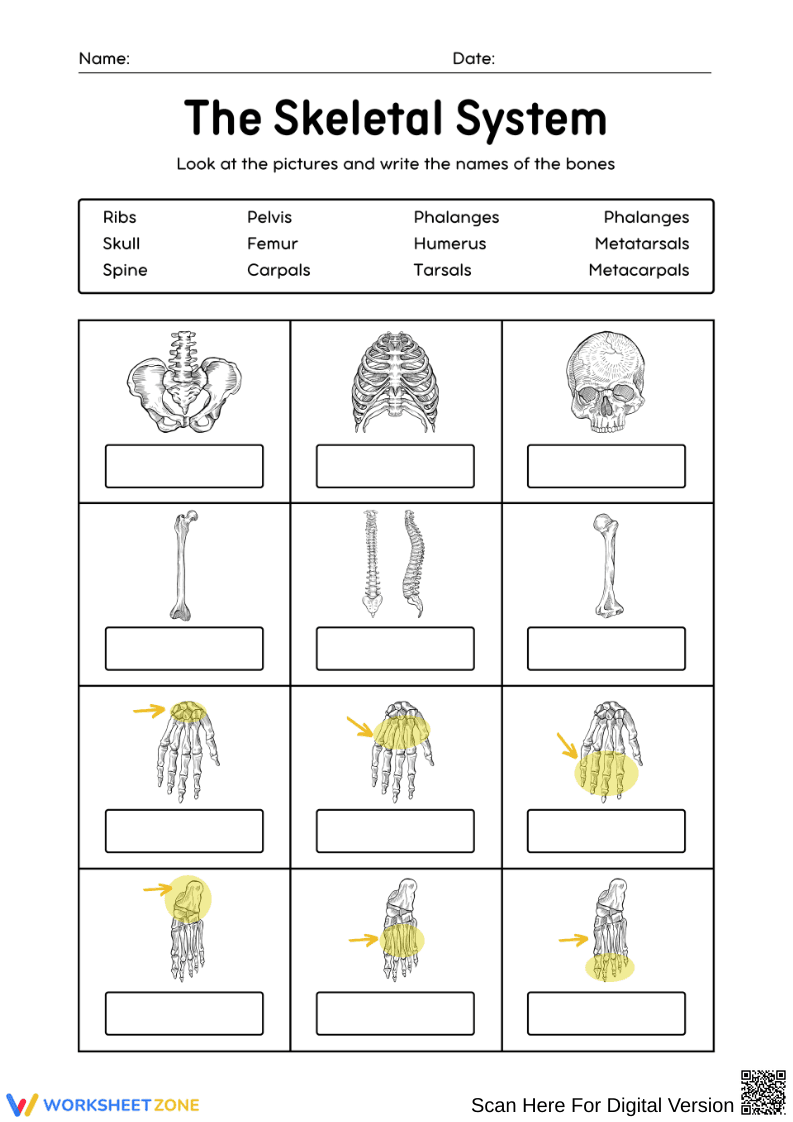
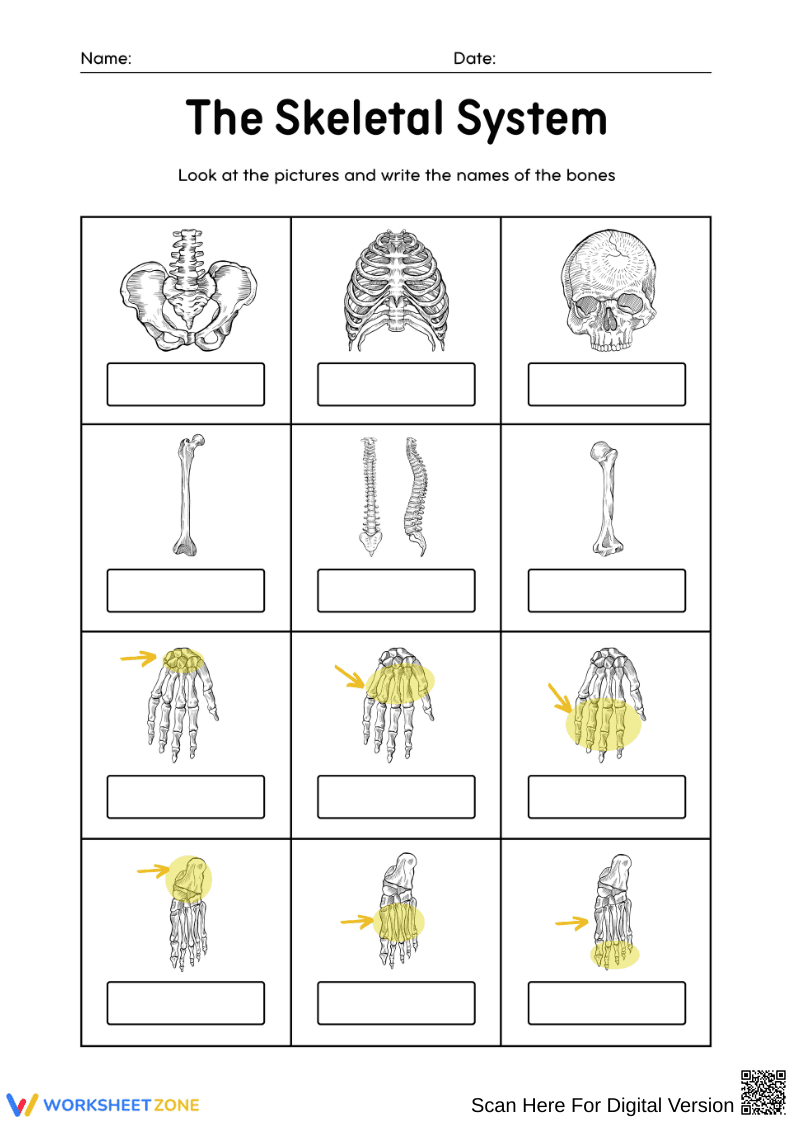
A skeletal system labeling worksheet where students identify major bones such as the pelvis, ribs, skull, spine, femur, humerus, carpals, metacarpals, metatarsals, tarsals, and phalanges. Clear illustrations guide students as they match each bone to its correct name.
Why Use It:
This worksheet strengthens anatomy vocabulary and helps students visually recognize the major bones of the human body. It supports learning about body structure, science standards on human anatomy, and reinforces memory through hands-on labeling practice.
How to Use It:
• Have students study the word bank and label each bone in the boxes provided.
• Use as independent practice, a science center activity, or a review before quizzes.
• Pair with a skeletal system lesson to help students connect bone names to their locations and functions.
• Ideal for building foundational anatomy skills through visual learning.
Grade Suitability:
Best suited for Grades 3–6.
• Great for introducing the skeletal system and reinforcing bone identification.
• Supports life science and human anatomy units.
Target Users:
Teachers, homeschool educators, tutors, and students learning about the skeletal system and the major bones of the human body.
A skeletal system labeling worksheet where students identify major bones such as the pelvis, ribs, skull, spine, femur, humerus, carpals, metacarpals, metatarsals, tarsals, and phalanges. Clear illustrations guide students as they match each bone to its correct name.
Why Use It:
This worksheet strengthens anatomy vocabulary and helps students visually recognize the major bones of the human body. It supports learning about body structure, science standards on human anatomy, and reinforces memory through hands-on labeling practice.
How to Use It:
• Have students study the word bank and label each bone in the boxes provided.
• Use as independent practice, a science center activity, or a review before quizzes.
• Pair with a skeletal system lesson to help students connect bone names to their locations and functions.
• Ideal for building foundational anatomy skills through visual learning.
Grade Suitability:
Best suited for Grades 3–6.
• Great for introducing the skeletal system and reinforcing bone identification.
• Supports life science and human anatomy units.
Target Users:
Teachers, homeschool educators, tutors, and students learning about the skeletal system and the major bones of the human body.


